Skip to content
 Social media management for custom home builders in Milton.
The biggest lie in custom builder marketing is that estate clients in The Manor and White Columns find you on Instagram. They don’t. But the architects, designers, and peer professionals who route them to you absolutely do — and the platform playbook is nothing like what your generic agency is selling you.
“Build a big follower count and Manor clients will find you.”
Here’s the thing. Almost every social agency pitching Milton custom builders shows up with a deck about “growing your audience,” “going viral,” and “building brand awareness.” The pitch is hashtag strategy, posting cadence, Reels production, and a target follower count of 10K, 25K, or 50K. The implication is that the bigger your audience, the more $5M Manor clients you’ll attract.
Real talk: it’s almost entirely backwards for this market. A Manor or White Columns homeowner does not browse Instagram looking for a custom home builder. She does not scroll Reels. She does not save Pinterest boards of “modern farmhouse exteriors.” If she does any of that, it’s idle entertainment, not buyer behavior. When she actually needs a builder — for a new estate, a tear-down replacement, or a major renovation — she asks her interior designer, her architect, her best friend in The Manor, or her trusted advisor at her wealth management firm.
So why do social media at all? Because those advisors live on social. Atlanta-based interior designers post daily on Instagram. Architects share project process work. Landscape architects geotag their best installations. A Milton custom builder’s actual social audience is not 25,000 homeowners — it’s 2,800 advisors, peers, and design professionals. When that audience watches you for two years, they remember you the next time a client asks. That’s the whole game. Vanity metrics don’t apply.
The most-followed custom builders in North Atlanta are not winning the most Manor work. The Milton firms with 3,200 followers made up of 60% design professionals routinely close more $5M-and-up estate work than firms with 28K followers from a Facebook ad campaign.
The good news? Once you understand who you’re actually performing for on social, the playbook simplifies dramatically. Less posting. Higher production value. Different platforms. Different metrics. The rest of this guide breaks down what changes.
Generic “grow the audience” vs. peer-graph cultivation
Same monthly retainer. Completely different inquiry pipeline by year two.
| What you’re buying | Generic builder social agency | Peer-graph cultivation (what we run) |
|---|---|---|
| Primary success metric | Follower count, reach, impressions | Design-pro followers, saves by named accounts, advisor mentions |
| Posting cadence | Daily on every platform | 2–3x/week, editorial-grade, fewer platforms |
| Production quality | Phone shots + Canva | Editorial photo + cinema-grade reel commissioning |
| Hashtag strategy | 30 tags, mass-discoverability targeting | 5–8 tags, geo + designer-tag focus |
| Estate inquiry attribution | Rarely traceable to social | Direct attribution via designer routing |
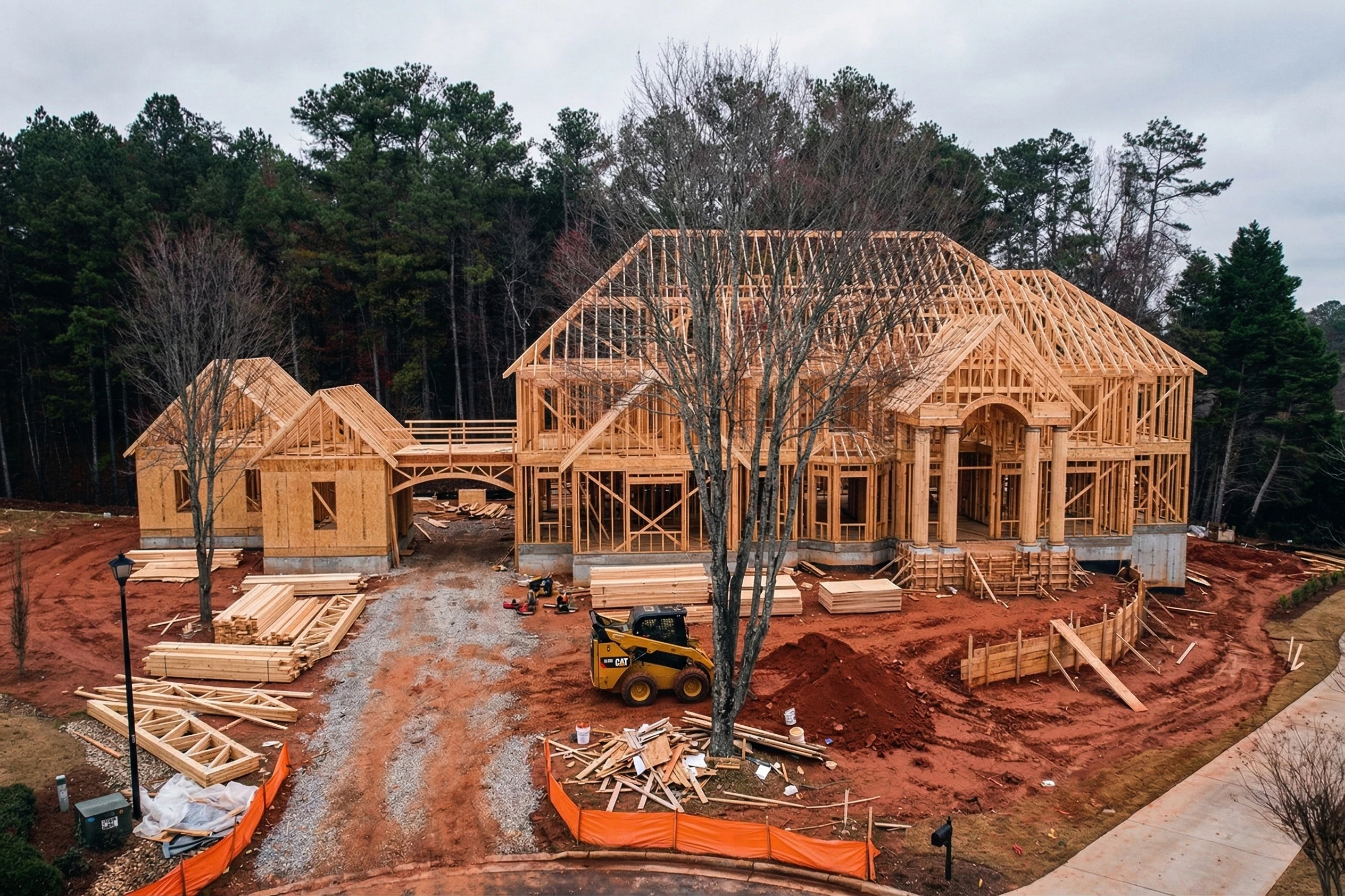
A completed Milton estate — the kind of asset that becomes one editorial Reel and 12 designer reposts when it’s shot at this level.
Stop trying to be famous. Start being useful to 40 designers.
You’ve probably been told the answer is “consistent posting.” Three Reels a week. Daily Stories. A Pinterest board for every project. The pitch is volume — keep filling the feed and the algorithm rewards you. That’s the consumer-influencer playbook applied to a builder, and it does not produce Manor estate work.
Here’s what the design-build firms winning the Birmingham Highway, Hopewell, and Cogburn estate corridors do differently. They post less, produce better, and obsess over whether 40 specific Atlanta-area interior designers and 18 specific architects have seen the work. Saves are tracked by named account. DMs from designers are followed up the same day. Tagged collaborations with architects are co-promoted. The whole mechanism is account-based — not audience-based.
That mechanism works because it matches how the buyer journey actually flows in this market. A White Columns client briefs her interior designer. Designer remembers an editorial Reel from your firm she saw three months ago — not because it went viral, but because it was beautifully shot and tagged her favorite architect. Designer DMs you. You’re on the shortlist before the client has done a single Google search. The whole conversion happens off-platform, in private, and never appears in your social analytics.
I don’t follow custom builders for fun. I follow the four whose work I’d recommend. When a client briefs me, those are the four names I give. Everyone else is invisible to me — and to my client.— A Buckhead-based interior designer on how she vets builders for her Milton clients
That doesn’t mean follower count is meaningless. It means the composition matters infinitely more than the total. A 4,200-follower account where 38 of those followers are top Atlanta interior designers and 14 are architects routinely outperforms a 32,000-follower account composed of homeowners and inactive contacts. The math is brutal and most agencies still optimize for the wrong number.
Three platforms. Different jobs. Almost no overlap.
After running social for ultra-luxury custom builders across The Manor, White Columns, and the Birmingham/Hopewell estate corridor, the same three platforms split the work cleanly. Each one does one specific job. Skip any and the engine has a hole.
The full social stack for a Milton custom builder.
None work alone. Instagram cultivates the designer graph. Houzz captures the in-market estate buyer. LinkedIn captures the architect partnerships. Run the wrong one as primary and you waste 90% of the production budget.
Instagram, optimized for designers and architects.
Two to three posts per week. Editorial photography only. Cinema-grade Reels for completed estates. Strategic tagging of architects, designers, landscape architects, and the photographer of record. Quarterly review of which design pros follow you and which don’t — outreach to fill the gaps. Story takeovers with collaborating designers. Hard cap of 8 hashtags, all geo or designer-named. This is where the 80/20 of custom builder social media management lives in this market. Done right, it produces 3–5 designer-routed inquiries per quarter once warm.
Houzz Pro deep portfolio.
Not a “social platform” technically, but the only place an in-market Milton estate buyer actually browses builders. Deep project portfolios, weekly answer participation in the Discussions section, save-and-tag tracking.
LinkedIn for architect relationships.
Quiet, professional. One post per week. Project completion announcements with architect-of-record credit. Industry commentary. Not for the buyer — for the architects vetting your firm’s professionalism before recommending you.
Platforms a Milton builder shouldn’t run.
TikTok. Wrong audience entirely. Pinterest. Consumer browsing platform; buyers are not on it; designers don’t route from it. YouTube as primary. Long-form has its place, but daily Shorts are not it. Cutting these saves $4K–$6K per month in production cost and refocuses the budget on the platforms that actually feed the architect-and-designer graph.
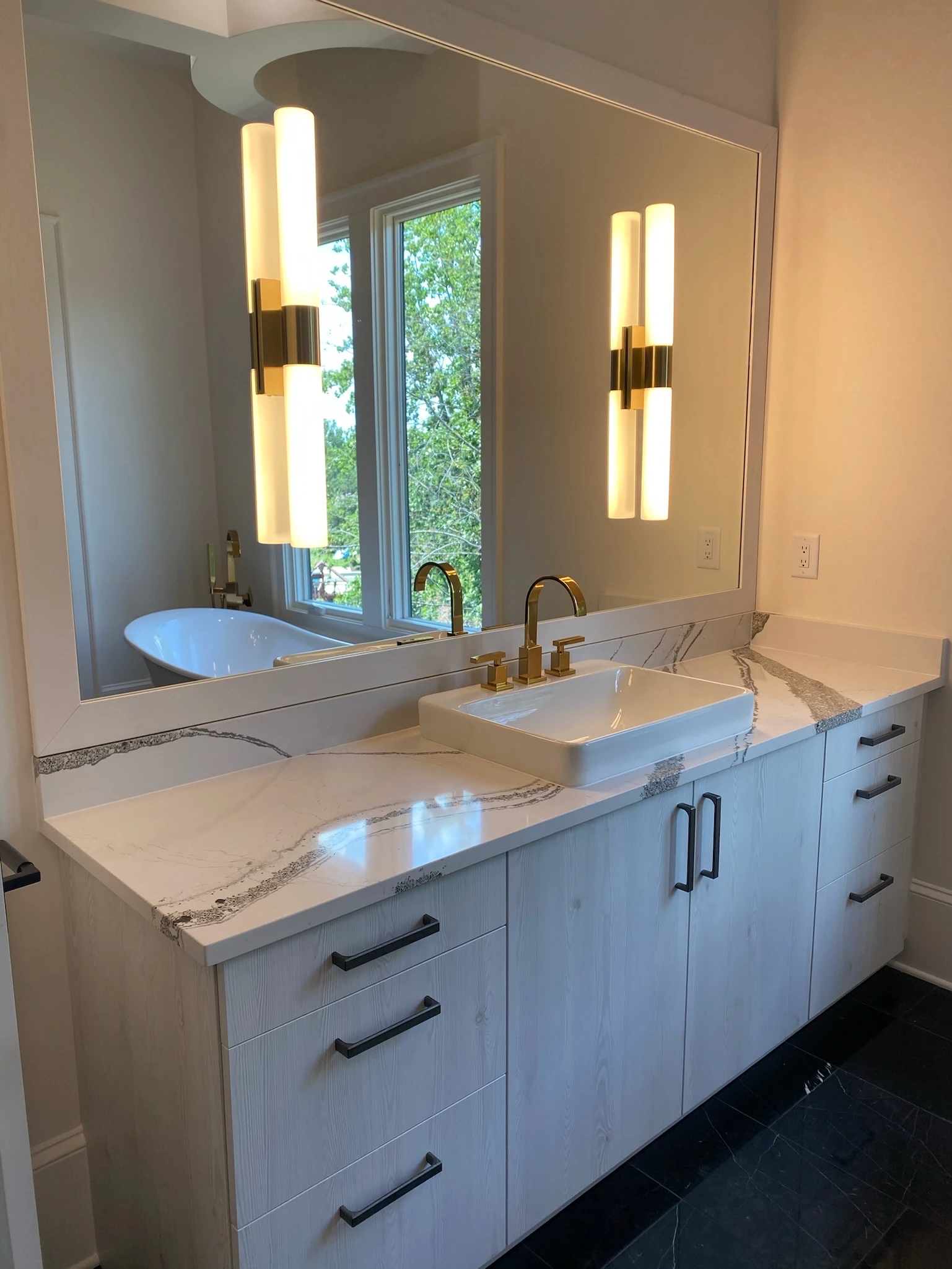
Architectural detail from a recent Milton build — the photo a designer screenshots and routes back to her favorite stonemason.
How we run a Milton custom builder social engagement.
Map the design-pro graph
We pull every active Atlanta interior designer, architect, and landscape architect doing Milton estate work. Identify the 60 most active. Document who follows you. Build a 12-month outreach calendar with collaboration hooks for each.
Commission and produce
Editorial photography across 3–4 Milton estates per year — only with explicit client NDA-cleared approval. Cinema-grade Reels for two completed projects. LinkedIn project announcements. Houzz Pro portfolio depth. No phone shots, ever.
Cultivate and measure
Quarterly account-by-account review. Which design pros engaged this quarter? Which didn’t? What outreach moved the needle? Average inbound DMs from named designer accounts replaces follower count as the primary metric.
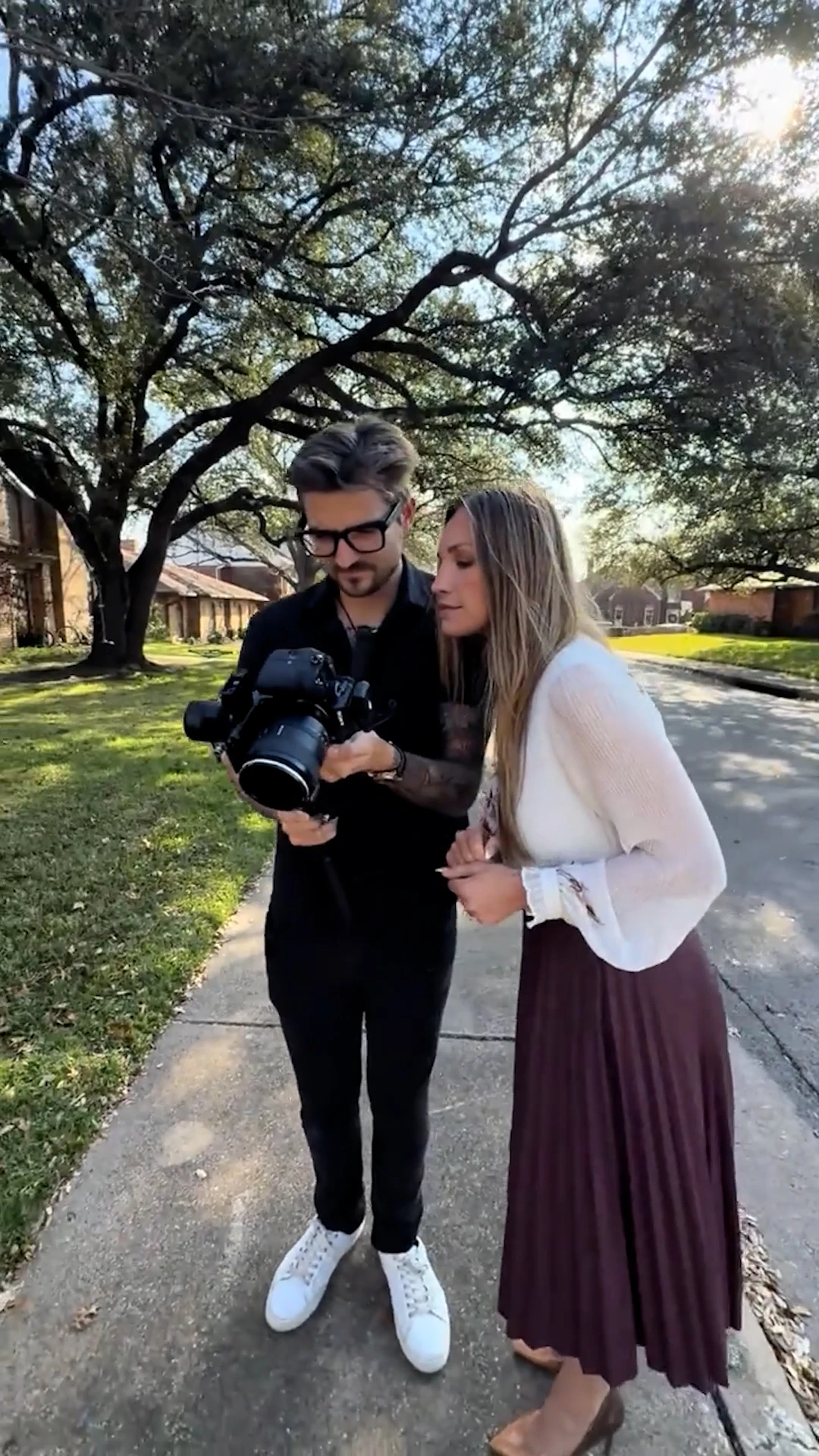
Behind the scenes of a content shoot at a Milton estate — the production grade that earns a designer repost and a Houzz feature pick.
The Cogburn Road builder who fired her TikTok agency.
An 11-year custom builder anchored in the Cogburn Road and Bethany Bend estate corridor was paying $7,800 a month to a social agency producing 22 posts per week across Instagram, TikTok, Pinterest, Facebook, and Twitter/X. Followers were “growing” — 19,400 on Instagram, almost none of them design professionals. Estate inquiries from social? Two in 18 months, both upper-middle, neither signed. We killed every platform except Instagram, Houzz Pro, and LinkedIn. Cut posting cadence from 22/week to 6/week. Commissioned editorial work for two completed projects. By month 14 her Instagram follower count was 3,840 — but 71 of those followers were named Atlanta interior designers and 22 were architects. She’d signed a $5.8M Manor build sourced through a designer DM, plus three $4M-and-up estates in design.
Designer-and-architect followers, month over month.
Design-pro followers compound on a different curve than vanity followers. Each new design-pro account is worth roughly 0.4 referred estate inquiries per year. Eighty design-pro followers becomes 32 inquiries. That math beats a 30K-follower vanity account every quarter, every year.
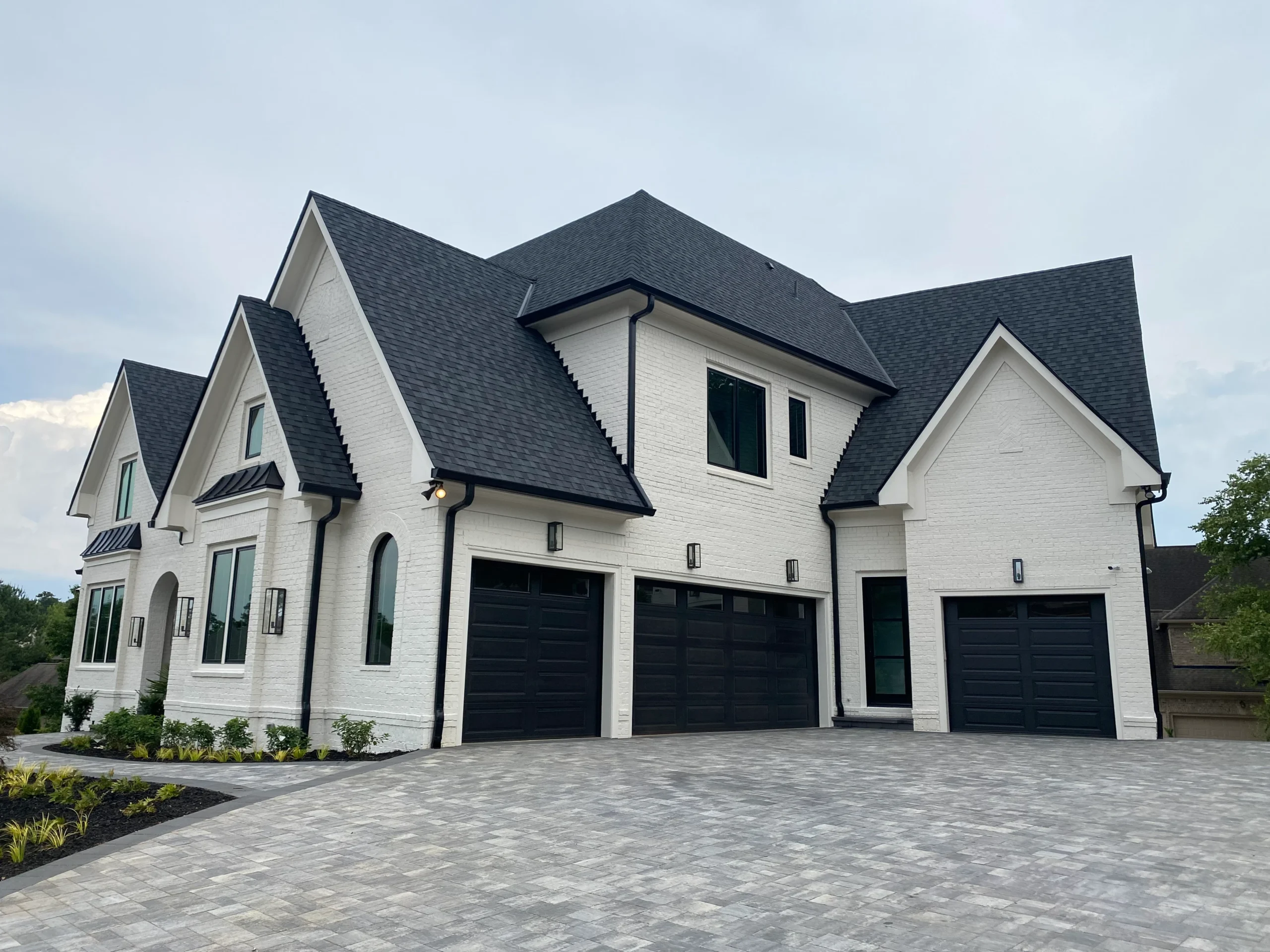
A completed estate front in The Manor — the kind of single image that anchors three months of social content done editorially, not endlessly.
Six questions every Milton builder should ask a social agency.
Whether you’re talking to us, a national luxury social shop, or a North Atlanta generalist — these six questions surface 90% of what matters at the Milton estate price point.
“How do you measure success that isn’t follower count?”
Right answer: design-pro account composition, named-designer saves, DM inbound from advisors, attributed estate inquiries. If they only show reach and impressions, walk.
“How do you handle client privacy on social?”
Strict NDA-cleared workflow. No exterior shots that geo-locate a Manor home. No client names ever. If they look confused, they’ve never run an ultra-luxury account in this geo.
“What’s your posting cadence — and why?”
Right answer: 2–4 high-production posts per week, never daily. If they pitch daily-posting as a virtue, they’re applying a consumer-influencer playbook to a market that doesn’t reward it.
“Who’s shooting the photo and video — and what’s the gear?”
Editorial photographer with architecture-grade portfolio, cinema camera for Reels (not iPhone). Production budget $3K–$6K per project shoot minimum. Anything less is consumer content.
“How many designers and architects do you currently engage with monthly?”
If they don’t have a number — they don’t run account-based social. Walk. The whole strategy hinges on tracking this.
“Will you take on a second Milton custom builder?”
Right answer: no, period. The whole reason for niche representation is exclusive access to the same designer graph. Two builders means split attention and conflicting referrals.
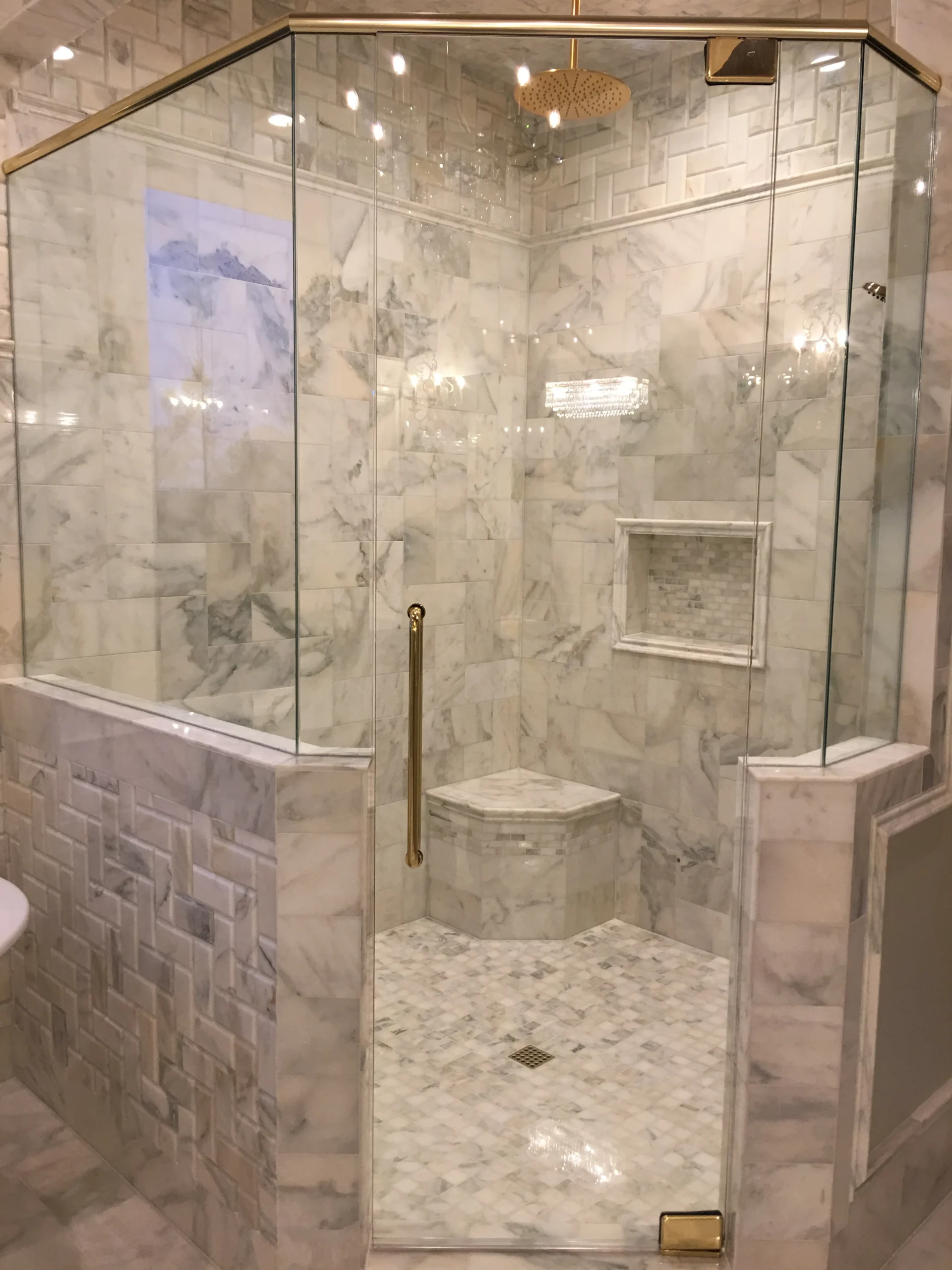
An estate front off Hopewell Road — single editorial image, three months of social rotation, two designer reposts, one DM from a Buckhead architect.
What Milton custom builders keep asking us about social.
Honest range is 8–14 months. The first 3–4 months are spent rebuilding production quality and pruning the wrong followers. Months 4–8 grow the design-pro graph. Months 9+ start producing direct designer DMs that lead to estate inquiries. Anyone promising signed estates from social inside 90 days is selling you the consumer-influencer playbook for a market that does not reward it.
Realistic working range is $4,800–$9,200 per month for established Milton estate firms. That covers strategy, content production (editorial photo + cinema Reel commissioning), platform management, designer-graph cultivation, and reporting. Below $3,500 the production quality drops below what designers will engage with. Above $11K and you should be questioning what you’re buying.
No. Both platforms target consumer-browsing behavior that does not match the Milton estate buyer journey. Designers and architects don’t route from Pinterest or TikTok in this market. The production budget that would go there is much better spent on editorial Instagram Reels and Houzz Pro portfolio depth.
Don’t purge. Just stop optimizing for them. Switch the content strategy to design-pro-targeted editorial work and your follower composition will shift naturally over 6–9 months. Inactive followers self-prune. The active homeowner followers are still useful — they engage with posts which boosts reach to the designer accounts you actually care about.
No. One custom builder per city, per geo, hard rule. We cannot run social for two builders in Milton because we’d be cultivating the same Atlanta designer graph for both — which dilutes the leverage we promise to either. That conflict-of-interest line is what makes the strategy work for firms targeting the Milton estate market.
Imagine the next Manor inquiry coming through a Buckhead designer’s DM — not a Facebook ad.
If you want a 30-minute call where we audit your current social, the design-pro graph you should be cultivating, and the three platforms you should kill on Monday — that’s free. We do a few of these a week with builders across our regional guide on home services marketing in North Atlanta.