Marketing built for the builders putting up $2M–$15M custom estates across North Atlanta.
Most agencies treat a $5M custom build the same way they treat a $300K renovation. Premium buyers don’t shop on Angi. We build the discreet, architect-aligned, slow-compounding marketing engine that fits how your business actually closes work.
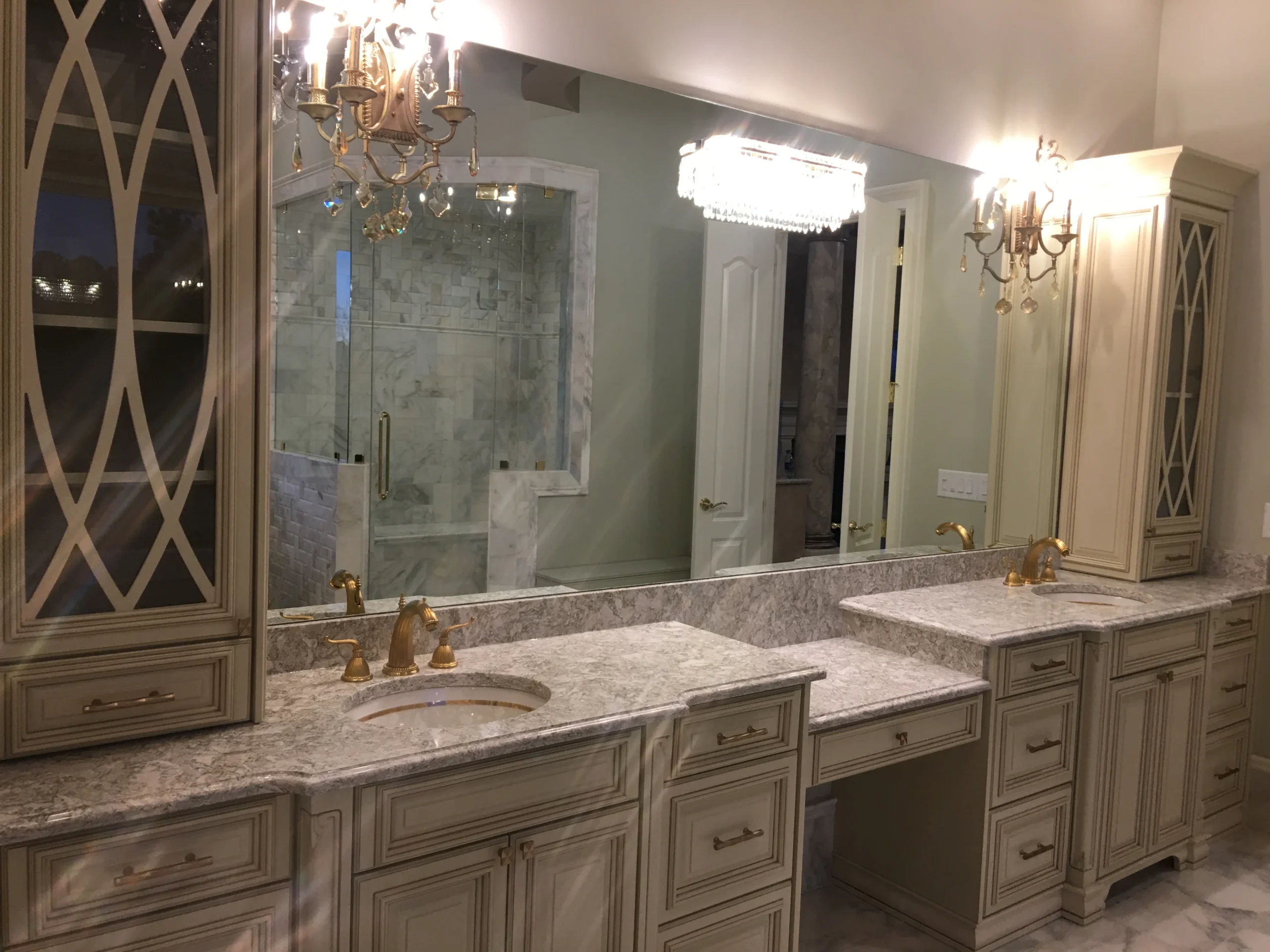
An interior detail from a recent Alpharetta corridor build — the kind of editorial imagery your architect referral graph passes around without you ever asking.
You’re not running the same business as a $300K remodeler. Stop hiring agencies that pretend you are.
Here’s the thing. Most marketing agencies in North Atlanta have one playbook. More leads, more ads, more form fills. That playbook works fine for a roofer averaging $14K per job or a remodeler doing $80K kitchens. It doesn’t work for a custom builder doing eight to twelve $2M–$15M projects a year. The math is different. The buyer is different. The sales cycle is different. The risk profile is different.
Real talk: when an agency pitches you 47 leads a month, they’re describing the worst thing that could happen to your business. You don’t need 47 inquiries. You need three. Three serious, lot-secured, architect-introduced, $3M–$8M-budget inquiries — and you need them every quarter, on a slow drip, from sources your peers and your buyers actually respect.
The premium buyer in The Manor, White Columns, or Country Club of the South is not browsing Angi at 9pm. They’re getting your name from their architect, their designer, the couple two cul-de-sacs over who just finished their build, and the tasteful Instagram account they’ve been quietly following for eight months. If your marketing isn’t built around feeding those four channels, you’re invisible to the buyers who actually have $5M to spend.
The custom builders we work with sign 6–14 builds a year and turn down twice that many. Our entire job is to make sure the right inquiries land in your pipeline — and that the wrong ones never waste an hour of your project manager’s time.
The good news? Premium custom-builder marketing is the most defensible niche in residential construction marketing. Once you’ve built the architect referral graph, the signature project content library, and the slow-build SEO position — competitors can’t catch you in 12 months. They can’t catch you in 36. That’s why we only work with one custom builder per metro corridor. Once you’re in, the door closes behind you.
Volume contractor marketing vs. custom-builder marketing.
Same agency line items. Completely different objectives, audience, and what success looks like 12 months in.
| What we’re building | Volume contractor playbook | Custom-builder playbook |
|---|---|---|
| Inquiries per month | 40–120 high-volume form fills | 3–8 pre-qualified, lot-secured |
| Sales cycle | 2–6 weeks from inquiry to signed | 8–14 months, often longer |
| Primary referral source | Past clients + Google reviews | Architects, designers, peer principals |
| Content tone | Aggressive offers, urgency hooks | Discreet, editorial, NDA-aware |
| Photography rights | Universal — shoot and post freely | Per-project negotiated, often delayed |
| SEO ramp expectation | 90–180 days for first contracts | 9–18 months — the search volume is tiny but the close value is enormous |
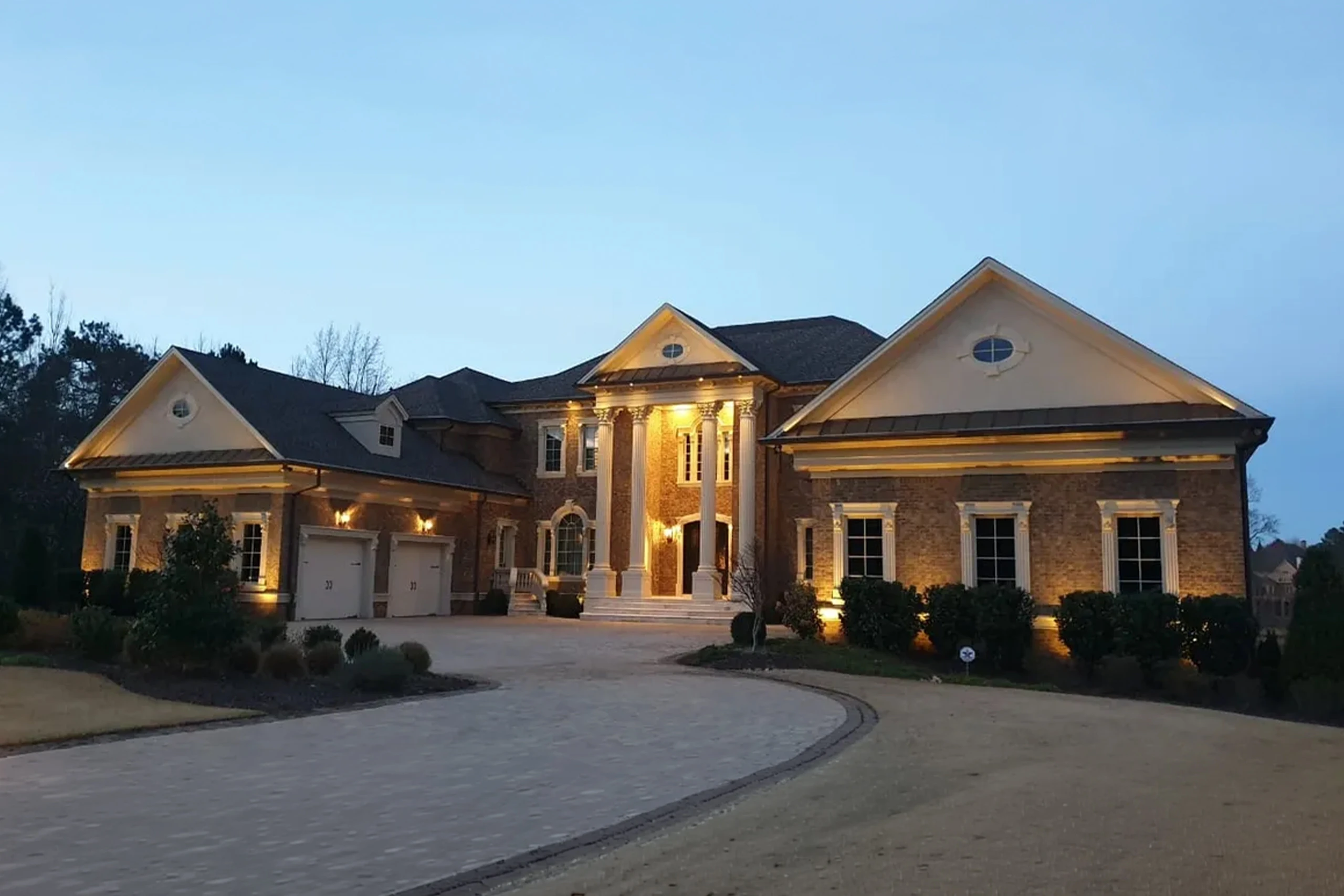
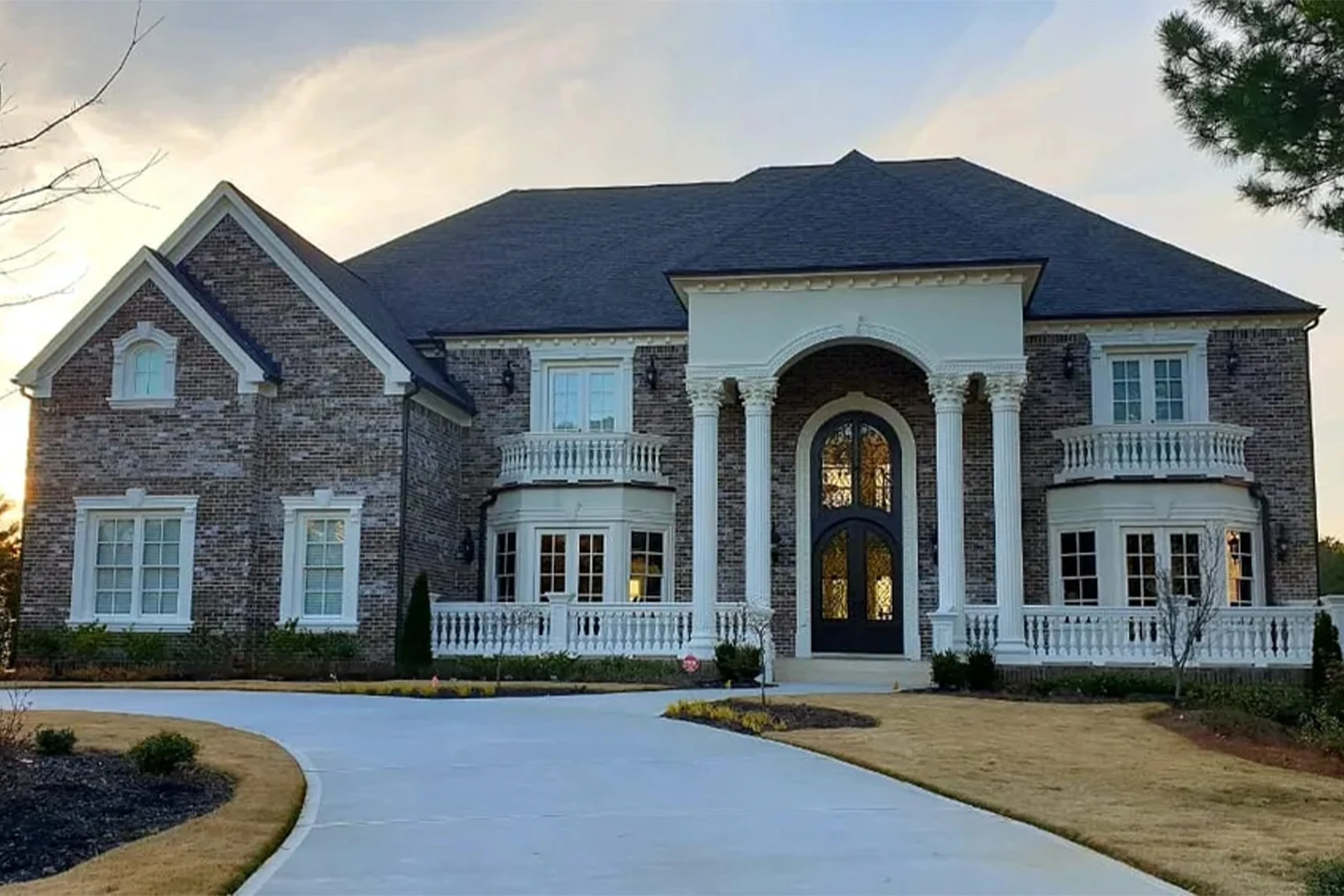
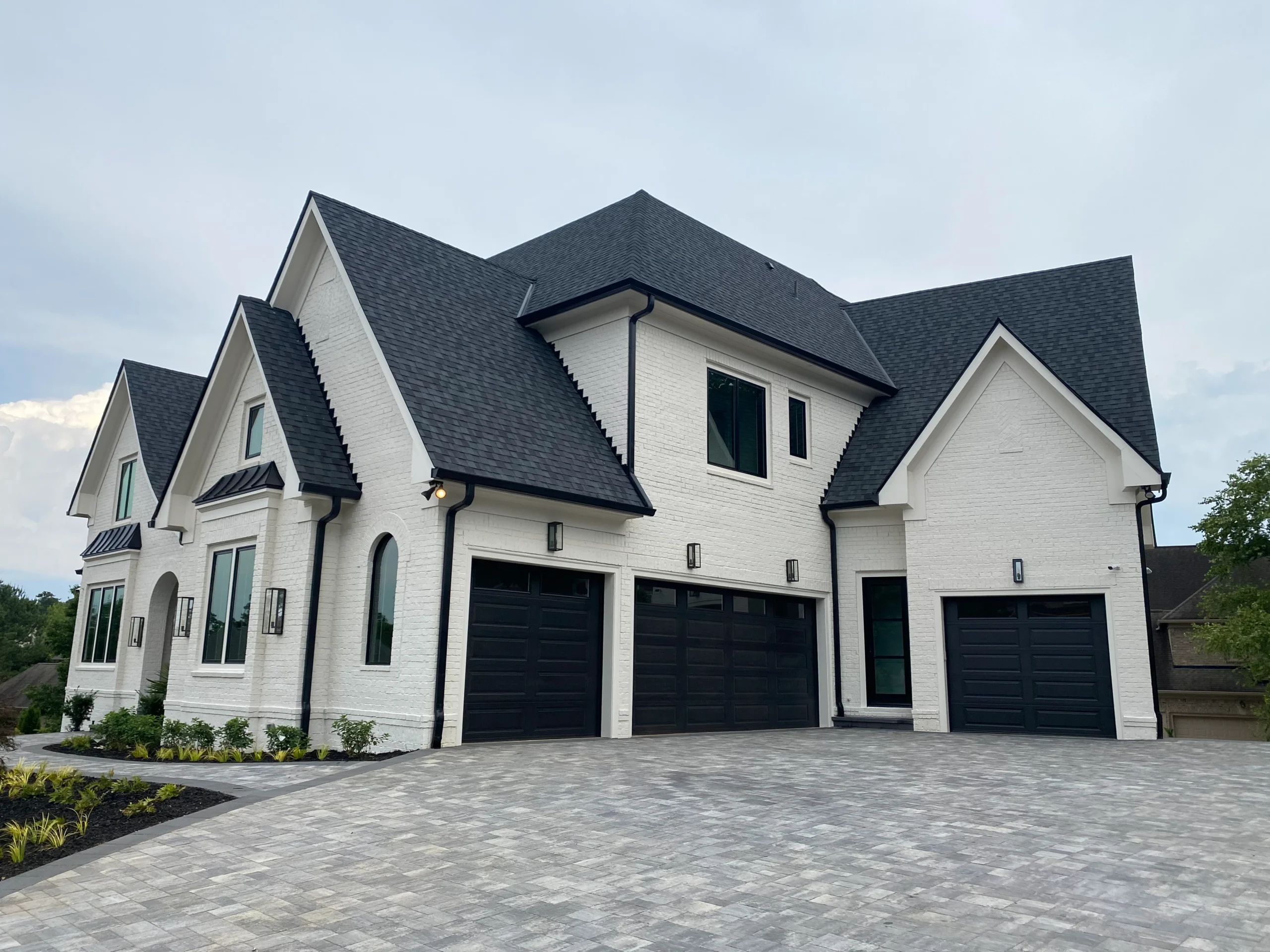
A finished build in the Alpharetta luxury corridor — the kind of project that becomes 18 months of architect-graph content when shot, packaged, and released correctly.
Custom-builder marketing is mostly about feeding three people. Almost nothing else matters.
You’ve probably noticed that the loudest voices in contractor marketing all talk about volume. Lead-platform spend. Funnel hacking. Aggressive Meta retargeting. None of it applies to your business.
The buyers who sign $4M–$8M custom contracts in Milton, Alpharetta, and Cumming almost never come from a cold form fill. They come from three sources, and your entire marketing budget should be designed to feed those three sources every single month. Their architect. Their interior designer. The handful of peer principals in their neighborhood whose homes they’ve already toured. Add a thin layer of “high-net-worth searchers Googling at 11pm” on top and you have your full audience.
That’s it. That’s the addressable market for a North Atlanta custom builder. It’s a referral graph problem and a search-position problem — not a lead-volume problem. When we strategize an engagement, we’re asking: how do we make sure every architect doing $2M+ residential work in North Atlanta has us mentally bookmarked as a builder they’d recommend without a second thought? How do we make sure when one of those rare “luxury home builder Milton” searches happens, we’re position one? How do we make the four projects you do release publicly feel more inevitable than the forty your bigger competitors push?
The serious custom builders in this market aren’t competing for inquiries. They’re competing for mindshare with twenty-three architects and a small handful of designers who decide who gets the introduction.— Paraphrased from a Buckhead architect-led design-build principal
Once you accept that framing, the entire marketing program changes. Social stops being a posting calendar and becomes an architect-portfolio hand-feed. SEO stops chasing volume keywords and becomes a slow-compounding position grab. The website stops being a brochure and becomes the credentialing artifact your referral sources hand to their clients. Lead generation stops being a paid media problem and becomes a relationship orchestration problem. Different game entirely.
What each of our four services actually does for a $5M-build custom shop.
Same four service lines we run for every contractor we work with. Completely re-tooled for a low-volume, high-trust, NDA-aware buyer journey.
Web design, lead generation, SEO, and social — re-built for ultra-luxury custom.
You don’t need a roofer’s marketing stack. You need a credentialing engine, a referral-feeder, a slow-compounding SEO moat, and a discreet content library. Here’s how each piece works.
The credentialing artifact your architect hands to her client.
Your website is not a lead-capture tool. It’s the credentialing document a designer texts to a client right after the introduction. We build editorial project case studies with square footage, lot specifics, finish tier, and material spec — the level of detail a $5M buyer expects. We build neighborhood pages for The Manor, White Columns, Sugarloaf Country Club, and Country Club of the South. We build a tiered consult flow that pre-qualifies budget, lot status, and timeline before the meeting lands on your calendar. The full breakdown lives at our web design service page, with the deep-dive at our custom-builder web design guide.
Referral orchestration, not paid media.
Most months your lead generation budget goes to architect-firm dinners, designer showroom partnerships, sponsored lot tours, and discreet retargeting of past inquiries — not Google Ads. Read the architecture at lead generation and the playbook at our custom-builder lead-gen guide.
Slow, defensible category dominance.
“Luxury custom home builder Milton” gets searched maybe 90 times a month. We own all 90. The volume is small. The close value is enormous. Approach detail at our SEO service page and the strategy at SEO for custom builders.
An editorial content library — not a posting calendar.
Custom-builder social isn’t reels-with-captions. It’s a quietly compounding portfolio that an architect can scroll for three minutes and immediately understand your taste, scale, and discretion. We shoot in-progress framing, finished primary suites, stone selection days, and exterior twilight reveals — release-cleared per project, NDA-respecting, never named without consent. The breakdown lives at our social media management page, and the deep playbook at social media for custom builders.
Exterior detail from a recent Alpharetta corridor build — the kind of editorial-grade asset that carries an architect-portfolio submission for the next 18 months.
The eleven North Atlanta corridors where the work actually lives.
We build dedicated landing pages, neighborhood-specific case studies, and quietly-targeted retargeting audiences for each of these. If your work concentrates in any of these zip codes, we already know the lot patterns, the HOA review boards, and the architect rotation.
Custom-builder marketing is a referral graph problem with an SEO topping.
Volume contractors think in funnels. Custom builders need to think in graphs. Here’s the actual structure of a North Atlanta custom-builder pipeline once you stop pretending it works like a roofer’s.
Who actually controls who hires you.
In a single 18-month sales cycle on a $4.6M build, the buyer typically receives your name from two of these five sources before they ever Google you. Marketing spend should follow that order — not the lead-platform order.
- Their architect of record~38%
- Their interior designer~22%
- Peer principal in their neighborhood~18%
- Direct organic search~14%
- Social discovery / press~8%
The handful of high-intent searchers.
On top of the referral graph sits a small but ferocious group: the buyer who already has the lot, the budget, and a 14-month timeline — and who Googles “luxury custom home builder Milton” exactly once at 10:47pm on a Tuesday in October. There are maybe 60–110 of these searches per month across all eleven corridors we serve. We own every single one. And the conversion rate, when the site is built right, runs 18–34%.
- Monthly high-intent searches (region)60–110
- Conversion rate on properly-built site18–34%
- Avg signed contract value$3.8M–$6.2M
- Total annual category value$58M+
Run both halves of that program for 18 months and you do not have a marketing budget anymore. You have a moat. Architects in your corridor reach for you reflexively. Designers attach you to their pitch decks unprompted. The handful of high-intent searchers find you in position one. The competitor across town who started six months after you is six months behind, permanently.
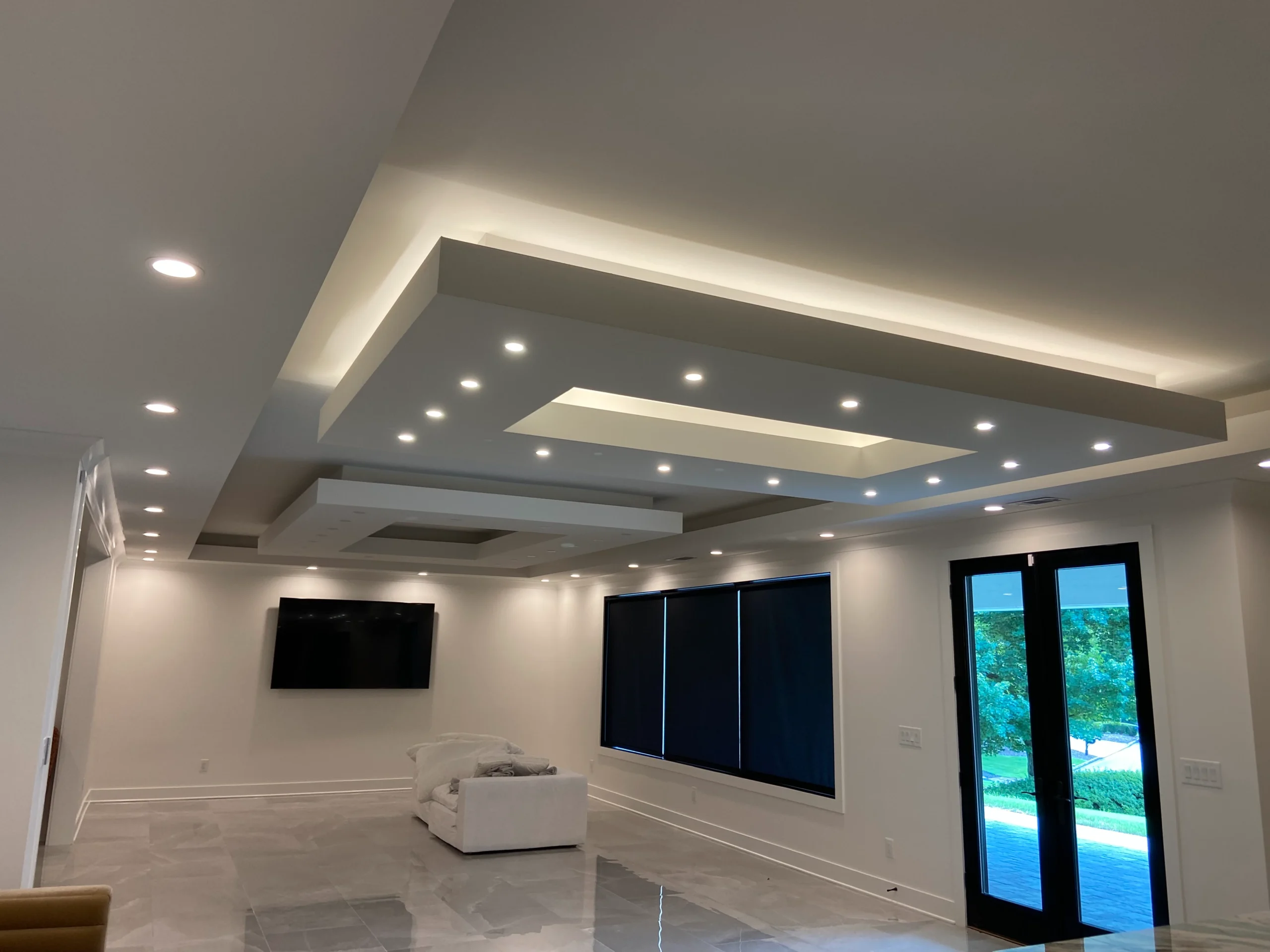
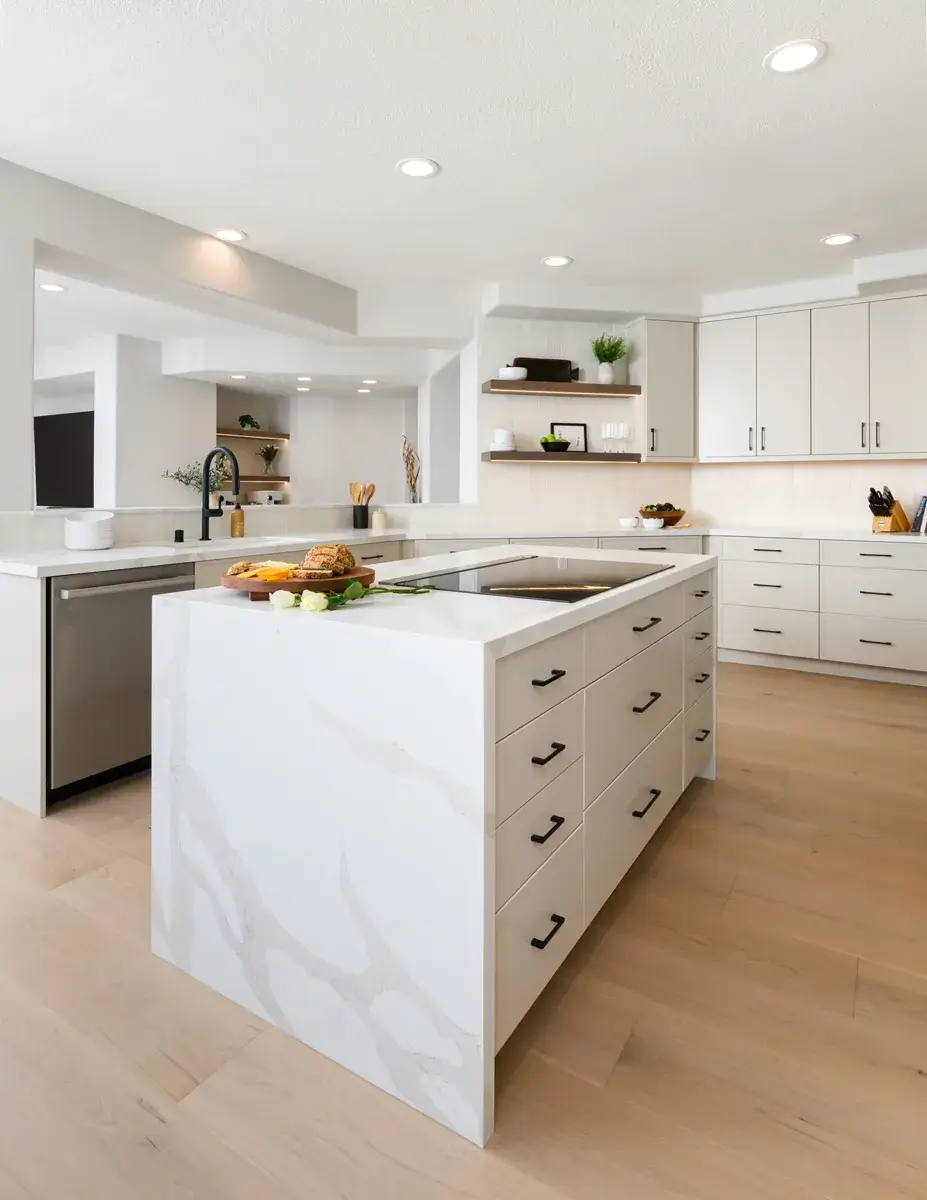
Interior detail from a finished kitchen in the corridor — the level of editorial photography that does the credentialing for you when an architect is texting your name to a client.
How a custom-builder engagement actually runs.
Architect referral mapping
First 60 days. We map every architect doing $2M+ residential work across your corridor — typically 18–34 firms. Catalog who they currently recommend, who they used to recommend and stopped, and where the relationship gaps are. Same exercise for the top 12–20 designers and 6–10 high-end real-estate teams. Outcome: a named, prioritized referral-target list with introduction strategy per relationship.
Signature project content
Months 2–6. We shoot two to four of your existing finished or in-progress projects to a true editorial standard — release-cleared, NDA-respecting. Each project becomes a case-study page, a neighborhood landing page, an architect-portfolio submission, a designer co-publish piece, an editorial-grade reel set, and three to five SEO-targeted long-form posts. One project, eight assets, 18 months of compounding visibility.
Slow-build SEO + retargeting
Months 4 onward. Neighborhood pages for The Manor, White Columns, Sugarloaf and the rest. Topical authority for “custom home builder,” “luxury home builder,” “estate builder” plus city modifiers. Quiet retargeting on past inquirers and high-value warm audiences. By month 12 you own position one for the searches that matter. By month 24 the moat is real and the next agency physically cannot catch you in the corridor.
The $9M Manor inquiry that came from a designer DM, not a form fill.
A boutique builder doing five to seven custom homes a year between The Manor, Crooked Creek, and Sugarloaf was getting steady work but flat on annual signed-contract value at around $18M for two years running. Mostly past-client referrals. No real architect graph. No public-facing project library. Eleven months into our engagement, his architect-graph map was alive — 21 firms in regular contact, four actively co-pitching him on projects. His finished-project library had grown from two case studies to nine. His “luxury custom home builder Milton” search position had moved from page two to position one. Annual signed-contract value: $34.8M. The biggest single contract — a $9.2M Manor estate — came in as a designer Instagram DM after the designer saw the editorial reel from the previous Three Bridges build. Zero form fills. No paid media touched it. Pure referral graph plus signature content compounding.
The custom builder who treats her marketing like a 36-month relationship investment beats the one who treats it like a quarterly ad budget. Every single time. The compounding curve is brutal.— Industry-insider line we keep coming back to
Annual signed-contract value, year over year on a custom-builder engagement.
Custom-builder marketing barely moves in the first six months. Then it inflects. By year three the architect graph and signature content library are doing 80% of the selling on their own.
Primary bath detail from a recent corridor build — the level of finish that has to be photographed correctly the first time, because the homeowner won’t grant a re-shoot.
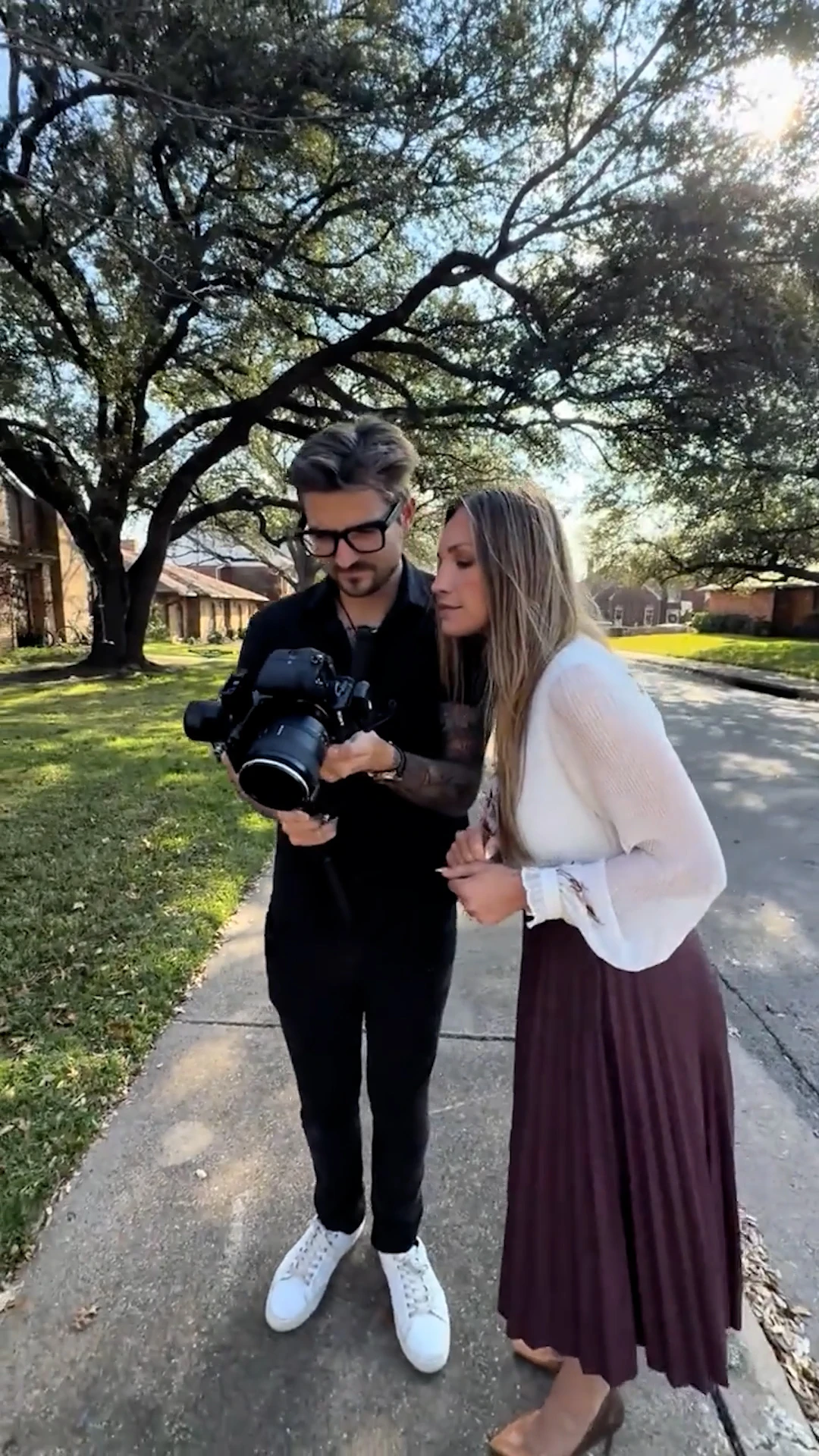
Behind the scenes — every signature project we shoot becomes a year and a half of architect-graph and SEO assets, released on a schedule the buyer respects.
Six questions every $2M+ custom builder should ask before signing a marketing engagement.
If a prospective agency can’t answer these clearly with named examples — keep looking. The cost of the wrong agency for a custom builder isn’t a wasted month. It’s a corridor relationship you spent fifteen years building and a buyer who quietly wrote you off.
“Show me a custom builder you took from $X annual to $Y in signed contract value.”
Not website traffic. Not impressions. Real signed-contract revenue, real timeline, real names — even if the dollar figure has to be partially anonymized for privacy.
“Will you respect my NDAs and per-project release process?”
Most agencies have never thought about per-project photography releases. The right agency walks you through their release-cleared content workflow without you asking.
“What’s your architect-firm relationship strategy?”
If they don’t have one, they don’t understand your business. Custom-builder marketing without an architect outreach program is missing the largest single referral channel.
“Will you take on another custom builder in my corridor?”
The right answer is no. One custom builder per corridor — Milton, Alpharetta, Johns Creek, Cumming — full stop. The agency who’ll take you and your competitor is selling category dominance to neither of you.
“What’s your realistic SEO ramp on luxury custom keywords?”
Anyone promising page-one in 90 days for “luxury custom home builder” is burning your money on ads while pretending it’s organic. Real ramp on these terms is 9–18 months.
“Can we do a single-project marketing engagement?”
Sometimes the answer should be yes — when a flagship build deserves its own dedicated reveal campaign. Most of the time it’s no. Custom-builder marketing compounds annually, not project-by-project.
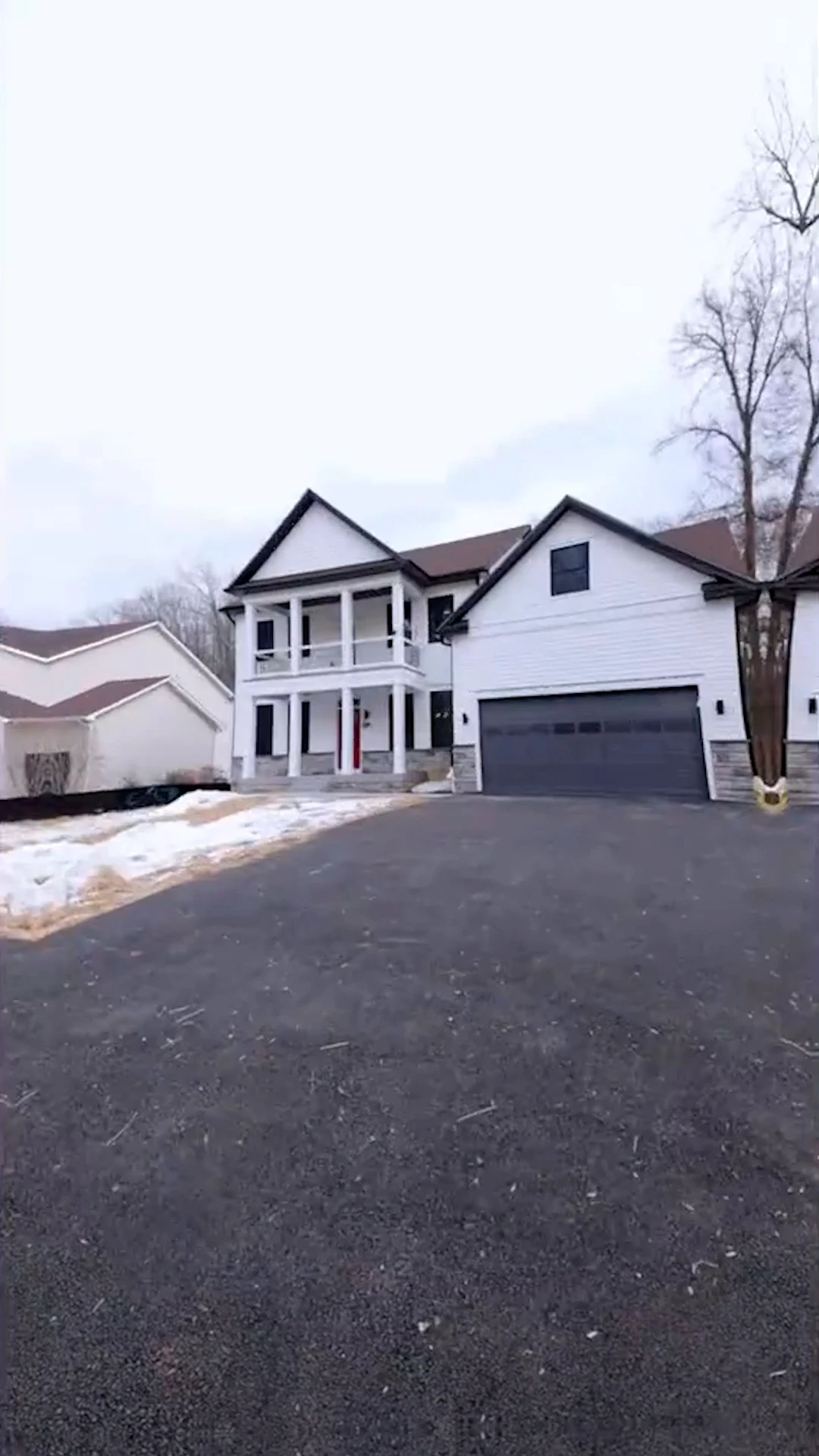
Project-page detail from a recent corridor build — the kind of case study that pre-sells a $4M buyer before the architect introduction even happens.
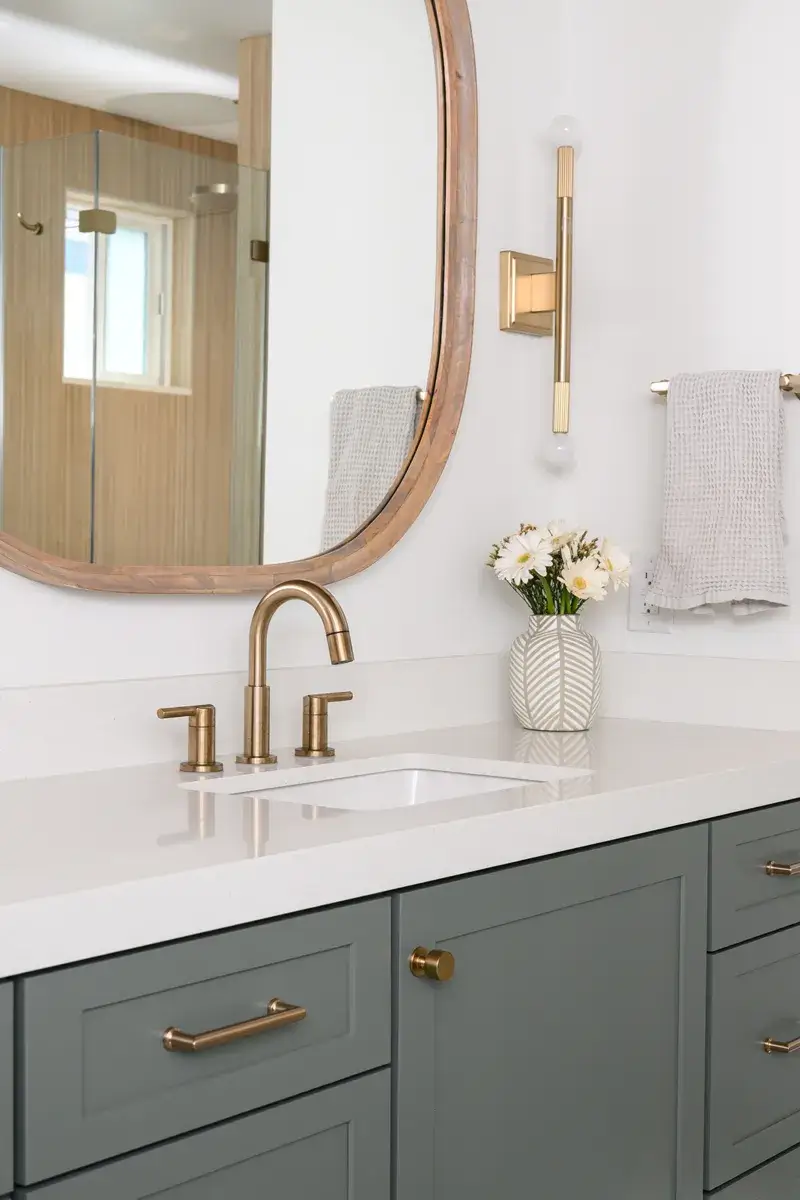
Custom kitchen detail from a Crooked Creek build — the kind of release-cleared interior that becomes a designer co-publish asset and a corridor SEO anchor in the same week.
What North Atlanta custom builders keep asking us.
Every engagement starts with a project-by-project release matrix. Some clients are happy to be named. Some only allow exterior shots, no interior. Some require a 12-month delay before any public release. Some are zero-publication, ever — and we shoot those purely for your in-house pitch deck. We never publish a project image, location detail, square footage, or buyer-identifying detail without written per-project release. That workflow is in the master agreement.
Sometimes — usually for a signature build the principal wants positioned as a corridor-defining project. We’ve done six-month single-project engagements built around one $8M+ reveal: editorial photography, a dedicated micro-site, an architect-co-publish strategy, a designer-press push, and a release-controlled social rollout. But for most builders the better play is a 24-month full engagement where four to six projects compound together. We’ll tell you honestly which fits your situation on the discovery call.
Yes — that’s most of the engagement, actually. Phase one of every custom-builder retainer is mapping your existing architect and designer graph, identifying which relationships are warm vs. cold, and building a co-marketing strategy that strengthens the warm ones and resurrects the dormant ones. We never reach out to your relationships without your sign-off, and we never go around you to a referral source.
Two ways. First, those projects get shot for your in-house pitch deck only — not public — which is still high-value because that pitch deck is what closes your next inquiry. Second, the architect, the trades, the lot agent, and the designer all know you built it, and that information moves discreetly through their referral networks even when nothing is published. Some of the highest-value referrals in the corridor come from projects that never appeared anywhere online. We respect that and design around it.
You do. Every photograph, every video, every editorial asset we produce on your behalf is delivered with full transferable rights to your business. We retain limited usage rights to publish on our own portfolio and case-study channels — but only after you’ve approved the specific assets and only with whatever release language your homeowner agreement requires. Nothing leaves our hands without your sign-off.
Imagine your next $5M Manor introduction coming directly from the architect, with the buyer already pre-sold on your work.
If you want a discreet 45-minute call where we look at your current website, your active referral graph, and the top three custom builders ranking against you in your corridor — and tell you exactly what’s leaking — that’s the call. We do a small handful of these a month. Reach us at hello@viralsparkmarketing.com or book direct.