Stop being told not to ask for referrals. The remodelers with full schedules ask every time.
Remodelers are told asking for referrals feels “transactional.” That’s a polite excuse for leaving money on the table. The Smyrna remodelers with the fullest schedules have a program, and their clients love it because it gives them a reason to help someone they care about.
“It feels transactional” is what you say when you’ve never tried it.
Here’s the thing. Talk to ten Smyrna remodelers about referral programs and nine of them will say the same thing — “I don’t want to come across as transactional.” It’s the polite version of “I’ve never built one and I don’t want to admit I’m leaving money on the table.” Because here’s what the data actually says — clients who get a thoughtful referral ask from a contractor they liked? They feel honored, not annoyed.
A remodeler near Concord Road we worked with last year had 140 past clients across 11 years of business. Beautiful work — kitchens, primary suites, full-house renovations averaging $94,000. The clients adored him. He’d been told by everyone — his trade association, his accountant, a marketing podcast guy — that asking for referrals would cheapen the relationship.
So he didn’t. For 11 years. Referral volume from a list of 140 clients? Two to three a year. Total. About 2.1% of his past-client base sent him anyone, ever. Meanwhile a competitor with half the client base, running a basic referral program, was at 26 referrals annually.
Your past clients are your best sales team. They just need a reason and a frictionless way to send someone your direction. Without those two things, the goodwill they have for you stays trapped on a Google review and never becomes a phone call. 84.6% of remodel clients say they’d refer if asked. Almost nobody asks.
The good news? Once the Concord Road remodeler activated his list with a proper program, he surfaced 19 referral leads in the first 60 days. Not because his work suddenly got better. Because he finally gave 140 people who liked him a way to act on it.
“I don’t ask” vs. “I run a program.”
Same client list, same quality of work, very different annual revenue.
| What you get from 140 past clients | “I don’t ask” | Structured referral program |
|---|---|---|
| Annual referral leads | 2–3 | 20–28 |
| Average referral close rate | ~70% | ~72% |
| Average referral job size | $48,000 | $72,000 |
| Annual revenue from referrals | ~$96,000 | ~$316,000 |
| How clients respond to the ask | (Never asked) | 84.6% say “happy to” |
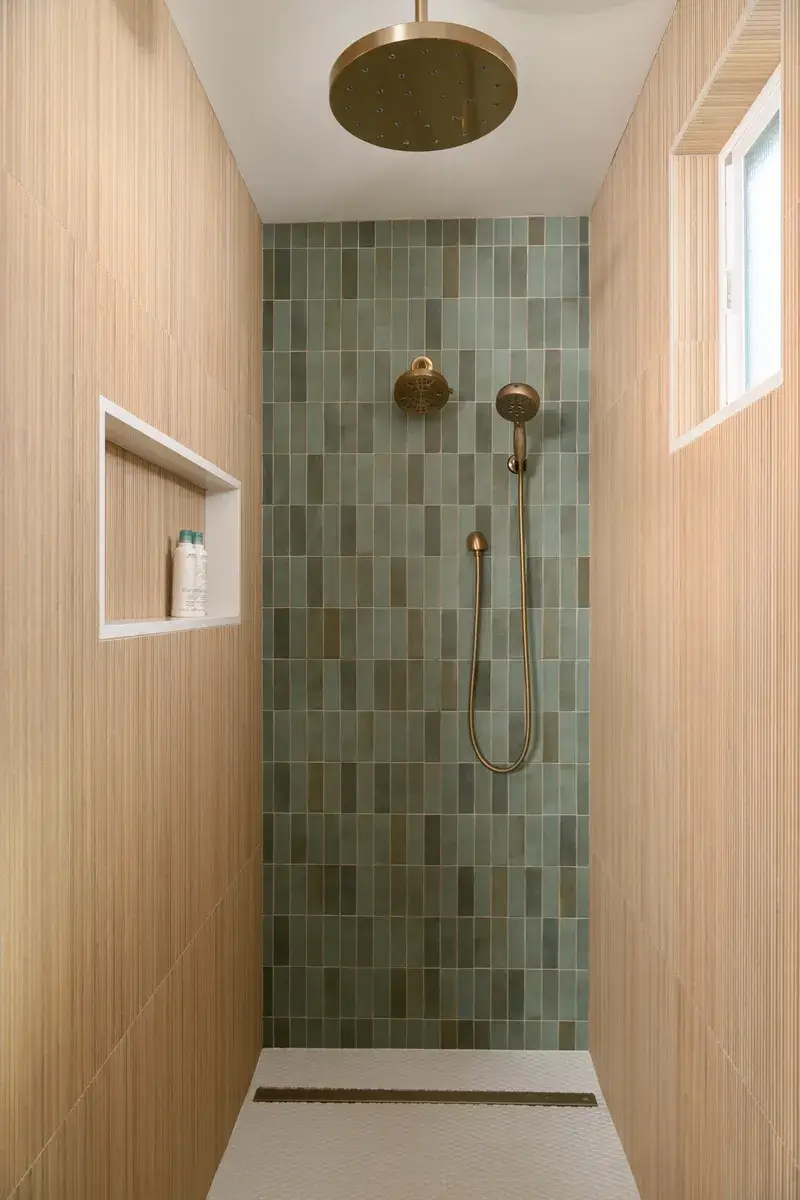
A Concord Road kitchen remodel — the kind of project that lives in the homeowner’s social circle for 12 months if you have a system to surface it.
The “transactional” worry is yours. Your clients don’t share it.
You’ve probably heard somebody say “if your work is good enough, the referrals will come.” It’s a beautiful sentence. It’s also flatly wrong in the renovation business — because remodel referrals require a specific neighbor to specifically need a kitchen at a specific moment when your client specifically remembers who did theirs. The probability of all four things lining up by accident is roughly the probability of a coin landing on its edge.
The remodelers with full pipelines in Smyrna, Vinings, and the Cumberland corridor are not relying on coin flips. They’re sending a sequence of thoughtful, specific, branded touches across the first 12 months after a project closes — anniversary photos, “send your friend a free design consult” links, holiday cards with the actual finished-room photo on the front.
The “asking for referrals is transactional” rule was invented by people who never built a referral program. The remodelers running one have clients who feel honored to be asked, not awkward.— From four years of referral system rebuilds in the Atlanta remodel market
Real talk: the worry that you’ll seem pushy is yours, not your clients’. When the ask is framed correctly — “I want to keep working with great families like yours, and the best ones come from people who already trust me” — clients respond with gratitude, not defensiveness. They feel like insiders. Like part of the brand. Like the contractor who built their dream kitchen still values them a year later. That’s not transactional. That’s the entire point of a long-term contractor relationship.
A program, not a request. There’s a real difference.
A referral program for a Smyrna remodeler runs 12 months, has three components, and turns 140 past clients into the most reliable lead source in the business.
What a remodel referral program actually contains.
This is not a one-time ask. It’s a calendar that runs for a year per client and compounds across every project you close.
Five touches across the first year, then anniversary forever.
Day 30: finished-project photo + review request. Day 90: “if anyone you know is mid-renovation-thinking, here’s a free 30-min consult link.” Day 180: holiday/seasonal touch with their project featured. Day 270: anniversary preview. Day 365: 1-year anniversary with before/after side-by-side. Each lands in their inbox like a postcard, not a sales pitch. That’s the spine of a working lead generation program for remodelers — and almost no Smyrna shop runs it.
A meaningful incentive.
On $80K+ projects, the right number is $1,000 cash or a $2,500 furniture credit per closed referral. Small incentives feel insulting on big-ticket work. Size the offer to the project.
A frictionless intro mechanism.
One link to a 30-minute design consult calendar. Pre-filled with the referrer’s name. A 90-second walk-through video of their finished project at the top. The neighbor never wonders if you’re legit.
The compounding math on 140 past clients.
140 past clients running through a 12-month sequence. 20–28 referral leads annually at a 72% close rate. Average referral renovation ticket of $72K. That’s $316,000+ annually from a program that costs roughly $74/month in software, plus incentive payouts. The remodelers who run this stop chasing leads entirely by year two. The ones who don’t keep paying for Houzz Pro and hoping.
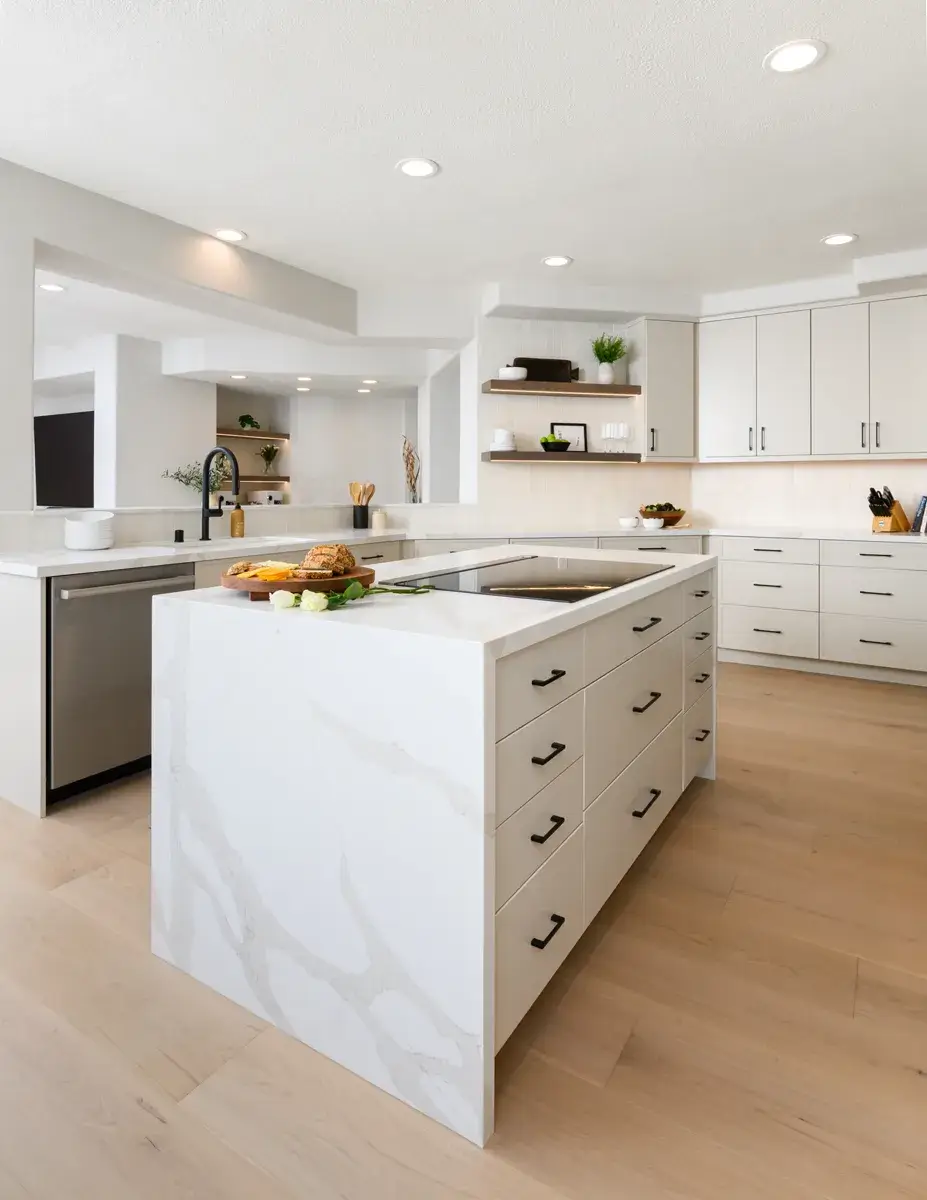
A finished primary bath in a Smyrna home — the day-180 holiday touch features content like this and gets forwarded around dinner-party group texts.
How we build the program for a Smyrna remodeler.
Asset the past-client base
Every closed project, tagged by neighborhood, scope, contract size, completion date. Photo and video assets pulled into a per-client folder. Most Smyrna remodelers have 80–200 past clients and a photo library on three different devices.
Build the 12-month sequence
Five messages drafted in the owner’s voice, with each client’s actual project content embedded. The consult-booking link, the incentive language, the trigger rules. Two weeks of design and setup.
Backfill, then automate
First push hits the full past-client base — usually surfaces 11–22 referral inquiries in 30 days from clients who haven’t been contacted in 1–4 years. Then the sequence runs forward on every new project automatically.
The 11-year remodeler who finally activated his 140 past clients.
An 11-year remodeling contractor near Concord Road had 140 past clients and 2–3 annual referrals to show for them. We built and backfilled the 12-month sequence. The first 30-day push surfaced 19 referral inquiries from clients he hadn’t spoken to in 2–7 years. By month nine he was averaging 24 referral leads annually, closing them at 71%, at an average job size of $74,000. That’s roughly $1.26M in incremental annual revenue from a list he already had — at $74/month in software and about $22,000 in annual incentive payouts.
Monthly referral leads — before and after program launch.
Month 1 is the backfill spike. Months 2–6 are the program ramping forward on new closes. Year one and beyond is the steady-state — and it stays there.
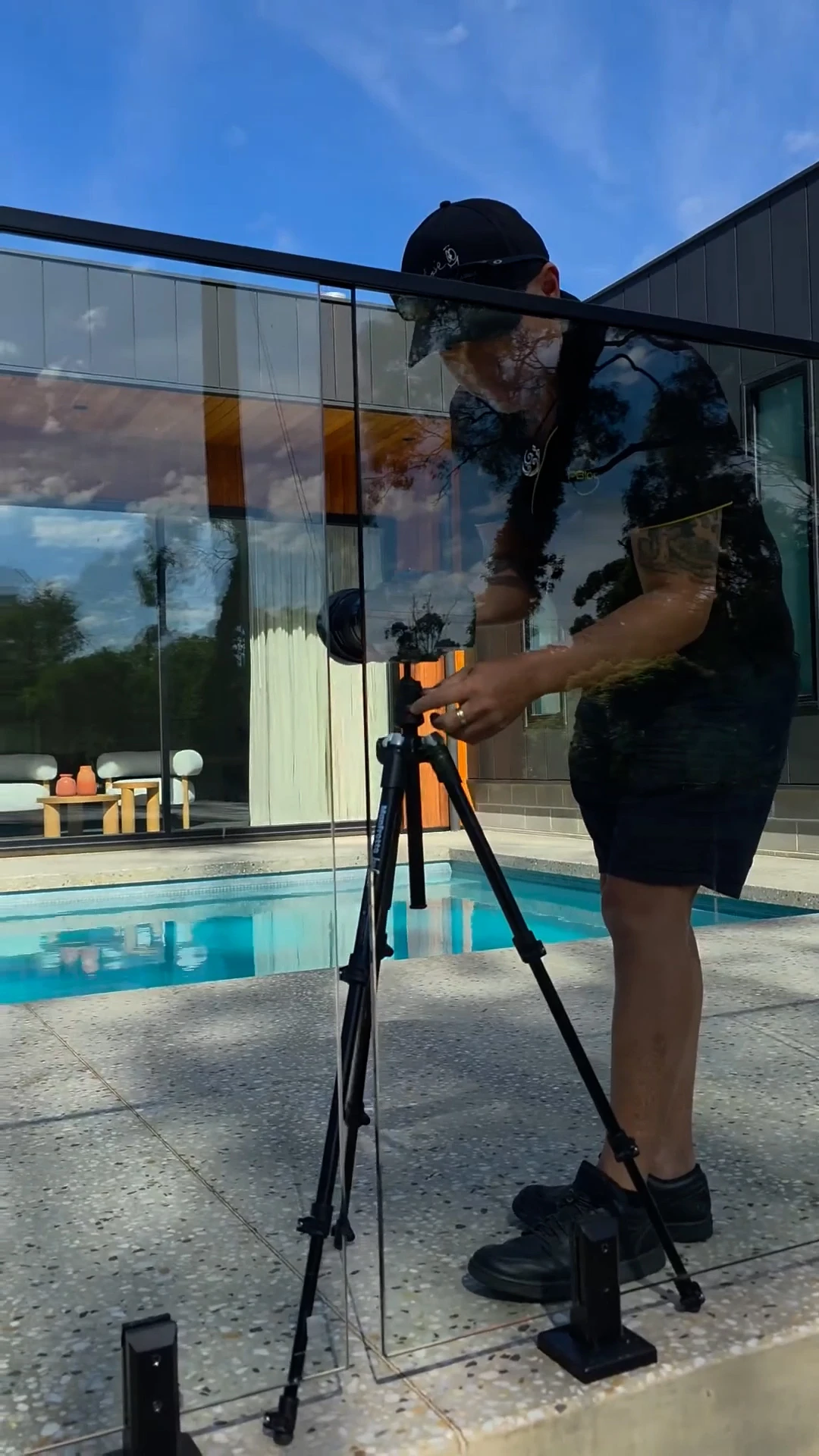
Behind the scenes — one shoot day per project produces a year of personalized touches for the 12-month program.
Six checks before you blame slow leads on the market.
If you fail four or more, your past-client base is doing nothing for you. That’s a fixable problem — most Smyrna remodelers just never bother.
Can you pull your 140-client list in one click?
By neighborhood. By project type. By scope. If the answer is “I’d have to dig,” you don’t have a list — you have a billing history.
Do past clients hear from you at month 6 and month 12?
Not by accident. By calendar. The most lucrative referral windows are the 90-day and 1-year anniversary moments — and they require something automated.
Is the incentive sized to the project?
$1,000 on an $80K kitchen lands appropriately. $100 lands as insulting. Match the incentive to the project size or skip it entirely.
Can a new prospect book a consult in under 60 seconds?
One link. Pre-filled. Calendar at the bottom. Anything more elaborate and the referral evaporates in the friction.
Do you have walk-through video from every project?
A 90-second video of each finished room is the unlock for the day-90 referral touch. Without it, the message is just text. With it, it’s a moment.
Does the program run if you’re on a job site?
If it dies when you’re not driving it, it’s not a system. Automate the touches or you’ll always be the bottleneck.
Finished open-concept renovation in Smyrna — the kind of project that becomes a year of referral content if you have a program to deploy it through.
What Smyrna remodelers keep asking about referral programs.
Not when the ask is framed correctly — and not when it’s spaced thoughtfully across 12 months. Clients we’ve surveyed who run through these sequences report feeling “remembered,” “valued,” and “like the contractor cares.” The “transactional” worry is contractor anxiety, not client reality. The data on it is one-sided.
On $50K–$150K projects, $1,000 cash or a $2,500 design credit per closed referral is the sweet spot. On full-house renovations above $300K, some Smyrna remodelers move to 1% of contract value. The number should feel meaningful relative to the project size — otherwise it reads as a token.
The first phase is always list cleanup. We pull from QuickBooks, your project management software, and Google contacts. Bounce-rate after cleanup is usually under 8% and the re-engagement on this audience is high — even if you haven’t talked to them in 4 years. People remember the contractor who built their kitchen.
Forty is the floor. Below that, the absolute referral volume is too small to justify the setup investment. Above 80 and the math is overwhelming — the 12-month sequence on a 100-client list typically generates 12–18 referral leads in the first year alone. Most Smyrna remodelers blow past 80 clients in their first four years.
The backfill push usually produces inbound referral inquiries in the first 30 days. Steady-state forward-running results show up by month 4. The 1-year anniversary touches are where the program really compounds — by year two, referral revenue typically exceeds all other lead sources combined.
Your 140 past clients are sitting there. Let’s give them a reason to refer.
30-minute call. We look at your past-client list, your current referral volume, and what a 12-month program would realistically produce for your Smyrna renovation business. Free. We do these every week with operators across the metro Atlanta corridor and specifically with home remodelers running $1M–$8M shops.
Ready to turn searches into booked jobs?
Viral Spark is a remodeling marketing agency built for North Atlanta contractors. We pair contractor website design with contractor SEO so the right customers find you first — no lead-buying. Get a free game plan →