The myth that luxury clients don’t refer. And the Sugarloaf builder who built four homes from one.
Custom home builders love to believe luxury clients are too private to talk. The Duluth builder who turned a single Sugarloaf Country Club client into four $1.6M projects over three years would argue otherwise — because he built a system that made the referrals impossible to avoid.

“Luxury clients are too private to refer.” Wrong question.
Here’s the thing. Almost every Duluth custom builder we’ve talked to over the last few years has accepted a quiet myth as fact: luxury Sugarloaf and St. Marlo Country Club clients won’t refer. They’re private. They don’t talk about money. They don’t gossip about contractors. So the only way to grow is more marketing spend.
Real talk: that’s a half-truth that has cost Duluth builders a generation of pipeline. Luxury clients absolutely refer — at the country club, at neighborhood dinners, on golf weekends, on long Tuscan family vacations with three other couples. They refer constantly. What they don’t do is initiate the recommendation cold. They wait until someone asks. And when someone asks, they refer to whoever made it easy for them to remember the builder’s name, find the project, and pass along a tangible reference.
If your post-handoff process ends with a final walkthrough and a thank-you note, your client has nothing to point to when their Sugarloaf golf partner says “we’re thinking about a custom build — who did yours?” They’ll fumble. They’ll say “let me find his number, hold on.” Half the time, the conversation never reaches the point where you get the call.
The Duluth custom builder who got four Sugarloaf homes from one client didn’t ask. He handed his client artifacts — a portfolio book, a private project page, a framed rendering, an annual dinner invitation — that turned every “who did yours?” into a 90-second answer ending with “I’ll text you his number now.”
The good news? At your volume (4–8 luxury builds a year), the engine is small enough to run with one project manager and disciplined enough to identical every time.
Passive luxury referrals vs. structured Sugarloaf system
Same caliber of completed homes. Same Sugarloaf and St. Marlo Country Club client base. Wildly different referral math by year three.
| What you’re running | Passive | Sugarloaf system |
|---|---|---|
| Post-handoff artifacts | Thank-you card | Portfolio book + project page + framed rendering + annual dinner |
| Referrals per Sugarloaf client/yr | 0.3 | 1.4 |
| Pipeline from 5 active clients | ~1.5 referrals/yr | ~7 referrals/yr |
| Avg referred build value | $1.4M | $1.6M (community calibrated) |
| 3-yr pipeline value | ~$6M | ~$24M |

A finished Sugarloaf build — also a centerpiece spread in the portfolio book that sits in 6+ neighbor living rooms.
Stop expecting luxury clients to remember your phone number. Hand them artifacts.
You’ve probably been told that luxury custom-building is a “relationship business” and that the referrals come naturally if you do great work. That’s only true if the relationship has structure after handoff. Without structure, the relationship decays — slowly, invisibly, but completely — over the 12–18 months after the keys change hands.
Here’s the math the winners run. Each Sugarloaf or St. Marlo client knows roughly 25–40 other families at the same income level and home-investment stage, through golf foursomes, neighborhood dinners, school events, and country club committees. Over the 5 years after move-in, 6–10 of those 25–40 families will seriously consider a custom build. Of those 6–10, your past client will recommend a builder to at least half — but only if remembering and recommending you is frictionless.
The portfolio book on the coffee table. The dedicated project page they can text in a single tap. The framed front-elevation rendering on the home-office wall. The annual builder-hosted client appreciation dinner. These aren’t gimmicks. They’re structure. They turn ambient “good work” into specific, tangible, shareable references.
The Duluth custom builders running multi-year Sugarloaf backlogs didn’t out-market the competition. They engineered the moment someone asks their client “who built this?” — and made the answer impossible to forget.— What 40+ luxury-builder sales calls have taught us
That’s the whole insight. The referral system at the Duluth luxury level isn’t about asking. It’s about building artifacts the client can’t help but show.
Four artifacts. One annual ritual. A multi-year backlog.
Every Duluth custom builder we’ve worked with who built a serious Sugarloaf referral engine did it with the same artifact-driven framework — installed once, repeated identically on every close-out.
What a real Sugarloaf-tier referral engine looks like.
Each artifact has a job. The annual ritual is the loop that keeps the whole thing alive year after year. Together, they convert ambient client trust into a tangible, transferable, durable referral asset.
The hardcover portfolio book on the coffee table.
A printed hardcover featuring 18–24 of your finished Duluth custom homes, with 4 dedicated spreads for the client’s own home — delivered move-in week. It lives on the coffee table. Every guest flips through it. Every spread is a future referral conversation. This is the single highest-leverage artifact in luxury custom-builder lead generation, and almost nobody at the Sugarloaf level does it consistently.
The dedicated project page link.
A beautiful page on your site featuring the build — copy, photos, drone reel, brief story. You send it to the client with “easy to share if someone asks.” Becomes their default reply.
The framed architectural rendering.
Custom-framed front-elevation rendering, hand-signed by the architect. Goes on a wall in the home office or stairwell. Every guided tour passes it. Cost: $400–$800. Effect: every visitor asks about it.
The 12-month walk + the annual client dinner.
At month 12 you personally walk the home for any settling, then once a year you host a 12-person private-room dinner for past clients — a focused topic (architect speaker, real estate briefing), no sales. Past clients bring their friends. That dinner is where 2–3 future builds get seeded every single year.
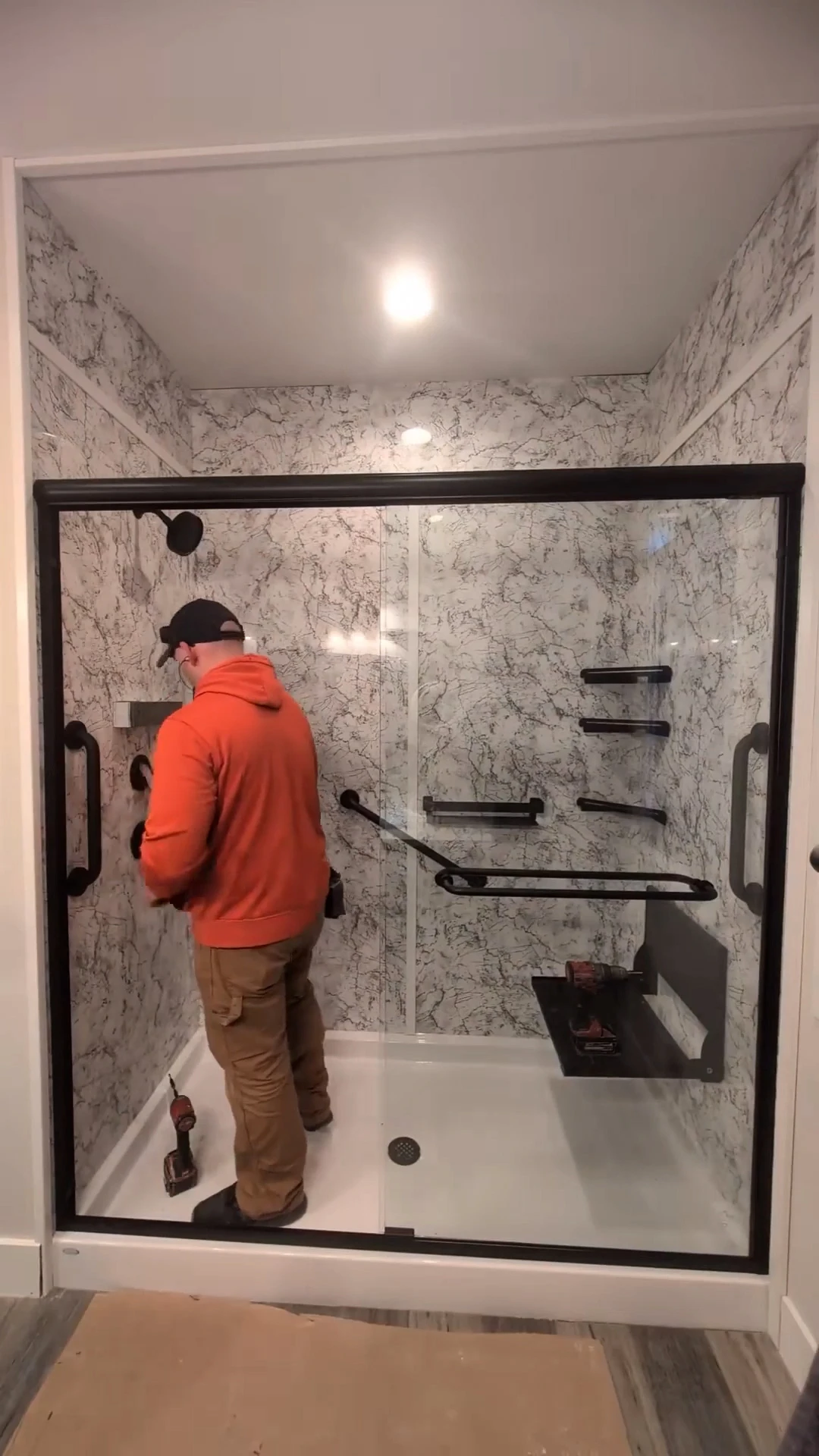
A finished great room in a Sugarloaf build — also a portfolio book spread that drives the next 3 referral conversations.
How we install the Sugarloaf engine in a Duluth custom-builder firm.
Audit the back catalog
We pull every completed Duluth luxury build. Score by community density (Sugarloaf, St. Marlo, Edinburgh, River Oaks), photography quality, and current client relationship temperature. Identify the 6–10 highest-leverage past clients to retro-activate.
Produce the artifacts
Portfolio book design and printing. Project-page template. Rendering framework. Dinner logistics and venue selection. All four artifacts produced once as templates, then reproduced per-client at low marginal cost.
Roll forward + backfill
Every new close-out gets the full artifact set. Past clients from the last 3 years get a retroactive “we missed this” portfolio book delivery — typically producing 3–5 booked consults inside 90 days.
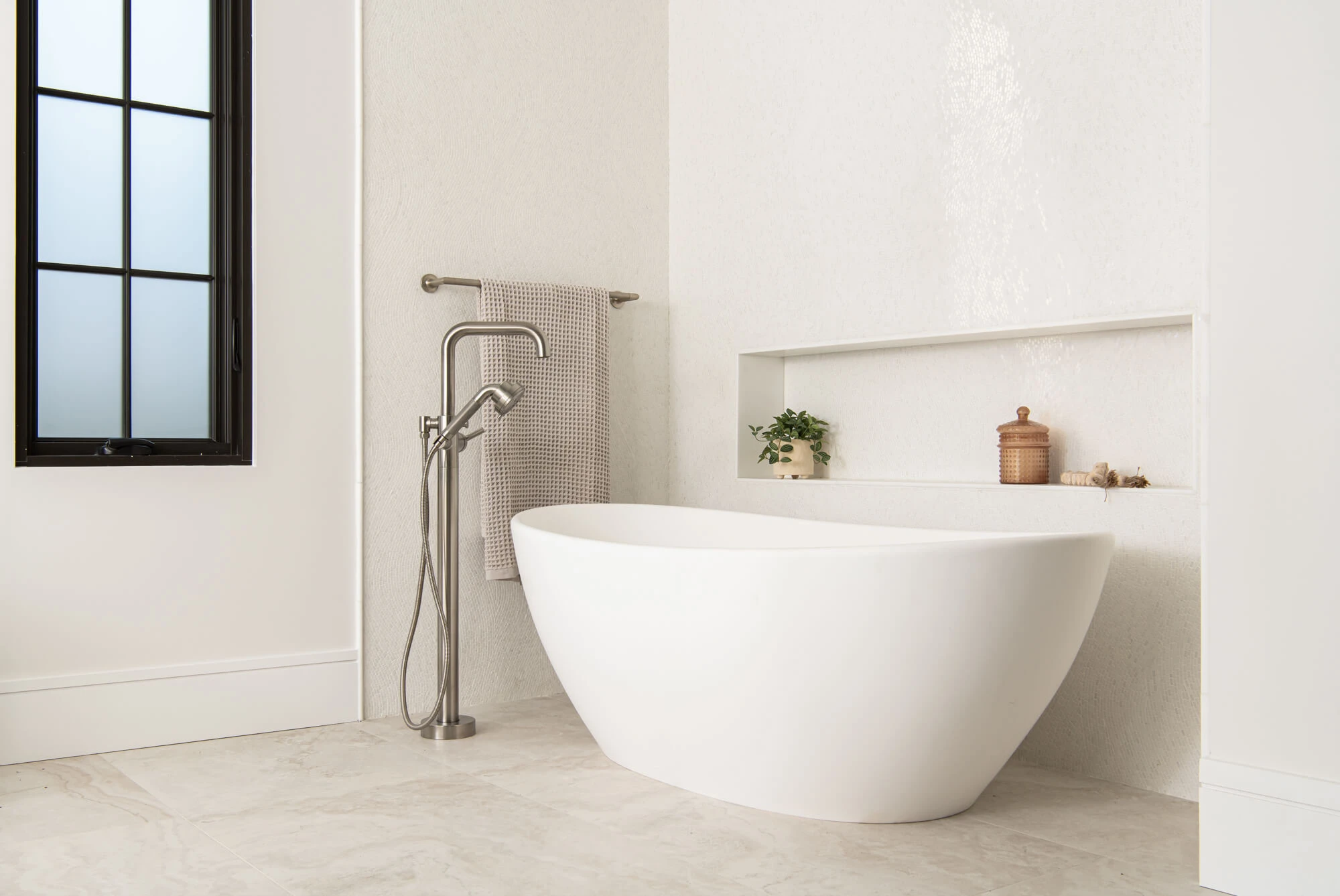
A Sugarloaf kitchen finish — every detail compounds into 24+ months of referral artifacts.
The Sugarloaf builder who turned one client into four homes.
A Duluth custom builder finished a $1.6M Sugarloaf home in late 2023. He installed the full 4-artifact engine at close-out and added that client to his annual dinner list. Over the next 36 months: 4 additional Sugarloaf builds were referred by that one client through golf foursomes, country club dinners, and the annual builder-hosted dinner. Total pipeline value from one activated client: $6.4M. The portfolio book on her coffee table is still doing the work today. The next referred build is already in pre-design.
Inbound Sugarloaf-tier referred consults, month over month.
Each new completed home enters the engine on day 1. By year 3, your portfolio books sit in 15+ Duluth luxury living rooms simultaneously. That’s the compounding.
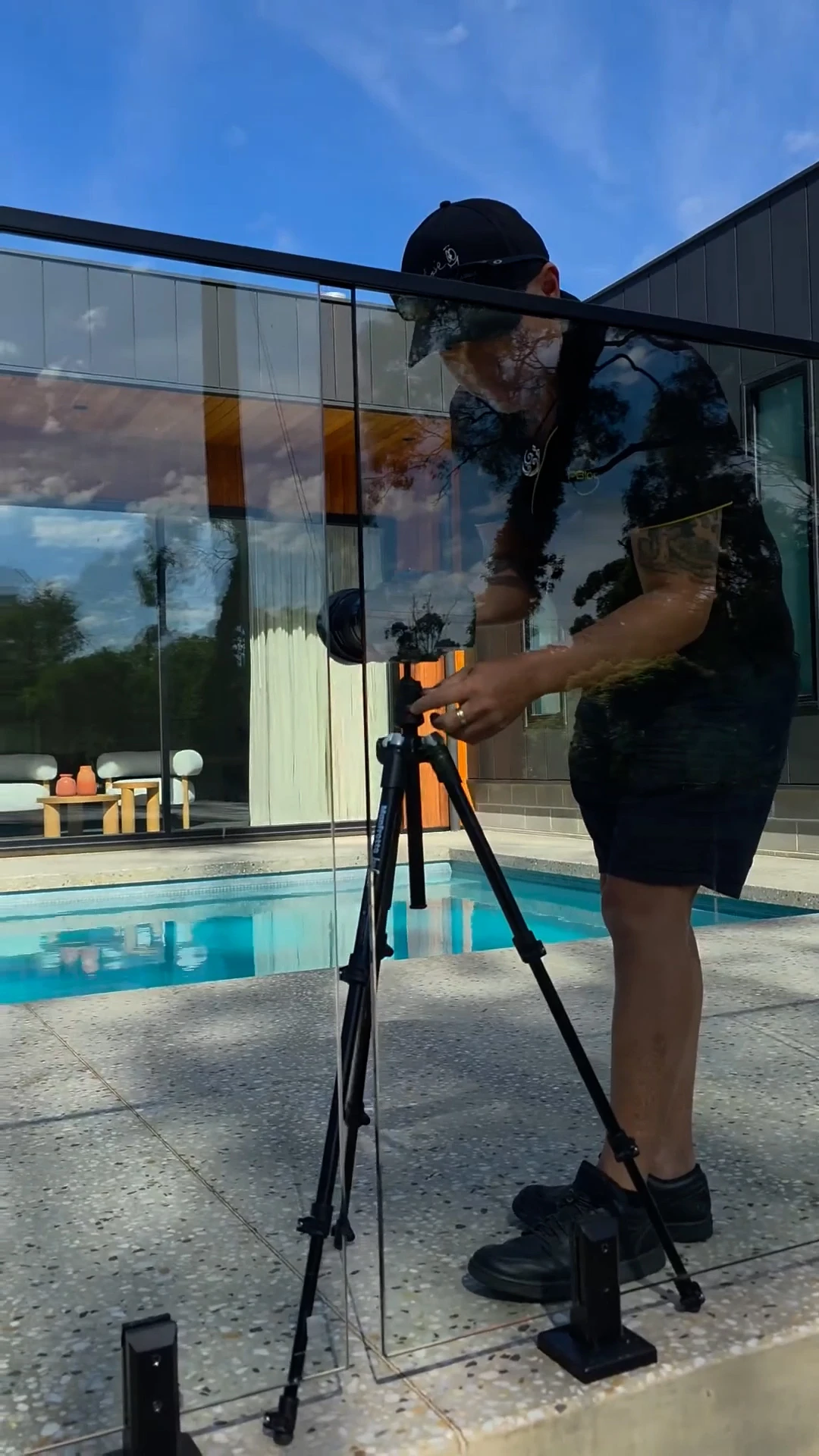
Behind the scenes of a Duluth custom build shoot — every home produces 60+ images for the portfolio book.
Self-audit before you produce the first portfolio book.
Walk these honestly. They surface the gaps every Duluth custom builder has and almost never sees until the engine fails to produce.
“Do I have magazine-quality photos on every Duluth build I’ve completed?”
If the answer is no for half your portfolio, step one is a back-catalog shoot. The book can’t exist without it.
“Is the annual dinner on the calendar?”
If you don’t have a venue, a date, and a guest list 6 months out, the dinner won’t happen. The single highest-ROI ritual in the engine.
“Does my site support a dedicated, indexed project page per build?”
One ‘portfolio’ page is a missed opportunity. Each home deserves its own URL — both for SEO and for the day-14 share artifact.
“Am I personally doing the 12-month walk?”
The PM is fine for the work. The founder is what the client tells the Sugarloaf neighbor about. Don’t delegate.
“Have I mapped my past clients by community?”
Sugarloaf, St. Marlo, Edinburgh, River Oaks — density compounds inside each. Knowing the map tells you where to lean.
“Is the portfolio book quality high enough for a coffee table in a $2M home?”
A cheap-looking book is worse than no book. Hardcover, premium paper, designer-laid-out. The book has to belong on the coffee table.
A twilight elevation that anchors a portfolio spread — the page guests linger on at every dinner-party visit.
What Duluth custom builders keep asking us.
Not a generic builder open-house. A 12-person seated dinner at a private room in a Sugarloaf or Atlanta steakhouse, hosted by you as a thank-you to past clients, with a focused topic (an architect or designer guest speaker, a real estate market briefing). Past clients bring their own friends. New consults emerge organically.
Single most-mentioned artifact when we interview past clients about why they referred a builder. The book lives on the coffee table for years. Every guest flips through it. Every spread is a referral conversation waiting to happen. Cost: $80–$140 per book. Value: incalculable.
Yes — and arguably easier than a 10-home-a-year builder. Lower volume means deeper client relationships. Two activated Sugarloaf clients producing 1–2 referrals each per year is the equivalent of an $8K/month ad budget — at zero ad spend.
Start where you have clients. The system works in any Duluth luxury community — Sugarloaf, St. Marlo Country Club, Edinburgh, River Oaks. The principle is the same: density compounds. One activated client in any tight community is the seed of an 8-build pipeline over five years.
No. The engine runs one-to-one with your clients in their own social context — private dinners, golf foursomes, neighborhood book clubs. Nothing requires HOA approval. Nothing crosses into commercial solicitation on community property.
Imagine your portfolio book sitting in 15 Sugarloaf living rooms — silently doing your selling.
If you want a 30-minute call where we audit your last 3 years of Duluth luxury builds, score the referral pipeline sitting in your back catalog, and map the 4-artifact engine plus annual dinner to your Sugarloaf / St. Marlo / Edinburgh client base — that’s free. We only work with one custom home builder per Duluth zip.
Ready to turn searches into booked jobs?
Viral Spark is a home builder SEO agency built for North Atlanta contractors. We pair high-converting contractor websites with local SEO that ranks so the right customers find you first — no lead-buying. Get a free game plan →