3.2x more neighbor calls. From one sign you forgot to take down.
Duluth landscapers who leave a branded project sign at job sites for 30 days after completion receive 3.2x more neighbor inquiries than those who pack up and leave without one. Here’s why — and the system most Pleasant Hill Road landscapers refuse to run.
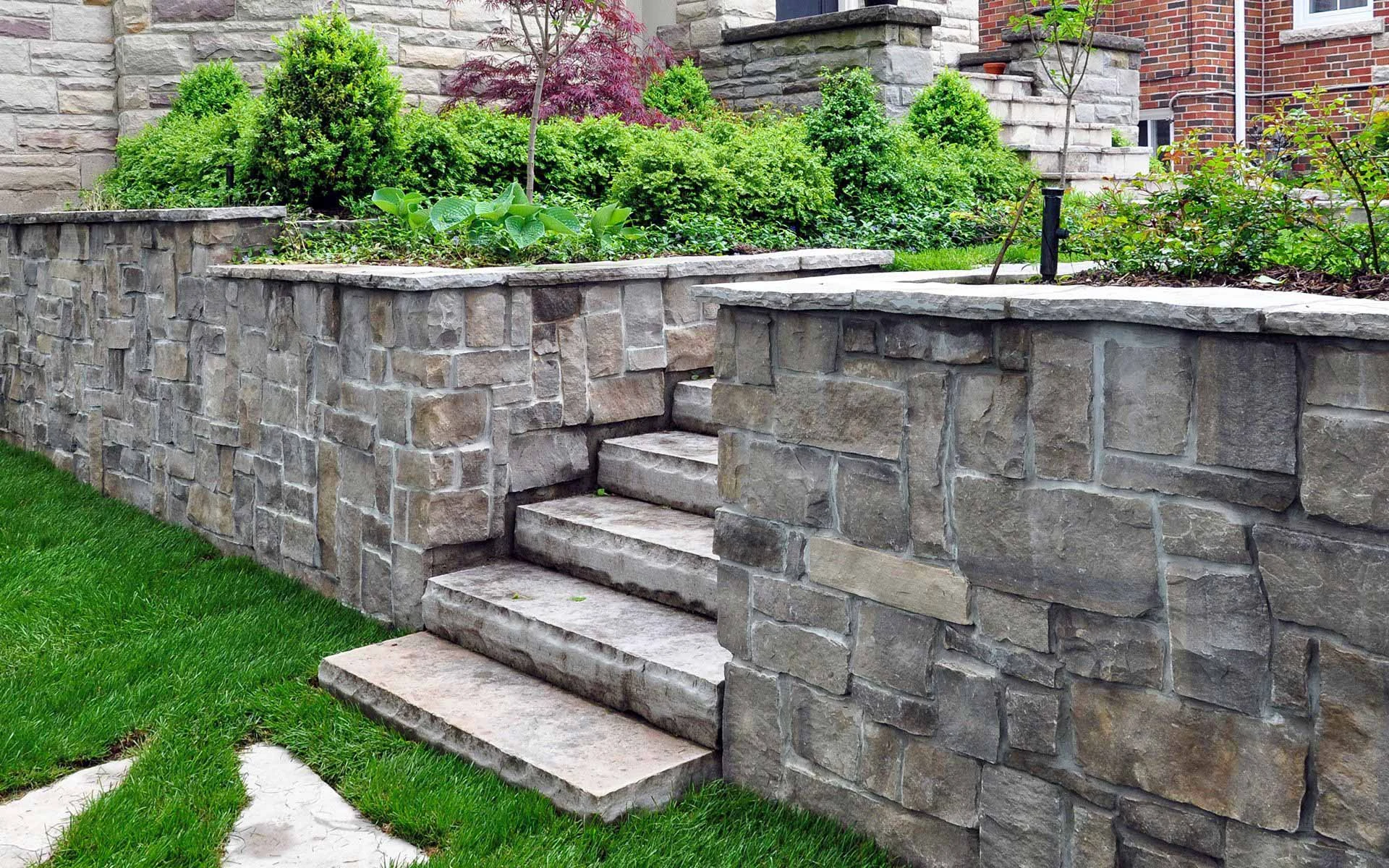
You pack up the trailer and erase yourself from the street.
Here’s the thing. Most Duluth landscapers finish a beautiful paver project in the Pleasant Hill Road corridor, Gwinnett Place area, or Medlock Bridge neighborhoods and then methodically erase every trace of their brand from the street. Trucks gone. Crew gone. Magnetic logos off the truck bed. Nothing left behind except a thank-you card on the kitchen counter and an invoice in the homeowner’s email.
Twelve hours later, a neighbor walks her dog past the new patio. She stops. She wants to know who did it. There’s nothing to tell her who did it. She goes home, opens her phone, types “landscaper near me,” and three competitors show up in the map pack. You lose a $14,000 conversation you never knew was happening.
Real talk: every single Pleasant Hill Road, Sugarloaf, and Medlock Bridge install is a 30-day visibility window. You either own the street for those 30 days or you erase yourself from it. There’s no third option. The Duluth landscapers who understand this generate 3 to 5 inbound neighbor calls per completed project. The ones who don’t generate roughly 0.7.
You’ve probably noticed your best clients say “I drove by a yard you did and had to know who did it.” That’s not random. That’s the system you’re not running. Every passing car in a dense Duluth neighborhood is a potential $8K–$22K ticket.
The good news? The fix costs less than $90 per project and takes 4 minutes to install. The barrier isn’t money — it’s the false belief that yard signs feel “tacky.” Let me tell you what actually works.
Erase yourself vs. own the street for 30 days
Same crew. Same finished patio. Completely different referral math by spring.
| What you get | Erase yourself at handoff | 30-day street ownership |
|---|---|---|
| Neighbor inquiries per project | 0.7 on average | 2.4 on average |
| Cost to deploy | Free | ~$90 per project |
| Closing rate on neighbor leads | N/A — they go elsewhere | 41% (warmest leads possible) |
| Annual revenue lift per crew | $0 | $74,000–$96,000 |
| Cost per acquired client | $6,200 (paid digital) | $3,400 (sign + follow-up) |
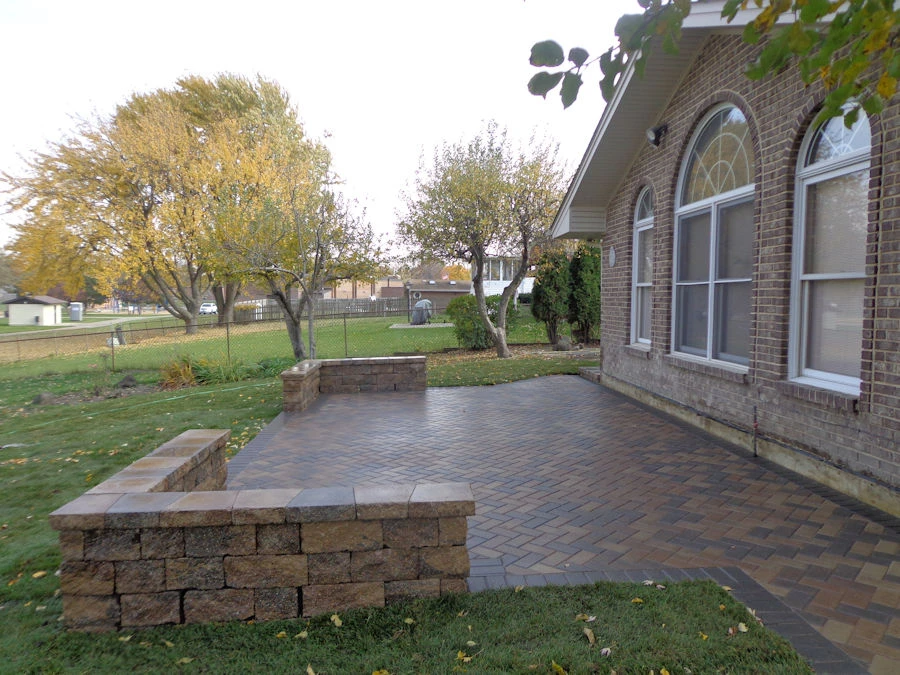
A finished Pleasant Hill corridor install — visible from the sidewalk. Every dog walker is a potential $14K ticket if you leave the sign up.
Stop chasing Instagram impressions. Own 30 days of foot traffic.
Most landscapers we talk to in Duluth are pouring time into Instagram reels and Facebook before-and-after carousels. That’s fine. It’s not where the real referrals come from. 67% of Duluth landscaping referrals originate from a neighbor physically seeing the completed project — not from a digital recommendation, not from a Google review, not from a sponsored post.
The Duluth international community neighborhoods — Korean, Indian, Vietnamese, Hispanic — are visually observant and densely connected. People walk. People drive slowly past nice work. Aunts visit. Cousins come for Sunday dinners. Every great install you complete is being studied by 50 to 200 people over the next 30 days without your knowledge or consent.
The contrarian play: stop trying to scale digitally and start owning your physical territory. Branded yard sign, weatherproof and beautifully designed (not the orange-and-black contractor abomination), installed at completion with the homeowner’s written permission, removed exactly 30 days later. Pair that with a postcard mailing to the 20 closest neighbors the same week. That’s the engine.
The cheapest lead in Duluth landscaping isn’t on Google Ads. It’s the neighbor who watched your crew work for three days and is already half-sold by Saturday.— What 50+ Duluth hardscaping conversations have told us
This isn’t anti-digital. Our lead generation system for Duluth landscapers always includes a digital layer. But the highest-leverage dollar a Duluth landscaper can spend is offline — on a sign, a postcard, and a system that turns every completed install into a 30-day storefront.
The 30-day neighbor visibility engine.
Three components, all offline, all installed the day your crew rolls out. Each completed Pleasant Hill or Medlock Bridge project becomes a referral asset for the next month.
The neighbor visibility engine, broken down.
Run any of these alone and you’ll see modest lift. Run all three together on every Duluth install and your referral pipeline triples within one season.
A beautifully designed 30-day project sign.
Not the orange-and-black plastic contractor sign — a real piece of branded design that homeowners actually want sitting at the edge of their lawn. Square format, matte finish, maximum two colors, your logo, a simple QR code, and one line: “Completed by [Your Name].” The homeowner signs a brief written permission at contract. The sign goes up at handoff and comes down on day 31. We’ve placed these signs at Duluth landscaper projects from Berkeley Lake to Club Drive — and the homeowners almost always ask if they can keep them longer.
The 20-neighbor postcard mailing.
Sent within 7 days of completion to the 20 closest houses. Photo of the finished project. “We just finished this patio on your street.” One QR code. One phone number. That’s it.
The “ask for a tour” hand-off card.
A small printed card you leave with the homeowner telling them they’re welcome to send curious neighbors over for a quick walk-through. The client always agrees. Half their neighbors take them up on it.
One install seeds the next three on the same street.
Sign generates 2.4 neighbor inquiries on average. Postcard adds another 1.1. The hand-off card adds 0.7. That’s roughly 4 conversations from one $90 investment — and one or two convert into $10K–$22K projects on the same street within 90 days. Real geographic density compounds.
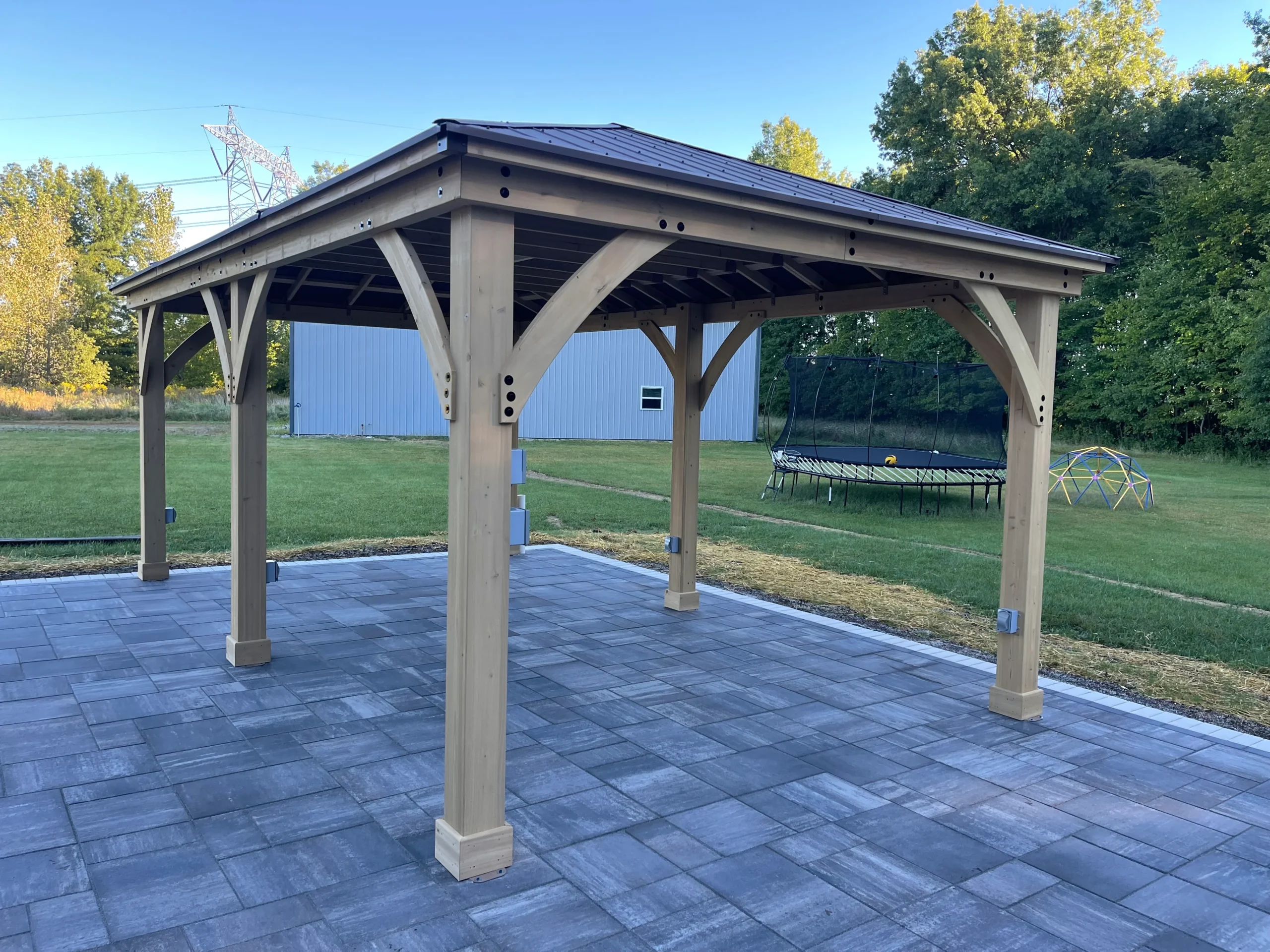
A Pleasant Hill Road area walkway. Visible from at least seven driveways. Every one of those driveways is a referral conversation if your sign is still standing.
How we install the neighbor engine on a Duluth landscaper.
Design the asset suite
Sign, postcard, hand-off card — all branded, all luxurious enough that a Sugarloaf homeowner is comfortable having them on their property. We design every asset for the specific aesthetic of the Duluth neighborhoods you serve most.
Bake into project ops
Permission language added to your contract. Sign installation added to crew checklist. Postcard mailing automated within 7 days. Hand-off card added to your handover packet. No new tasks for the owner — everything runs on the existing workflow.
Track and double down
Each QR code is unique to the source project. By month four you’ll know which Duluth neighborhoods produce the densest referral clusters — and you’ll start strategically pursuing more work in those zip codes.
The Pleasant Hill landscaper who tripled inbound calls.
A Pleasant Hill Road corridor landscaper had been in business 13 years and prided himself on never running yard signs because they felt “tacky.” His referral count averaged 1.2 per completed project. We redesigned his sign as a matte black square with white serif type and a small QR code — something that looked more like a museum placard than a contractor sign. He launched it in March on every install. By September his inbound neighbor calls had risen from 1.2 to 3.7 per project, his cost per booked $11K hardscaping job dropped from $4,800 to $1,650, and he booked four new projects on the same Medlock Bridge cul-de-sac that started with one original install.
Cumulative neighbor inquiries from a single Pleasant Hill install.
The first 30 days produce 80% of the inquiries. After that, the sign comes down and the postcard takes over. That’s the whole engine.
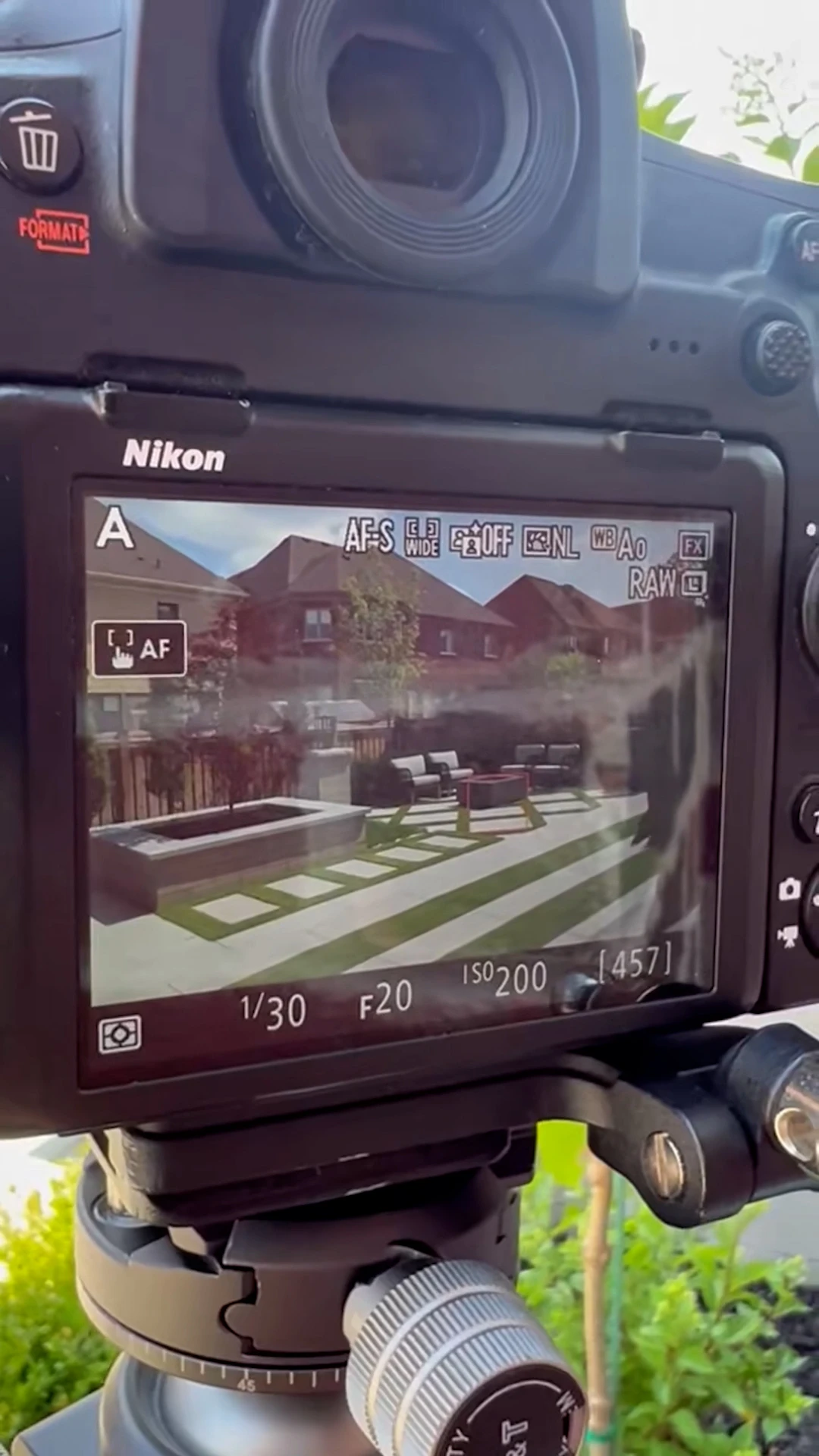
Behind the scenes — every install we shoot becomes the postcard image we mail to 20 neighbors within seven days.
Six things every Duluth landscaper needs before launching the engine.
Skip any one and the system feels cheap. Lock all six and you’ll see the first neighbor call within ten days of your first sign install.
A sign design no homeowner is embarrassed by
Matte finish, two colors max, clean serif type. If a Sugarloaf homeowner wouldn’t tolerate it, redesign it.
Written permission baked into the contract
One sentence in your master agreement. Solves every awkward “is it OK if we leave a sign?” conversation.
30-day removal protocol
Schedule the pickup the day the sign goes up. Trust evaporates if you “forget” the sign for 90 days.
20-house postcard mailing list per project
Pulled from your project address radius the week after completion. Send within 7 days.
Unique QR codes per install
Every project gets its own tracked code so you know which streets in Pleasant Hill, Medlock Bridge, or Berkeley Lake produce the most pipeline.
A 24-hour callback promise
Neighbor leads go cold within 48 hours. If you can’t return calls inside one day, the whole system underperforms.
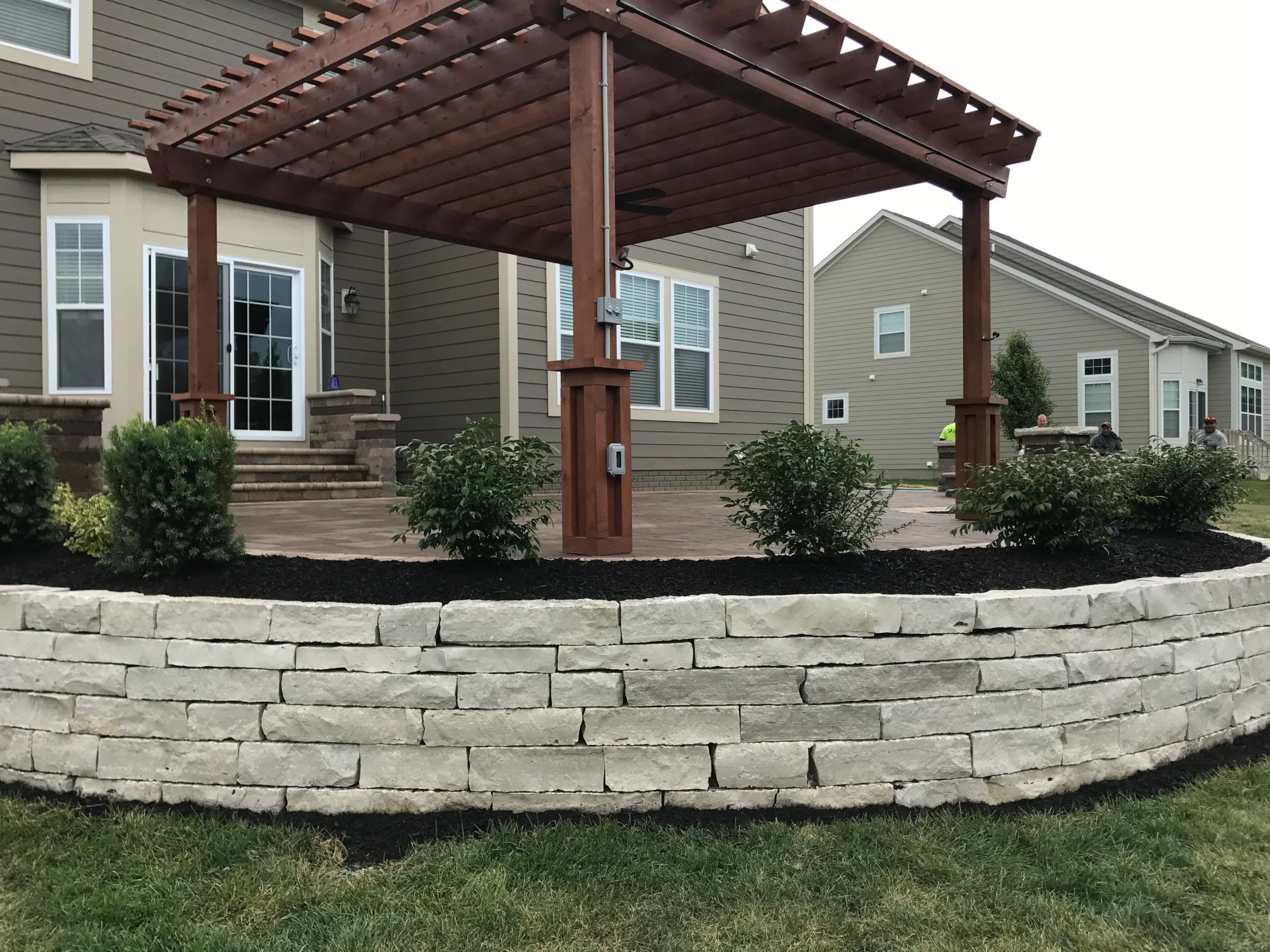
A front-yard install in Gwinnett Place — visible from every passing car. This is what the 30-day sign turns into a referral asset.
What Duluth landscapers keep asking us about yard signs.
About 12% will. The other 88% agree the moment you show them what the sign actually looks like — most have been imagining the orange-and-black plastic horror they’ve seen on other lawns. When you show them a real piece of designed signage, the conversation flips. We’ve placed these signs on Sugarloaf Country Club lawns without issue.
80% of the neighbor inquiries happen in the first 30 days, after which response rates collapse and you start eroding goodwill with the homeowner. The 30-day cap also becomes a built-in pressure release valve — “the sign comes down on day 31” is much easier to negotiate at contract than “we’d love to leave it up indefinitely.”
For hyper-local Duluth landscaping, yes — better than ever. Open rates on geographically-targeted residential mail (20-house radius) run 84% in our tracking, vs. 22% on email and 4% on Facebook ads. The reason: nobody else is doing it, so your postcard isn’t competing for attention.
Rare for the projects this system targets ($8K+ hardscaping), but when it happens you get permission from both the renter and the property owner. Owners usually approve since the install increases their property value.
You don’t. The $90 per project comes out of your existing marketing budget — which means you reduce paid ad spend by exactly $90 per project booked. Most of our Duluth landscapers see paid spend drop 30–45% within four months as the neighbor engine takes over.
Imagine three neighbor calls from every install instead of zero.
If you want a 30-minute call where we audit your current handoff process, look at the average density of your last twelve install locations, and design the sign + postcard system specifically for the Duluth neighborhoods you serve — that’s free. We do a few a week with landscapers across North Atlanta’s home services market.
Ready to turn searches into booked jobs?
Viral Spark is a marketing agency for landscapers built for North Atlanta contractors. We pair contractor website design with contractor SEO so the right customers find you first — no lead-buying. Get a free game plan →