Two Buford custom builders. Same volume. One spends $6,200/mo on marketing. The other spends $1,400.
The difference isn’t tactics or talent. It’s a 4-step close-out system that turns every Hamilton Mill and Lake Lanier waterfront build into a permanent referral asset — so the second builder doesn’t have to keep buying leads to fill his calendar.
Same number of completed homes. Wildly different marketing budgets. Why?
Here’s the thing. Two Buford custom builders we know — both finishing four luxury homes a year, both serving the same Hamilton Mill and Lake Lanier waterfront corridor — spend dramatically different amounts on marketing. Builder A spends $6,200 a month. Builder B spends $1,400. Both stay fully booked. Both are profitable. Both do beautiful work.
The difference is structural. Builder A buys most of his next year’s pipeline through digital ads and lead-platform spend. Builder B built a referral system 5 years ago that now feeds 70% of his pipeline organically — at near-zero marginal cost — and uses the remaining 30% of digital spend purely as accelerant.
Real talk: Builder A is renting his pipeline. Builder B owns his. Both are good builders. Only one has compounding economics. And in a market like Buford — where Lake Lanier waterfront values continue climbing and Hamilton Mill builds keep getting larger — the builder with compounding economics is the one who survives the next downturn.
The 79% of Buford luxury clients who’d refer their builder never do — because the builder vanished after the keys changed hands. A 4-step post-completion engine closes that gap. Same client list. 4x pipeline.
The good news? At 4–6 homes per year, the engine is small enough to live inside one project manager’s role and disciplined enough to be identical on every close-out.
Renting pipeline vs. owning pipeline
Same 4 homes per year. Same Hamilton Mill and Lake Lanier clientele. Wildly different cost structure by year three.
| What you’re running | Rented (ads-heavy) | Owned (referral-heavy) |
|---|---|---|
| Monthly marketing spend | $6,200 | $1,400 (referral artifacts + light digital) |
| Pipeline source mix | 85% paid, 15% referral | 30% paid, 70% referral |
| Cost per booked $1.6M build | ~$18,600 | ~$4,200 |
| Pipeline if ads pause | Drops to zero in 60 days | Negligible impact |
| 3-yr pipeline value | ~$19M | ~$24M (compounding) |

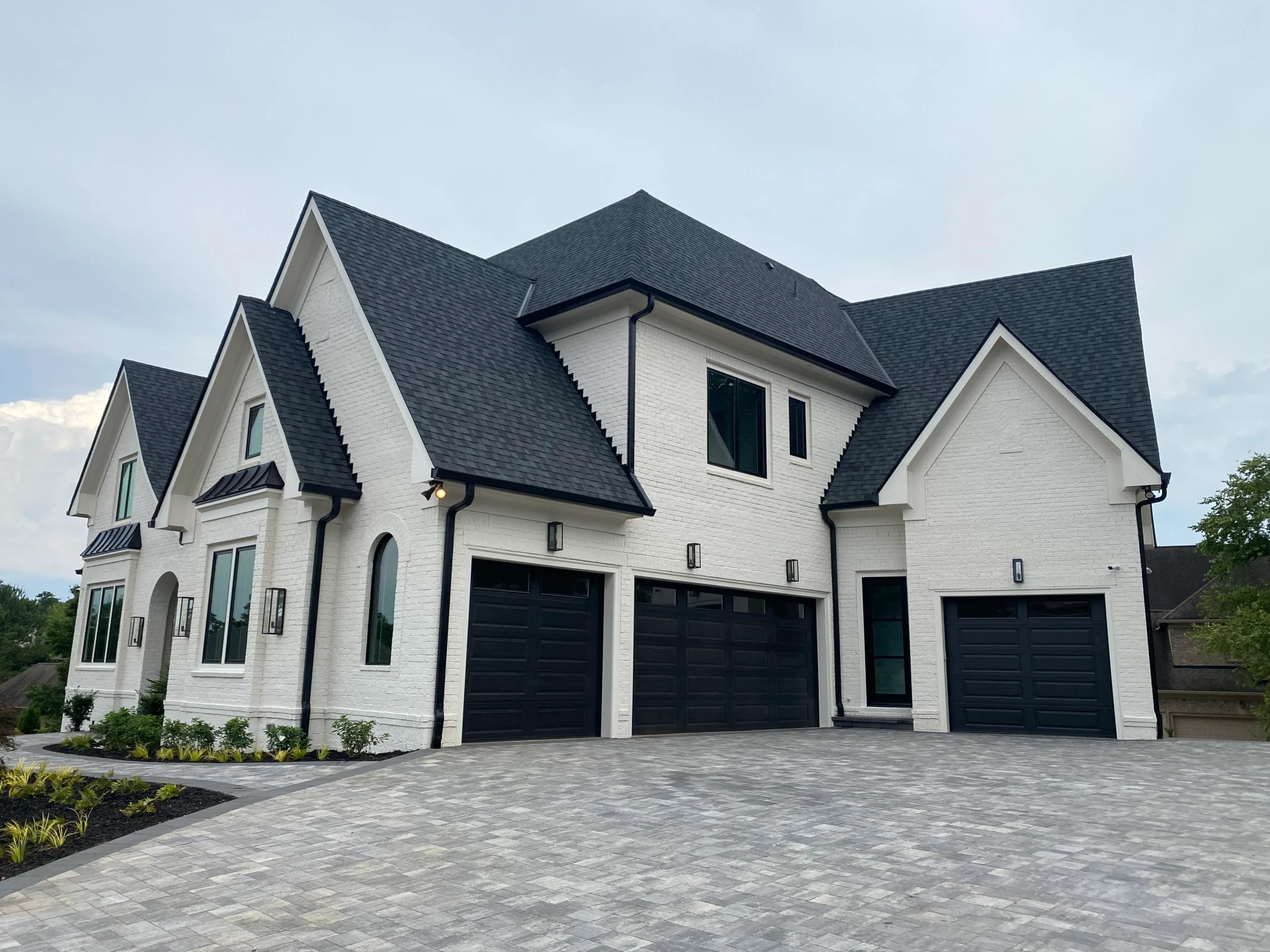
A Hamilton Mill build at twilight — same home, two different referral outcomes depending on the close-out system.
Stop disappearing after handoff. The first 45 days are the entire game.
You’ve probably been told the close-out is where the project ends. Final walkthrough, punch list, warranty paperwork, handshake, move on. That’s the operational truth. It’s also why most Buford custom builders leave 70% of their referral pipeline on the table.
The first 45 days post-move-in are when the client hosts their first dinner party, gives their first guided tour, takes their first set of phone photos to text to family. Every visitor asks “who built this?” Every conversation is a chance for your client to either remember you vividly — or fumble and say “some guy in Buford, I’ll have to look him up.”
Here’s what builder B does in those 45 days that builder A doesn’t. Day 1: professional photography delivered to the client as a gift. Day 14: a dedicated project page on his site, sent to the client as a “share when someone asks.” Day 30: a community-tag social post that the client almost always reshares. Day 45: a personal phone call, an in-person 6-month-warranty walk-through, and a small, thoughtful gift. Four touches. Forty-five days. The system that turns 14% referral conversion into 64%.
The Buford custom builders running pipelines through year three didn’t market harder. They installed a 4-step close-out that turns every Lake Lanier client into a 20-person referral asset.— What 40+ custom-builder sales calls have taught us
That’s it. The luxury referral engine isn’t about asking. It’s about being present, useful, and visible during the exact 45-day window when your client is doing all the hosting and showing-off you could never do for yourself.
Four steps. Forty-five days. Two-million-dollar pipeline.
Every Buford custom builder we’ve worked with who cut their marketing spend in half while growing pipeline did it with the same 4-step close-out — installed once, repeated identically on every Hamilton Mill, Stonebridge, and Lake Lanier handoff.
The 45-day engine, step by step.
Each step has a job. Skip one and conversion halves. Run all four with discipline and a single $1.6M Hamilton Mill build produces 2–3 additional contracted projects over the next three years.
Professional photography delivered as a gift, not a sales asset.
The day they move in, you deliver 30–40 magazine-quality photos of the finished home via a private gallery — no watermark, no “feel free to tag us” ask, just a gift. The client uses these for personal social, family texts, holiday cards. Photos travel through their network for years. This is the cheapest, highest-leverage step in luxury contractor lead generation and almost nobody at the Buford luxury level does it consistently.
The dedicated project page.
A beautiful, dedicated page on your site featuring this build — copy, photos, drone reel, brief story. You send the link to the client with a single line: “Easy to share if someone asks.” Becomes their default reply at every dinner party.
The community-tag social post.
A short, well-shot social post tagging the Hamilton Mill or Lake Lanier community (not the client by name unless they opt in). The client almost always reshares. Their reshare lands in front of 200–600 of their connections in that exact community.
The 6-month-warranty walk + thoughtful gift.
You — not your PM, you — visit the home, walk the warranty list, tighten anything that’s settled, and bring a thoughtful gift (custom-framed front-elevation rendering, a bottle of something the client mentioned during the build, a charitable donation in their name). That single visit reignites the relationship and is the single most-mentioned thing past clients tell us when we interview them about why they referred. This is the loop that turns one client into a multi-year referrer.

A finished great room — also the spread that lives on the dedicated project page guests get shown.
How we install the 45-day engine in a Buford custom-builder firm.
Audit the last 3 years
We pull every completed Buford build. Score by neighborhood density, client network, photography quality. Identify the 6–10 highest-leverage past clients to retro-activate.
Build the artifacts
Photography workflow, project-page template, social-post system, gift framework, calendar automation. All four steps templated and assigned to one PM as a non-negotiable close-out checklist.
Reactivate + roll forward
Past clients from the last 24 months get a retroactive “we missed this” sequence (project page + community post + warranty walk). Typical result: 2–4 booked consults in the first 90 days, paying for the engagement before the new-project engine even matures.

Mid-build content fuels the day-14 project page — every shoot pays dividends for 2+ years.
The Hamilton Mill builder who cut marketing spend by 77%.
A Buford custom builder doing 4 luxury homes a year between Hamilton Mill and Lake Lanier was spending $6,200 a month on ads, lead platforms, and a national agency retainer. After 12 months of installing the 4-step engine and reactivating his past 8 clients with the retroactive sequence, his referred pipeline grew from 1 project a year to 4. He cut paid spend to $1,400/month and his contracted pipeline grew from $6.4M to $9.8M. Cost of the engine: roughly $4,800 a year in photography, printing, and gifts. ROI: not close.
Inbound referred custom-home consults, month over month.
Each new completed home enters the engine on day 1. By year 3, you have 12+ activated past clients each producing 0.4–0.7 consults a year. That’s a pipeline.

Behind the scenes of a Buford luxury build shoot — every home produces 30–40 photo assets the client gets as a gift.
Self-audit before you build the engine.
Walk these honestly. They surface the gaps that quietly kill luxury-builder referral systems before they start producing.
“Do I have professional photography on every Buford build?”
If half your past projects only have iPhone shots, step one is a back-catalog shoot. The engine can’t run without high-end imagery.
“Who owns the 45-day calendar?”
The PM, in writing, with the four steps as a checklist. ‘We’ll remember’ becomes ‘we forgot’ on every single project.
“Does my site support a dedicated project page per build?”
If your portfolio is a single ‘gallery’ page, you’re missing 70% of the SEO and referral value. Each home deserves its own indexed URL.
“Am I doing the 6-month warranty walk personally?”
The PM is fine for the work. But the founder doing the walk is what the client tells the neighbor about. Don’t delegate this one.
“Am I tracking which past clients drive consults?”
By year 2, three or four clients will be driving 60% of your referred pipeline. Knowing who they are tells you who to invest in deeper — and which neighborhoods to lean into.
“Have I defined the gift?”
A framed rendering. A bottle they mentioned. A charitable donation in their name. Decide once. The gift becomes the talking point at the next dinner party.

A finished Buford great room — the photo spread the client texts to family on move-in day.
What Buford custom builders keep asking us.
Because by day 45 the client has hosted at least one set of visitors, the home is photo-ready, the punch list is settled, and the excitement is still high. Earlier is too raw — they’re still finding light switches. Later, the newness wears off and conversation momentum drops.
Yes — but the artifacts and timing matter more than the asks. Waterfront clients respond to thoughtful, beautiful objects (custom-framed renderings, drone reels, portfolio books on a coffee table) far more than to direct asks. Hamilton Mill clients respond well to both.
Six is the floor. By 12–15 activated clients across Lake Lanier and Hamilton Mill, the engine produces 4–8 inbound consults per year on its own. Below six, the system still works — it just takes longer for the network density to start compounding.
Don’t run the engine on clients with unresolved issues. Repair the relationship first — sometimes that’s a maintenance visit, sometimes it’s a frank conversation. A neutral or recovered client can still become a strong referrer over time, but only after the underlying issue is fully addressed.
No, it complements it. The referral engine produces pre-qualified consults at a much lower cost than digital. But every referred client still Googles you before calling — so your website, GBP, and content need to be strong enough to reinforce the referral, not undermine it.
Imagine cutting marketing spend by 77% and growing your Hamilton Mill pipeline at the same time.
If you want a 30-minute call where we audit your last 3 years of Buford custom builds, score the referral pipeline sitting in your back catalog, and map the 4-step engine to your Lake Lanier / Hamilton Mill client base — that’s free. We only work with one custom home builder per Buford zip.
Ready to turn searches into booked jobs?
Viral Spark is a custom builder lead generation partner built for North Atlanta contractors. We pair websites built to book jobs with SEO that books jobs so the right customers find you first — no lead-buying. Get a free game plan →