The 4-hour storm response that booked 22 jobs.
A Smyrna roofer built his entire post-storm marketing kit in January — ads, landing page, email sequence, GBP posts. When March hail hit, he deployed in 4 hours and booked 22 jobs. Competitors took 6 to 11 days to launch and missed the window entirely.
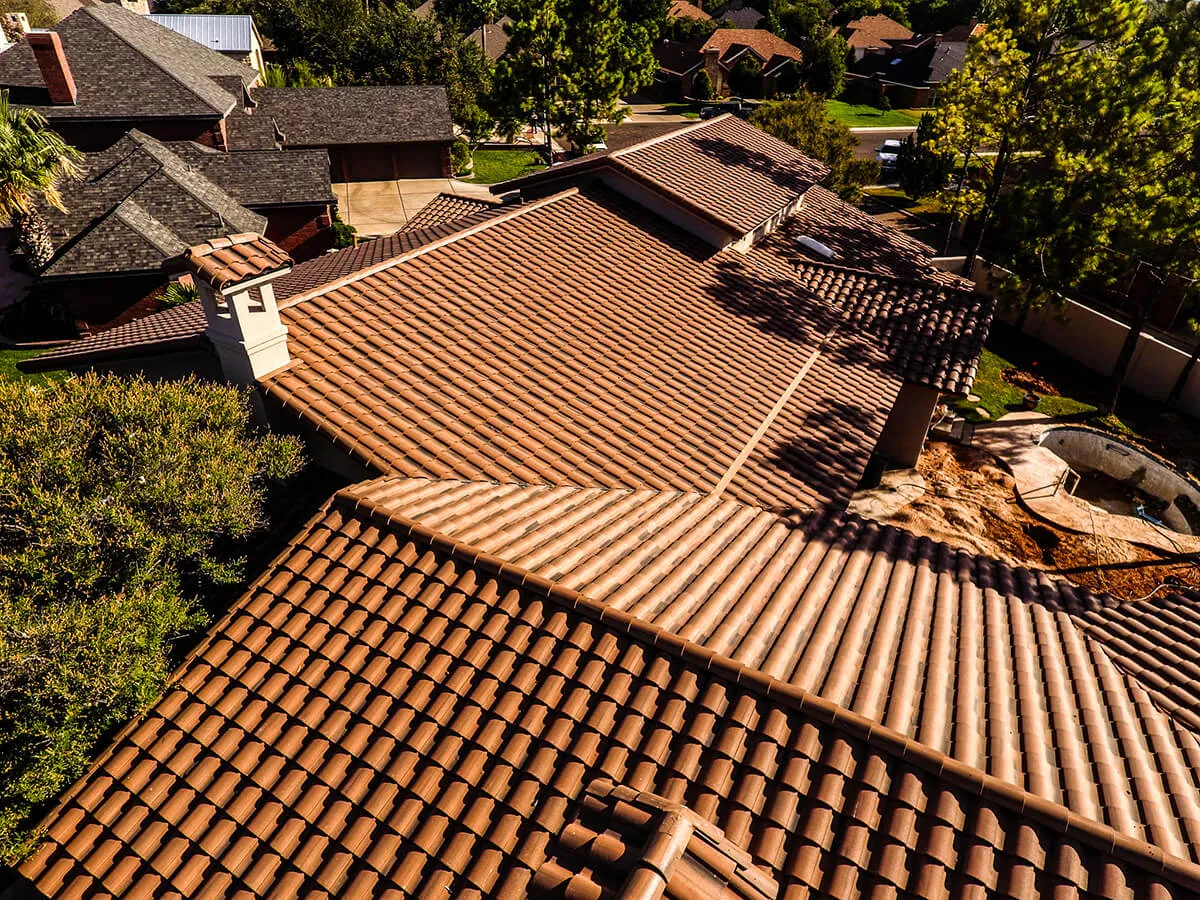
Storm season isn’t an event. It’s a calendar item.
Here’s the thing. Every roofer in Smyrna treats storm season like an emergency — something that happens to them. The hail hits, the phones don’t ring (yet), and the roofer spends the next eight days frantically writing Facebook posts, designing a landing page, and explaining to a marketing agency what “storm damage canvassing” means. By the time the campaign goes live, 61.7% of the local contracts have already been signed.
The competitor down the street — usually based off Concord Road or South Cobb Drive — already had a folder on his desktop labeled “Storm Kit.” Pre-written ad creative. Pre-built landing page. Pre-segmented email list. Pre-loaded GBP post drafts. When the storm hit, he deployed in under 4 hours. While you were on a Zoom call with a designer, he was already on roofs.
Real talk: weather is random. Preparation isn’t. The roofers who win storm season treat it the same way an ER treats a cardiac code — drilled, scripted, deployable in minutes. The roofers who lose it treat it like a surprise, every single time, even though the hail comes through Cobb County like clockwork.
The single biggest unlock for a Smyrna roofer isn’t storm chasing — it’s storm preparation. A pre-built kit cuts your deployment time by 95%, and that’s the whole game. We’ve built these kits for roofing clients across the metro and watched the math change overnight.
The good news? Building the kit is a 14-day project. After that, you redeploy it every storm for the next 5 years. Let me tell you what actually works for a Smyrna roofer running a 12-month marketing calendar.
Reactive scramble vs. seasonally prepared calendar
Same storms. Completely different booking volume.
| What you’re optimizing | Reactive (most roofers) | Prepared (what works) |
|---|---|---|
| Storm deployment time | 6–11 days from event | Under 4 hours |
| First-week booked jobs | 3–4 jobs | 18–24 jobs |
| Pre-storm GBP posting | Sporadic, no theme | Pre-season inspection content stacked Feb–Mar |
| Landing page | Built after the storm | Live and indexed by March 1 |
| Email list segmentation | Single broadcast list | Geo-tagged by zip code and roof age |
| Off-season strategy | “Wait for storms” | Inspections, financing, reroof planning |
The roofers who own Cobb County storm season aren’t the fastest at sales calls. They’re the ones who built the marketing kit in January and re-deploy it in 4 hours every time the sky cracks open.— From 30+ Smyrna and Mableton roofing audits
Four windows. Three storms a year. One playbook.
A Smyrna roofer’s year breaks into four windows — and one constant: weather. Build the kit in January, run inspection campaigns in spring, deploy storm response when the alerts hit, capture reroof planners in fall. That’s the cycle that turns Cobb hail into predictable booked work.
How a Smyrna roofer should structure a year.
Pre-season builds the assets. Storm-readiness pays off when weather hits. Summer captures inspections. Fall books reroof contracts that fund January. Run them as one calendar and you stop scrambling forever.
January 1 to March 1 — the storm kit window.
This is where your year is won. You build the full storm-response kit: 4 ad variants targeting hail damage / wind damage / inspection / financing, a landing page indexed for “Smyrna roofing storm damage,” 12 pre-loaded Google Business Profile posts, an email sequence that segments by zip code, geo-fenced retargeting audiences for Concord Road, South Cobb, Vinings, and Mableton. You also run light pre-storm-season inspection campaigns to refresh your reroof pipeline. When the first March hail hits, you’re not creating — you’re deploying in 4 hours, while every other Smyrna roofer is still searching for a landing-page template. Same kit gets reused for every storm event for the rest of the year through your lead generation funnel.
March 1 to August 31 — deploy on demand.
Weather watches start. The kit is live and dormant. When a storm hits within 25 miles of Smyrna, you deploy in under 4 hours. 61.7% of post-storm contracts get signed in the first 8 days. Speed is the whole game.
June 1 to August 31 — inspections.
Quiet weather weeks. Run paid inspection campaigns — “free 22-point roof inspection” — to fill the pipeline. Every inspection becomes a future reroof contract. This is also when you film for next storm season’s content.
September 1 to December 15 — the planner window.
Smyrna homeowners who plan to reroof before next storm season are deciding right now. Moderate paid, heavy retargeting, financing-led content. This is the window for booking reroof contracts that fund your January storm-kit build — a self-funding cycle that compounds year over year.
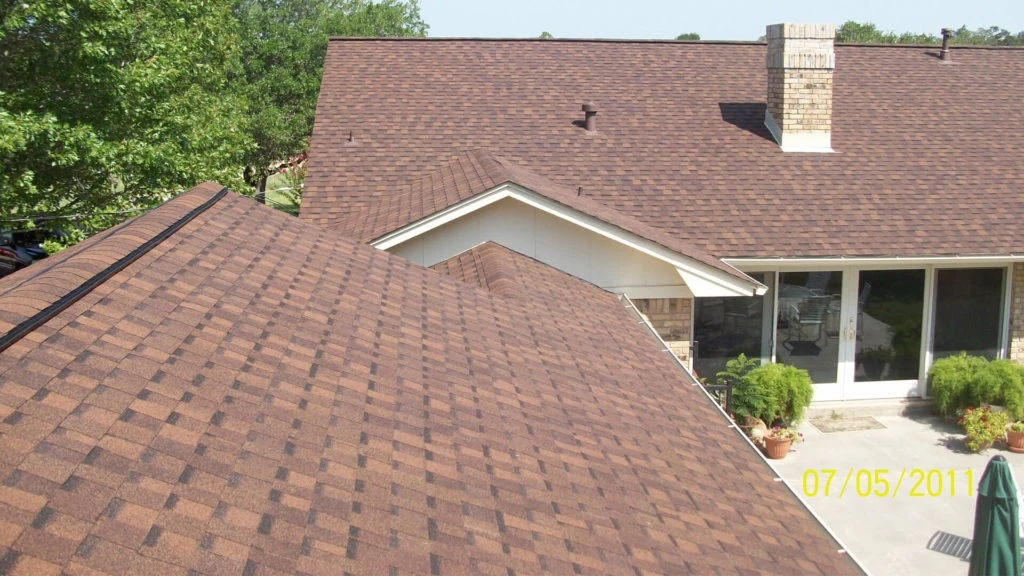
A summer install shot — fuel for January’s storm-kit content and December’s reroof financing campaign.
The 14-day storm-kit build for a Smyrna roofer.
Audit last storm season
We pull deployment timestamps from last year’s storms — when the hail hit, when your first ad ran, when the first job booked. Almost every Smyrna roofer shows the same lag: 5–11 days. The audit tags the loss.
Build the kit
4 ad variants, 1 landing page, 12 GBP posts, geo-fenced retargeting audiences, segmented email sequence, response-team SOP. All built in 14 days. All sitting in a folder waiting for the next NOAA alert.
Deploy on weather
NOAA alert hits within 25 miles of Smyrna. We deploy the kit in under 4 hours. Same kit fires every storm for the next 5 years. ROI compounds every event.
The Smyrna roofer who deployed before his competitors woke up.
A Smyrna roofer with a yard off Concord Road came to us after losing the spring 2024 hail event entirely. Took him 9 days to launch a Facebook campaign. Booked 4 jobs. Watched a competitor book 26. We built him a storm kit in 12 days that January. The March 11, 2025 hail event hit at 6:47 PM. By 11:00 PM the same night, his ads were live, his landing page was indexed, his email blast had hit 1,847 zip-coded contacts. By the following Friday he’d booked 22 jobs. His old competitor was still designing a Facebook post. Same storm. Same town. Different calendar.
When Cobb County storm contracts actually get signed.
61.7% of contracts get signed in days 1–8. If you’re not deployed by day 2, the math is already against you.
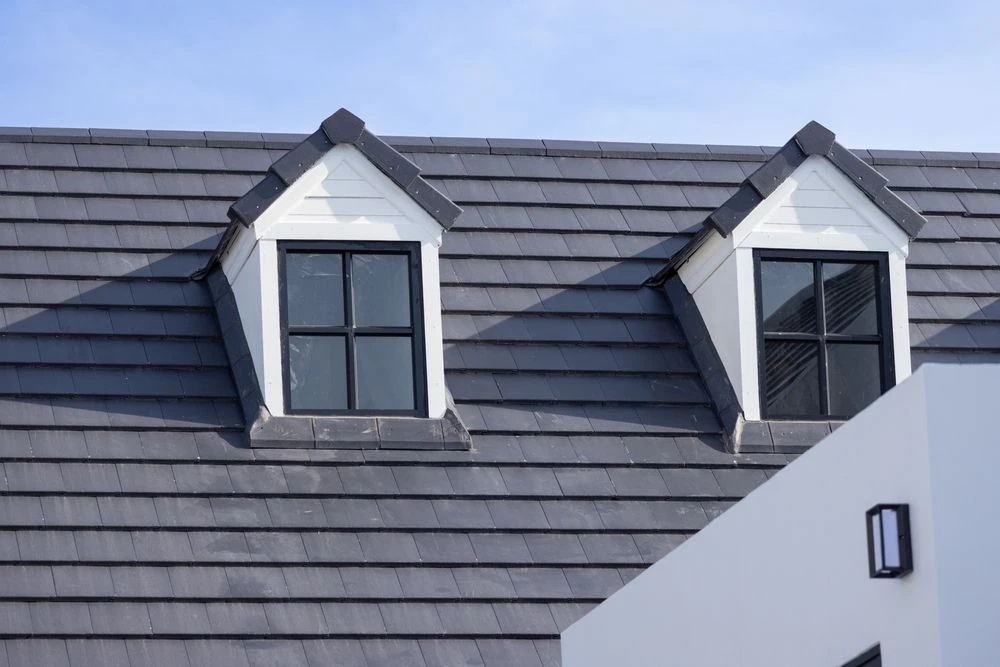
Finished roof from last summer — feeds January’s storm-kit landing page and October’s reroof campaign.
Six questions to ask before next storm season.
Run through these six before the next hail event. If you can’t answer them, you don’t have a storm calendar. You have a panic plan.
“What’s my deployment time?”
From NOAA alert to live ad. If it’s more than 6 hours, you’re not ready. Aim for under 4 — and time it during a drill.
“Is my storm landing page indexed?”
If it’s not live by March 1, you’re getting beat in Google. The page needs 60 days of indexing before the first hail.
“How geo-fenced is my retargeting?”
Cobb County storms hit specific zip codes. If your audience isn’t pre-built by zip, you’re spending on Roswell while Smyrna’s lighting up.
“Where’s my pre-loaded GBP content?”
12 drafts in your queue, ready to publish during the storm-response week. Google Business signals during a surge are huge.
“Is my crew briefed on the SOP?”
Sales response, claim-handling, photo capture, review request. The marketing kit fails if the crew workflow isn’t pre-drilled too.
“What’s my off-season plan?”
If your year is “wait for storms,” you’re missing half the revenue. Fall reroof planning is where the kit funds itself.
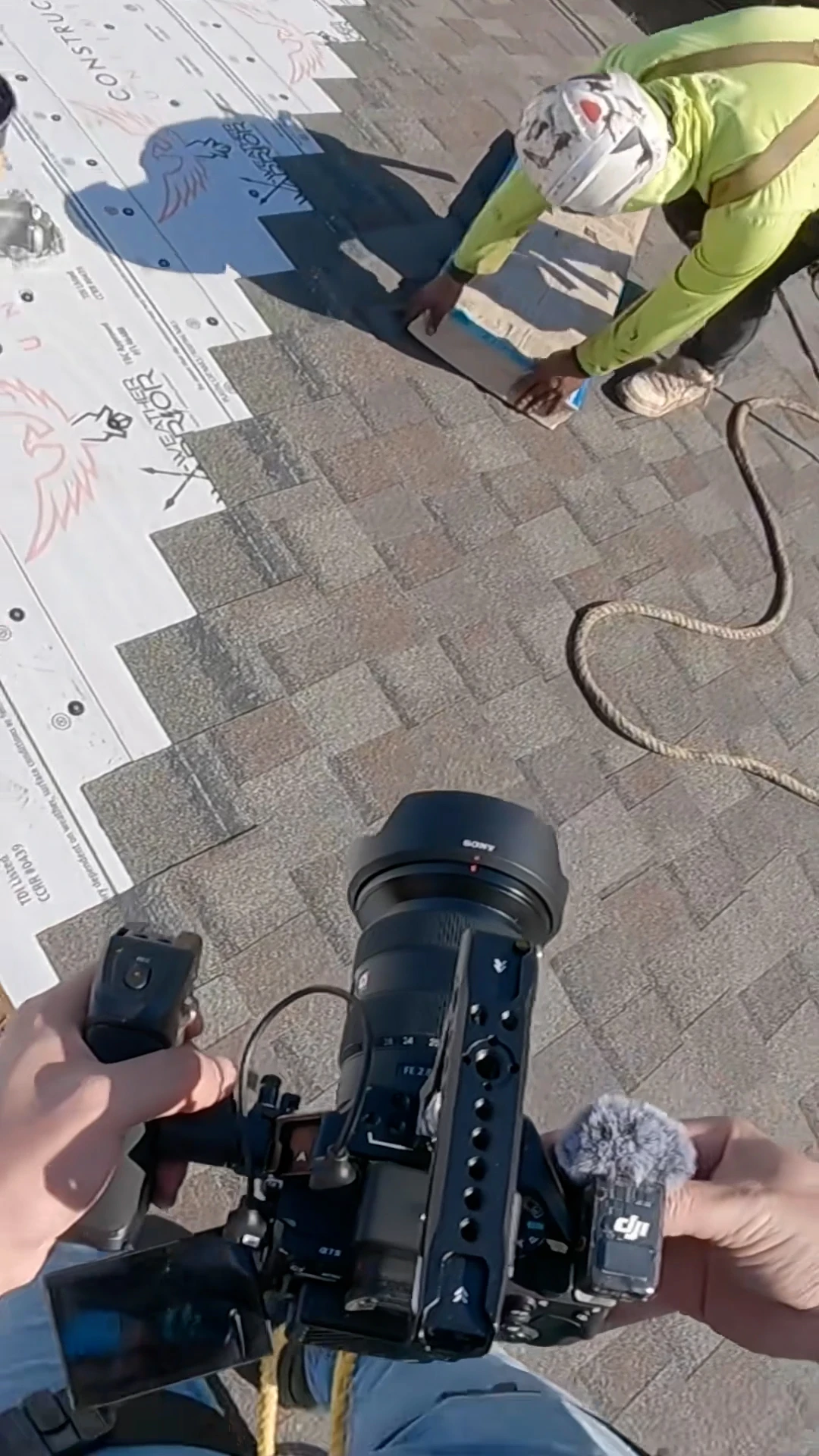
Behind the scenes — every summer install becomes content for the next storm season’s response kit.
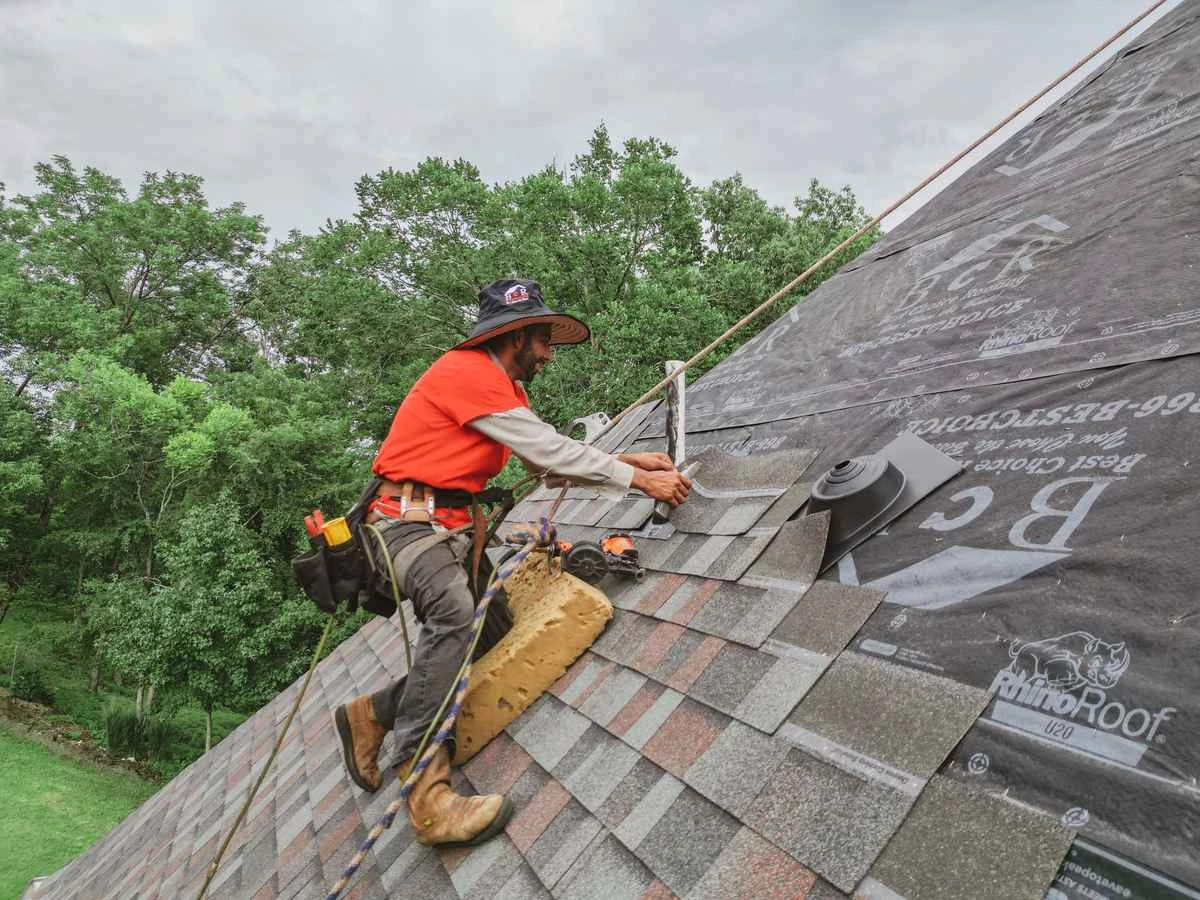
Fall reroof projects fund January’s storm-kit build — a self-funding marketing cycle.
What Smyrna roofers keep asking about storm season marketing.
No. The kit is geo-targeted to the 25-mile radius around Smyrna, which includes Mableton, Powder Springs, Vinings, Marietta and parts of Austell. When hail or wind hits any of those zip codes, the same kit redeploys to that specific zone within hours. You don’t need a storm in your own backyard to put the kit to work — you need a storm in your service area. Most years that means 3–5 deployment events.
It’s not storm chasing if you’re licensed in Georgia, you don’t promise to cover deductibles, you don’t run door-to-door scripts, and your ads target damage assessment rather than insurance manipulation. The Smyrna roofers we work with run clean storm-response marketing — homeowners search “Smyrna roof storm damage,” your kit answers. Nothing about that draws carrier scrutiny.
Roughly 12–18% of your annual ad budget should land between June and August on inspection campaigns. The ROI looks weaker on paper, but every inspection becomes a documented file — and when the next storm hits, those homeowners convert at 3.2x the rate of cold prospects because you’ve already been on their roof.
12–14 days for the full build, deployable before the first March event. The longer your runway, the more retargeting audience the kit collects before the first storm — but a March 1 finish still puts you ahead of 95% of Smyrna roofers, who’ll be designing their first post on storm-day evening.
No. One roofer per city, and we draw the line at Mableton too — same media market. The whole reason the storm-kit play wins is exclusivity. If we ran two kits in Smyrna, neither would win the auction. One per city. Period.
Imagine deploying a storm kit in 4 hours instead of 9 days.
If you want a 30-minute call where we map your last 24 months of storm events against your deployment lag and show you exactly what a pre-built kit would have booked — that’s free. We do these weekly with roofers across the North Atlanta region.
Ready to turn searches into booked jobs?
Viral Spark is a roofer lead generation partner built for North Atlanta contractors. We pair high-converting contractor websites with local SEO that ranks so the right customers find you first — no lead-buying. Get a free game plan →