Storm season is won in January, not April.
A Duluth roofer called us in May asking how to compete during storm season. Here’s what we told him: the roofers who win storm season started marketing in January.
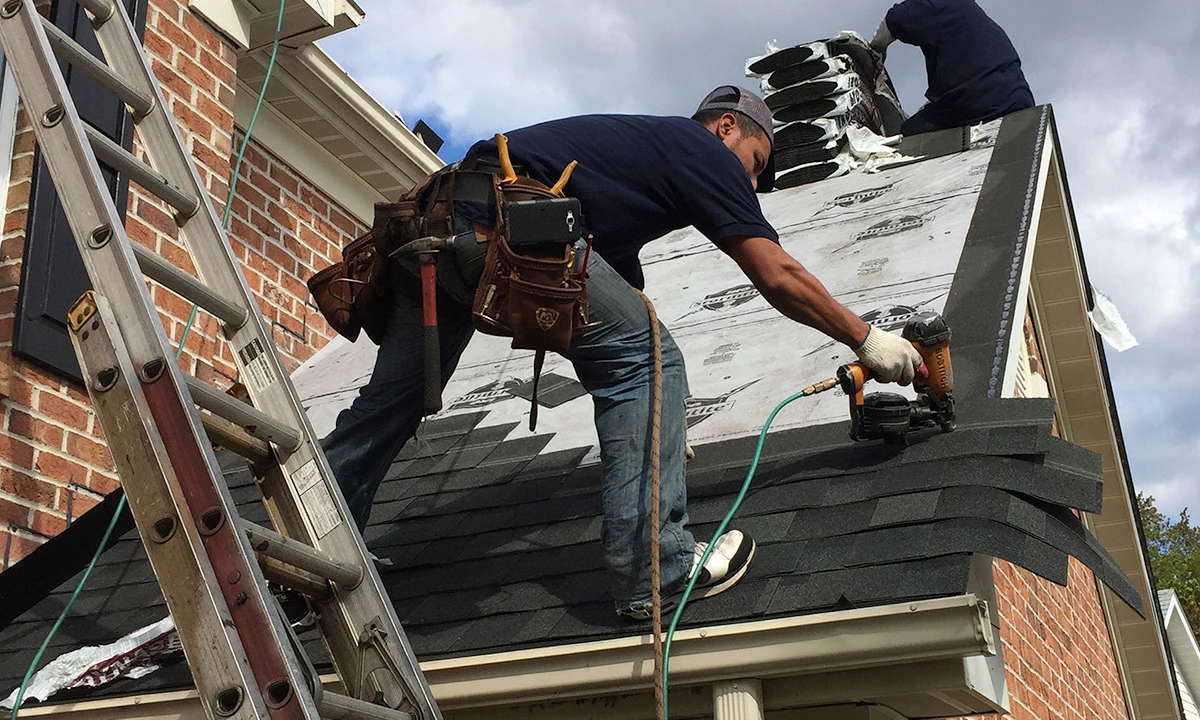
Reactive marketing in a reactive industry.
Here’s the thing. Most Duluth roofers we talk to treat marketing the same way they treat the weather radar — they don’t start watching until something hits. The storm rolls through Gwinnett County, the phones light up, and suddenly the ad budget gets cranked. By the time the spend hits Google, every other roofer in Duluth, Suwanee, and Lawrenceville is bidding on the same keywords.
The result? Post-storm CPCs in Duluth roofing have hit $18.60. You’re paying six times the off-season rate to compete for a homeowner who’s calling four other roofers in the same hour. The lead is hot, but it’s also priced like luxury real estate. And the homeowner isn’t choosing on price — she’s choosing on recognition, reviews, and which truck she’s seen driving Pleasant Hill Road three times this winter.
Real talk: storm season is won before the storm. The Duluth roofer with active marketing through January and February has the brand recognition, the review depth, and the Google ranking that makes him the default call when hail hits in April. Reactive marketing always loses to compounded brand presence — and storms reward that pattern more than any other niche in Gwinnett County.
74% of Duluth homeowners already have a roofer name in their head before the storm rolls through. The roofers who are that name built their position six months earlier — not in the 72 hours after the radar lit up red.
The good news? You don’t need to outspend competitors during storm chaos. You need to outpresent them in the four months they’re sleeping. Here’s the calendar.
Reactive storm-chasing vs. pre-loaded brand
Same total annual spend. Wildly different cost-per-roof by July.
| What you measure | Reactive storm-chase | Pre-loaded brand calendar |
|---|---|---|
| CPC during storm window | $18.60 per click | $18.60 — but you’re getting organic clicks free |
| Post-storm call volume | 22–34 inbound calls/wk | 112–168 inbound calls/wk |
| Lead-to-inspection rate | 18–24% (price-shopping) | 52–66% (already chose you) |
| Review volume by storm season | 38 reviews | 148+ reviews |
| Cost per signed roof | $1,840 | $340 |
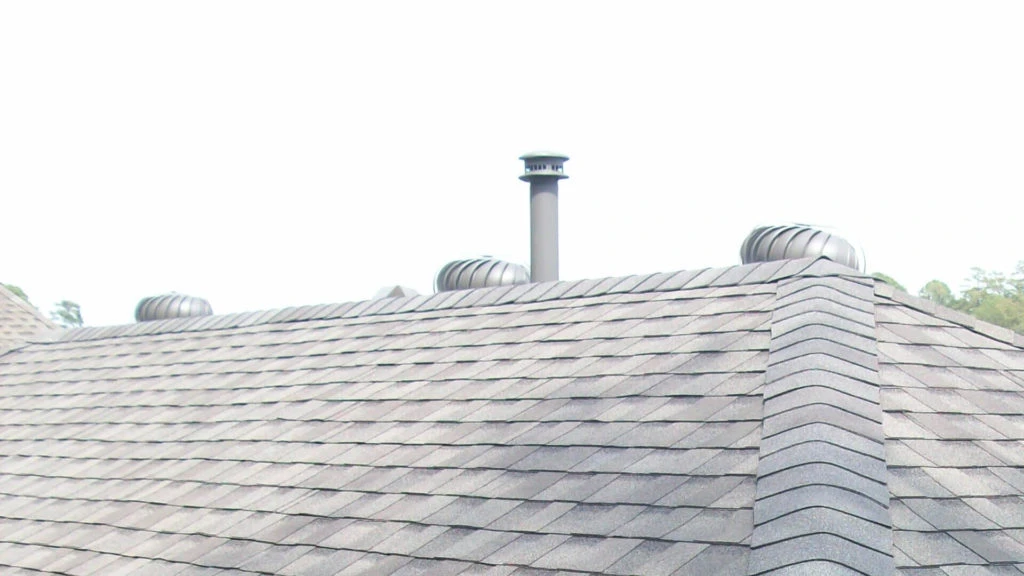
A Sugarloaf-area replacement — the kind of project that becomes a six-month review-collection asset when shot during install.
Stop trying to beat competitors after the storm. Beat them before it.
You’ve probably been told the storm-chaser model works. Out-of-state vans, post-storm canvassing, aggressive door-knocks. It does work — for the few first to the neighborhood. But that’s a hard, expensive, exhausting way to make a living, and it depends on weather you can’t schedule.
The Duluth roofers who built durable businesses don’t chase storms. They make sure when the storm hits, the homeowner already knows their name. They run consistent presence through January, February, March — months other roofers consider dead. They collect reviews after every spring inspection. They keep their Google profile fresh with weekly photos. By April, when a hailstorm lights up Buford Highway, half the affected homeowners already saved their phone number from a Facebook post in February.
That doesn’t mean storm-window ads are useless. They’re the accelerant — but they only work if there’s brand to amplify. Lead generation for roofers is brand + capture, not capture alone. Roofers serving Duluth’s storm zone who treat off-season as the build phase win every storm season that follows.
The Duluth homeowner whose tree branch crashed through her gutter on Tuesday isn’t Googling “roofer” — she’s calling the name she remembers. Your only job is to be that name.— Lessons from 30+ Duluth storm-season post-mortems
This is why your competitors’ “spend big after the hail” strategy is so beatable. They show up to fight the war that was already won in January. By the time their ads load, your phone is already ringing.
Four windows. Three jobs. One outcome.
Every dollar a Duluth roofer spends should know which job it’s doing — build the brand, capture the storm, document the work, or compound the reviews. Here’s the breakdown.
The Duluth roofer marketing year.
Each window has a specific job. Build during the quiet. Capture during the chaos. Document the work. Compound the reviews. Run them in sequence and storm season pays for the whole year.
December through March — push brand hardest.
This is when competitor ad spend hits its annual floor and CPCs drop to $3.10. Spend 40–45% of your annual budget here on brand-building campaigns — Facebook video showing crews on Duluth roofs, Google Search dominance for “Duluth roofer” and “Gwinnett County roofer,” neighborhood-targeted YouTube ads. The goal isn’t direct leads. It’s recognition. The homeowner who sees your truck Wednesday on Pleasant Hill Road and your Facebook video Thursday and your Google result Friday is yours when the storm hits in April. Brand built in winter pays interest forever.
April–June — capture the storm.
30% of budget. Hail and wind season. Run aggressive Google LSAs and Search ads. Crank emergency response landing pages. But you’re only converting because the brand was built.
July–September — document everything.
10% of budget. Crews replacing roofs from the spring storm. Send a content team to every job. Every replacement = 5 reviews + 20 photos + 1 video.
October–November — stack the reviews.
15–20% of budget. Every June through September replacement = 1 review opportunity. Push hard on review collection workflow. Reviews aren’t a side effect of work — they’re the asset that wins the next storm season. A Duluth roofer with 180 reviews ranks above one with 60 reviews in Google’s local pack — every time. Build the moat now.
A Berkeley Lake corridor tear-off — exactly the kind of project that needs a content team on-site, not just an estimator.
How we build a Duluth roofer storm-season engine.
December audit
We pull your previous year’s spend, post-storm response data, and review velocity. The waste is always in the same place — too much spent in the 72-hour post-storm chaos, too little spent in the 90-day winter build window.
Build the winter brand
January–March: Facebook video, Google Search, neighborhood YouTube, and a relentless review-collection workflow on last year’s customers. By April 1st, your brand is in 60%+ of Duluth homeowner heads.
Capture and compound
Storm hits. Your phone explodes — not because your ads are loudest, but because you’re the name they already knew. Every replacement becomes the asset that funds the next winter’s brand build.
The roofer who stopped chasing and started building.
A Duluth roofing company doing $4.1M in annual revenue spent $42,000 of its $84,000 annual marketing budget reactively — entirely after storms hit. Closed 8% of post-storm inbound calls. Spent $1,840 to land each signed roof. We rebuilt his year: pulled $34,000 into a December–March brand-build campaign. The next storm season produced 168 inbound calls/week peak versus 22 the prior year. Close rate jumped to 59% because callers already trusted the brand. Cost per signed roof dropped from $1,840 to $340. He hasn’t run a panic post-storm spend since.
Budget allocation by month (% of annual).
The April–May spike doesn’t work unless January–March is loud. Brand built in winter is what makes storm spend convert.
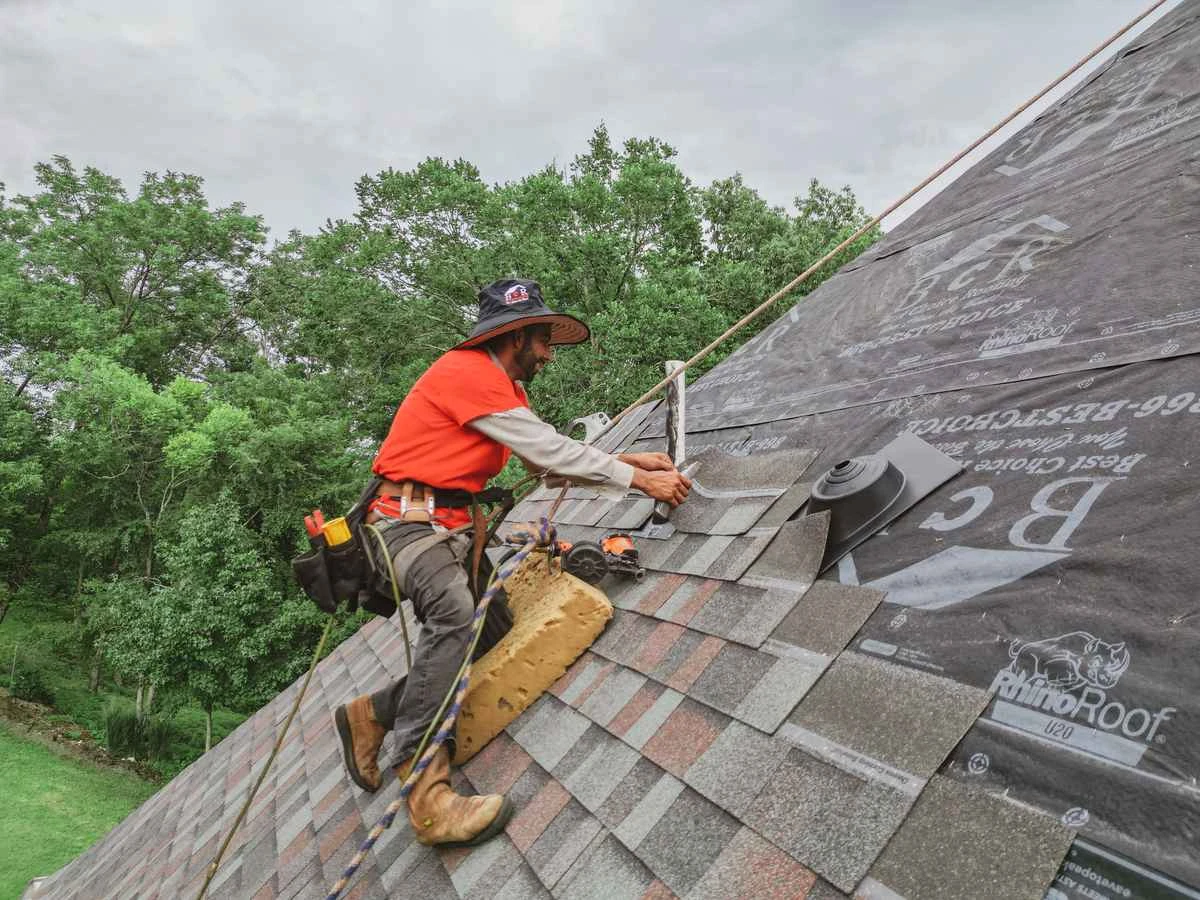
Branded-truck content is the cheapest, highest-leverage brand asset a Duluth roofer can run in January.
Six moves that separate Duluth roofers winning storm season from ones chasing it.
If you can answer yes to all six by November 1st, you’re set up to dominate next year’s spring storm window without overspending.
Do you have 100+ verified Google reviews?
Below 100 you don’t rank in the storm-day local pack. Reviews are the moat. Build it October–November or you’ll regret it April–May.
Is 40%+ of next year’s budget allocated December–March?
Storm season can’t be won during storm season. Winter brand build is the single highest-leverage move in the entire year.
Did you shoot crew content during summer installs?
Branded-truck reels, install time-lapses, sunset crew shots — these are your winter Facebook ads. If you didn’t shoot, you can’t run.
Do you have an emergency-response landing page?
Your generic homepage doesn’t convert at 4pm on storm day. A specific “Duluth storm damage” landing page does — and it has to exist before the storm.
Is your inbound call routing automated?
When the storm hits, you’ll go from 8 calls/day to 80. If routing isn’t automated and after-hours coverage isn’t real, you lose 60% of the spike.
Are you actually pulling back in August?
Late summer is the only honest pull-back window. Spend then is wasted because the storm calls have dried up and homeowners are on vacation. Discipline matters.
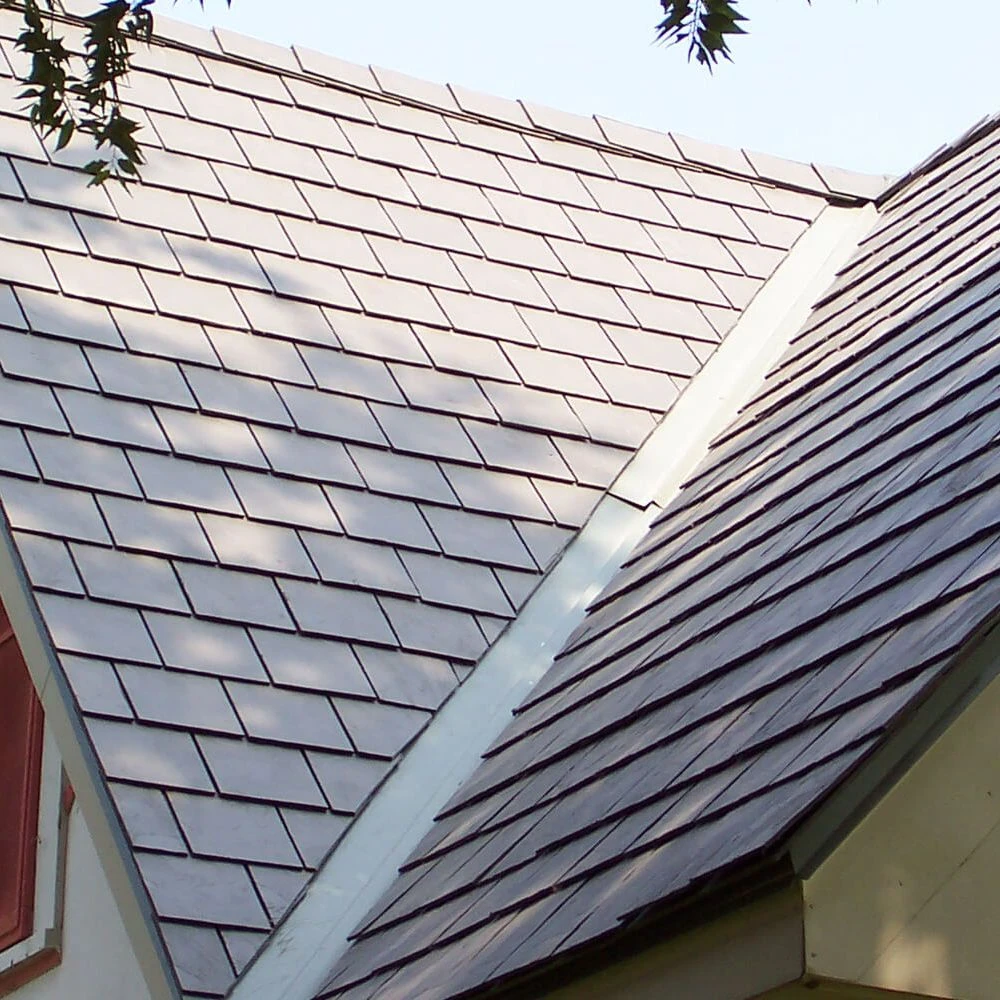
Completed-job content like this — captured in summer, deployed in January — is what wins storm season.

Behind the scenes — every summer install becomes 6 months of pre-storm brand fuel when shot right.
What Duluth roofers keep asking about the calendar.
Then the winter brand build still pays — just slower. The same brand presence that converts post-storm leads at 59% also converts non-storm replacement leads at 31% (versus the storm-chaser’s 8–12%). Winter brand build is insurance against weather variance. You’re hedging your business against the wrong forecast.
Commercial is a different rhythm entirely. Commercial roofing decisions happen in Q4 budget cycles, with installation in Q1 and Q2. If you serve both, you run two parallel calendars — residential on the storm cycle described here, commercial on a Q4-heavy decision cycle.
That’s exactly the mental block. The winter spend isn’t trying to generate winter leads — it’s pre-paying for spring storm conversions at one-fifth the cost. Track the right metric: brand awareness within Duluth zip codes, not winter form fills. The form fills come in April with much lower CAC.
Maybe — but only as a small percentage of total spend, and only the storm-specific platforms. Generic shared-lead platforms ramp their per-lead price during storms exactly like Google does. The economics get ugly fast. If you build the brand right, you won’t need them.
Year one is harder — there’s no review base, no past-job content, no organic recognition. Run an even heavier winter spend tilt, focus on building a referral partnership with a Duluth roofing supplier, and offer first-year price-locked replacements in exchange for video case studies. Year two you join the standard rhythm.
Imagine the next Duluth storm with your phone ringing 168 times a week.
If you want a 30-minute call where we audit your last storm season, look at your review velocity and brand presence in Duluth zip codes, and tell you exactly what to build before the next storm — that’s free. We do a few of these a week with roofers across the broader North Atlanta storm zone.
Ready to turn searches into booked jobs?
Viral Spark is a roofing marketing agency built for North Atlanta contractors. We pair high-converting contractor websites with local SEO that ranks so the right customers find you first — no lead-buying. Get a free game plan →