The roofer marketing calendar for Suwanee, GA.
Stop ramping up your Suwanee roofing ads after a storm hits. Start owning search before it rains — that’s when the real bookings happen, and that’s when CPCs are still affordable.
You ramp ads after the hail. The auction already cleared.
Here’s the thing. Most Suwanee roofers we talk to run their marketing the same way: quiet through winter, normal in spring, then full-throttle the day after a big storm hits. Sounds smart. It’s the most expensive thing you can do.
Real talk: when a hail event sweeps the Brushy Creek and McGinnis Ferry corridor, every single roofer in Gwinnett County hits “increase budget” inside Google Ads within 48 hours. The auction floods. CPCs that were running $2.10 in February shoot to $9.40 inside a week. You’re now paying 4x to compete for the same searches your already-ranking competitors are getting through organic.
Meanwhile, the homeowner with hail damage on her McGinnis Ferry house? She didn’t wait for your post-storm ad. 71% of Suwanee homeowners search for a roofer within 6 hours of a storm event — most of them while the rain is still falling. The roofers who already ranked in the local map pack and had a credible site captured those calls before your campaign even went live. By the time your post-storm ads served at 9pm Tuesday, the inbound calls were already booked through the weekend.
A Suwanee roofer who maintains organic top-3 ranking for “roofer Suwanee GA” captures roughly 4x the leads of a roofer who tries to spend their way into the auction after a storm. The math on pre-season SEO is brutal — in your favor.
The good news? You don’t need a six-figure budget to flip this. You need a calendar that puts the heavy lifting into the months where everyone else is sleeping — and pulls back when everyone else is in a bidding war.
Reactive post-storm spend vs. pre-season authority build
Same annual dollars. Wildly different storm-season case load.
| What you’re funding | Reactive (most Suwanee roofers) | Pre-season authority (what we run) |
|---|---|---|
| Jan–Mar spend | $3,800 (8% of year) | $22,500 (50% of year) |
| Apr–Jun spend (storm season) | $28,400 (63% of year) | $13,500 (30% of year, mostly LSAs) |
| Cost per booked job (storm weeks) | $610 | $190 — organic-led inbound |
| Storm-season job count | 52 — baseline | 118 — organic + LSA stack |
| Off-season presence | Dark. Brand decays. | SEO compounding monthly. |
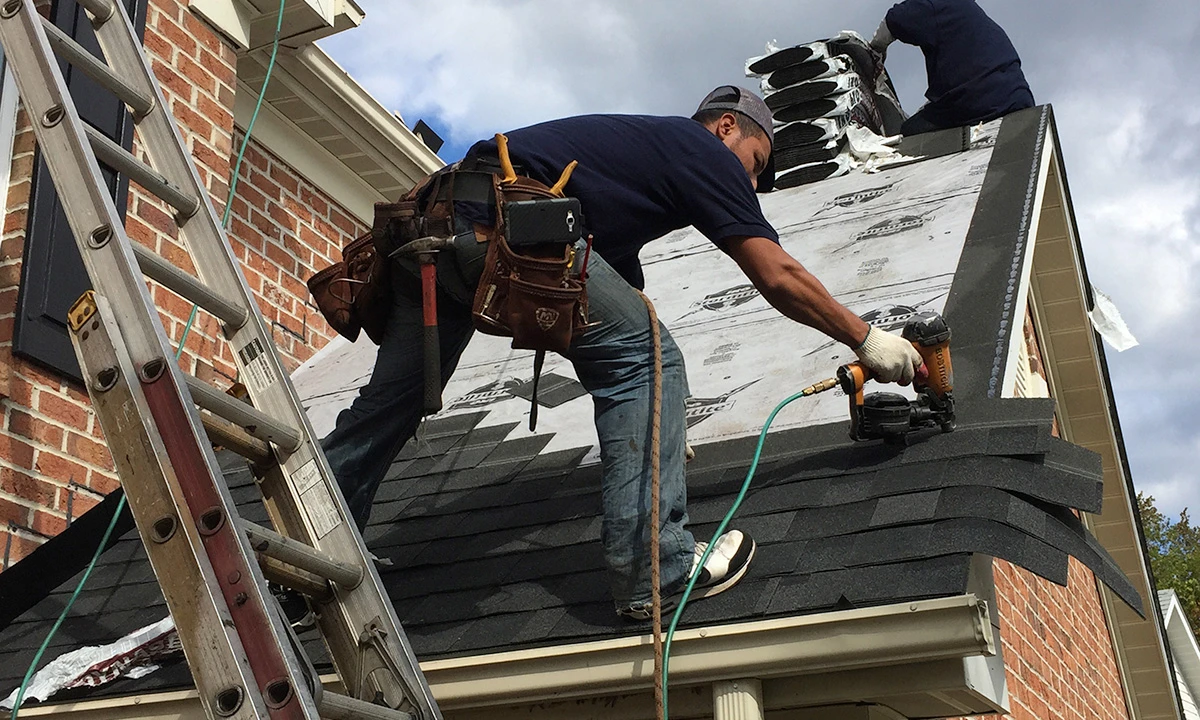
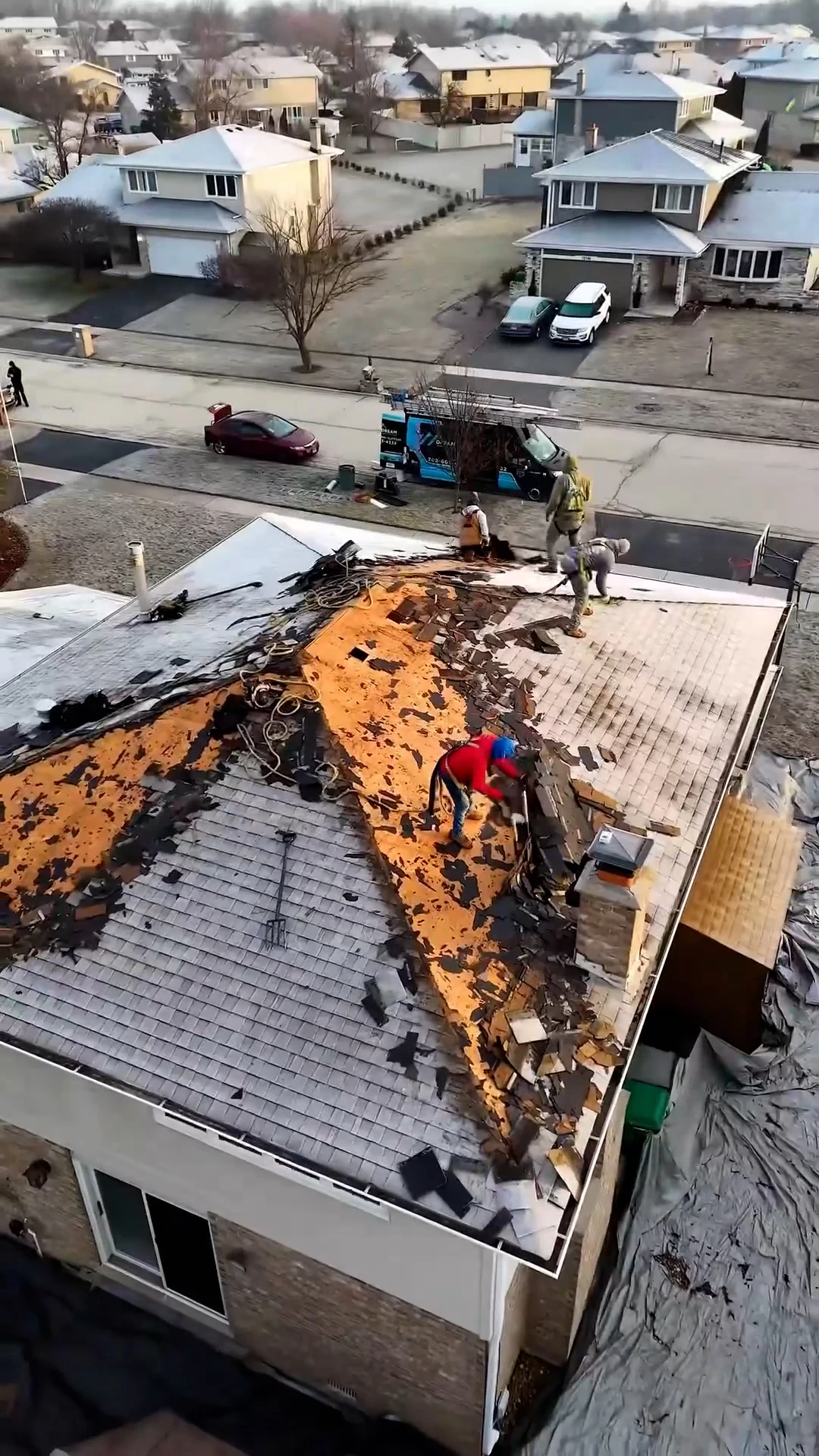
A Suwanee crew working a residential install — the kind of job that gets booked from organic search, not Tuesday-night ads.
Build authority in February. Cash it in April.
You’ve probably been told that roofing is a “spring/summer” business. Storm season runs April through June in North Georgia, so the reasonable instinct is to spend when the storms are happening. That instinct burns money.
Here’s what the Suwanee roofers winning right now actually do. They spend their biggest budget in January, February, and early March — when there’s no storm, no urgency, and almost no competition in the SEO auction. They publish neighborhood content. They optimize their Google Business Profile relentlessly. They get reviews. They fix mobile speed. They rebuild their storm-response landing page. They become the obvious answer to “roofer Suwanee” before the first cell rolls through.
Then April hits. The hail comes. And the homeowner Googling “Suwanee roofer” sees them in position one without paying a cent of paid spend. Their LSA budget runs at full throttle for 6 weeks because the foundation is already there to convert that traffic. Their phone rings. The reactive guy is still optimizing his fifth landing page.
The Suwanee roofer dominating storm season didn’t outspend you in May. He outspent you in February — when nobody else was paying attention to the auction.— What 5 years of Gwinnett storm-season auction data tells us
What about December and July? Those are pure brand maintenance. Keep posting. Keep collecting reviews. Keep producing content for the index. But pull paid spend by 60–70%. The CPC math doesn’t justify aggressive PPC outside of storm windows. Roofing lead generation done right is seasonal — not flat.
Six weeks of authority work. Six weeks of compounding return.
Suwanee’s spring storm season is a 6-week revenue event — the roofers who own search before April win it without paying storm-week prices.
The Suwanee roofer year, restructured properly.
Gwinnett storm patterns are one of the most predictable seasonal frames in North Atlanta service business. Match your budget to the pattern and your cost per booked job drops 68%.
50% of budget. Build the moat.
This is when you publish the neighborhood content for Brushy Creek, Tench Road, McGinnis Ferry, and Old Peachtree. Optimize your GBP weekly. Stack reviews. Rebuild the storm-response landing page. Run a heavy lead-generation foundation push when CPCs are at $2.10 instead of $9.40. The roofer who walks into April already ranking owns the share-of-voice fight before the first hail cell forms. Front-load 50% here. Future-you will thank present-you.
30%. Cash in.
LSAs maxed. Geo-targeted Meta into the ZIP codes hit by the latest cell. Don’t try to “grow” SEO in this window — it’s harvest time. If the foundation isn’t built by April 1, no amount of spend in May saves it.
Maintenance only.
10% of spend. Heat dome closes the storm window. Keep brand SEO, content, and GBP steady. Use the savings to fund April–May overflow. Don’t chase summer leads at storm-season CPCs.
The fall storm window. Don’t sleep on it.
10% of spend. North Georgia gets a secondary storm window in October driven by remnants of Atlantic systems and early-season cold fronts. Most competitors ignore it entirely. Easy share-of-voice if you’re already ranking — push LSA budget for 4 weeks and harvest. December drops to brand maintenance.
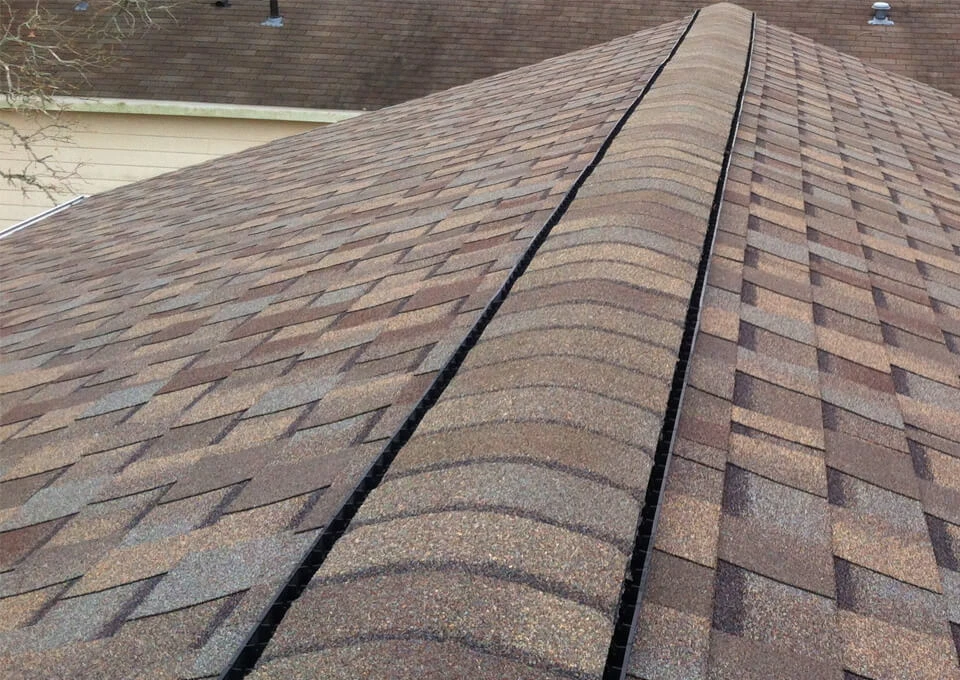
A storm-season install in Suwanee — the foundation that converts April traffic was built in February.
How we shape a Suwanee roofer’s year.
Plot 3 years of jobs against NWS storm reports
We overlay your booked-job dates against National Weather Service storm reports for Gwinnett County. The pattern is brutal — 60%+ of revenue inside a 6-week window between mid-April and early June. Most roofers have never seen their own intake plotted against the weather data.
Compress the foundation into Q1
50% of annual marketing dollars deploy between January 5 and March 31. Neighborhood landing pages. GBP overhaul. Review-velocity push. Local citations. The storm-response page rebuilt. The whole foundation goes in before April 1.
Harvest in storm windows
April 1 through June 15: LSAs maxed. Real-time ZIP geo-targeting that follows storm cells. Brand-defense bidding on competitor names during the post-storm 72-hour window. The goal in this phase isn’t growth — it’s conversion of the foundation built in Q1.
The Brushy Creek roofer who flipped his calendar.
A Suwanee roofer working Gwinnett’s North Brushy Creek and McGinnis Ferry corridor was running roughly $3,800/month flat — heavier in storm months, lighter in winter. Booking 52 storm-season jobs at a $610 cost per booked job. We compressed $22,500 of his annual $45,000 budget into January through March. By April 14 he ranked top-3 organically for “roofer Suwanee,” “Suwanee storm damage roof,” and 11 neighborhood variants. Storm season results: 118 jobs booked, $190 cost per booked job. Same builder. Same year. Same dollars. Different shape — and an extra 66 jobs at less than a third of the unit cost.
What the calendar should look like.
Suwanee roofing demand isn’t flat. Your marketing budget shouldn’t be either.
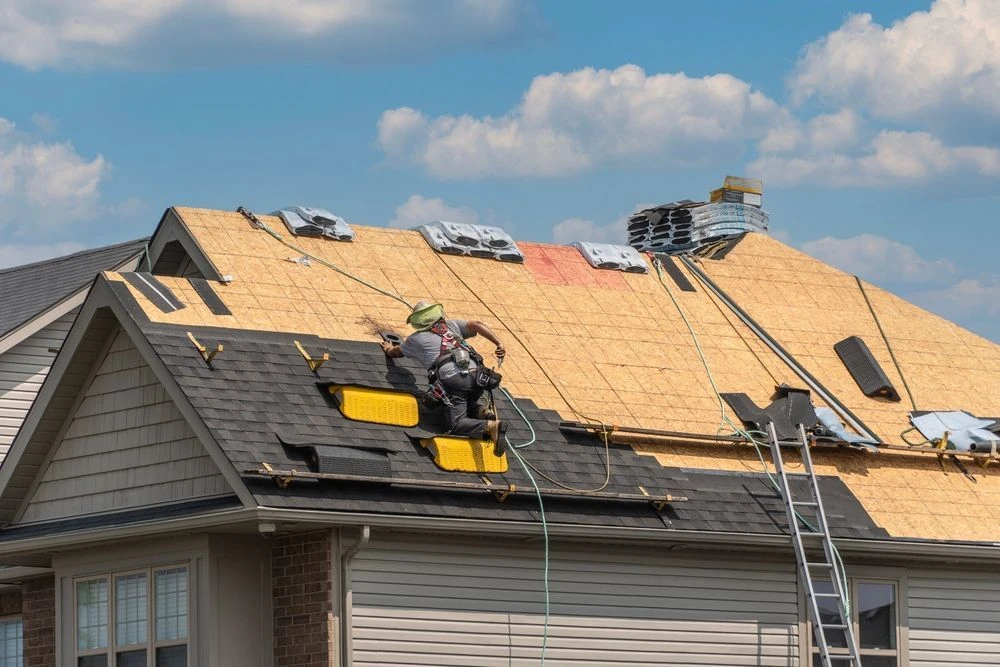
Post-storm inspection in Suwanee — the calls only ring for roofers who built authority before April.
Six questions every Suwanee roofer should answer before March 1.
Run these in early January. If you’re answering “no” to most, you’re going to be in a bidding war on April 14 instead of harvesting organic traffic.
Do you rank top-3 organically for “roofer Suwanee GA”?
If not, your January–March priority is fixing it. Top-3 captures 60%+ of organic clicks during storm-week search spikes.
Do you have neighborhood landing pages for Brushy Creek, McGinnis Ferry, and Tench Road?
Generic “Suwanee roofing” pages convert at 4%. Neighborhood pages convert at 11–14% during storm weeks.
Is your storm-response landing page production-grade?
Inspection scheduling form, before/after gallery, insurance walkthrough, Google reviews block. If it loads slow on mobile or asks for too much info, you lose 30% of post-storm traffic.
Are you collecting reviews on a weekly cadence?
Storm-week conversion is review-driven. The roofer with 280 reviews at 4.9 wins the click over the roofer with 41 reviews at 4.7 — every time.
Is your LSA budget cap removed for April–June?
Capped LSAs leave money on the table during storm weeks. Remove the cap, set a daily budget by ZIP, let Google deliver.
Can your intake answer 80% of calls within 3 rings during storm weeks?
Your April 18 inbound call volume will be 6x your January 18 baseline. If your intake answers in 2 rings on Jan 18 and 14 rings on Apr 18, you’re losing 35%+ of peak callers to the next roofer’s auto-attendant.
Behind the scenes on a Suwanee roofing brand shoot — pre-season content production should peak in February.
What Suwanee roofers keep asking us about the calendar.
Tight but doable. We can typically get neighborhood landing pages live, GBP optimized, and review velocity moving in 4–5 weeks. You won’t dominate by April 14, but you’ll be in the auction at half the cost of a fully-reactive competitor. The deeper benefit kicks in by the October mini-peak and the next year’s spring.
We have a trigger-based emergency LSA push protocol. If a hail event hits outside the predicted window, we redeploy from reserve within 24 hours. The beauty of the foundation-first model is that organic ranking captures the unexpected events for free — the LSA cap removal is the only spend lift you need.
Strongest for retail residential and insurance work. Commercial roofing has a flatter calendar tied to property-management procurement cycles. If you do both, we run two parallel calendars. Most Suwanee roofers we work with are 80%+ residential.
No. One roofer per geo, full stop. The conflict-of-interest line is non-negotiable — it’s the whole reason we can promise category dominance.
October. We need 90 days for foundation work to compound — content indexed, GBP signals settled, reviews stacked, citations built. Onboarding in March is a scramble. Onboarding in May is a write-off for the season.
Imagine 118 storm-season jobs at $190 each instead of 52 at $610.
If you want a 30-minute call where we plot your last 3 years of jobs against Gwinnett storm reports and rebuild your spend curve around the pre-season window — that’s free. We do a few of these a week with roofers across the broader North Atlanta market and inside the roofing vertical specifically.
Ready to turn searches into booked jobs?
Viral Spark is a marketing agency for roofers built for North Atlanta contractors. We pair websites built to book jobs with SEO that books jobs so the right customers find you first — no lead-buying. Get a free game plan →