North Fulton Storm Chasers Generate 61% of Revenue in 14 Weeks.
Roofers who maintain year-round SEO and GBP activity generate that same revenue in 32 weeks — at lower ad costs and higher close rates. Storm chasing isn’t a strategy. It’s a tax on roofers who don’t have one.
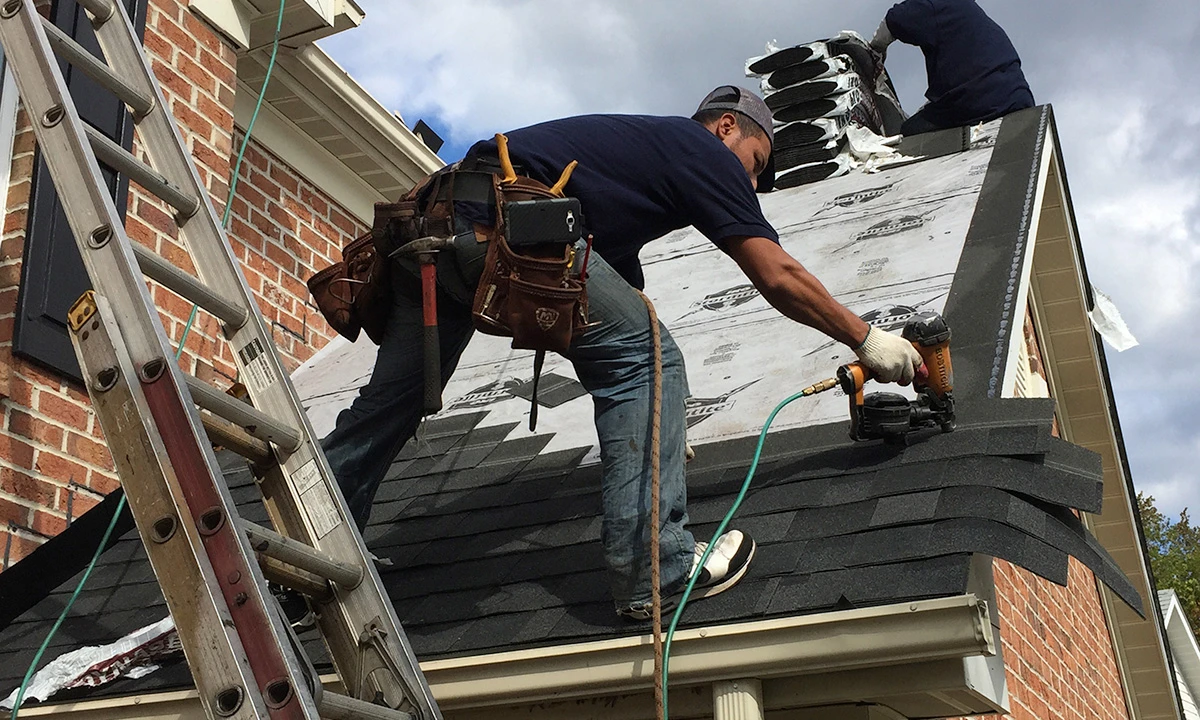
Storm season is a sugar high, not a business model.
Here’s the thing. Most North Fulton roofers run their entire revenue plan on weather. A good hail month does $280,000. January does $43,000. You’ve probably noticed your own revenue chart looks like a heart monitor. That’s not a business. That’s a coin flip with a tax bill.
Real talk: 31% of every residential roof in North Fulton gets replaced for non-storm reasons — age, leaks, sale prep, insurance demands, energy-efficiency upgrades. That’s a 12-month baseline of demand sitting right there. And it goes to whichever roofer is visible when the search happens.
The roofer ranking in the top three for “Alpharetta roof replacement” doesn’t have a winter problem. He has a winter advantage. While storm-chasers are sitting on their hands waiting for the next hail report, he’s getting 7 to 11 inbound calls every week from homeowners who Googled their problem and called the company they saw first.
Storm-chaser vs. year-round roofer
Same crew size. Same average ticket. Two completely different annual revenue stories.
| What You Get | Storm-chaser | Year-round roofer |
|---|---|---|
| Revenue concentration | 61% in 14 weeks | Even across 32 weeks |
| January monthly revenue | $43,000 | $167,000 |
| Cost per signed contract | $680 (peak storm) | $214 (sustained SEO) |
| Crew utilization | Feast or famine | 78%+ year-round |
| Insurance-only revenue mix | 89% | 54% |
“The roofer ranking in the top three for ‘Alpharetta roof replacement’ doesn’t have a winter problem. He has a winter advantage.”— what we tell every North Fulton roofing client during onboarding
Let me walk you through the math, because it’s not theoretical. A typical North Fulton storm-chaser doing $3.4M annually averages 11 inbound calls per week in May at a CPL of $680 — most of which are insurance-claim races against five other roofers in the same neighborhood. Same roofer with year-round SEO foundation averages 9 calls per week in May plus 8 calls per week in January at a blended CPL of $214. Twice the annual volume, less than a third of the cost per acquisition, and a project mix that tilts toward higher-margin retail work.
You’ve probably noticed it in your own intake: the storm leads close at 22% to signed contract because they’re cross-shopping in a panic. The non-storm leads close at 47% because the homeowner has time, trust signals to evaluate, and isn’t comparing six bids in 48 hours. Same crew, same craftsmanship, different close rate — driven entirely by which month the lead came in.
That’s why I tell every Alpharetta roofer the same thing on a first call: your January revenue isn’t a January marketing outcome. It’s a year-old SEO investment that started paying dividends six months in and compounds every month you stay live. The roofers who started this in 2024 are eating storm-chasers’ lunch in 2026 — quietly, predictably, and without ever waiting for the weather report.
Stop chasing storms. Start owning Google.
Storms are temporary. Rankings compound. The roofers who dominate North Fulton long-term aren’t the fastest responders to hail events — they’re the ones who built a digital pipeline strong enough to generate replacement business every single month.
What each quarter actually does for your pipeline.
Let me tell you what actually works for a North Fulton roofer doing $3M–$12M annually. The year isn’t twelve interchangeable months — it’s four very different demand patterns, and your marketing has to match.
Here’s how I think about it. Each quarter has a primary demand driver — aging-roof replacement, storm reactivity, real estate transaction, insurance audit. Your channels run all four, but the volume shifts with whichever driver is active. Most roofers only fund one of these. That’s why their revenue chart looks like a heart monitor instead of a steady climb.
The non-storm months that pay your overhead.
January, February, November, December — these are the quarters where your year-round SEO position pays the rent. Aged roofs don’t care about weather. Real estate transactions don’t pause. Insurance audits keep happening. The roofer ranking top-three captures 7–11 calls per week at $214 per signed contract. The roofer who only chases hail is invisible.
The high-velocity quarter.
March–May is when North Fulton hail patterns peak. Your job: be the first roofer in the neighborhood with a door-hanger AND a Google ad. Both, not either.
Where last year’s strategy pays.
July–September: crews running flat-out on Q2 claims, marketing focuses on content capture and Q4 baseline campaigns. Don’t pause anything. Volume shifts, channels don’t.
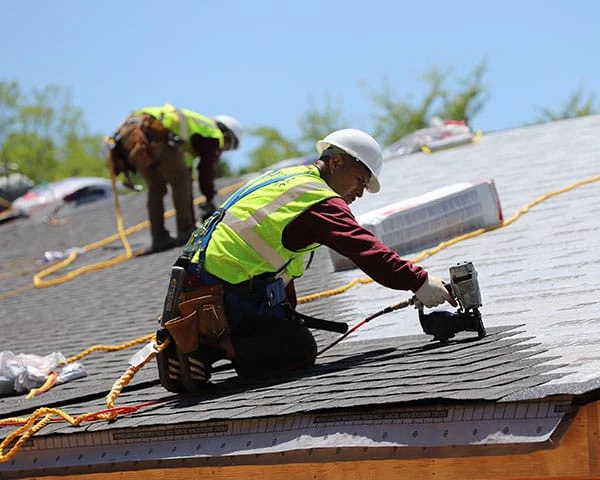
Three motions running in parallel, all year.
Always-on SEO + GBP
Rank for “Alpharetta roof replacement,” “Milton roofing contractor,” and “GA-400 corridor roofer” 365 days a year. Google Business Profile posts twice weekly, no exceptions. This is the floor, not the campaign.
Storm-mode toggle
Same ad accounts run year-round. When a storm hits North Fulton, you scale paid spend 6x for 14 days, then taper back. Speed wins storm season. Patience wins the year.
Content compounding
Every replacement becomes a before/after gallery, a drone video, and a Google review prompt. Document every roof. The job you do in July becomes the ad creative that books November.
A GA-400-corridor roofer ran the math.
His Januarys averaged $43,000 in revenue. He hated January. We built an always-on SEO + GBP foundation, kept his ads live at 25% of storm-season budget through Q1, and 14 months later his January did $167,000 — 4x his historical baseline. He still chases storms. He just doesn’t depend on them.
The valley is where year-round wins the war.
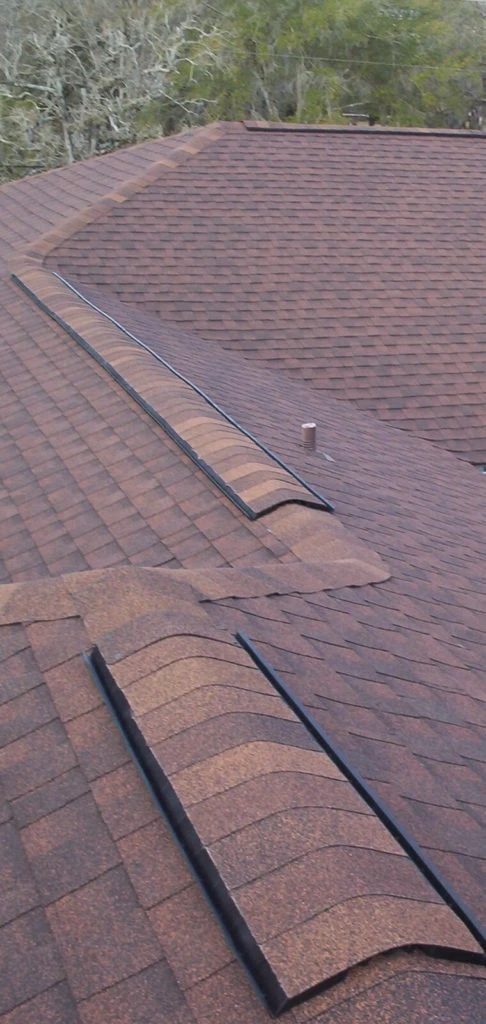
What you actually run, month by month.
Six motions, calibrated by quarter. Channels don’t change. Volume does. Here’s what a profitable year looks like for an Alpharetta roofer.
The hardest part isn’t the work — it’s the discipline of paying $1,800 in February when last storm season’s revenue is still in the bank and the phone feels quieter than you’d like. That discipline is the entire strategy. Every roofer I work with feels the same pull to “save money” by pausing SEO in non-storm months. Every one who pauses regrets it 6–10 months later when their rankings have slipped and they’re back to depending on weather.
You’ve probably noticed your best non-storm leads come from people who say “I Googled you” or “I saw your reviews.” That’s the year-round engine talking. The good news? Once you’ve held top-three rankings for 14 to 18 months, the engine becomes self-reinforcing. Every new review strengthens map-pack position. Every blog post pulls in long-tail traffic. Every job documented becomes both portfolio and SEO signal. Stop running the engine and the engine stops feeding you.
January–February: Hold the floor
SEO at full investment. GBP posts twice a week. Paid search at 30% of storm-season budget. Goal: $167K minimum from non-storm replacement.
March–May: Storm-mode toggle
Watch the weather. When hail hits, scale paid 6x for 14 days. Door-knock crews on the ground within 48 hours. Insurance adjuster relationships live or die in this window.
June: Capture and convert
Crews are buried with Q2 claims. Marketing’s job: document every roof, every crew, every reaction. This is Q4 ad creative being made.
July–August: Pipeline the fall
Insurance claims close out. Shift paid back to discovery. Publish two long-form blog posts on “preparing your roof for fall.” Run review-request automation.
September–October: Rebuild the floor
Refresh website hero gallery, audit GBP, brief your marketing partner on year-end demand. Insurance audit season starts in October.
November–December: Compound
Year-end real estate transactions, energy audits, and insurance renewals drive a quiet but steady wave of non-storm replacements through the holidays.
What North Fulton roofers actually ask us.
Because storm work is the most expensive to acquire and the most concentrated in time. 14 weeks of feast and 38 weeks of famine is a cash flow disaster. Year-round SEO doesn’t replace storm chasing — it makes the rest of the year survivable, which is the only way storm season becomes pure margin instead of overhead recovery.
The first 90 days are slow. Months 4–8 you’ll see top-five rankings on long-tail terms like “Milton roof replacement contractor.” By month 12, you should be in the top three for your money keyword. The roofers who started SEO in 2023 are eating the storm chasers’ lunch right now in 2026.
For a $4M Alpharetta roofer: $1,800–$2,400/month SEO sustained, plus $4K–$7K paid in non-storm months and 6x that during storm windows. The SEO budget never moves. Paid is the dial; SEO is the foundation.
Year-round marketing tilts your mix toward retail and out-of-pocket projects, which carry 22%–34% better margin than insurance work. Storm chasers run 89% insurance. Year-round operators run closer to 54%. That margin shift alone justifies the SEO investment.
Better, actually. A 2-crew roofer only needs 18–24 non-storm replacements a year to flatten the revenue curve completely. That’s two a month from year-round Google rankings. Achievable in months 8–14 of a proper SEO foundation.
Flatten the January valley before next year’s storm tax doubles.
We’ll audit your current Google presence, map the non-storm demand in your service radius, and show you exactly what a year-round North Fulton roofing pipeline looks like. No pitch, no pressure.
Ready to turn searches into booked jobs?
Viral Spark is a roofing SEO agency built for North Atlanta contractors. We pair contractor website design with contractor SEO so the right customers find you first — no lead-buying. Get a free game plan →