How Duluth landscapers dominate neighborhood search.
A Duluth landscaper built one neighborhood-specific page targeting the Rogers Bridge Road area. Within 60 days it produced more leads than his whole website had the previous year.
Your “service area” page lists 14 cities — and ranks for none of them.
Here’s the thing. Most Duluth landscapers we audit have the exact same site architecture. A homepage. A few service pages. And buried four clicks deep, a single page titled “Service Area” with a bulleted list of 14 cities — Duluth, Suwanee, Johns Creek, Sugar Hill, Norcross, Berkeley Lake, Peachtree Corners, Roswell, and so on. One paragraph at the top says, “We proudly serve all of these communities.”
Real talk: that page does not rank. For any of those cities. It’s the SEO equivalent of whispering 14 names in a stadium — Google has no idea which one you actually specialize in, and no homeowner clicking that page feels like you’re their landscaper. The page exists, but it doesn’t earn.
And here’s the deeper problem most landscapers haven’t noticed: Duluth’s homeowner communities cluster by neighborhood, not city. The Pleasant Hill Road corridor has its own dynamic. The Berkeley Lake homeowners network with each other. The Rogers Bridge Road area shares contractor referrals through tight community channels. The professional families along the Johns Creek border behave like their own market. When one of those homeowners searches, they often type the neighborhood — not “Duluth.”
The landscapers winning in Duluth right now don’t list 14 cities on one page. They built dedicated neighborhood pages for the three or four Duluth submarkets where they want to dominate — and now they own the searches their best clients are actually typing. 6.1x traffic is the conservative number.
The good news? Nobody in Duluth landscaping is doing this. Which means the ranking is yours to take if you commit to the strategy for 90 days.
Generic “service area” page vs. dedicated neighborhood pages.
Same content effort. Completely different ranking outcomes.
| What you’re building | One bulleted “service area” page | Dedicated neighborhood pages |
|---|---|---|
| Pages indexed by Google | 1 page, mostly ignored | 4–6 pages, each ranking individually |
| Average ranking position | Position 38 across all 14 cities | Position 3–6 for each targeted neighborhood |
| Monthly organic traffic per page | 11 sessions/month total | 140+ sessions/month per page |
| Inbound calls sourced | Less than 1 per month | 3–6 per neighborhood, per month |
| Buyer perception on landing | “Generic landscaper that lists my city” | “They specialize in my exact neighborhood” |
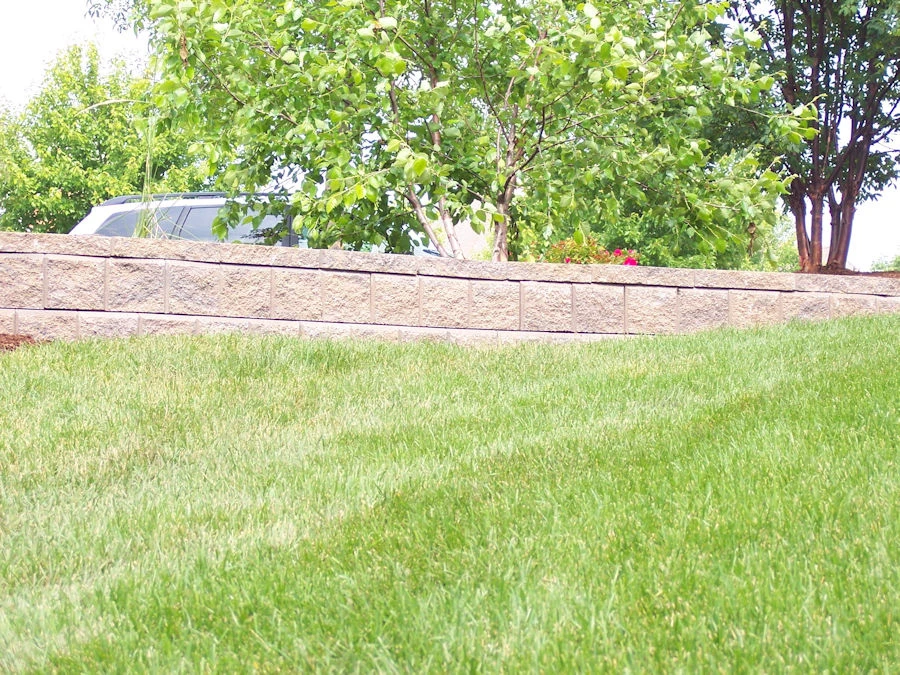
A Pleasant Hill corridor hardscape project — exactly the kind of visual that anchors a high-ranking neighborhood page.
Stop trying to serve “all of Gwinnett.” Start owning four Duluth neighborhoods.
You’ve probably been told the answer is “list more cities.” More keywords. Broader coverage. Get on every Gwinnett map you can find. The pitch is always the same — go wider and the leads will follow.
That’s backwards. Going wider weakens every signal. When Google can’t tell whether you specialize in Duluth, Suwanee, or Norcross, it ranks you for none of them. Specificity is what wins in 2026.
Here’s what the landscapers booking through October in Duluth do differently. They pick the four or five neighborhoods that produce 80% of their revenue — usually Pleasant Hill Road, the Gwinnett Place area, the Rogers Bridge / Johns Creek border, the River Green subdivision, and Berkeley Lake — and they build a dedicated, complete page for each one. Real photos from real jobs in that neighborhood. Real testimonials from real homeowners on those streets. Schema that ties the page to that exact geographic area.
Duluth’s Korean, Indian, and Vietnamese professional communities don’t search “Duluth landscaper.” They search the neighborhood where they live. Match the search and the rest is paperwork.— What 40+ Duluth landscaper rank audits show
And here’s the part competitors haven’t caught up to: Duluth’s international homeowner communities pass referrals neighborhood-by-neighborhood. Once you’ve done one Pleasant Hill job and your neighborhood page is the #1 result, the next eight homeowners on that corridor will find you, recognize the work, and call. You haven’t just won a search — you’ve embedded yourself in a referral network.
Four neighborhoods. Four pages. One Duluth landgrab.
Every landscaper we’ve watched dominate Duluth has run the same play. Pick the neighborhoods. Build the pages. Stack the proof. Watch the calls come from streets your competitors didn’t know were searching.
What a Duluth neighborhood landscape page actually contains.
Most landscapers think a neighborhood page is “the city name plus a few extra words.” That’s a sticky note, not a page. Here’s what a real one looks like.
One indexed URL per Duluth neighborhood.
A dedicated page at /landscaping-pleasant-hill-duluth/, /landscaping-berkeley-lake-duluth/, /landscaping-rogers-bridge-duluth/, etc. Each one runs 1,400–1,800 words. Each one has its own H1, meta description, schema, and internal links. Each one references the specific characteristics of that submarket — lot sizes, common styles, HOA dynamics, common project types. That depth is the entire foundation of local SEO that compounds. Most Duluth landscapers never build a single one. The ones who build four become uncatchable.
Visual proof from that exact submarket.
Photos from a real Pleasant Hill yard. A real Berkeley Lake patio install. A real River Green re-grade. Generic stock kills neighborhood pages. If the photos don’t feel like that neighborhood, Google and homeowners both know.
Testimonials with neighborhood references.
“We hired them for our yard on Rogers Bridge Road…” beats a generic five-star quote ten times over. Names of streets, subdivisions, and HOAs build the local authority signal — and the trust signal — at the same time.
The math at four pages.
Each ranked neighborhood page averages roughly $29,400 per year in sourced revenue at conservative Duluth landscape close rates. Build four — Pleasant Hill, Berkeley Lake, Rogers Bridge, River Green — and you’re at $117,600 annually from search nobody else is competing for. That number compounds yearly as referrals layer onto the ranking traffic.
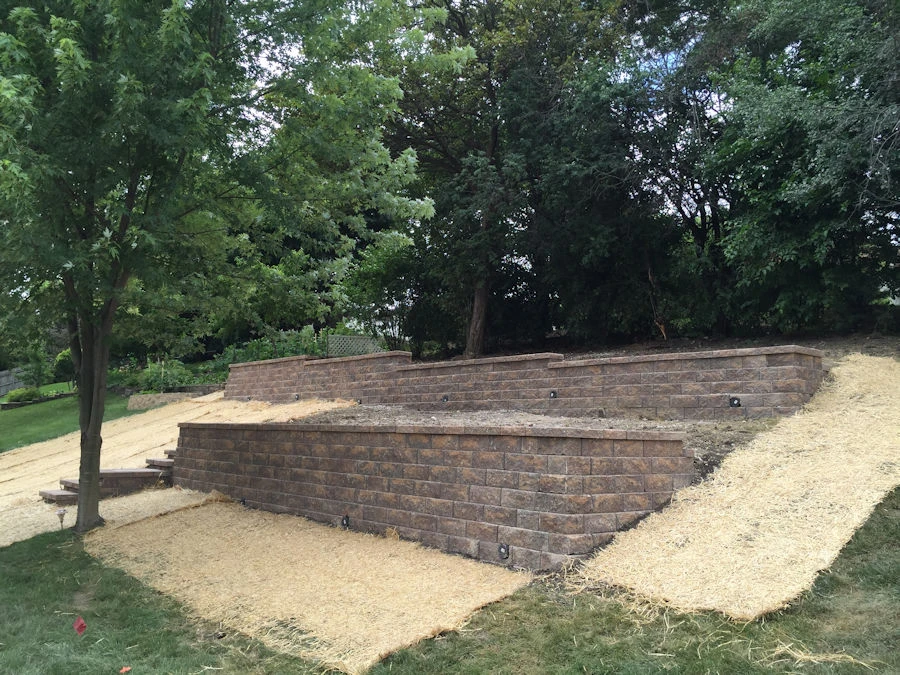
A Berkeley Lake hardscape — the type of asset that locks the neighborhood ranking and pre-sells the next call.
How we build four Duluth neighborhood pages in 90 days.
Pick the four submarkets
We pull your last 24 months of jobs. We map them by Duluth neighborhood. We identify the four where you have the most proof and where the keyword data shows zero competition. Usually Pleasant Hill, Berkeley Lake, Rogers Bridge, and one of River Green or the Gwinnett Place area.
Build the four pages
Each page gets a custom URL, H1, meta, schema, neighborhood-specific copy, real photo gallery from that submarket, neighborhood-referenced testimonials, and internal links to your service pages. We launch them in two-page waves so each gets attention.
Stack the local signals
Google Business Profile posts targeted at each neighborhood. Citations updated. Local backlinks from Duluth HOAs, Pleasant Hill business networks, and community resources. Within 62 days, the first page is ranked. By day 90, two more are climbing fast.
The Rogers Bridge landscaper who unlocked four neighborhoods.
A Duluth landscaper with 13 years in the market had a website that listed 14 Gwinnett cities on a single page. He averaged 7 inbound web leads per month — closing maybe 1.2. We pulled the keyword audit, surfaced 47 uncontested Duluth neighborhood phrases, and built four dedicated pages: Pleasant Hill, Berkeley Lake, Rogers Bridge Road, and River Green. By day 58, the Rogers Bridge page was ranked #2 nationally for its primary phrase. By month 9 he was averaging 21 inbound calls per month from those four pages — closing 7.4. Average ticket $8,200. Annualized: roughly $730,000 from a strategy that took 90 days to build.
Inbound landscape leads by month after launch.
Neighborhood pages hold rankings for years. Once you’ve planted the flag, competitors don’t catch up — they have to build their own from zero.
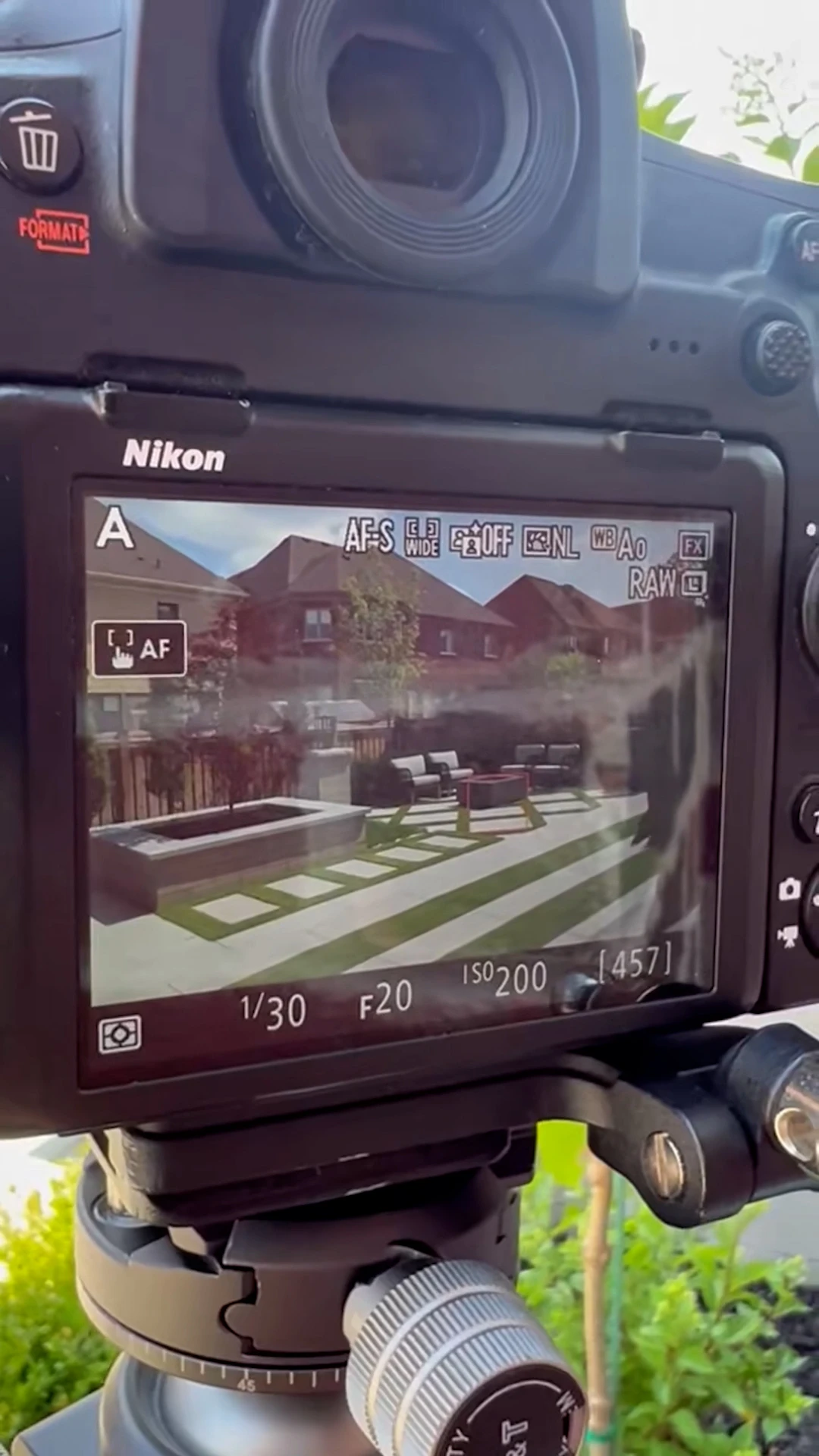
Behind the scenes of a Duluth content day — every shoot produces enough assets to anchor an entire neighborhood page.
Six questions before you launch a neighborhood SEO strategy.
If you’re hiring anyone to do this for you — us included — these six questions surface whether it’s a real plan or a recycled package.
“Which Duluth neighborhoods specifically?”
Pleasant Hill, Berkeley Lake, Rogers Bridge, River Green, Gwinnett Place area. They should name them. “Duluth neighborhoods” is a non-answer.
“How many indexed pages get built?”
One per neighborhood with full optimization. Not one mega-page or paragraphs squeezed onto your existing service-area page.
“Whose photos are on the pages?”
Yours. From real Duluth jobs. If they’re using stock or sourcing photos from a stock library, the pages won’t rank locally.
“How long until first-page rankings?”
For uncontested Duluth neighborhood keywords: 44–71 days. Anyone promising “two weeks” is selling ads in disguise.
“What’s the language strategy?”
Duluth’s professional communities include Korean, Indian, and Vietnamese homeowners. Does your strategy account for that? Many do not.
“What do I own at the end?”
Pages, content, photos, Google profile — all yours. If the answer is “ours,” you’re renting your own SEO from them.
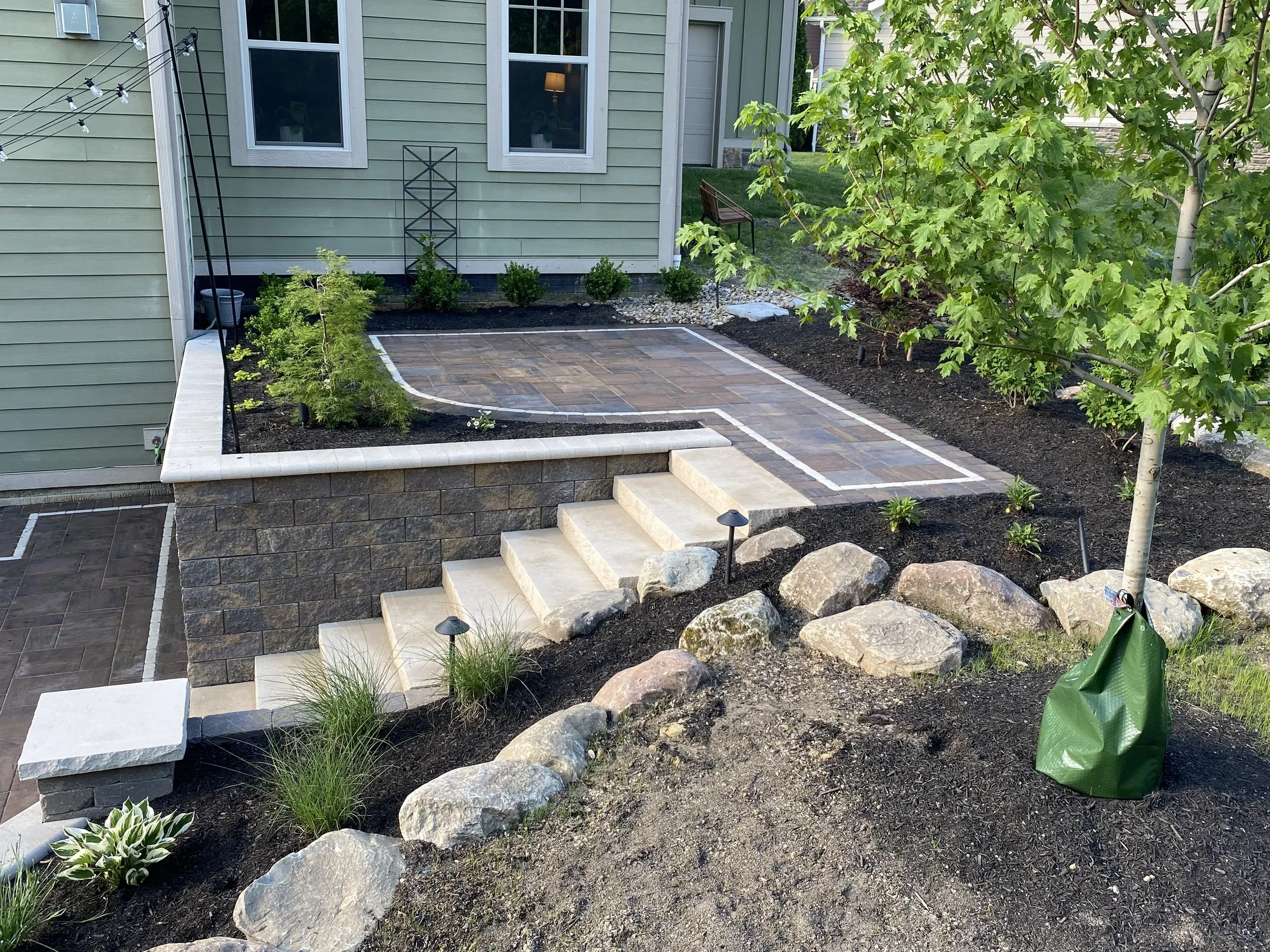
A River Green install — the asset that becomes the visual anchor for an entire neighborhood-targeted page.
What Duluth landscapers keep asking us.
Start with four — the Duluth submarkets where you’ve already done your best work. Trying to launch eight at once usually means none of them get the depth they need. Four well-built pages outrank eight half-built ones every time.
Then we shoot them. Most Duluth landscapers have at least one strong job in each priority neighborhood — we go back and document it properly. Or we shoot during your next install in that submarket and build the page once we have the proof.
Cover what you actually do in that neighborhood. The Berkeley Lake page might emphasize lakefront landscaping and erosion grading. The Pleasant Hill page might emphasize Asian-influenced garden design. Match the page to the real client base, not your full service menu.
For Duluth, we’ve gotten the best results by keeping the main page in English but including a short, professionally translated paragraph at the bottom — “We work with Korean-speaking and Spanish-speaking families across Duluth” — plus a quote in that language. Builds trust without complicating the build.
The opposite. Neighborhood depth sends local relevance signals back to your whole site. Most landscapers see their broad “Duluth” ranking climb 5–11 spots within a year of launching the neighborhood strategy — even though they never targeted the broad keyword directly.
Imagine owning four Duluth neighborhood searches your competitors don’t know exist.
If you want a 30-minute call where we map your current Duluth ranking gaps, identify the four richest neighborhoods to target, and show you exactly which competitors haven’t claimed them — that’s free. We do a few of these a week with landscapers across Gwinnett and the broader North Atlanta home-services market.
Ready to turn searches into booked jobs?
Viral Spark is a landscaping SEO agency built for North Atlanta contractors. We pair websites built to book jobs with SEO that books jobs so the right customers find you first — no lead-buying. Get a free game plan →