Website mistakes that cost Suwanee roofers thousands in lost jobs.
A Suwanee roofer called us the week after storm season ended. He’d pulled in 200 website visitors in one afternoon and booked exactly zero jobs. Here’s what we found inside his site — and the six fixes that turned the next storm week into 31 inbound leads.
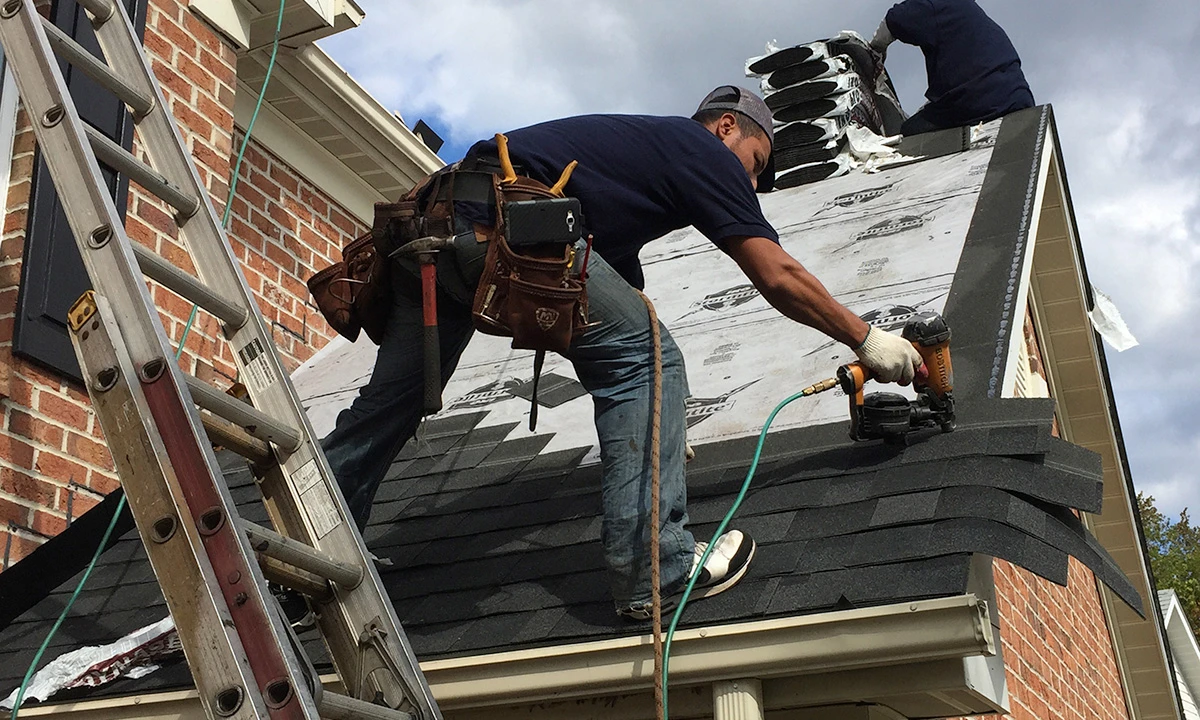
200 visitors in one afternoon. Zero jobs booked.
Here’s the thing. Storm season in Suwanee creates a narrow traffic spike — sometimes 4 hours, sometimes 2 days. Roofers either capture that spike or lose every single visitor to the competitor who built a site that converts at 9%. There’s no consolation prize.
The Suwanee roofer who called us had a homepage that looked fine. Hero photo, family company history, service list, contact page. On a normal Tuesday it pulled in 4–7 visitors and converted 1. Then a hailstorm rolled through McGinnis Ferry on a Thursday afternoon and his site got 200 visitors in 3 hours. He booked zero of them. Not one.
Real talk: that wasn’t a traffic problem. That was a website actively rejecting buyers during the only window of the quarter that matters. No emergency contact form above the fold. No financing info. No “we can be on your roof tomorrow” language. And his contact page required filling out 11 fields before it would submit — including a required dropdown for “How did you hear about us?”
Storm season is the only marketing window most Suwanee roofers can’t afford to lose. Every friction point during that 4-hour window is a $20K+ roofing job handed directly to a competitor.
The good news? You’ve probably got 3 of the 6 storm-window mistakes below. Fixing the worst two will pay for itself in your next storm spike — usually inside 6 weeks. Let me tell you what actually works.
One more thing before we get to the mistakes. Storm-driven roofing traffic behaves completely differently from normal home-services traffic. A homeowner researching a kitchen remodel takes 14 days to make a decision. A homeowner with hail damage on a Saturday afternoon decides in 90 minutes. They open three contractor tabs, scan for “Can you be here today,” and call whoever has the clearest answer. Your website isn’t competing on copy or design during a storm — it’s competing on whether a panicked homeowner can find your phone number and a 3-field emergency form in under 8 seconds.
That’s why the fix sequence matters. We ship the sticky call button first, the emergency form second, and the rest of the rebuild over the following month. The first two pick up roughly 70% of the storm-window bleed independently — you don’t have to wait for the full rebuild to start capturing.
Brochure vs. storm-capture engine
Same crew, same trucks. Different math the next time hail hits McGinnis Ferry.
| What you’re buying | Most Suwanee roofer sites | A storm-capture build |
|---|---|---|
| Above-the-fold call button | Missing or in footer | Sticky tap-to-call header on mobile |
| Emergency request form | Same as standard contact, buried | 3-field “We can be there today” form above the fold |
| Financing info | Buried on FAQ if anywhere | Named lenders on every storm landing page |
| Insurance claim language | Generic “we work with insurance” | Specific Allstate, State Farm, USAA process pages |
| Mobile load time | 5.1–7.4 seconds | Under 1.6 seconds |
| Contact form fields | 9–14 with dropdowns | 3: name, phone, address |
The Suwanee roofer who loses $31K in a single storm week didn’t lose on price. He lost on a 4-hour window where his contact form asked 11 questions before it submitted.— Pattern from 18 Suwanee roofer rebuilds
The website errors costing Suwanee roofers their next storm spike.
Storm season hits 3–5 times a year in north Gwinnett. Each one is a 4-hour to 48-hour traffic spike. These six mistakes are why most roofers convert under 2% of that traffic.
What’s actually broken on most Suwanee roofer sites.
Each of these is a storm-window killer. Roofers who fix the top three see emergency request conversion rates jump from 1.8% to 7–9% on the same storm-driven traffic.
No sticky tap-to-call button above the fold on mobile.
This is the biggest single leak on every Suwanee roofer site we audit. 77% of storm-driven visitors don’t scroll. They land on your homepage panicked about a leak, scan for a phone number, and if they don’t see one in 2 seconds they hit back and click the next result. A sticky mobile tap-to-call header picks up 60–70% of the conversion bleed during storm spikes. Our roofing contractor web design rebuilds fix this in the first week, before we touch anything else.
11-field “Contact Us” form during a hail event.
A panicked homeowner with a tarp on his roof isn’t filling out a dropdown. 3 fields max: name, phone, address. Anything more is friction.
No financing or insurance language above the fold.
A Suwanee homeowner staring at a $14K replacement quote needs to know financing exists before he calls. Put it in the hero.
Slow mobile load, no storm landing page, and a homepage that doesn’t say “Suwanee.”
Get mobile load under 2 seconds. Build a dedicated storm-response landing page that you can boost in paid the second a hailstorm rolls through McGinnis Ferry or Old Peachtree. Rewrite your homepage so “Suwanee” appears six times in the first 200 words and the phrase “emergency roof repair” appears once. Each of those costs you 10–14% of inbound during a storm. Together they’re why one roofer captured 31 leads from the last storm and his competitor across town captured 4.
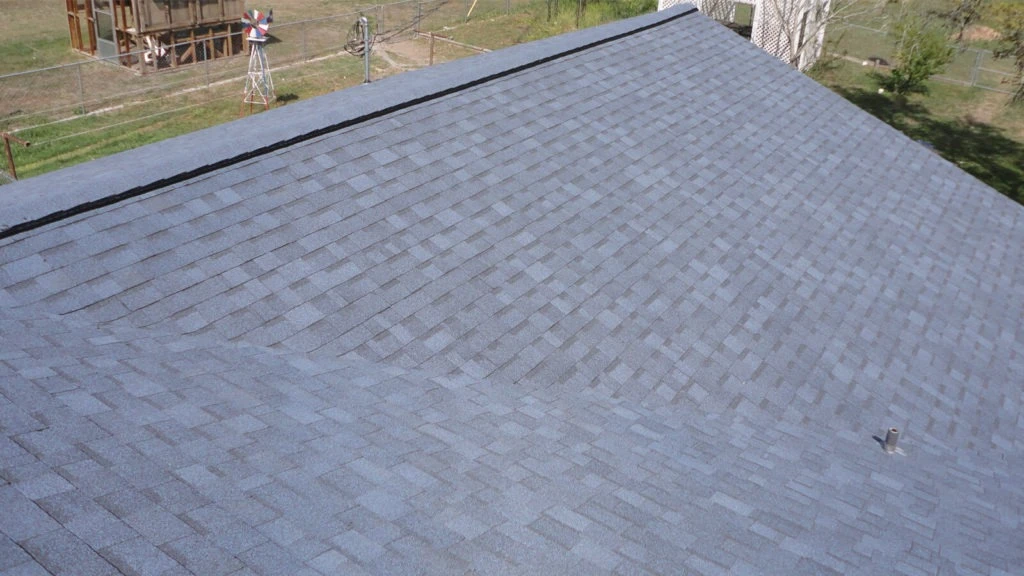
A real Suwanee crew on a real Suwanee roof — the kind of photo that anchors a storm-response landing page.
How we fix the six on a Suwanee roofer site.
Ship the sticky call button in week one
The single highest-leverage move. Live in 48 hours. Picks up the next storm spike whether the rest of the rebuild is done or not.
Build the storm landing page
One dedicated page with “Hail damage in Suwanee?” headline, 3-field emergency form, financing language, insurance process. Ready to boost in paid the next time a storm hits.
Measure storm-week inquiries
We don’t measure traffic. We measure inquiries during the next storm window. By the third storm, the math is clear: this rebuild paid for itself in roughly 3 weeks of capture.
What happened during the next storm spike after launch.
The Suwanee roofer relaunched in mid-March. Three weeks later, hail rolled through McGinnis Ferry on a Saturday afternoon. He got 280 visitors in 6 hours — a similar spike to the one that produced zero leads pre-rebuild. This time the sticky call button picked up 19 inbound calls. The 3-field emergency form captured 12 more requests. He booked 23 of 31 inquiries the following week at an average of $14,700 per job. The rebuild paid for itself before the second invoice cleared.
Suwanee roofer, McGinnis Ferry — conversions per 100 storm visitors
From a 0% storm-window conversion rate to roughly 11% — same crew, same trucks, same insurance partners.
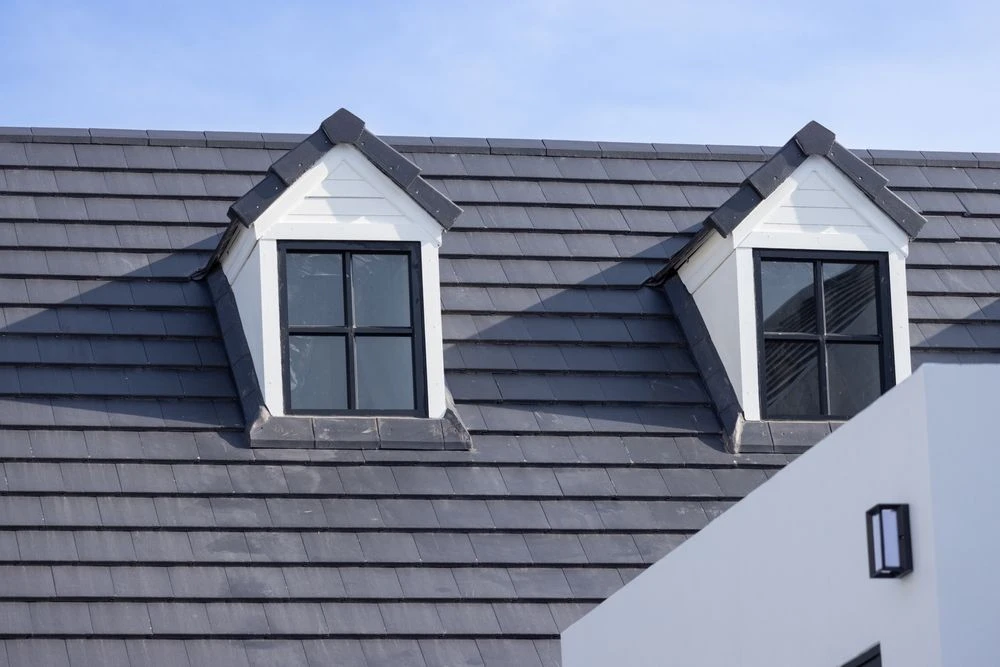
Inspection content like this — captured during real insurance-claim work — carries a storm landing page better than a stock crew photo.
Six checks to run before the next Suwanee storm.
Open your site on your phone right now. Run through these. Three failures means the next storm window costs you $30K+.
Is there a sticky tap-to-call button at the top of every mobile page?
Scroll your homepage. If the phone number isn’t fixed to the top, that’s the biggest single leak.
Does your emergency form have 3 fields or fewer?
Name, phone, address. Anything else is friction during a storm. Cut it.
Is “financing available” in your hero text?
If the homeowner has to dig to find it, they assume it’s not offered.
Do you have a dedicated storm-response landing page?
You need one URL you can boost in paid the minute hail hits Old Peachtree.
Does the homepage say “Suwanee” five times in the first 200 words?
If not, Google has no idea you’re a Suwanee roofer when storm searches spike.
Does the site load in under 2 seconds on cellular?
During a storm, half your traffic is on bad connections. Above 4 seconds you’ve lost them.
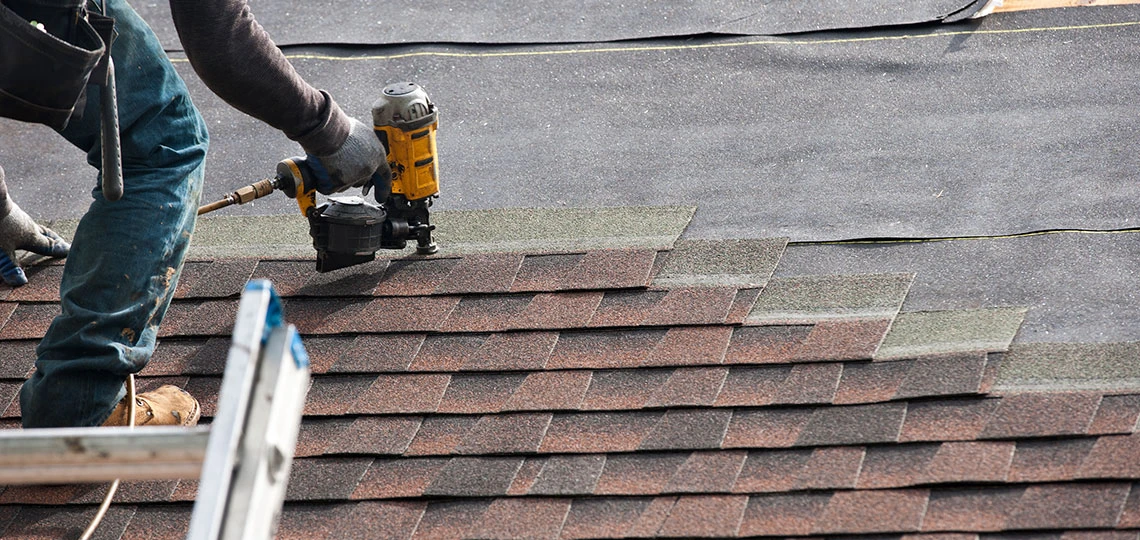
Mid-replacement content like this — real Suwanee crew, real Suwanee neighborhood — is the difference between trust and bounce.
A finished Suwanee replacement — the kind of asset that turns storm-window visitors into next-week bookings.
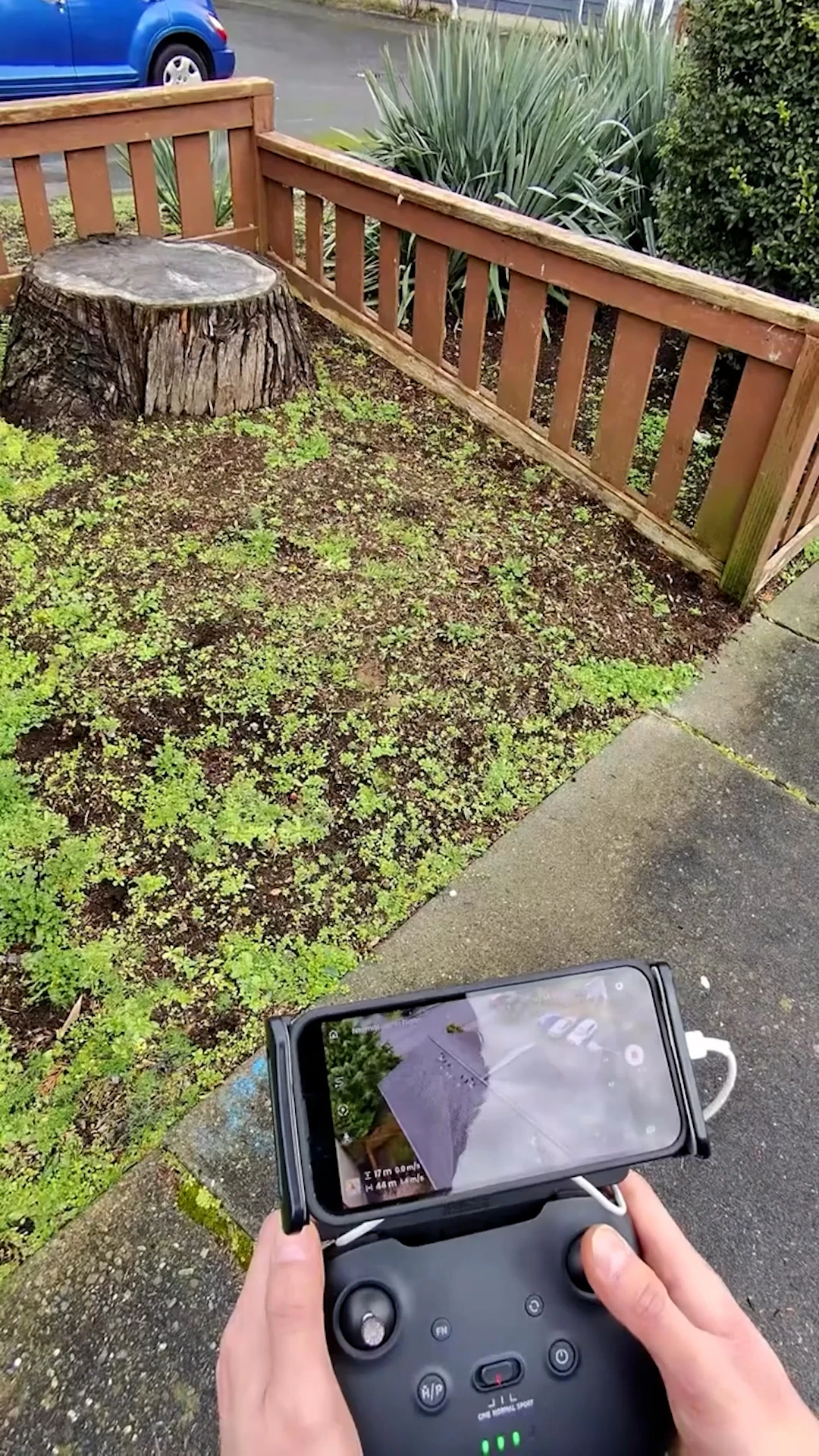
Behind the scenes — we shoot two Suwanee jobs before launch so every storm landing page has real proof.
What Suwanee roofers keep asking about website mistakes.
48 hours on most existing sites. It’s a header modification, not a rebuild. We ship that first because it captures the next storm spike whether or not the rest of the rebuild is finished.
Yes. Your homepage has to serve normal traffic too. The storm page is a dedicated URL with “Hail damage in Suwanee?” headline, 3-field emergency form, financing and insurance language, and a “we can be there today” promise. You boost it in paid the second a storm hits.
Three: name, phone, address. Form completion drops below 30% above 4 fields. During a storm, completion drops below 12% above 7 fields. Cut everything that isn’t essential to dispatching a crew.
For a Suwanee roofer doing $1M–$4M annually, a full storm-capture rebuild runs $8K–$18K. Most pay for themselves in a single storm week. Anything under $4K is a template; anything over $30K is a national agency overcharging.
You can spend on ads. But if your landing page converts at 1.8%, you’re paying 5x what your competitor pays for the same lead. Fix the conversion first. Then turn up the ad spend. Otherwise you’re paying for traffic that bounces.
Get your roofer site storm-ready before the next McGinnis Ferry hailstorm.
30 minutes. We screen-record your site on cellular data, identify the storm-window mistakes, and tell you which two we’d fix first. Free. We do these every week with roofers across north Atlanta’s storm corridor. See the full roofing approach for the bigger picture.
Ready to turn searches into booked jobs?
Viral Spark is a roofer lead generation partner built for North Atlanta contractors. We pair websites built to book jobs with SEO that books jobs so the right customers find you first — no lead-buying. Get a free game plan →