

The sealing question comes up on almost every paver patio installation in Canton, GA — and the honest answer is more nuanced than what most contractors will tell you. Sealing is not automatically right for every paver surface. The decision depends on your material, your color, your exposure to staining, and what outcome you are actually trying to achieve.
There are two ways to get this wrong: sealing pavers that don’t need it, and skipping sealing on pavers that genuinely benefit from it. In Cherokee County, where summer humidity is high, Georgia red clay stains everything, and pollen season is aggressive, the right answer for most concrete paver patios is yes — but with conditions. Natural stone is a different story entirely. Here is how to think through the decision for your Canton property.
When Sealing Helps
Concrete pavers — the manufactured interlocking units most commonly used for paver patio installation in Canton, GA — are porous. That porosity is exactly what makes sealing valuable on light-colored or tumbled concrete units. Without a sealer, red clay tracked from the yard, pollen, cooking grease from an outdoor grill, and tannin runoff from surrounding trees all absorb directly into the surface. Once absorbed, staining is difficult to remove without aggressive acid washing that can damage the paver face over time.
The three conditions that make sealing genuinely worthwhile on Canton concrete pavers are: stain protection on light or buff-toned units where staining is highly visible; color enhancement on pavers where the homeowner wants a richer, wet-look or satin finish; and polymeric sand joint stabilization, where a penetrating sealer applied over freshly installed polymeric sand locks the sand surface and extends its resistance to erosion and weed germination. That last use case applies to almost every new paver installation regardless of stone color.
“On concrete pavers, the question isn’t whether to seal — it’s what sealer type fits your aesthetic goal and how often Georgia’s climate will demand you reapply it.”
Sealer types split into two categories: wet-look sealers, which are film-forming coatings that leave a visible sheen and saturate color significantly, and natural-finish or matte sealers, which penetrate the surface without altering appearance. Wet-look sealers are popular for entertainment spaces where the homeowner wants maximum visual impact. Natural sealers are preferred when the goal is stain resistance without changing the paver’s color or surface texture. Either way, proper application requires a clean, dry surface — sealing over moisture or organic debris locks the problem in rather than out.
When Sealing Isn’t Necessary
Travertine and bluestone are the natural stone paver options most commonly requested for Canton pool decks and premium walkway applications. Both materials behave very differently from concrete pavers when it comes to sealing. Travertine, in particular, is a calcium carbonate stone with a natural void structure. Applying a film-forming sealer to travertine can trap moisture that needs to escape through the stone — especially in Canton’s high-humidity summers — and cause spalling, flaking, or efflorescence as water vapor works to push through the sealed surface.
The standard recommendation for travertine and unfilled natural stone is either no sealer or a breathable penetrating sealer specifically formulated for calcium-based stone. Bluestone in shaded or wet locations can develop algae and organic growth, which a penetrating impregnating sealer can help slow — but it will not perform the same way a concrete paver sealer does, and it will not produce any wet-look color enhancement. If a contractor quotes a single sealer product for both your concrete pavers and your travertine, they are not treating the two materials as the different chemical surfaces they are.
Georgia Climate & Longevity
In most of the country, a quality paver sealer applied correctly lasts four to six years. In Cherokee County, Georgia, plan for two to four years before reapplication is needed. Canton’s UV exposure is significant — the same solar intensity that fades outdoor furniture breaks down the polymer chains in film-forming sealers. The humidity cycle of wet Georgia summers followed by dry, contracting winters creates a thermal stress that accelerates sealer breakdown at the surface level, particularly on pavers exposed to direct sun for more than six hours per day.
The visible signs that a sealer has reached the end of its effective life are: water no longer beads on the surface (the contact angle has flattened), the surface has developed a chalky or peeling appearance in high-traffic areas, or the pavers have absorbed a stain that would have beaded off a year ago. Resealing requires stripping the old sealer film before applying a new coat — applying over a degraded existing sealer traps the old coating and produces a cloudy, uneven result that is more difficult to remediate than starting fresh.
Professional paver sealing in Canton typically costs $0.75 to $1.50 per square foot depending on patio size, sealer product selected, surface prep required, and whether the joints need to be re-sanded prior to sealing. A 400-square-foot patio runs roughly $300 to $600 for sealing alone when the surface is in good condition. If pressure washing, stain treatment, or joint re-sanding are needed first, the total project cost increases accordingly. Doing it wrong costs significantly more than doing it once correctly — stripping and re-sealing a clouded or peeling surface adds labor that the original application could have avoided.
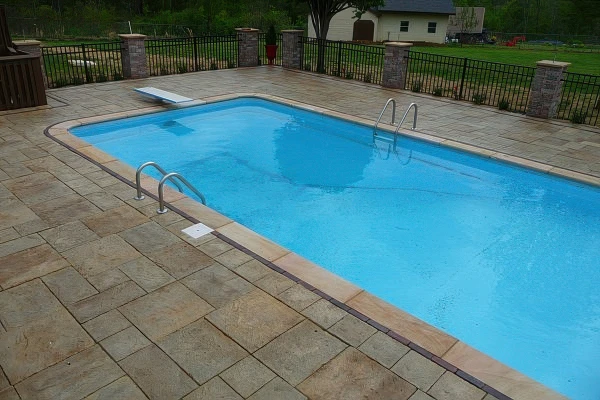
A sealed concrete paver patio in Canton — natural-finish penetrating sealer preserves color without altering surface texture or sheen.
Skipping sealing on concrete pavers in Canton’s climate produces a predictable outcome over three to five years: gradual color fade from UV exposure, progressive stain absorption that becomes permanent in the paver face, and polymeric sand joint erosion that allows organic matter to accumulate and germinate. None of these are catastrophic in year one — they compound. A patio that looks acceptable unsealed at age two often looks noticeably weathered and stained at age five, and remediation at that point involves more aggressive surface prep than a timely sealing schedule would have required.
Sealing incorrectly carries its own set of consequences. The three most common mistakes are: sealing over a wet surface (trapping moisture that causes hazing or whitening), applying film-forming sealer to natural stone (causing spalling and moisture-driven efflorescence), and failing to strip degraded sealer before recoating (producing a cloudy, peeling surface). All three are more expensive to fix after the fact than the original sealing project would have cost when done correctly.
Kaizen Scapes proudly serves homeowners across Canton, GA, Woodstock, GA, and the surrounding North Georgia communities including Holly Springs, Ball Ground, Acworth, Kennesaw, Marietta, Alpharetta, Milton, Roswell, Cumming, Johns Creek, and East Cobb. If you’re looking for hardscaping and landscaping craftsmanship within 35 miles of Canton or Woodstock, our team is ready to transform your outdoor space.
Whether you’re in Canton, Woodstock, Alpharetta, Milton, or anywhere across Cherokee County and the greater North Atlanta suburbs, Kaizen Scapes brings the same relentless standard to every project. We don’t do cookie-cutter. We do custom — built to last.
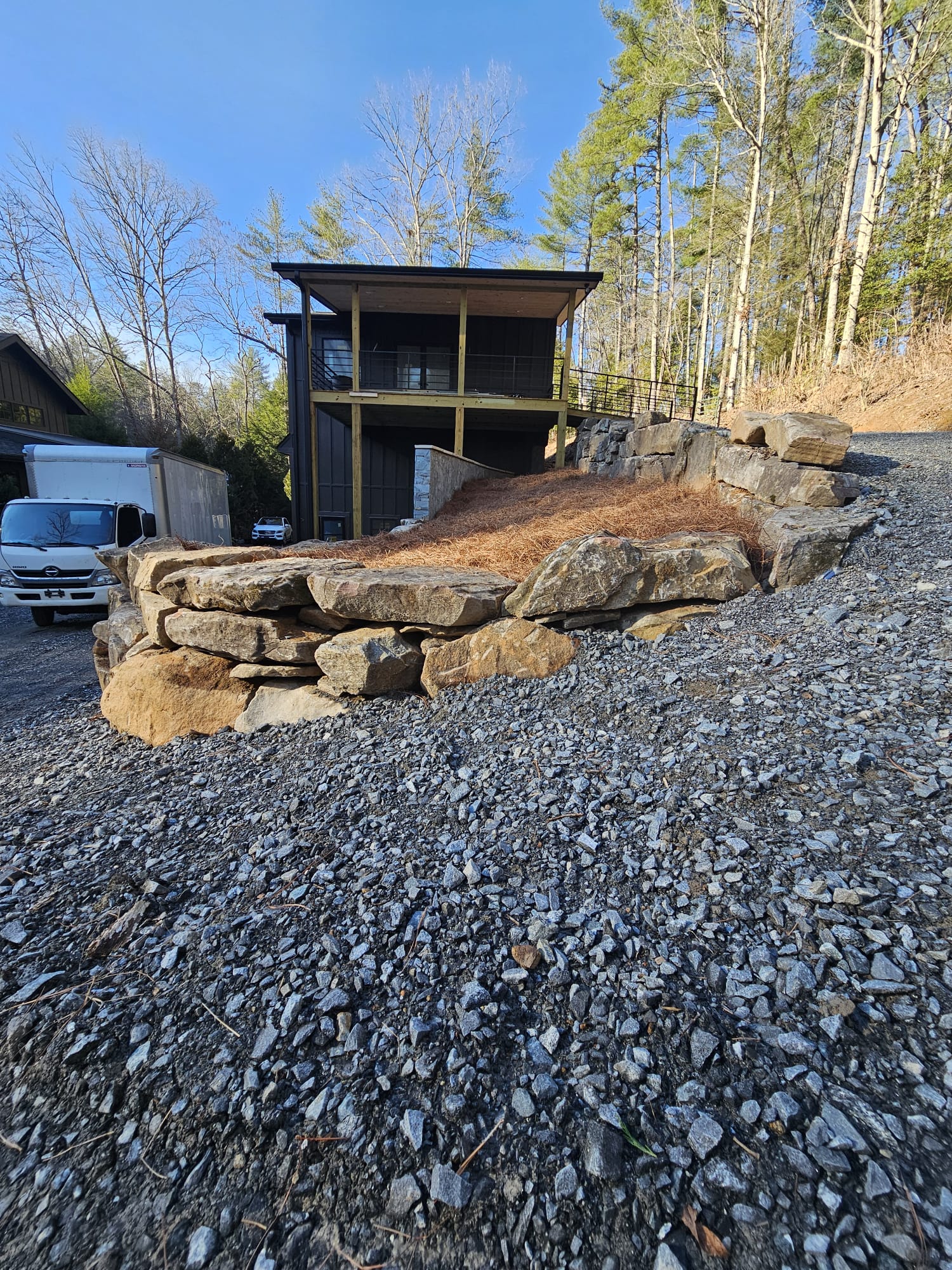
A completed hardscape installation in Canton, GA — concrete pavers properly sealed and jointed to handle Cherokee County’s humidity and clay exposure.
We assess the material, condition, and exposure before recommending anything. Free paver consultations across Canton and all of Cherokee County.
Kaizen Scapes is based in Canton, Georgia and serves the greater North Atlanta region within 35 miles: