

A steep slope in an Alpharetta backyard is not simply a landscaping problem — it is a structural engineering challenge with a specific right answer. For grade changes between eight and fifteen feet, that right answer is almost always a tiered retaining wall system. Not because a single tall wall can’t be built, but because the physics of lateral earth pressure distribution make tiering the structurally superior and often less expensive solution at that height range.
Alpharetta’s North Fulton properties — particularly lots in the established neighborhoods north of Windward Parkway and along the Chattahoochee corridor — frequently present grade changes in this range. Understanding how tiered systems distribute load differently from single tall walls is the foundation for evaluating any retaining wall quote on a property with serious elevation change.
The Engineering Case for Tiering
Lateral earth pressure — the force the soil exerts horizontally against a retaining wall — increases with wall height in a nonlinear relationship. A wall that is twice as tall does not carry twice the lateral load; it carries significantly more. The pressure at the base of a ten-foot wall is substantially greater than double the pressure at the base of a five-foot wall, because the soil column above exerts cumulative weight that translates into horizontal force at the base. This is the physics that makes tall single walls both expensive to engineer and more vulnerable to base failure.
A tiered system solves this by breaking the grade change into multiple shorter walls with a horizontal setback — a planted or graded bench — between each tier. Each wall in a tiered system stands independently and sees only the lateral pressure from the soil height it retains, not the cumulative pressure of the entire grade change. A twelve-foot grade change addressed by three four-foot tiers distributes the total load across three independent structures, each of which operates well within the performance range of standard segmental block without requiring the extreme geogrid engineering that a single twelve-foot wall would demand.
“A tiered system on a twelve-foot Alpharetta slope isn’t a compromise — it’s the structurally intelligent solution. Three four-foot walls are easier to build, easier to engineer, and often less expensive than one twelve-foot wall.”
The 1:1 Rule
The setback distance between tiers in a multi-wall system is not an aesthetic choice — it is a structural specification. The standard engineering guideline is a 1:1 setback: the horizontal distance between the base of an upper tier wall and the top of the lower tier wall should equal the height of the lower wall. A four-foot lower tier requires a minimum four-foot setback before the upper tier begins. This setback ensures that the active earth pressure zones behind each wall do not overlap — if the tiers are placed too close together, the upper wall’s backfill pressure extends into the reinforcement zone of the lower wall, compromising both structures.
For Alpharetta homeowners, the 1:1 rule has a practical implication: a tiered system requires more horizontal footprint than a single tall wall. A twelve-foot grade change addressed by three tiers with 1:1 setbacks requires roughly eighteen to twenty feet of horizontal run from the base of the first wall to the top of the third tier. On larger North Fulton lots, this is rarely a constraint. On narrower lots where the horizontal footprint is limited, the grade change math sometimes favors a two-tier solution with taller walls over three shorter tiers — a judgment that requires site measurement to resolve.
Beyond the structural advantage, tiered systems on Alpharetta properties produce something a single tall wall cannot: usable planting bench zones between each tier. The setback between walls creates a level or slightly sloped surface that can be planted with ornamental grasses, groundcovers, shrubs, or perennials — transforming a raw slope from a problem into a designed landscape feature. On North Fulton properties where outdoor aesthetic is a genuine priority, the bench zones of a tiered wall system become key elements of the rear yard design, creating visual depth and layering that a single tall wall face cannot achieve.
The planting zone width depends on the tier setback, which in turn depends on wall height. A four-foot lower tier creates a four-foot bench — wide enough for a planted border but not wide enough for outdoor furniture. A five-foot lower tier creates a five-foot bench. For homeowners who want functional terrace space — seating areas, planting beds with access, step-down lawn panels — the tier height and setback can be designed to deliver the bench width the program requires.
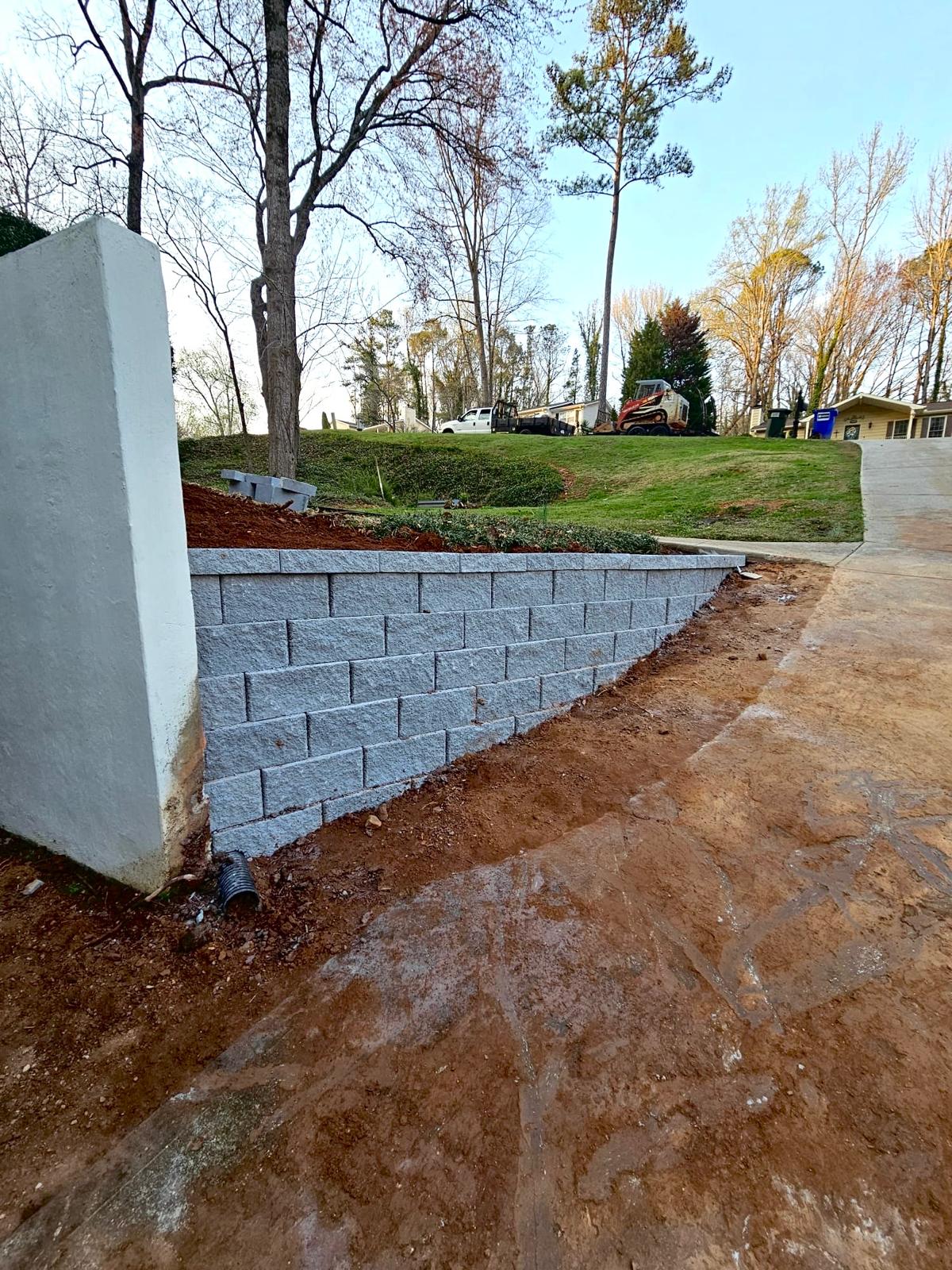
A tiered retaining wall system on an Alpharetta property — three-tier solution on a twelve-foot grade change, each tier independently engineered, bench zones planted with ornamental grasses.
The cost comparison between tiered and single tall walls is more nuanced than most homeowners expect. A single eight-foot retaining wall requires extensive geogrid engineering, a deep compacted base, and often engineered drawings for permitting in North Fulton — pushing the installed cost to $55 to $80 per square foot of wall face. A two-tier system addressing the same eight-foot grade change with two four-foot walls typically runs $30 to $50 per square foot of total combined wall face — with each wall requiring simpler drainage and no geogrid at the four-foot height in standard soil conditions.
For a 40-foot-wide slope: a single eight-foot wall (320 square feet of face) might cost $17,600 to $25,600. Two four-foot tiers on the same slope (totaling 320 square feet of combined face) might cost $12,000 to $19,200 — with the additional cost of grading the bench zone between tiers factored in. The tiered system delivers both lower cost and better structural performance for the same grade change. The single tall wall costs more and takes more engineering because the physics demand it — not because the result is superior.
There are contexts where a single tall wall is the correct solution. When horizontal footprint is severely constrained — a narrow lot, a wall adjacent to a property line, a grade change that must be handled in minimal horizontal run — a single engineered wall may be the only option regardless of cost. Pool surrounds frequently fall into this category: the pool deck and coping set the wall position, and there is no room for tier setbacks. In these cases, we engineer the single wall correctly — proper geogrid, proper drainage, proper base — and quote that accurately. We do not suggest tiering when the site doesn’t support it, and we do not suggest a single tall wall when tiering is the structurally smarter and more cost-effective answer.
Why Kaizen Scapes
Tiered retaining wall design starts with a site measurement, not a catalog. We measure the total grade change, the available horizontal run, the soil bearing conditions at each proposed wall base, and the drainage outlet options before we recommend tier count, wall heights, or material. The 1:1 setback is a minimum — on Alpharetta properties where the lot depth supports it, we sometimes increase the bench width to create more useful planting zones or accommodate step sequences between tiers. Call us at (470) 535-0252 or visit our contact page to schedule a free site evaluation.
Kaizen Scapes proudly serves homeowners across Canton, GA, Woodstock, GA, and the surrounding North Georgia communities including Holly Springs, Ball Ground, Acworth, Kennesaw, Marietta, Alpharetta, Milton, Roswell, Cumming, Johns Creek, and East Cobb. If you’re looking for hardscaping and landscaping craftsmanship within 35 miles of Canton or Woodstock, our team is ready to transform your outdoor space.
Whether you’re in Canton, Woodstock, Alpharetta, Milton, or anywhere across Cherokee County and the greater North Atlanta suburbs, Kaizen Scapes brings the same relentless standard to every project. We don’t do cookie-cutter. We do custom — built to last.
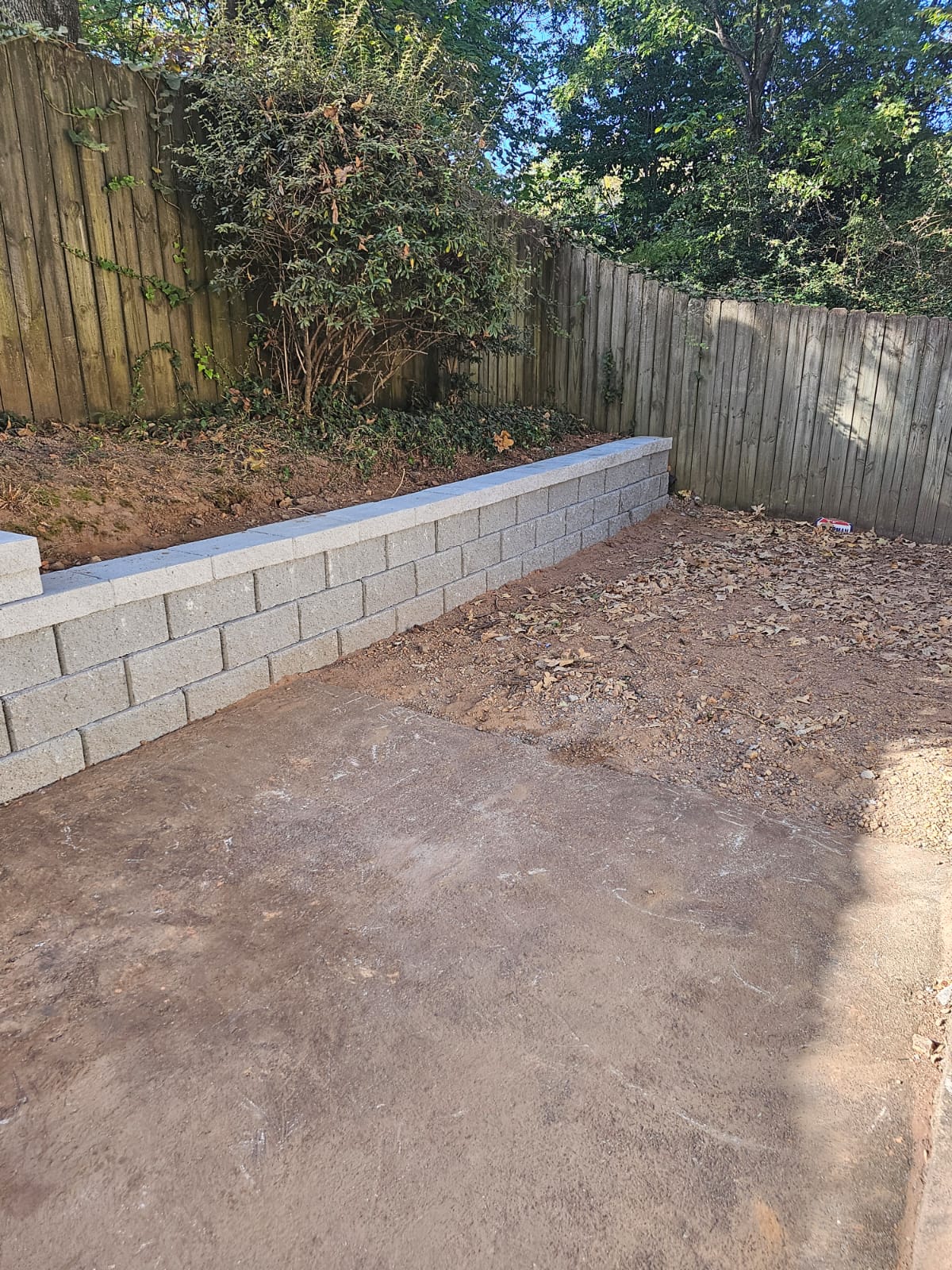
A completed tiered retaining wall system in Alpharetta — three independent tiers on a steep North Fulton slope, planting zones established between each level.
We measure the grade change, calculate tier options, and quote the system that performs best. Free retaining wall evaluations across Alpharetta and North Fulton County.
Kaizen Scapes is based in Canton, Georgia and serves the greater North Atlanta region within 35 miles: