

A hardscape investment in North Georgia — whether that is a paver patio, a retaining wall, a pergola, or an outdoor kitchen — is not finished when the crew packs up. What you do in the twelve months after installation determines whether it looks the same in year ten as it did in year one. Most maintenance failures are not dramatic events. They are small annual neglects that compound into expensive remediation.
Cherokee County’s climate creates specific maintenance demands. The wet spring and summer season drives weed pressure, algae growth, and joint erosion. The relatively mild winters still deliver enough freeze-thaw cycling to challenge masonry mortar joints and surface sealers. Knowing what to check and when — broken down by season — is the difference between a hardscaping investment that appreciates with age and one that quietly degrades into a costly repair project.
Spring — March & April
Spring is the highest-leverage maintenance window for North Georgia hardscape. After a winter of rain and occasional freeze-thaw cycling, March and April are when small problems are still small — and catching them before the growing season accelerates weed germination and plant establishment in joints and cracks saves significant remediation effort later in the year.
Joint inspection and top-up: Walk every paved surface and probe the joints. Joints that have eroded below the paver surface need to be topped up with polymeric sand before weed seeds germinate in the exposed cavity. A joint that is low in March is a weed problem by May. If joints are significantly depleted across the surface, a professional cleaning and full re-sanding may be more effective than spot-filling.
Edge restraint check: Inspect the perimeter of paved surfaces where edge restraints — plastic, aluminum, or concrete soldier-course borders — keep the paver field from spreading outward. A shifted edge restraint allows the paver units at the border to migrate laterally, creating gaps that accelerate joint breakdown across the adjacent rows. Reseating a loose edge restraint in spring is a 30-minute repair. Replacing a paver field that has spread out of tolerance over two seasons is not.
Sealer assessment: Test whether your paver sealer is still performing by applying a small amount of water to the surface — if it beads, the sealer is intact; if it absorbs flat, the sealer has reached the end of its effective life. In Canton’s climate, plan for professional resealing every two to four years on concrete pavers with significant sun exposure. Spring is the best time to reseal: temperatures are moderate, the surface is drying out from winter moisture, and application conditions are ideal before summer heat accelerates off-gassing.
“Spring is when a one-hour inspection saves a five-figure repair. The same crack in a retaining wall drainage outlet that costs nothing to clear in March costs thousands if it causes hydrostatic pressure failure by August.”
Summer — May Through August
Pressure washing: If paved surfaces have developed algae growth, tannin staining from leaf accumulation, or general surface dirt, early summer is the right time to pressure wash before the staining has a full season to set. Use 1200 to 2000 PSI on concrete pavers; lower pressure on natural stone. Always re-sand joints after pressure washing if the wash has displaced any of the joint fill — the force of washing loosens fine sand particles from the surface of polymeric joints, and leaving displaced joint material unfilled over the summer creates weed germination opportunity.
Pergola and structure hardware: Inspect all pergola hardware — post base hardware, beam connectors, and fastener heads — for rust or loosening. Georgia’s combination of heat and humidity accelerates corrosion on hardware that is not stainless steel or hot-dip galvanized. A rusting fastener head will transfer iron oxide staining to adjacent wood or stone surfaces. Tighten any loose hardware and treat surface rust before it advances to structural compromise.
Outdoor kitchen masonry: Inspect masonry mortar joints in outdoor kitchen construction and fire feature surrounds for heat-related cracking. Outdoor fireplaces and fire pits that have been in heavy use accumulate thermal stress in the mortar joints over time. A hairline crack in summer is a repair item; the same crack after another winter of freeze-thaw cycling becomes a structural failure point. Clean and re-point any compromised joints with a refractory mortar appropriate for high-heat applications.
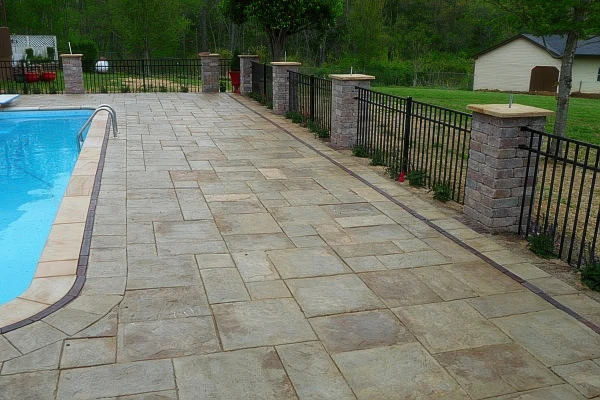
Well-maintained hardscape in North Georgia — annual inspections and seasonal care keep surfaces performing and looking new across the full lifespan of the investment.
Fall maintenance in Cherokee County is primarily about drainage and preparation. The sustained rain events of November and December are the hardscape stress test — and how well your retaining walls, patio drainage, and surface grading perform during that window determines whether you are making repairs in spring or starting fresh from a sound baseline.
Grading inspection: Walk the perimeter of all hardscape installations and observe where water pools or moves. Water that drains toward the house foundation, accumulates against a retaining wall face, or pools in low spots on the patio surface needs to be addressed before winter rain cycles begin. A poorly graded surface that drains toward the structure is a foundation and wall integrity issue, not just an aesthetic problem. Re-grading a planting bed or adjusting a drainage swale in fall is far less expensive than addressing the damage after a winter of standing water.
Blow out irrigation: Any in-ground irrigation serving landscaping adjacent to hardscape should be blown out and winterized before the first freeze. Burst irrigation heads adjacent to paver surfaces create freeze-driven heave in the surrounding paver field. Disconnecting and capping any irrigation connections at outdoor kitchen appliances — hose bibs, under-sink water lines, outdoor refrigerator connections — prevents winter freeze damage to the plumbing inside the masonry structure.
Winter — December Through February
North Georgia’s winters are mild relative to the upper Midwest — but Canton and Cherokee County receive enough freeze-thaw cycling to stress masonry surfaces and push water into vulnerable joint and crack locations. The two winter tasks that matter most for hardscape preservation are ice management and frost heave monitoring.
Ice on natural stone — never use rock salt: Sodium chloride (rock salt) and many ice melt products containing calcium chloride or magnesium chloride are chemically aggressive on natural stone surfaces — they accelerate surface spalling on travertine and cause surface scaling on concrete pavers over time. For ice management on natural stone walkways and steps, use coarse sand or a pet-safe potassium chloride product at reduced concentrations. Sand provides traction without chemical damage; potassium chloride is less aggressive on masonry than sodium or calcium-based ice melt products.
Frost heave inspection: After any hard freeze, walk all walkway and step surfaces and observe for lifted or rocked paver units. Frost heave — the upward displacement of paver units driven by soil moisture freezing beneath the base — is most common in areas with inadequate base depth or poor drainage that allows water to accumulate in the base layer. A single lifted step is a safety hazard and a repair item; a pattern of lifted units across a walkway indicates a systemic drainage problem in the base that needs professional assessment.
A full professional annual maintenance visit for a North Georgia hardscape installation — covering joint inspection and top-up, surface cleaning, drainage outlet clearing, hardware check, and a sealer condition assessment — typically runs $350 to $800 depending on the size and complexity of the installation. That cost is almost always less than the remediation cost of a single season of neglected maintenance. Joint re-sanding alone, if deferred long enough to require full excavation and re-installation, runs $2 to $4 per square foot. A retaining wall drainage outlet cleared annually costs nothing; cleared after a hydrostatic pressure failure costs the wall.
Kaizen Scapes proudly serves homeowners across Canton, GA, Woodstock, GA, and the surrounding North Georgia communities including Holly Springs, Ball Ground, Acworth, Kennesaw, Marietta, Alpharetta, Milton, Roswell, Cumming, Johns Creek, and East Cobb. If you’re looking for hardscaping and landscaping craftsmanship within 35 miles of Canton or Woodstock, our team is ready to transform your outdoor space.
Whether you’re in Canton, Woodstock, Alpharetta, Milton, or anywhere across Cherokee County and the greater North Atlanta suburbs, Kaizen Scapes brings the same relentless standard to every project. We don’t do cookie-cutter. We do custom — built to last.
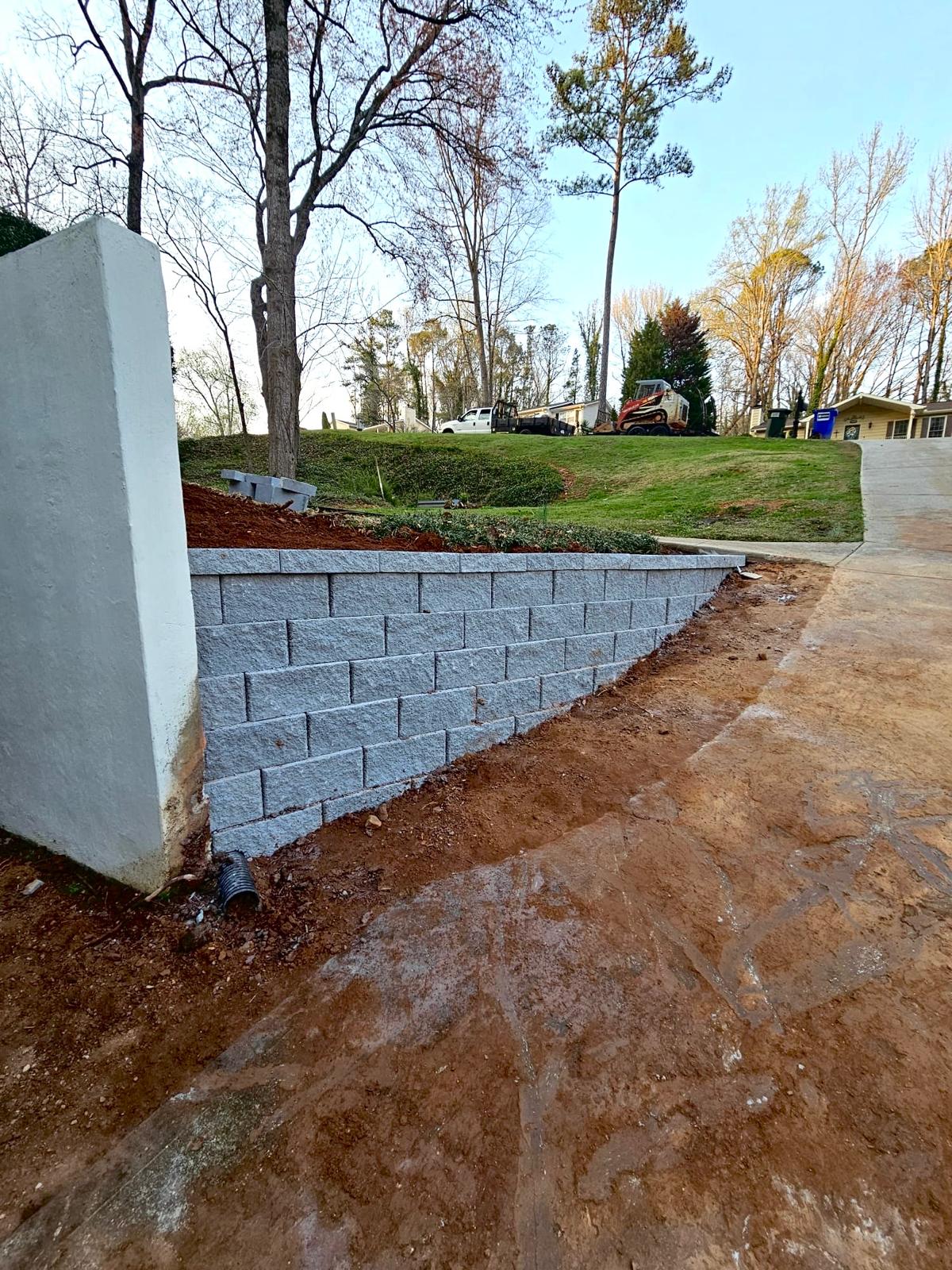
Kaizen Scapes provides annual maintenance, inspection, and restoration services across Cherokee County and the greater North Atlanta region.
We inspect, clean, reseal, and restore hardscape across Cherokee County and North Atlanta. Annual maintenance agreements available.
Kaizen Scapes is based in Canton, Georgia and serves the greater North Atlanta region within 35 miles: