

Most Canton homeowners think about accessibility the first time someone they love needs it — a parent with a walker, a spouse recovering from surgery, a child on a tricycle navigating the front walk. Universal design hardscape means you planned for that before the need arrived. And when you do it during a project, it costs a fraction of what it costs to retrofit five years later.
The term universal design sounds clinical, but the principle is simple: outdoor spaces that work well for one generation work better for every generation. A walkway wide enough for a wheelchair is also easier to navigate with a loaded garden cart. A ramp alongside front steps serves your aging parents on their first visit and your youngest grandchild on their first visit. The design upgrades that serve people with mobility limitations also make everyday outdoor living easier for everyone who uses the space — that’s not a compromise, it’s a smarter brief.
The Measurements That Matter
Four feet is the minimum clear width for wheelchair passage. Most residential walkways are poured at 36 inches — close, but not quite enough for a standard wheelchair to pass without requiring the user to angle slightly and risk veering onto soft soil. A 48-inch walkway adds just one foot of width but opens the entire path to full accessibility — for wheelchairs, walkers, side-by-side child strollers, and two people walking together comfortably. In new construction or full walkway replacement, that one foot of additional width adds very little material cost. In a retrofit, it means tearing out and replacing an existing walk — which is why the conversation is worth having now, during your patio or walkway project.
Cross-slope is the second measurement that most contractors don’t mention. A walkway needs to shed water, so it must have some cross-slope — but the maximum 2% cross-slope is the figure that determines whether a wheelchair or walker can track straight without fighting lateral drift. A walkway with a 3% or 4% cross-slope feels flat to someone walking on two legs. To someone using a wheelchair or walker, it means constant correction. Two percent is achievable on virtually any properly graded walkway — it is not a concession to accessibility, it is correct drainage practice.
“Designing for accessibility at 45 costs about 8% more than designing to minimum standards. Retrofitting at 70 costs roughly 300% more than the original project. The math favors doing it right the first time.”
Not every grade change needs to become a step. In Canton’s rolling Cherokee County terrain, many properties have natural elevation transitions between the driveway, the front entry, the patio, and the back yard that are handled by default with a quick step or two. A level change alternative — a gentle ramp, a sloped landing, or a combination pathway — routes that same elevation differently, in a way that works for users who cannot navigate steps. This doesn’t eliminate steps. It adds a pathway that works alongside steps, so different users can arrive at the same destination by the route that works for them. Both can coexist, and both can look intentional and beautiful in natural stone or paver systems.
The Cost Calculation
The hardscape decisions that serve you best at 70 add roughly 8 to 15 percent to a new walkway project when they’re designed in from the start. That premium covers wider paver laying area, slightly modified grading specs, and landing pads at key transition points. Those same upgrades, retrofitted to an existing completed walkway, require full demolition of the original work, regrade, and reinstallation — typically running two to three times the original project cost. The physical work is the same. The demolition and disposal is what drives the retrofit premium.
For Canton homeowners in their 40s and 50s planning a major outdoor project, this is the calculation worth making: a $12,000 walkway project done to universal design standards may cost $13,200. That same project addressed at age 70 following a family member’s diagnosis costs $28,000 — because you’re paying to undo and redo work that was already done. The 8% premium at construction is the cheapest accessibility decision you’ll ever make.

A 4-foot-wide paver walkway in Canton — correct cross-slope, smooth grade transition, and landing area at the entry threshold.
A universal design hardscape is not a hospital ramp bolted onto the side of your front porch. Done correctly, it is indistinguishable in appearance from a premium hardscape project — and it functions better for every user in the household. The front entry has a 4-foot-wide paver walk with a gentle slope to the threshold, a 5×5 landing at the base of the steps, and a secondary pathway that navigates the grade change without steps. The back patio is level within 2%, drains at the perimeter, and has flush transitions at the threshold so no one is lifting anything to cross from indoors to outdoors.
The aesthetic difference between an accessible design and a standard one is nearly zero. Pavers don’t know whether they’re in a 36-inch walk or a 48-inch walk. Natural stone doesn’t know whether it’s been laid to 2% or 3% cross-slope. The materials are the same. The specification is the only thing that changes — and the specification is exactly what a hardscaping contractor in Canton should be discussing with you at the design stage, not leaving as an afterthought.
The front entry pathway is the single highest-impact location for accessible hardscape design on a Canton residential property. It is the route traveled by every guest, every service provider, and every family member — including the ones who will eventually need it most. A front entry that works for a wheelchair makes that home genuinely livable through any mobility event, planned or not. Grade change, landing area, door threshold height, walkway width — these four elements, addressed during the initial hardscape build, are the difference between a home that ages with you and one that forces a move.
Kaizen Scapes proudly serves homeowners across Canton, GA, Woodstock, GA, and the surrounding North Georgia communities including Holly Springs, Ball Ground, Acworth, Kennesaw, Marietta, Alpharetta, Milton, Roswell, Cumming, Johns Creek, and East Cobb. If you’re looking for hardscaping and landscaping craftsmanship within 35 miles of Canton or Woodstock, our team is ready to transform your outdoor space.
Whether you’re in Canton, Woodstock, Alpharetta, Milton, or anywhere across Cherokee County and the greater North Atlanta suburbs, Kaizen Scapes brings the same relentless standard to every project. We don’t do cookie-cutter. We do custom — built to last.
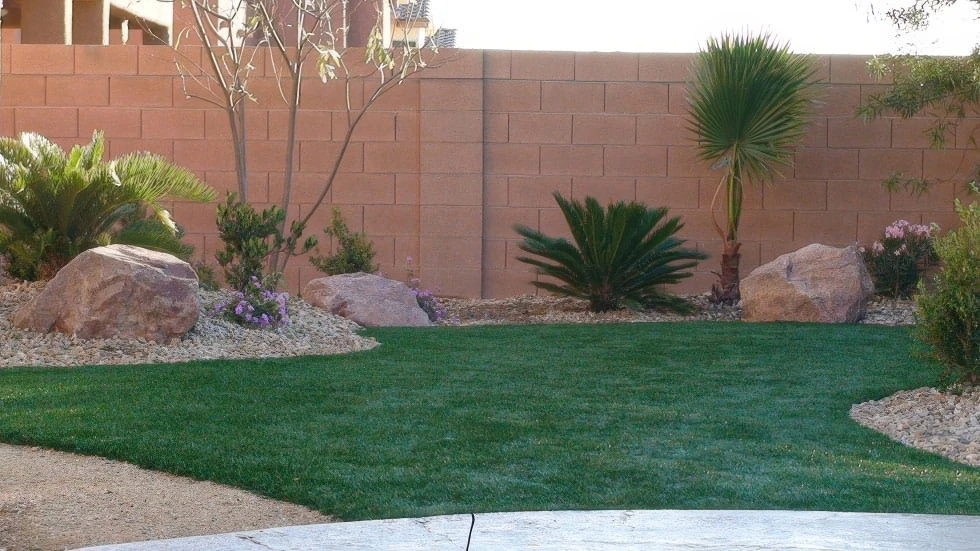
A completed accessible outdoor space in Canton — level patio surface, wide connecting walkway, and grade transitions designed for every generation.
Free consultations across Canton, Woodstock, and all of Cherokee County. Call (470) 535-0252 or request an estimate online.
Kaizen Scapes is based in Canton, Georgia and serves the greater North Atlanta region within 35 miles: