

You’re in your 40s or 50s, planning a significant outdoor project for your Canton home. You’re not thinking about walkers and grab bars. You’re thinking about a beautiful patio, a proper front entry, a backyard that finally works the way you’ve imagined it. Here’s what no one tells you at the design stage: the decisions you make now about width, slope, threshold height, and pathway grade will determine whether this outdoor space still fully serves you at 70 — or whether you’re paying to tear it out and start over.
Aging-in-place hardscape is not a different category of project. It is the same project, specified with intentionality about dimensions and gradients that add minimal cost at construction but are devastatingly expensive to retrofit later. The homeowners who get this right don’t build a “handicap-accessible” outdoor space. They build an outdoor space that happens to be fully usable through any mobility event — planned or unplanned — that the next 30 years might bring.
The Complete Checklist
These are not theoretical considerations. They are specific, measurable specifications that either appear in your hardscape project or they don’t. Each one adds modest cost at construction. Each one adds significant cost — or functional loss — if addressed as a retrofit.
“At 45, you build a patio. At 70, you find out whether the contractor who built it thought about 20 years from now — or only about the day of installation. The specification is the only thing that differs. The material and the labor are the same.”
The exterior threshold — the transition from interior finished floor to exterior paved surface — is the most-traveled grade change in any home. It happens multiple times a day, in every weather condition, in full sun and in total darkness. A flush or near-flush threshold costs nothing additional in a new hardscape project — it is a matter of setting the paved surface elevation correctly relative to the door sill, which any competent contractor controls. A threshold with a 3-inch step up from the patio — the kind that gets built by default when no one is thinking about this — is the kind of threshold that causes falls and that costs $8,000 to $14,000 to correct after the fact in a patio demolition and regrading project.
For Canton properties, the back door threshold is typically more problematic than the front entry. The back patio in Cherokee County’s rolling terrain is often set below the interior floor level, with a step down that becomes a step down with a load in your hands, a step down in the dark after an evening on the patio, a step down when your balance isn’t what it was. Designing the patio elevation to achieve a flush or near-flush threshold at the back door — with drainage handled by perimeter channels rather than cross-slope — is the decision that makes the back patio genuinely safe for daily use over decades.

Step riser lighting and masonry rail integration in Canton — nighttime safety and daytime aesthetics, designed as one unified system.
The 20-year test for a Canton hardscape project is simple: can the primary users of this home still move through every outdoor space without assistance, without modification, and without risk? That means the front entry can be navigated with a walker. The back patio can be reached without stepping down. The walkway to the driveway is wide enough and level enough to use with a cane without veering into the landscaping. The steps to the lower yard have a handrail that can actually be gripped. The patio lights up at night from the riser LEDs so no one is navigating by memory.
None of these are extraordinary features. They are baseline functional requirements for a home that continues to serve its occupants as they age. The extraordinary thing is how few hardscape projects are designed with them. The default brief — “build me a nice patio and front walkway” — doesn’t include any of them. You have to ask for them. And asking for them during the design stage, before a single paver is placed, is when the cost of doing it right is lowest by an enormous margin.
One of the most cost-efficient age-in-place decisions available to Canton homeowners is designing ramp capability into the grade transition without building the ramp immediately. This means grading the adjacent ground, reserving the horizontal run, and planning the landing pads at top and bottom — so that if a ramp is needed in five or fifteen years, it can be built without demolishing any existing hardscape. The cost of including ramp capability in the design is negligible. The cost of retrofitting a ramp into a space that wasn’t designed for it — demolishing retaining walls, regrading, rebuilding — is where the bill becomes painful.
The Canton homeowners who make this decision correctly never need to have the retrofit conversation. Their contractor designed the space so the ramp path is there when it’s needed — and invisible until it is. That is the highest expression of age-in-place hardscape design: a space that is fully capable without looking like it was built with a limitation in mind.
Kaizen Scapes proudly serves homeowners across Canton, GA, Woodstock, GA, and the surrounding North Georgia communities including Holly Springs, Ball Ground, Acworth, Kennesaw, Marietta, Alpharetta, Milton, Roswell, Cumming, Johns Creek, and East Cobb. If you’re looking for hardscaping and landscaping craftsmanship within 35 miles of Canton or Woodstock, our team is ready to transform your outdoor space.
Whether you’re in Canton, Woodstock, Alpharetta, Milton, or anywhere across Cherokee County and the greater North Atlanta suburbs, Kaizen Scapes brings the same relentless standard to every project. We don’t do cookie-cutter. We do custom — built to last.
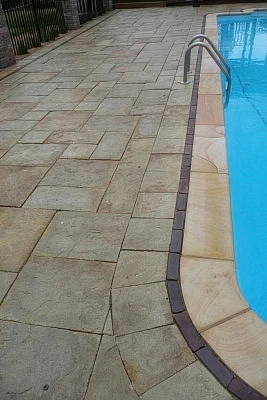
A completed age-in-place outdoor project in Canton — flush threshold, level patio surface, ramp-capable grade transitions, and pathway lighting designed for the long term.
Free age-in-place hardscape consultations across Canton, Woodstock, and all of Cherokee County. Call (470) 535-0252 or request an estimate online.
Kaizen Scapes is based in Canton, Georgia and serves the greater North Atlanta region within 35 miles: