

The choice between organic mulch and stone ground cover in a Kennesaw planting bed is not an aesthetic decision. It’s a decision about what happens below the surface — to your soil biology, your plant root zone, your moisture levels through a Georgia summer, and your maintenance schedule over the next five years. Both materials serve a purpose. Neither is universally right. What matters is matching the right one to what’s actually happening in that specific bed.
Kennesaw homeowners who make this switch without understanding the difference often end up with stone over soil that needed feeding, or mulch in a zone where stone would have eliminated the weed pressure they’ve been fighting for years. Both materials are doing something to the bed at all times — understanding what each one does is the only way to choose correctly for your specific situation. Here’s the full picture on both sides of the comparison.
What Mulch Does
Organic mulch — shredded hardwood, pine bark, pine straw — is doing active biological work from the moment it’s applied. As it breaks down, it feeds the soil food web: the fungi, bacteria, nematodes, and earthworms that convert organic matter into plant-available nutrients, build soil structure, and regulate the moisture retention that Georgia clay needs to perform. A properly mulched bed in Kennesaw is building its own fertility over time. The soil in year four under consistent mulching is measurably more biologically active, better draining, and more nutritive than it was at installation — that’s the compounding benefit that stone cannot replicate.
Mulch also moderates soil temperature. In Kennesaw’s summer heat, bare soil can reach surface temperatures exceeding 130°F — lethal to the shallow feeder roots of most ornamental plants. A 3-inch layer of organic mulch keeps soil surface temperatures 20–30°F cooler during peak summer heat, which is the difference between a plant that establishes well and one that stress-cycles through every July and August. That temperature moderation is especially critical for newly planted shrubs and perennials in their first two establishment summers.
“Mulch isn’t just covering the ground. It’s feeding it. Stone is permanent. Choosing between them is really a question about what your soil needs — not what you want the bed to look like.”
The downside of organic mulch in Kennesaw’s climate is the breakdown rate. Georgia’s heat, humidity, and regular rainfall accelerate decomposition significantly compared to cooler climates — most shredded hardwood mulch in Cobb County breaks down to the point of requiring replenishment within 12–18 months. Annual mulch refresh typically runs $150–$400 per bed depending on size and depth requirement — a recurring cost that compounds over time. It’s not a prohibitive cost, but it is a true annual line item that homeowners often underestimate when comparing options.
What Stone Does
Stone ground cover — river rock, pea gravel, or decomposed granite — conserves moisture through a different mechanism than mulch: it shades the soil surface and reduces evaporation from direct sun exposure, but it does not reduce soil temperature the way mulch does. In fact, stone in full sun in a Georgia summer can radiate heat downward into the root zone — a meaningful limitation that makes stone ground cover unsuitable for beds with sun-sensitive or newly planted material. Where stone performs best is in established beds with mature plant material, in hardscape-adjacent zones where runoff and displacement are concerns, and in areas that receive dog traffic, foot traffic, or other physical disturbance that organic mulch can’t withstand.
The weed suppression profile of stone is also different from mulch. Stone with a landscape fabric barrier underneath provides excellent suppression of germinating weed seeds in the short term, but over time, organic debris accumulates in the stone layer and creates a seedbed for surface-germinating weeds that roots directly into the fabric. Stone beds that look low-maintenance in year one can become high-maintenance weed problems by year four without proper fabric selection and occasional stone cleaning. The solution is commercial-grade woven fabric rather than the thin perforated plastic sold at home improvement stores — the difference in longevity is significant.
Stone is the right answer for Kennesaw planting beds that are hardscape-adjacent — where shredded mulch would wash into the patio or pool deck with every rain event. It’s right for dog-use areas where mulch would be scattered or consumed. It’s right for established beds with mature, drought-tolerant plants that don’t benefit from the soil-feeding properties of organic mulch — ornamental grasses, succulents in protected microclimates, and mature native shrubs that are past their establishment window. It’s the correct specification for any bed that will receive very low maintenance attention, because stone doesn’t break down, doesn’t need annual refresh, and holds its visual quality for years without intervention.
Mulch is right everywhere else. New plantings, actively growing perennial beds, foundation beds around your home, beds with food crops or moisture-sensitive ornamentals — all of these benefit from the biology, temperature moderation, and moisture retention that organic mulch provides. Annual mulch cost versus one-time stone installation: a typical Kennesaw bed refreshed annually at $250 per year costs $1,250 over five years. A stone installation of the same bed runs $800–$1,800 installed — often cheaper over five years, but only if the plant and site conditions support stone. The break-even analysis works in stone’s favor only when the bed is actually suitable for it.
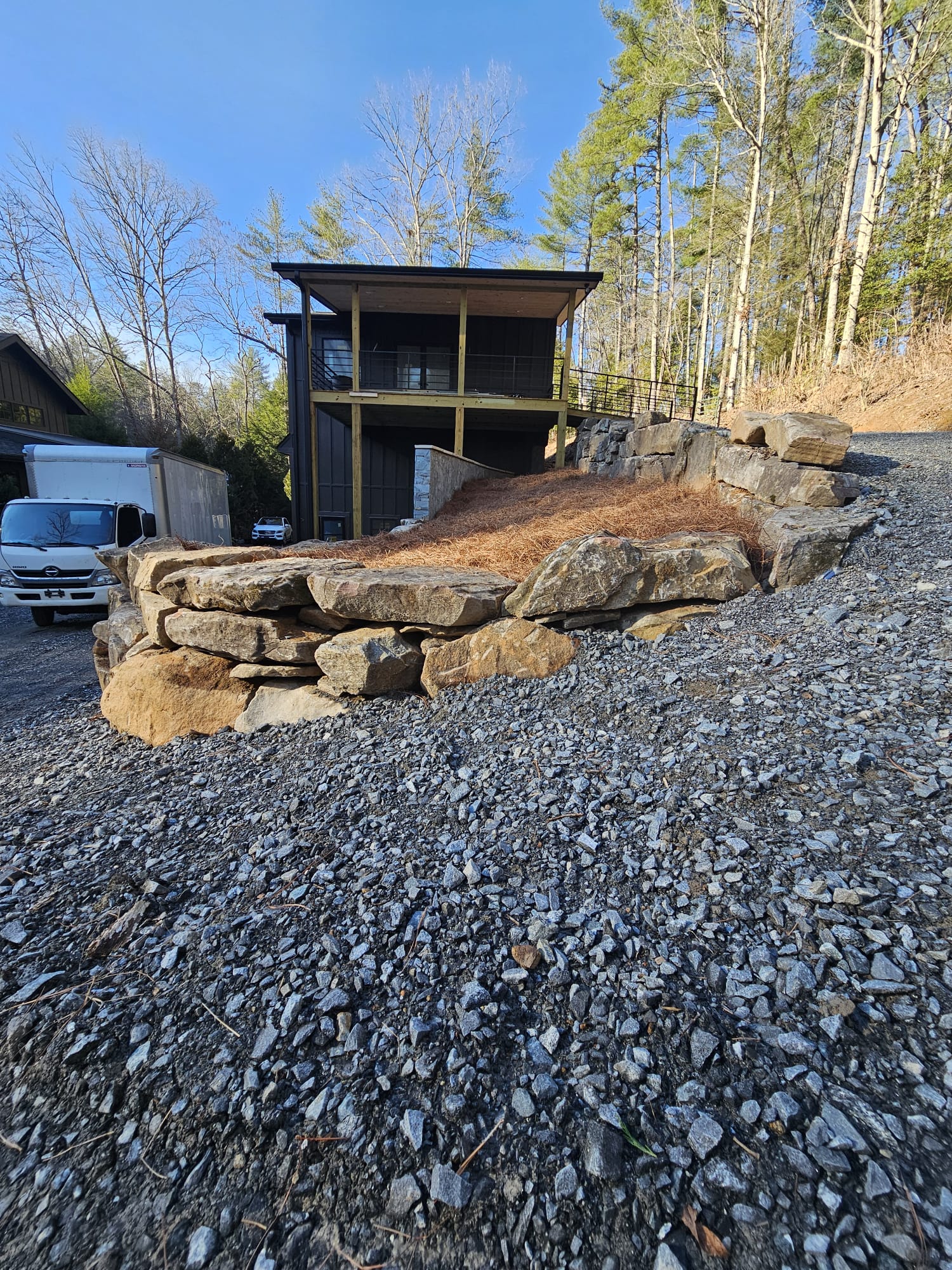
A Kennesaw planting bed installation — ground cover material selected to match the bed’s plant profile, drainage conditions, and maintenance requirements.
The decision framework for any Kennesaw planting bed comes down to three questions: what is the plant material and how established is it, what is the sun exposure and drainage profile of the bed, and how much annual maintenance are you willing to do? If the bed has newly planted material in sun or partial shade with active growth goals — mulch. If the bed is mature, hardscape-adjacent, low-maintenance-required, and in a zone where stone heat absorption won’t stress the plants — stone. And if you have beds that fall into both categories on the same property, those are separate specifications — not a one-size-fits-all decision for the whole yard.
Kaizen Scapes proudly serves homeowners across Canton, GA, Woodstock, GA, and the surrounding North Georgia communities including Holly Springs, Ball Ground, Acworth, Kennesaw, Marietta, Alpharetta, Milton, Roswell, Cumming, Johns Creek, and East Cobb. If you’re looking for hardscaping and landscaping craftsmanship within 35 miles of Canton or Woodstock, our team is ready to transform your outdoor space.
Whether you’re in Canton, Woodstock, Alpharetta, Milton, or anywhere across Cherokee County and the greater North Atlanta suburbs, Kaizen Scapes brings the same relentless standard to every project. We don’t do cookie-cutter. We do custom — built to last.

A completed Kennesaw landscape installation — ground cover selected to match the bed’s specific plant profile and maintenance requirements, not just the look.
We assess the plant material, sun exposure, and drainage in each bed before making any recommendation. Free site evaluations across Kennesaw, Marietta, and Cobb County.
Kaizen Scapes is based in Canton, Georgia and serves the greater North Atlanta region within 35 miles: