

A paver patio that settles or shifts is not a failed product — it’s a symptom of something happening beneath the surface. The pavers themselves are almost certainly fine. What’s failed is the base system they’re sitting on, and the cause of that failure determines whether a targeted repair holds long-term or whether you’re setting pavers back into a problem that will move them again within two to three years.
This is the most important distinction in paver repair: the pavers are the indicator, not the problem. The problem is underground. A contractor who shows up, pops the settled pavers, dumps sand beneath them, and resets them hasn’t repaired anything — they’ve reset the clock on the same failure. In Cherokee County’s clay conditions, that approach typically holds for one to three seasons before the same section settles again.
Why Paver Patios Settle
Base compaction failure is the most common cause — and the most preventable. A properly installed paver base uses compacted gravel aggregate in lifts of three to four inches, with each lift mechanically compacted before the next goes down. A base that was installed in a single deep lift, or compacted insufficiently, will continue to densify under load over the first several years — pulling the sand layer and the pavers down with it. This is especially common on patio installations done by landscaping crews rather than dedicated hardscape contractors.
Sand migration is the second cause, and it works in concert with base failure. The bedding sand layer beneath pavers is not a structural element — it’s a leveling medium. When the base beneath it is compromised, when edge restraints fail, or when water is allowed to flow across the bedding layer, the sand migrates out of position. Individual pavers settle into the gaps. The fix for sand migration is not adding sand on top — it’s excavating to find where the sand went and why, correcting the cause, and rebuilding the bedding layer from scratch.
Edge restraint failure is a third common cause, particularly on older installations. Edge restraints — the plastic or metal channel that holds the outermost paver course in position — must be properly staked into undisturbed soil at regular intervals. When edge restraints are under-staked, installed in loose soil, or allowed to deteriorate, the perimeter pavers migrate outward. This creates a cascading effect: as the outer course spreads, the pavers behind it lose lateral support and begin to shift.
“Resetting pavers without diagnosing the base failure is like replacing a smoke detector instead of finding the fire. The visible problem is not the actual problem.”
What Proper Repair Requires
A proper paver repair on a sunken or shifting section in Canton begins with removing all the pavers in the affected area — and a buffer zone around it. The pavers are set aside carefully to be reused. Then the excavation begins: all the sand and base material in the problem area is removed until the contractor reaches undisturbed subgrade — the native soil beneath the original base installation. This is the only way to understand what failed and why.
Once the subgrade is exposed, the contractor can assess: is the soil itself unstable or saturated? Is there evidence of root intrusion? Is the base depth adequate for the load? The base is then rebuilt in compacted lifts to the correct depth — typically four to six inches of compacted gravel for a patio application in Cherokee County clay conditions. A laser level is used to verify the rebuilt base maintains the correct slope for drainage before the bedding sand layer goes back in. Then the pavers are reset, joints re-sanded with polymeric sand, and the surface is compacted with a plate compactor to seat everything into position.
The most common DIY approach to a settling paver section: lift the pavers, add more sand beneath them, reset. This approach does not address any of the five causes of settlement listed above. It adds sand on top of a compromised base — and that sand will migrate out of position through the same mechanism that moved the original sand. In most cases, a DIY sand-add repair settles again within one season. Worse, if the homeowner uses the wrong sand product (regular play sand or concrete sand rather than ASTM C33 bedding sand) the migration accelerates. After two or three DIY attempts, the base underneath is disturbed, the paver joints are filled with mixed sand types, and a professional repair now costs more because the contractor has to sort out what was added before they can properly diagnose and fix the original problem.
Mid-repair on a Canton paver patio — base excavated to undisturbed subgrade, drainage failure identified, rebuilt with compacted gravel in lifts before pavers are reset.
Targeted repair — excavating and rebuilding the base in the affected zone — is the right call when the settlement is localized: one section of the patio, a specific area near a downspout or tree, or the perimeter edge where restraint failure occurred. If the rest of the patio surface is stable and level, there’s no reason to rebuild the entire base. A well-executed targeted repair on a 40-to-80-square-foot section costs $1,200 to $4,500 depending on the cause and scope of base reconstruction required, and holds as well as a new installation when done correctly.
Full base reconstruction is warranted when multiple sections of the patio have settled in different areas, when the original base depth is found to be insufficient throughout, or when drainage failure is systemic — meaning the entire surface is draining incorrectly, not just one zone. At that point, targeted repair in one area is buying time for the next section to fail. The honest conversation at that stage is whether the cost of sequential repairs over the next five years approaches or exceeds the cost of a full base reconstruction done once.
A settling paver section is a safety issue before it’s an aesthetic issue. Trip hazards from uneven pavers are a real liability on a patio that hosts guests. More practically: as edge restraints fail and pavers migrate, the affected area grows. A 20-square-foot settling section that’s repaired promptly costs $1,200 to $2,200. That same section left for two to three seasons, where adjacent pavers have been disturbed by frost heave, root movement, or water infiltration, can cost $3,000 to $5,500 to properly address. Early intervention is almost always the lower-cost outcome.
Kaizen Scapes proudly serves homeowners across Canton, GA, Woodstock, GA, and the surrounding North Georgia communities including Holly Springs, Ball Ground, Acworth, Kennesaw, Marietta, Alpharetta, Milton, Roswell, Cumming, Johns Creek, and East Cobb. If you’re looking for hardscaping and landscaping craftsmanship within 35 miles of Canton or Woodstock, our team is ready to transform your outdoor space.
Whether you’re in Canton, Woodstock, Alpharetta, Milton, or anywhere across Cherokee County and the greater North Atlanta suburbs, Kaizen Scapes brings the same relentless standard to every project. We don’t do cookie-cutter. We do custom — built to last.

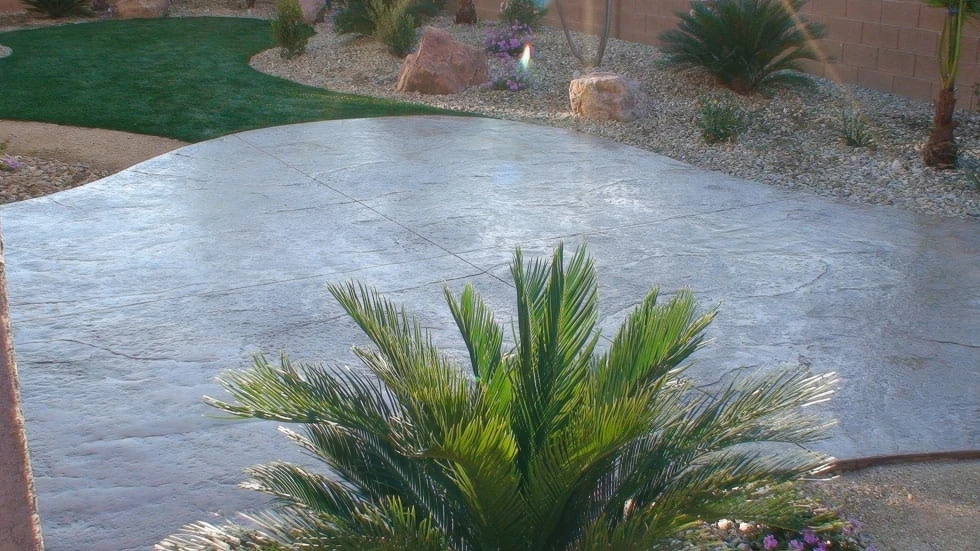
A completed paver repair in Canton — base excavated, reconstructed to spec, pavers reset with fresh polymeric sand. The surface looks identical to the original installation.
We’ll find the cause before we quote the repair — not the other way around. Free paver patio assessment across Canton, Woodstock, and all of Cherokee County. Call (470) 535-0252.
Kaizen Scapes is based in Canton, Georgia and serves the greater North Atlanta region within 35 miles: