

Acworth’s proximity to Lake Allatoona changes what a paver patio installation needs to do. Properties within a mile or two of the lake experience drainage conditions, soil saturation patterns, and seasonal water table shifts that standard residential hardscaping specs don’t account for — and patios that were installed without that context are the ones that pool water, heave, and need to be redone within five years.
Acworth is also a market of two distinct renovation profiles: the older lakeside homes along Allatoona that are being renovated by buyers who paid for the location and now want the outdoor space to match, and the newer subdivisions along the Cherokee and Cobb County line where homeowners have the square footage but not yet the hardscape to use it. Both markets are active. Both have different patio requirements. Understanding which one applies to your Acworth property determines the right design approach, drainage strategy, and county permit pathway.
Lake-Adjacent Drainage
Properties within Allatoona’s drainage watershed — which includes a significant portion of west Acworth — experience ground saturation events during heavy rain that can last days, not hours. A paver patio installed on a conventional gravel-and-sand base in saturated Acworth soil will eventually shift — not catastrophically, but progressively. Lippage develops. Joints open. The surface loses the flat plane that makes it functional and safe.
The solution is base depth and drainage engineering calibrated to the site’s actual saturation patterns, not to a standard residential specification. For Acworth properties near Allatoona, that typically means a minimum eight-inch compacted aggregate base (versus the standard four to six inches on dry-site properties), a perforated drain system running to a daylight outlet or dry creek bed, and a paver material rated for high-moisture environments. Permeable paver systems — where joint aggregate allows water to infiltrate rather than sheet-flow across the surface — are increasingly the right answer for Acworth lake-proximity properties.
“On lake-adjacent Acworth properties, the drainage system is more important than the paver material choice. Get the drainage right and the surface will last. Skip it and no material fixes the problem.”
Permeable paver systems use a modified joint fill and a deeper aggregate base layer that allows water to move downward through the patio surface rather than pooling on top. They’re more expensive than conventional installations — typically 15 to 25 percent above standard paver cost — but on Acworth properties where drainage is a persistent challenge, they eliminate the root cause rather than managing the symptom.
Permit Differences
Acworth sits across the Cherokee/Cobb County line in a way that creates real permit complexity. The western portions of Acworth fall under Cobb County jurisdiction; the eastern side follows Cherokee County’s permit process. The permit requirements for residential paver patio installations differ between the two counties — and a contractor who assumes one applies when the other does creates delays that push your project start back weeks.
Cobb County’s residential permit threshold for patio installations currently triggers at certain square footage and structural modification thresholds — patios below that threshold typically proceed without a formal permit, while those above require a permit application, site plan, and inspection. Cherokee County follows a similar framework but with different thresholds and an inspection timeline that varies by current backlog. The practical answer: your contractor should determine your county jurisdiction at the site assessment stage and factor the permit timeline into the project schedule — not discover it when the crew shows up.
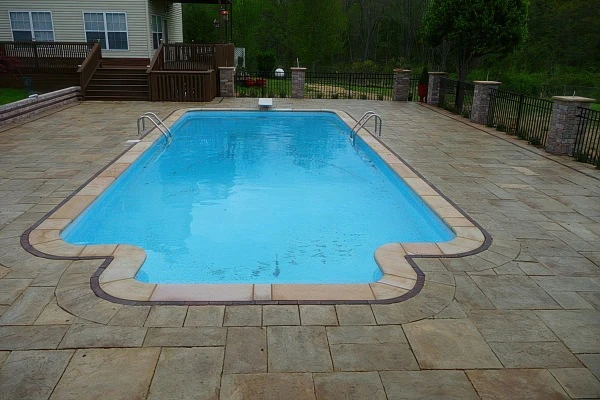
A paver patio installation in Acworth — deeper aggregate base, perimeter drainage, and permeable joint specification for a lake-adjacent property near Lake Allatoona.
The older lakeside properties in Acworth — the homes along Allatoona Drive, the established neighborhoods north of Logan Farm Road — present renovation conditions that differ substantially from newer subdivision lots. These properties often have mature tree canopies, root systems that extend across the full backyard, and existing concrete or brick patio surfaces that need to be removed before new work can begin.
Root system mapping is a critical pre-installation step on older Acworth lakeside properties. Excavating through an established oak or hickory root system without assessment can damage mature trees that took thirty years to establish — and that represent significant property value. We map root zones before any excavation begins and route the base preparation around protected root areas where possible, adjusting the patio footprint rather than sacrificing trees to gain square footage.
The newer subdivision market in Acworth operates differently. These properties have builder-grade concrete patios on flat or gently sloping lots, minimal root competition, and standardized drainage infrastructure already in place from construction. The renovation path is more straightforward: demolish the existing slab, assess the base conditions, re-grade as needed, and install a properly sized paver system. The drainage challenge on these properties is typically less about saturation and more about directing surface runoff away from the house — a perimeter channel drain or graded surface pitch resolves most of it.
A standard Acworth paver patio on a new-subdivision lot runs $10,000 to $18,000 for a 300 to 450-square-foot installation with standard base prep and drainage. A lake-adjacent property with permeable paver specification, extended base depth, and a full drainage system runs $16,000 to $30,000 for a comparable footprint — the premium reflects the drainage engineering and base material requirements, not markup.
Why Kaizen Scapes
We serve Acworth from both sides of the county line — Cherokee County projects out of our Canton base, Cobb County projects as part of our broader service area. We know which permit path applies to your address before we quote, and we build the permit timeline into the project schedule from the start. We’re not discovering your jurisdiction on day one of demolition.
If you have a lake-adjacent Acworth property with drainage challenges, root systems, or an existing surface that other contractors have found complicated — that’s exactly the kind of project our site assessment process is designed to evaluate clearly and quote honestly.
Kaizen Scapes proudly serves homeowners across Canton, GA, Woodstock, GA, and the surrounding North Georgia communities including Holly Springs, Ball Ground, Acworth, Kennesaw, Marietta, Alpharetta, Milton, Roswell, Cumming, Johns Creek, and East Cobb. If you’re looking for hardscaping and landscaping craftsmanship within 35 miles of Canton or Woodstock, our team is ready to transform your outdoor space.
Whether you’re in Canton, Woodstock, Alpharetta, Milton, or anywhere across Cherokee County and the greater North Atlanta suburbs, Kaizen Scapes brings the same relentless standard to every project. We don’t do cookie-cutter. We do custom — built to last.
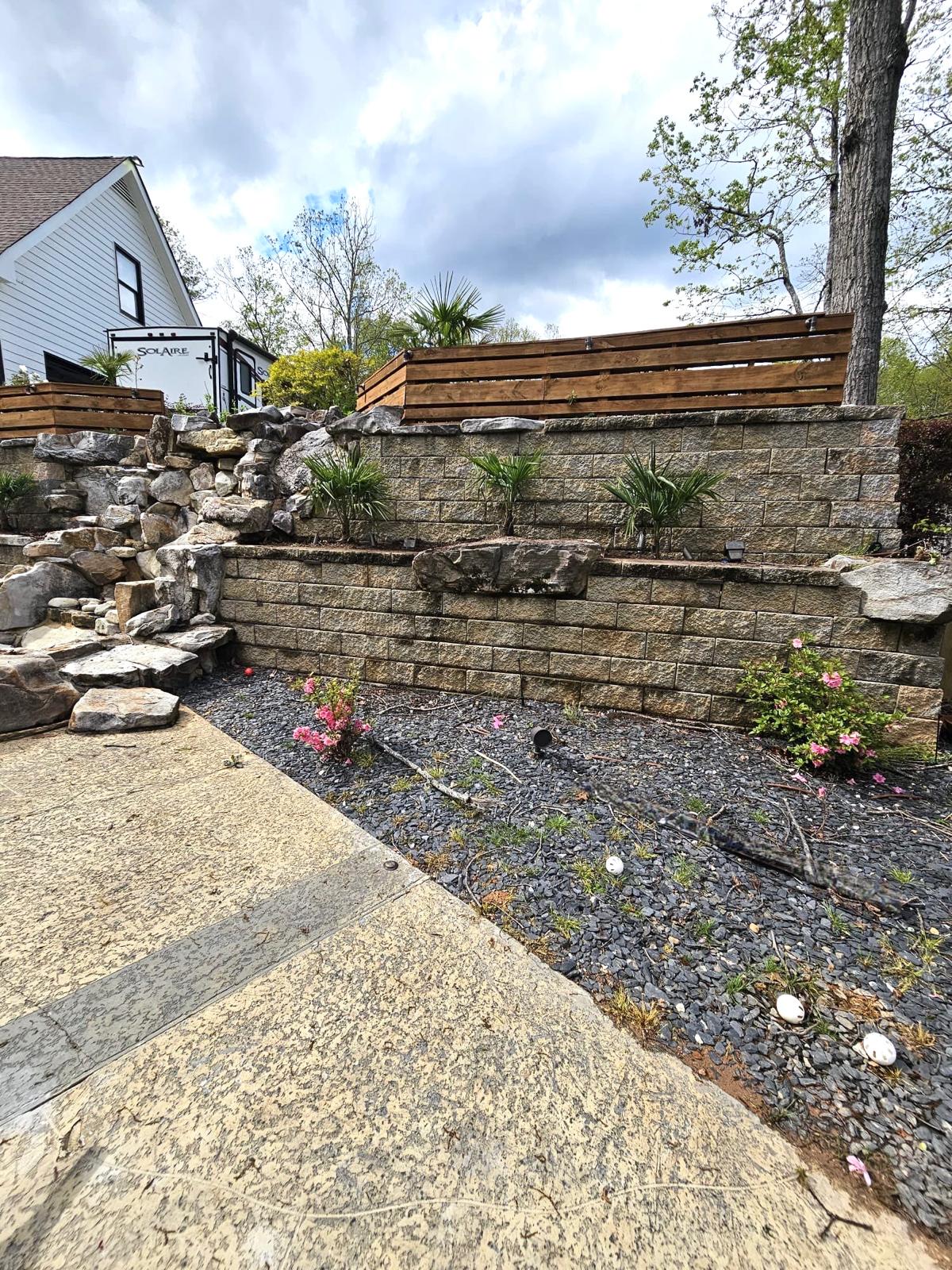
A completed paver patio in Acworth — permeable joint specification, extended base depth, and perimeter drainage designed for lake-adjacent soil saturation conditions.
Free paver patio evaluations across Acworth, Canton, Kennesaw, and both sides of the Cherokee–Cobb County line. We handle permits, drainage, and the design.
Kaizen Scapes is based in Canton, Georgia and serves the greater North Atlanta region within 35 miles: