

The outdoor privacy problem in Woodstock looks the same on nearly every property: a patio worth using, a yard worth enjoying — and a clear view from the neighbor’s deck, the road, or the second-floor window next door. The question isn’t whether to screen. It’s which screening solution actually solves the problem without creating a new one.
What most Woodstock homeowners don’t realize is that outdoor privacy screening is not a single category of solution — it’s a spectrum of approaches with fundamentally different durability, cost, maintenance burden, and design outcomes. A wood fence, a masonry wall, a pergola screen panel, a steel privacy insert, and a layered hardscape-plus-planting combination are all described as “privacy solutions,” but they perform completely differently over time and integrate with outdoor living spaces in very different ways.
Comparing the Options
Option one is the wood privacy fence. It is the default choice because it is the lowest upfront cost — typically $18 to $35 per linear foot installed in the Woodstock area — and it is familiar. The problem is what it becomes. Wood privacy fences in Georgia’s climate require staining or sealing every two to three years and begin structural decline around year eight to twelve. Posts rot at grade, boards warp and split, and the fence that looked fine at installation becomes an embarrassment by the time the patio investment underneath it has matured. For a Woodstock outdoor living project with a multi-decade horizon, wood fencing is the most expensive privacy solution when total cost of ownership is calculated over 30 years.
Option two is the masonry privacy wall. Concrete block core, stone veneer cap, built as a permanent architectural element of the outdoor space. Cost runs $65 to $140 per linear foot depending on height and finish. Service life is 40 to 60 years with essentially no maintenance. A masonry wall at 42 inches functions as seating. A masonry wall at 6 feet creates a complete outdoor room enclosure. It is the only privacy option that actually increases property value in a measurable way, because it is classified as a permanent improvement rather than a temporary fixture. On a Woodstock outdoor living project with a $50,000-plus investment in patio and pergola, masonry is the privacy solution proportional to the investment.
“The right privacy screening solution for a Woodstock property depends on three things: the sightline geometry, the outdoor living investment underneath it, and whether you want to solve the problem once or solve it repeatedly.”
Option three is the pergola screen panel — a horizontal or vertical panel system integrated into the pergola structure, typically using composite, cedar, or aluminum louver systems. These work well for overhead privacy (second-floor sightlines from adjacent homes) and for partial screening where a solid wall would feel visually heavy. Composite and aluminum louver panels have a 20-to-30-year service life and require minimal maintenance. They don’t solve ground-level sightlines as effectively as a solid wall, but for pergola-integrated privacy they are often the most elegant solution. Cost runs $80 to $180 per linear foot of screen panel, installed.
Option four is the steel or Corten privacy screen panel. A steel panel — laser-cut or solid, typically 4 to 8 feet tall, post-mounted — creates an architectural privacy element with a distinctly modern or industrial aesthetic that suits some Woodstock properties extremely well. Corten steel develops a rich rust patina that is stable after the first season, requires no maintenance, and has an essentially indefinite service life. Steel panels work best as accent screens — a focal point on one side of the patio rather than a perimeter solution — and are best suited for properties with a contemporary design aesthetic. Cost runs $120 to $280 per linear foot for fabricated and installed panels.
Option five is the layered hardscape-plus-planting combination. A masonry wall or raised planter at 36 to 48 inches provides immediate structural privacy at the seated level while evergreen plantings — arborvitae, skip laurel, Leyland cypress — rise above the wall to create visual screening at standing height over time. This approach gives you privacy on day one at the seated level, with increasing privacy over three to five years as the plantings establish. It is the most naturalistic-looking solution and the most appropriate for Woodstock properties with a traditional or transitional design aesthetic. It is also the most forgiving from an HOA perspective, since the hardscape element stays below strict height thresholds and the plantings read as landscape rather than construction.
Matching Solution to Sightline
The most common mistake in outdoor privacy planning is choosing a solution before identifying the actual sightline problem. A 6-foot masonry wall on the wrong side of a patio solves nothing if the overlooking view comes from a second-floor window on the other side. Before any solution is specified, the sightline geometry needs to be mapped: where does the unwanted view come from, at what height, from what distance, and at what angle to the patio use zone?
The most successful outdoor privacy projects in our Woodstock portfolio combine two or three screening approaches, each solving a different part of the problem. A masonry wall at 42 inches handles seated-level privacy and functions as seating. Arborvitae planted in a bed at the base of the wall rise to 8 to 12 feet over three years, handling standing-level and second-floor sightlines without requiring a 6-foot masonry wall that might feel visually heavy in the space. A pergola overhead with solid roofing panels handles the overhead view. Each element is doing a specific job, and none of them are working harder than they need to. The result feels layered and designed rather than fortified.

Hardscape in Woodstock — clean stone work providing structure and definition for outdoor living spaces in Cherokee County.
For a typical Woodstock patio with a 40-foot rear boundary requiring privacy screening, here is what each approach costs at the time of installation — and what it costs over 30 years when replacement cycles are included.
Wood privacy fence: $720 to $1,400 installed (40 LF at $18–$35/LF). Over 30 years with two replacement cycles and maintenance staining, total cost approaches $2,500 to $5,000+.
Masonry privacy wall at 42 inches: $2,600 to $5,600 installed (40 LF at $65–$140/LF). Over 30 years: same cost — no replacement, no maintenance. It also functions as integrated seating, eliminating the need for separate seating furniture along that edge.
Layered masonry wall + arborvitae: $3,200 to $6,400 installed (wall plus plant material plus bed prep). Over 30 years: marginally more than the wall alone, with the added benefit of full-height privacy within three to five years and a naturalistic aesthetic that most Woodstock HOAs prefer.
Masonry wall at 6 feet: $3,600 to $7,200 installed. Solves the privacy problem permanently, top to bottom, on day one. The right choice when you need complete standing-level screening immediately and don’t want to wait for plant material to establish.
Kaizen Scapes proudly serves homeowners across Canton, GA, Woodstock, GA, and the surrounding North Georgia communities including Holly Springs, Ball Ground, Acworth, Kennesaw, Marietta, Alpharetta, Milton, Roswell, Cumming, Johns Creek, and East Cobb. If you’re looking for hardscaping and landscaping craftsmanship within 35 miles of Canton or Woodstock, our team is ready to transform your outdoor space.
Whether you’re in Canton, Woodstock, Alpharetta, Milton, or anywhere across Cherokee County and the greater North Atlanta suburbs, Kaizen Scapes brings the same relentless standard to every project. We don’t do cookie-cutter. We do custom — built to last.
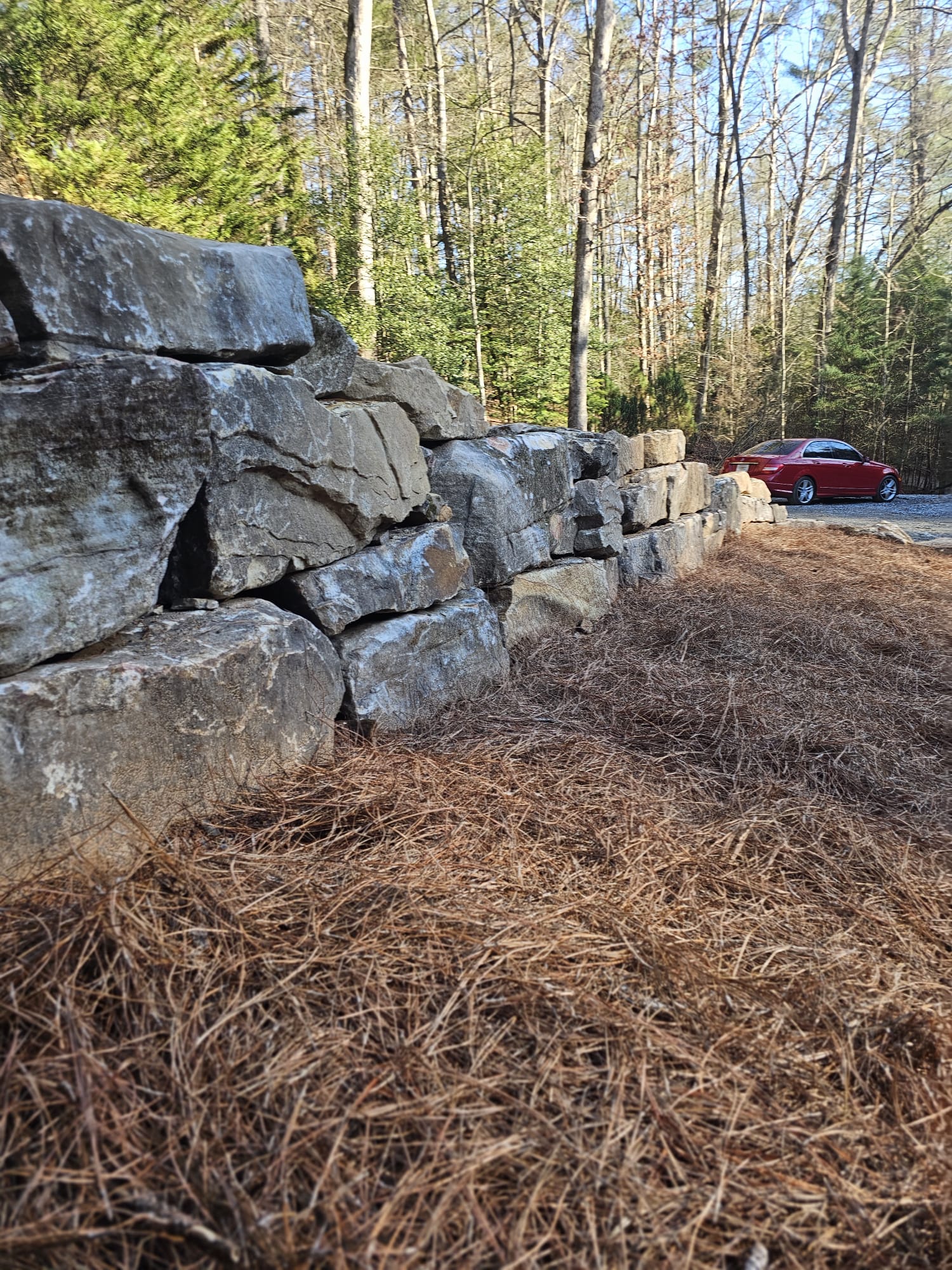
Masonry craftsmanship in the Woodstock area — built for the long term, designed to match the outdoor living investment it protects.
We map the sightline geometry before recommending any approach. Free estimates across Woodstock, Canton, and all of Cherokee County.
Kaizen Scapes is based in Canton, Georgia and serves the greater North Atlanta region within 35 miles: