

Most backyards in Canton start the same way: a sloped lot, builder-grade seed, heavy clay soil that holds water for three days after rain, and a concrete step off the back door that goes nowhere. The yard is technically there. But nobody uses it — because there’s nothing to use. A complete outdoor transformation changes that relationship permanently. Here is exactly what that process looks like, from the first site walk to the evening you sit by your own fire and realize you haven’t been inside since dinner.
The $60,000 to $100,000 range for a complete Canton backyard transformation isn’t a number pulled from a brochure. It reflects the real scope of work required to solve a challenging lot — grading, drainage, hardscape installation, structure, fire feature, lighting, and planting — done at a standard that holds up in Cherokee County’s clay soil and heavy seasonal rainfall. What follows is the honest sequence of how that investment unfolds, phase by phase, and what each phase actually delivers.
Phase One
Every Canton backyard transformation begins underground and out of sight. A sloped lot cannot be built on until it is stabilized — which means retaining walls to hold grade changes, proper drainage infrastructure to move water away from future patio areas, and compacted fill where needed to create level platforms for hardscape. This phase is unglamorous, but it is the reason the patio you install next doesn’t crack, heave, or pond water three years from now.
In Cherokee County, retaining walls are typically segmental block with geogrid reinforcement, engineered for the specific height and soil load of your site. A modest slope might require a single 24-inch retaining wall to create a level patio area. A more aggressive grade — common on lots backing to natural areas in Canton — may require tiered walls stepping down the hillside, with drainage channels running between levels. This work adds cost upfront. It prevents far greater cost in future repairs.
Drainage infrastructure installed at this phase includes perforated pipe at the base of retaining walls, surface drains at low points in the future patio, and slope grading that directs sheet flow away from the house. Skipping this step is the single most common mistake Canton homeowners make when hiring the lowest bidder — and it’s why they call a second contractor two years later when the patio they paid for is sitting in a puddle.
Phase Two
With the grade stabilized and drainage in place, the patio installation transforms a dirt construction zone into something you can actually see. Paver selection for Canton properties typically favors concrete pavers in the 2.375-inch thickness range — substantial enough to handle the freeze-thaw cycle, and available in enough color and texture options to complement virtually any Canton home style from craftsman to modern farmhouse.
Patio size is where most Canton homeowners underestimate. A 12×14 patio looks generous until you put a six-person dining set on it and realize you can’t pull a chair back without stepping off the edge. For a functional outdoor living room, we typically design primary patio areas at 400 to 600 square feet — enough for a dining zone and a lounge zone with clear circulation between them. Walkways connect the patio to the rest of the yard and to the home’s entry, providing a finished edge that makes the entire property feel intentional rather than improvised.
“The yard that sat unused for six years — not because the homeowners didn’t want to be outside, but because there was nowhere to land — becomes the place they eat every summer evening.”
Beyond aesthetics, paver selection affects long-term maintenance. Tumbled pavers hide small chips and wear marks better than smooth-faced options. Lighter colors show efflorescence more visibly in the first year — a temporary mineral deposit that washes away but alarms homeowners who weren’t warned about it. Darker colors absorb more heat in Georgia’s summer sun, which matters for bare-foot comfort near a pool. These are conversations that happen in the design phase, not after the patio is installed.
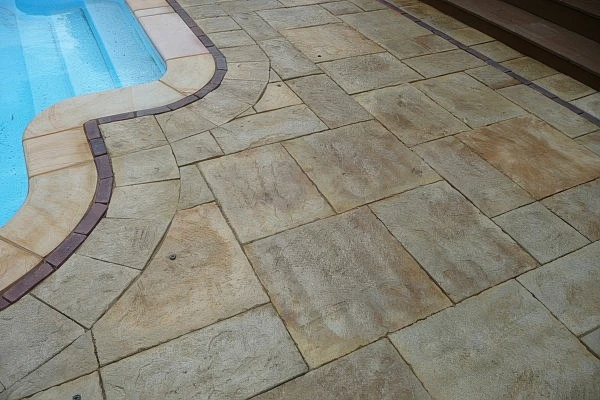
A complete patio and pool deck installation in Canton — the hardscape foundation that makes the rest of the outdoor living room possible.
A patio without a pergola is a floor. A pergola gives the outdoor space a ceiling — and that single addition changes the psychological experience of being in the space from “sitting outside” to “sitting in a room that happens to be outdoors.” Cedar and aluminum are the dominant material choices for Canton homeowners: cedar for warmth and natural character, aluminum for longevity in Georgia’s humidity without the maintenance requirement of sealing and staining every two to three years.
The fire feature — whether a wood-burning fire pit, a gas fire pit table, or a full outdoor fireplace — becomes the focal wall of the outdoor room. It anchors the seating arrangement, extends the usable season from April through November in Cherokee County, and creates the emotional center of the space. Evenings that would have ended at 8pm when the sun drops now continue past 10. The fire feature is, more than any other element, the one Canton homeowners say changed how they use the backyard. It is not a luxury. It is the conversion point between a space you walk through and a space you live in.
Phase Four
Lighting is the element that separates a daytime patio from a space you want to be in at night. Low-voltage LED landscape lighting in Canton backyards typically addresses four zones: step and riser lighting (safety), path lighting (navigation and edge definition), uplighting on specimen plants or trees (vertical interest), and string or pendant lighting within the pergola (ambiance). The lighting plan should be designed before the patio is installed, because conduit runs under the paver field cost nothing during installation and cost several thousand dollars to retrofit afterward.
Planting provides the transition between the hardscape and the natural landscape — softening the edges of retaining walls, adding screening where privacy is needed, and introducing the organic texture that makes a hardscape feel embedded in its environment rather than dropped onto it. Cherokee County’s climate supports a wide palette: ornamental grasses along retaining wall faces, hydrangeas for mid-height color, knockout roses for season-long bloom, and evergreen screening shrubs where property lines need year-round definition.
The emotional arc of a Canton backyard transformation ends here, at the last phase — when the planting fills in and the lighting comes on for the first time and you realize that the yard you ignored for six years is now the place your family actually gathers. That shift doesn’t happen by accident. It happens because every phase was planned and executed in sequence, with each one supporting the next. That is what a complete outdoor transformation looks like — and that is the standard Kaizen Scapes builds to on every project across Canton and Cherokee County.
Kaizen Scapes proudly serves homeowners across Canton, GA, Woodstock, GA, and the surrounding North Georgia communities including Holly Springs, Ball Ground, Acworth, Kennesaw, Marietta, Alpharetta, Milton, Roswell, Cumming, Johns Creek, and East Cobb. If you’re looking for hardscaping and landscaping craftsmanship within 35 miles of Canton or Woodstock, our team is ready to transform your outdoor space.
Whether you’re in Canton, Woodstock, Alpharetta, Milton, or anywhere across Cherokee County and the greater North Atlanta suburbs, Kaizen Scapes brings the same relentless standard to every project. We don’t do cookie-cutter. We do custom — built to last.
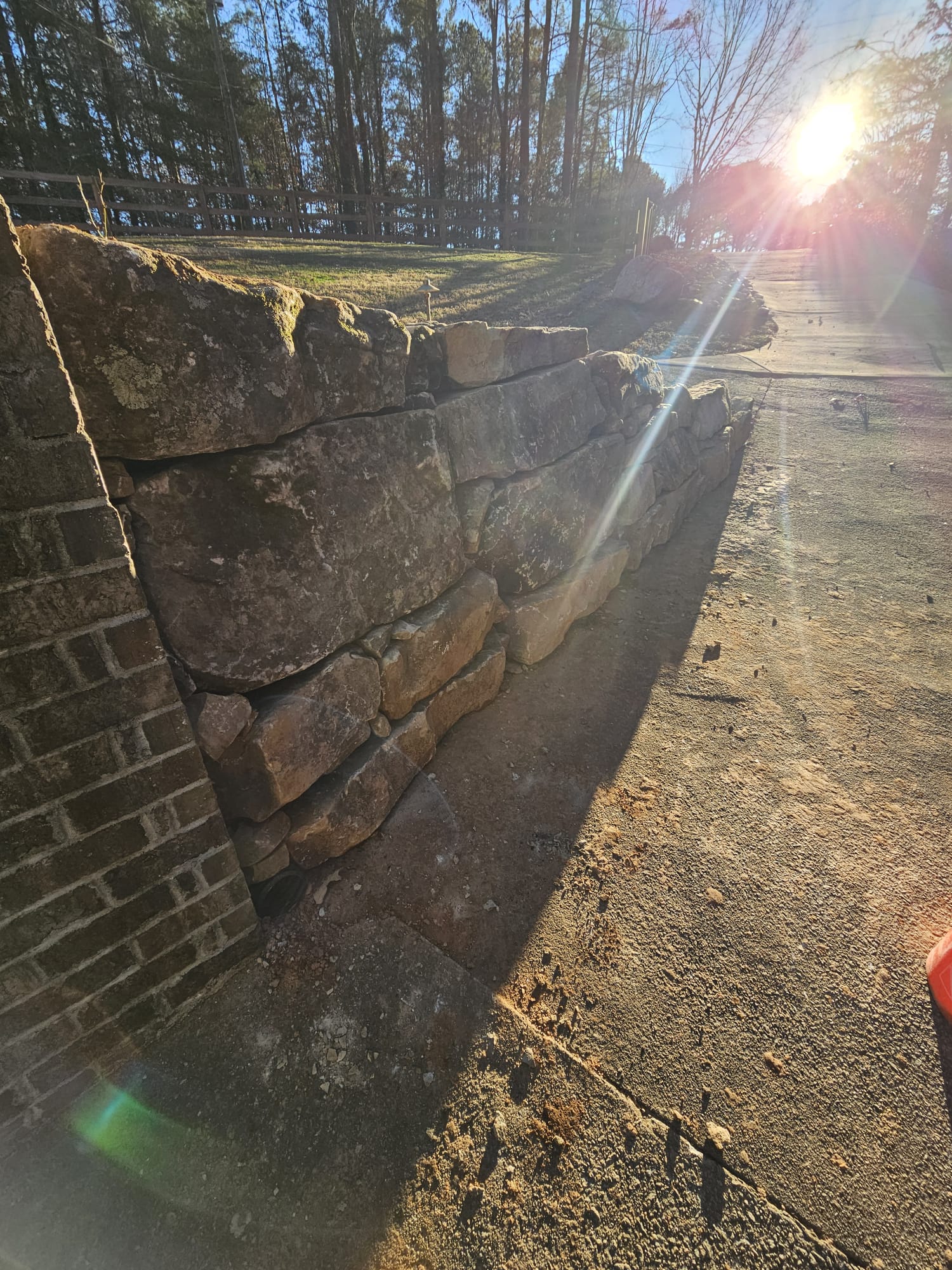
A completed Canton backyard transformation — retaining structure, patio, fire feature, and planting working together as a single designed outdoor room.
We’ll assess your lot, walk through the transformation sequence, and give you an honest scope. Free evaluations across Canton, Woodstock, and all of Cherokee County.
Kaizen Scapes is based in Canton, Georgia and serves the greater North Atlanta region within 35 miles: