

Marietta, GA sits in a climate zone that punishes the wrong grass choice and rewards the right one for decades. Cobb County summers are long, hot, and humid, with heavy afternoon thunderstorms that test drainage and root depth. Winters are mild enough to keep some species dormant but not dead — and freeze events are unpredictable enough to finish off anything that’s barely hanging on. Choosing the right grass type for a Marietta lawn is not a preference question. It’s a performance question.
The four grass types that come up in every Marietta lawn conversation are Bermuda, Zoysia, Tall Fescue, and St. Augustine. Each one performs genuinely well in the right Marietta context — and genuinely poorly in the wrong one. The mistake most homeowners make is choosing by appearance or by what their neighbor has, rather than by the actual sun exposure, shade patterns, traffic load, and irrigation capacity of their specific Cobb County property.
The Grass Type Comparison
Bermuda grass is the dominant choice for full-sun Marietta lawns, and for good reason. It tolerates Cobb County’s peak summer heat better than any other common turfgrass species, recovers fast from foot traffic and mowing stress, spreads aggressively to fill bare spots, and goes dormant (brown) in winter rather than dying — greening up reliably in spring. Its weaknesses are real: it requires full sun (6+ hours minimum) and fails quickly in shade, it requires consistent summer irrigation during drought periods, and its aggressive spreading means it will invade planting beds if not edged. Bermuda is right for open, sunny Marietta yards with active family use and an owner who will fertilize and mow on a real schedule.
Zoysia grass is Bermuda’s most common alternative and the species we recommend most often for Marietta homeowners who want a softer, denser turf with slightly better shade tolerance. Zoysia handles 3–4 hours of direct sun reasonably well and stays green longer into fall, which matters in Cobb County where the lawn is still visible through November. It establishes more slowly than Bermuda — expect 6–12 months to achieve a fully closed canopy from sod — and it’s less forgiving of compacted clay soil without proper prep. The payoff is a thicker, more weed-resistant turf that feels and looks premium once established. Cost per pallet runs slightly higher than Bermuda sod.
“The right grass type isn’t the one that looks best at the sod farm. It’s the one that matches the actual light, soil, and maintenance reality of your specific Marietta yard.”
Tall Fescue is the answer for heavily shaded Marietta properties — and the only realistic grass option for yards where mature hardwoods or pines block summer sun for more than half the day. Fescue stays green year-round in Marietta’s climate and tolerates shade that would kill Bermuda or Zoysia within a season. Its challenge is summer heat: Fescue thins out during Cobb County’s hottest weeks if shade is incomplete or irrigation is absent. Fescue lawns in Marietta typically require annual overseeding in fall to maintain density, since summer heat stress causes natural thinning. The overseeding window — mid-September through mid-October — is critical and non-negotiable for maintaining a dense Fescue lawn through the following summer.
St. Augustine is a warm-season species that performs beautifully in Marietta yards with moderate shade, high humidity, and good irrigation — but it’s cold-sensitive in ways that matter in Cobb County. A hard freeze below 20°F can kill St. Augustine that would have survived another warm-season species. Marietta’s occasional January and February cold events make St. Augustine a moderate-risk choice. For homeowners in East Cobb or along lower elevations where hard freezes are less frequent, it’s viable. For properties at higher elevations or with significant frost exposure, the risk-reward calculus favors Zoysia instead.
Installation Timing
Warm-season grasses — Bermuda, Zoysia, St. Augustine — should be installed in Marietta between late April and mid-August. The soil needs to be at or above 65°F consistently for warm-season root development to begin. Installing in March might look fine for a few weeks, but the roots don’t establish in cold soil and the first summer stress hits a lawn that never actually knit into the ground. The closer to June and July the installation, the more aggressive the establishment — heat is the warm-season grass’s ally.
Tall Fescue runs on the opposite calendar. Fall installation — mid-September through October — is the only viable window for Fescue in Marietta. Fescue installed in spring in Cobb County faces an immediate summer heat gauntlet before the root system is established enough to handle it. Fall installation gives Fescue a full cool season to develop roots before summer stress arrives. Spring Fescue installation in Marietta is a money-losing proposition — the sod cost, the prep cost, and the establishment irrigation investment all go out the window when summer arrives before the roots are deep enough to survive it.
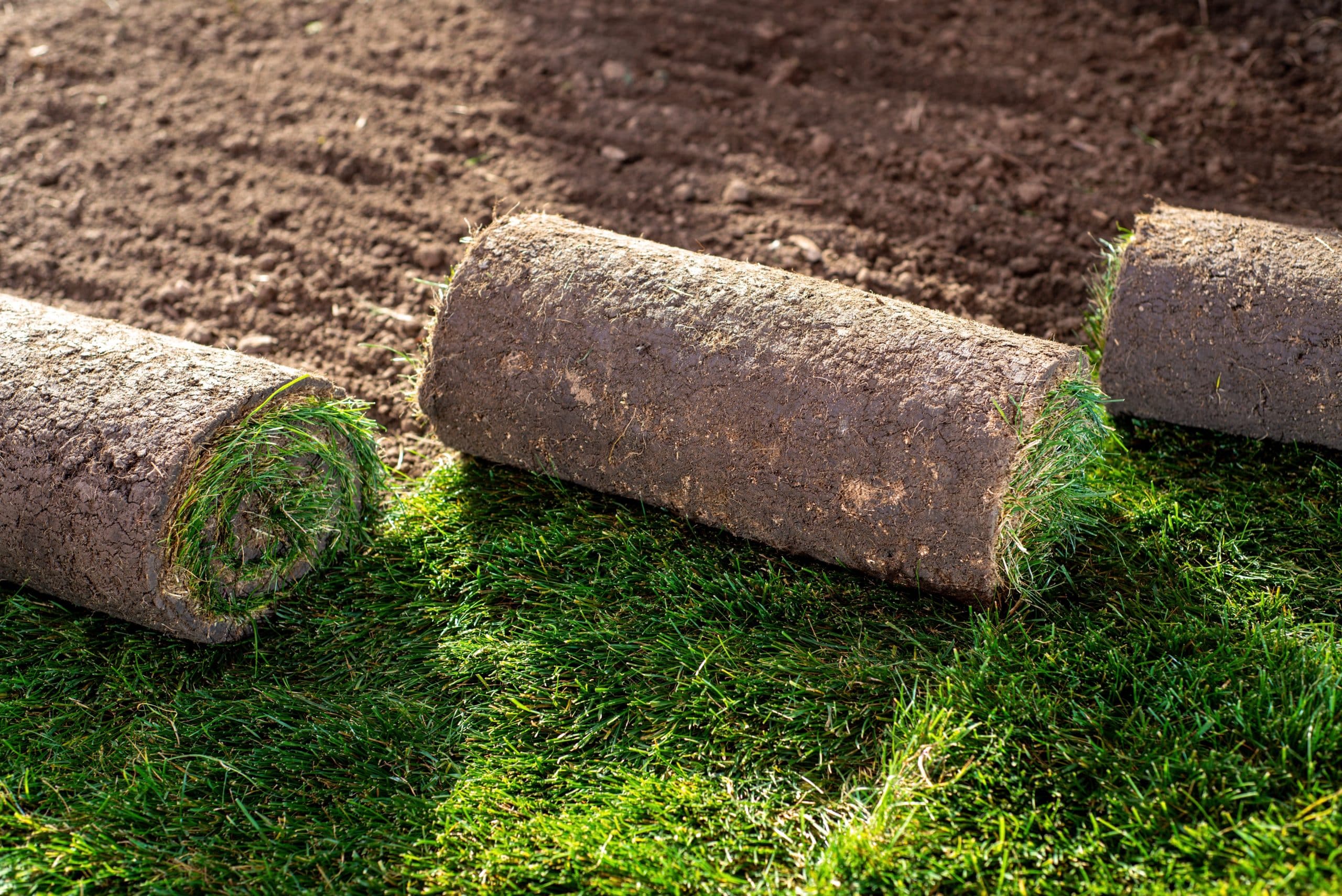
Sod installation in the Marietta area — species selected for the property’s sun exposure profile, base prep matched to Cobb County’s clay soil conditions.
Some areas of Marietta properties — under mature oaks, along north-facing fence lines, beneath dense canopy — receive insufficient light for any grass species to maintain healthy density. Planting sod in a zone that receives less than 2–3 hours of direct sun is setting money on fire. The grass will thin, thin further, and eventually be bare soil with a mulch problem. The real solutions for deep-shade zones in Marietta are: ground cover planting (Liriope, Pachysandra, Mondo Grass, native ferns — all thrive in full shade and build density over two to three growing seasons), river rock or decomposed granite with landscape edging and low-maintenance plantings, or — where appropriate — a defined mulch bed that acknowledges the space as a planting zone rather than a lawn zone.
Forcing grass into a shade zone it can’t support is a cost that compounds annually — resodding every few years, overseeding every fall, fighting thin turf and weed pressure that takes hold wherever the grass thins. The ground cover alternative typically costs less over a five-year window and requires a fraction of the maintenance. Kaizen Scapes includes an honest site assessment of every zone on a Marietta property before recommending a grass species — including the zones where grass is not the right answer.
Kaizen Scapes proudly serves homeowners across Canton, GA, Woodstock, GA, and the surrounding North Georgia communities including Holly Springs, Ball Ground, Acworth, Kennesaw, Marietta, Alpharetta, Milton, Roswell, Cumming, Johns Creek, and East Cobb. If you’re looking for hardscaping and landscaping craftsmanship within 35 miles of Canton or Woodstock, our team is ready to transform your outdoor space.
Whether you’re in Canton, Woodstock, Alpharetta, Milton, or anywhere across Cherokee County and the greater North Atlanta suburbs, Kaizen Scapes brings the same relentless standard to every project. We don’t do cookie-cutter. We do custom — built to last.
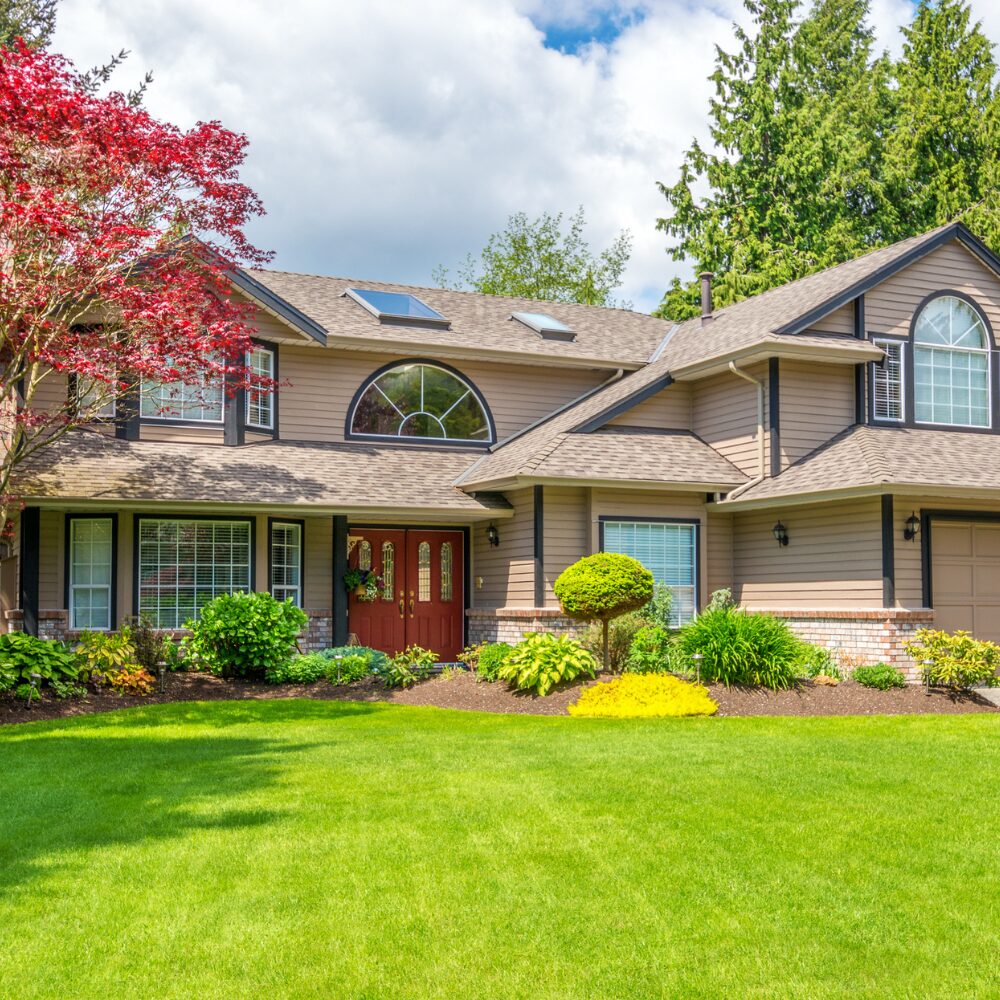
A completed sod installation in Marietta — grass species matched to the property’s sun exposure, installation timed for the correct seasonal window.
We assess sun exposure, soil, shade patterns, and irrigation before recommending any species. Free sod installation estimates across Marietta, Cobb County, and North Atlanta.
Kaizen Scapes is based in Canton, Georgia and serves the greater North Atlanta region within 35 miles: