

Acworth has a lot type that produces more retaining wall inquiries than almost anywhere else in the North Atlanta corridor: the sloped rear yard backing to a common area or tree line, with Lake Acworth or Lake Allatoona visible from the upper floor but completely unreachable from a backyard that drops eight feet from the patio door to the property line. Before you get three quotes and pick the middle one, there are things you need to know first.
The homeowners who call us after a failed retaining wall experience share a common story: they got quotes, compared numbers, chose a contractor, and didn’t ask the right questions before the project started. This post is the pre-project education those homeowners wish they’d had. Permits, setbacks, drainage responsibilities, HOA considerations, what belongs in a quote, and how to tell whether the contractor standing in your backyard actually knows what they’re looking at.
Before You Get Quotes
Cobb County requires a building permit for retaining walls that exceed a certain height threshold — typically four feet in exposed wall height, though this can vary by specific jurisdiction and project context. A contractor who quotes your project without mentioning permits isn’t saving you paperwork; they’re skipping a requirement that exists to protect you from structural failure and liability. If a wall built without a required permit fails and damages a neighboring property or injures someone, the liability exposure falls on the homeowner, not the contractor.
Property line setbacks are the second thing to confirm before breaking ground. A retaining wall that encroaches on an easement, utility corridor, or neighbor’s property line will need to come down regardless of how well it was built. Many Acworth properties in lakefront communities near Logan Farm Park and Lake Acworth Drive have drainage or utility easements running through the rear yard that are not visible without a survey review. Confirming setback requirements before the quote process starts is not optional — it’s the step that keeps the project from being stopped mid-construction.
“The homeowners who have the smoothest retaining wall projects are the ones who asked the hard questions before the first shovel went in the ground — not after.”
HOA rules in Acworth’s established lake-area communities add another layer. Some HOAs require architectural review before any hardscaping project that alters the visible grade or drainage behavior of a lot — including retaining walls in rear yards that back to common areas. An HOA rejection after installation is a situation where the wall comes down at the homeowner’s expense. If your property is in an HOA community, reviewing the CC&Rs before contacting contractors is the correct order of operations.
Drainage Responsibilities
Drainage responsibility on sloped Acworth lots — particularly those backing to common areas or natural drainage corridors near Lake Allatoona — is a question that must be answered before any wall is designed. If your lot currently receives drainage from an uphill property or common area, a retaining wall that intercepts that flow redirects it. Where it goes after that redirection is your responsibility. If it goes onto a neighbor’s property or damages a community drainage system, you’ve created a liability that didn’t exist before the project.
The drainage system behind a correctly built retaining wall is designed to handle the water that the slope delivers. But the outlet for that drainage system must be designed as part of the wall project — not left to figure out after the wall is in. We design drainage outlets to daylight at a safe location downhill, away from structures and property boundaries, and sized for the actual water volume the slope produces in a heavy rain event.
Three questions reveal more about a contractor’s competence than anything else in a retaining wall quote conversation. First: what drainage system is included behind the wall? A specific answer — perforated pipe, compacted gravel backfill, filter fabric, outlet location — is the right answer. “We’ll handle drainage” is not. Second: what is the footing specification? Depth, base aggregate type, and compaction method. Third: what block system are you using, and is it rated for this wall height? A contractor who answers all three with specifics is quoting a fundamentally different wall than one who deflects or generalizes. The price difference between those two walls is real, and it shows up in year three.
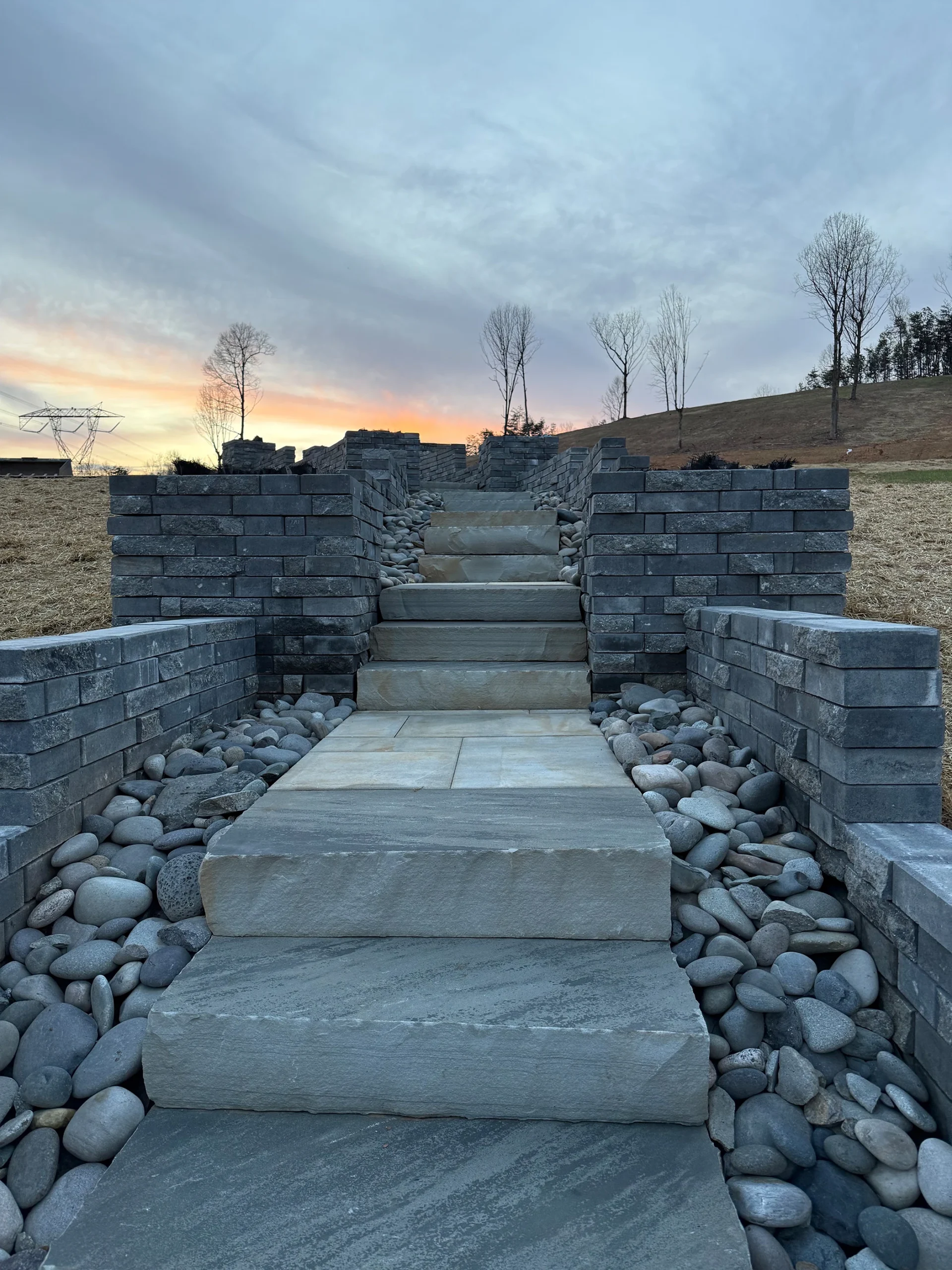
A properly engineered retaining wall on an Acworth sloped lot — footing set to stable bearing depth, drainage system designed before the first block was placed.
Retaining wall projects in Acworth range from $6,000 for a straightforward single-tier segmental installation on a modest grade to $30,000 or more for engineered multi-tier systems with natural stone and full drainage infrastructure on significant slopes near the Lake Allatoona watershed. The permit cost and HOA review timeline are separate from the construction budget — factor both into your project timeline, not just your project cost.
The lowest quote in your comparison set deserves the most scrutiny, not the most consideration. Ask what permit process the contractor has accounted for. Ask what the drainage outlet design looks like. Ask where the drainage exits the property. A quote that doesn’t account for those details isn’t a lower-cost option — it’s a quote for a different, shorter-lived project that may also create a permit or drainage liability you’ll be dealing with long after the contractor has moved on.
Why Kaizen Scapes
Our process in Acworth starts with the site assessment before a number is put on paper. Slope, soil conditions, drainage sources, permit requirements for the specific wall height, setback confirmation, and HOA applicability — all of that gets resolved before we design a drainage system and quote a wall. The site walk is where the competent contractor earns their higher price, and where the low bidder reveals what they skipped.
Kaizen Scapes proudly serves homeowners across Canton, GA, Woodstock, GA, and the surrounding North Georgia communities including Holly Springs, Ball Ground, Acworth, Kennesaw, Marietta, Alpharetta, Milton, Roswell, Cumming, Johns Creek, and East Cobb. If you’re looking for hardscaping and landscaping craftsmanship within 35 miles of Canton or Woodstock, our team is ready to transform your outdoor space.
Whether you’re in Canton, Woodstock, Alpharetta, Milton, or anywhere across Cherokee County and the greater North Atlanta suburbs, Kaizen Scapes brings the same relentless standard to every project. We don’t do cookie-cutter. We do custom — built to last.
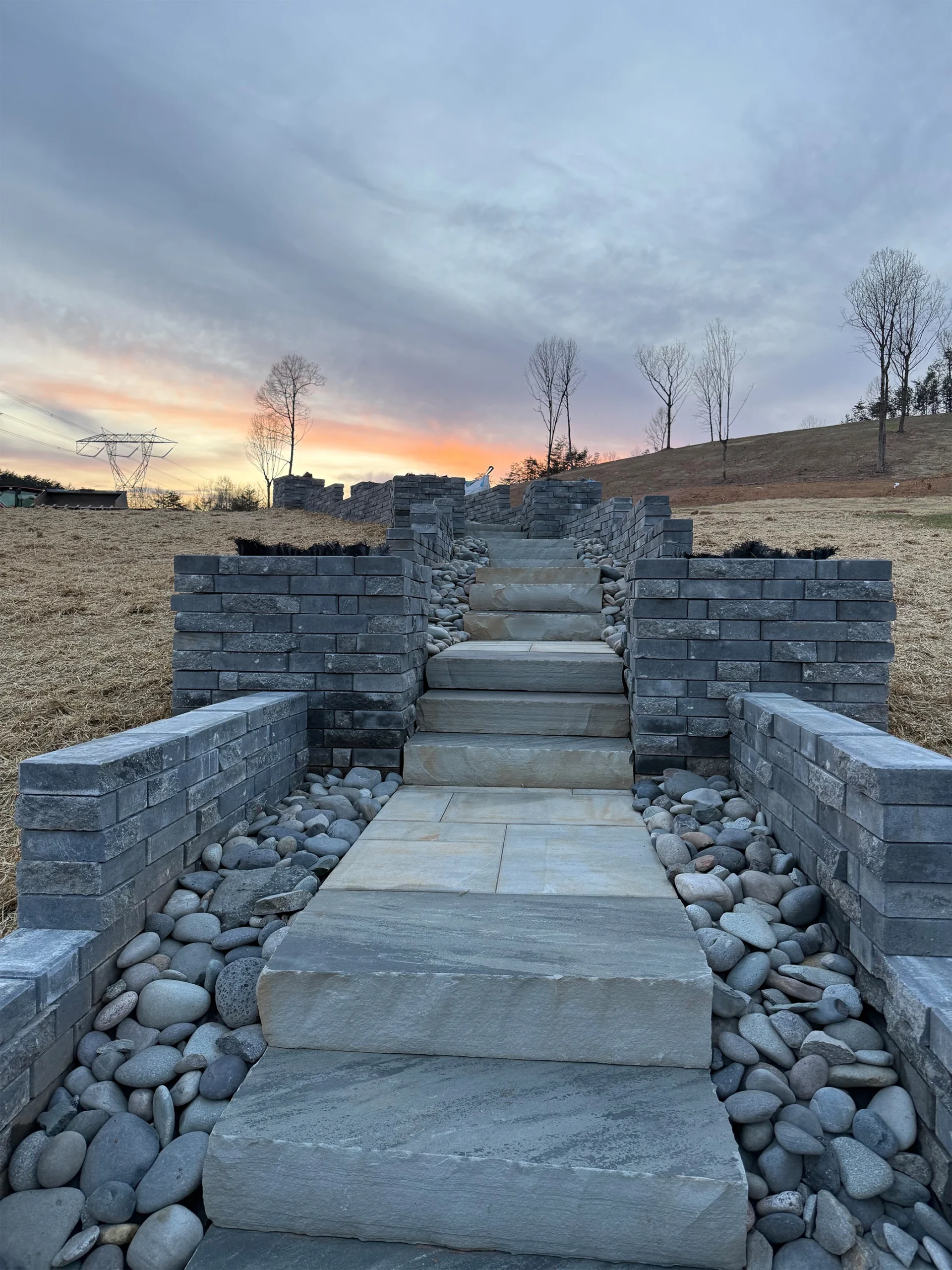
The project done right — permits pulled, drainage designed before construction, footing set to bearing depth. A wall Acworth homeowners don’t have to think about for twenty years.
Free retaining wall assessments across Acworth, Kennesaw, Marietta, and the greater Cobb County area. We walk the site, check drainage, and give you a straight answer.
Kaizen Scapes is based in Canton, Georgia and serves the greater North Atlanta region within 35 miles: