

Hiring a pool deck contractor in Roswell, GA should feel like a conversation between equals — you bring the vision, they bring the engineering. What too many homeowners discover after the fact is that the questions they didn’t ask in the bidding phase are the exact reasons the project went sideways. The gap between a pool deck that holds up for twenty years and one that starts cracking, shifting, and draining poorly in year three almost always traces back to a handful of decisions made before a single paver was placed.
The Roswell market is full of contractors who can quote a pool deck. Far fewer can articulate their drainage plan before you ask for it, explain their expansion joint spacing, or describe what coping detail they use at the waterline. These aren’t gotcha questions — they’re the baseline of what a qualified contractor should be able to answer without hesitation. If they can’t, that silence is the most expensive thing on their bid.
The Evaluation Framework
Start with drainage. A pool deck drainage plan is not optional in the North Atlanta area — it is the single most determinative factor in the long-term structural integrity of the surface. Ask every contractor: what is your slope specification, and how are you handling the runoff at the deck perimeter? The correct answer involves a minimum 1.5% slope away from the pool coping, with a defined terminus — either a channel drain, trench drain, or graded swale that directs water away from the pool shell and any adjacent landscape or structure. A contractor who says “we’ll slope it toward the yard” without specifying terminus or gradient has not engineered drainage — they’ve improvised it.
Next: expansion joint spacing. Roswell’s Fulton County location puts pool decks through significant thermal cycling — summer surface temperatures regularly exceed 140°F on exposed concrete or stone, and winters can drop into the teens. Expansion joints that are improperly spaced or filled with the wrong material will telegraph into cracks within two to three seasons. The industry standard for concrete pool decks is joints every 8 to 10 feet; for paver systems, the joint pattern is built into the material but the perimeter restraint edge must be properly set. Ask the contractor what material they use to fill control joints. The answer should not be standard mortar.
“The quality of a pool deck bid is inversely proportional to how fast it was written. A legitimate proposal takes site time — because the site is the variable that everything else must respond to.”
Then ask about coping detail. The coping — the cap material that runs along the pool edge — is the structural and aesthetic transition between the pool shell and the deck surface. It must be mortared at the correct overhang, pitched slightly toward the pool for runoff, and selected for a material compatible with pool chemistry. Travertine and bullnose concrete pavers are the most common residential coping choices in Roswell; both perform well when properly installed. What fails is improperly bonded coping set over a substrate that moves seasonally — meaning the bond bed and mortar mix must be specified for exterior wet-area exposure. If the contractor can’t explain their coping bond spec, treat it as a red flag.
Red Flags in Bids
Any pool deck bid that arrives as a single dollar figure — “pool deck installation, 800 sq ft, $X” — without itemized line items is not a complete proposal. A legitimate bid includes base preparation, sub-base compaction depth, edge restraint spec, drainage scope, material and pattern specification, coping detail, and a defined warranty period. When those line items are absent, you cannot compare bids accurately. You are comparing two contractors who may be planning to build two fundamentally different projects at the same price — and only one of them told you what they’re actually building.
The lowest bid in a Roswell pool deck project is statistically the most expensive. Not because low-cost contractors are dishonest, but because the budget constraints of a low bid almost always come out of base preparation depth, drainage scope, or sub-base compaction — the invisible work that determines longevity. You will never see those omissions on day one. You will see them in year three when the deck surface starts shifting and the water starts pooling.
What a Legitimate Bid Includes
A complete pool deck proposal in Roswell should itemize: existing deck demolition and haul-away (if applicable), sub-base excavation depth, compacted aggregate base specification, edge restraint system, material specification with pattern layout, drainage plan including slope gradient and terminus, coping material and installation method, expansion joint placement and fill material, and post-installation sealing if applicable. If any of these line items are missing, add them to your question list before signing anything.
Also ask for references — specifically from pool deck projects completed within the last two years in Roswell, Alpharetta, or Milton. Pool decks age differently than patios, and a contractor whose references are all general patio work has not necessarily proven their pool-specific installation competency. The wet environment, chemical exposure from pool water, and thermal cycling at the coping line create conditions that only experienced pool deck installers have worked through repeatedly.
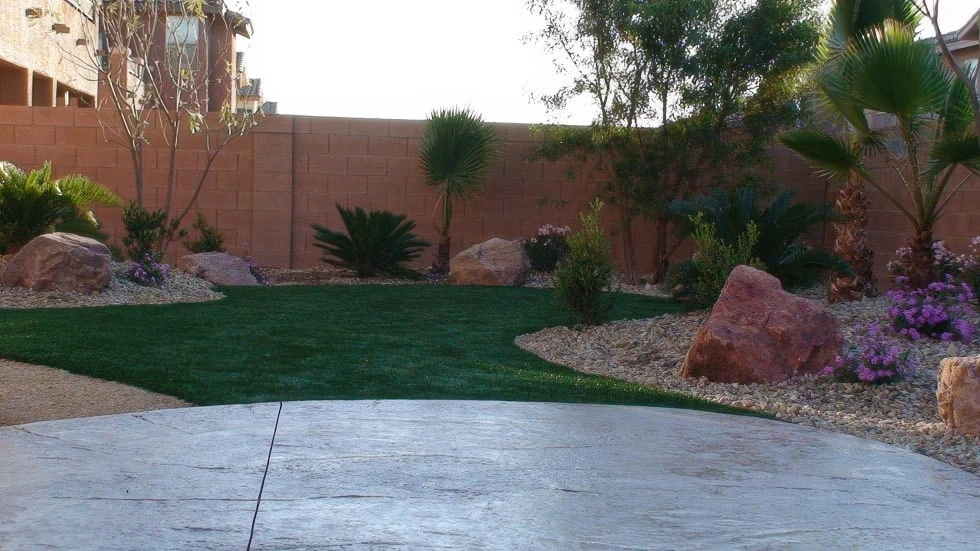
A Kaizen Scapes pool deck installation showing proper coping overhang, surface slope, and drainage terminus — the three details that determine long-term performance in Roswell’s climate.
We don’t write a number before we walk the site. Every Roswell pool deck project starts with a site evaluation that documents the existing grade, soil bearing conditions, pool shell perimeter, drainage outlet options, and coping condition. The proposal that follows is a direct response to what we found — not a templated figure pulled from a price sheet. Our drainage plan is drawn before we quote it. Our expansion joint placement is specified by material and location. Our coping detail includes mortar mix, overhang spec, and a defined warranty on the installation.
We work across Roswell, Alpharetta, Milton, and the greater North Atlanta area, and we’ve installed pool decks in Fulton County’s challenging soil conditions long enough to know what the red clay does to an under-engineered base over three summers. That knowledge is in our proposals — and it’s why the homeowners who have called us after a failed installation from another contractor can usually point to one of the line items above that was never addressed in the original bid.
Kaizen Scapes proudly serves homeowners across Canton, GA, Woodstock, GA, and the surrounding North Georgia communities including Holly Springs, Ball Ground, Acworth, Kennesaw, Marietta, Alpharetta, Milton, Roswell, Cumming, Johns Creek, and East Cobb. If you’re looking for hardscaping and landscaping craftsmanship within 35 miles of Canton or Woodstock, our team is ready to transform your outdoor space.
Whether you’re in Canton, Woodstock, Alpharetta, Milton, or anywhere across Cherokee County and the greater North Atlanta suburbs, Kaizen Scapes brings the same relentless standard to every project. We don’t do cookie-cutter. We do custom — built to last.
Ready to get a pool deck bid that actually answers your questions? Call us at (470) 535-0252 or request a free estimate online. We serve Roswell and the entire North Atlanta region.
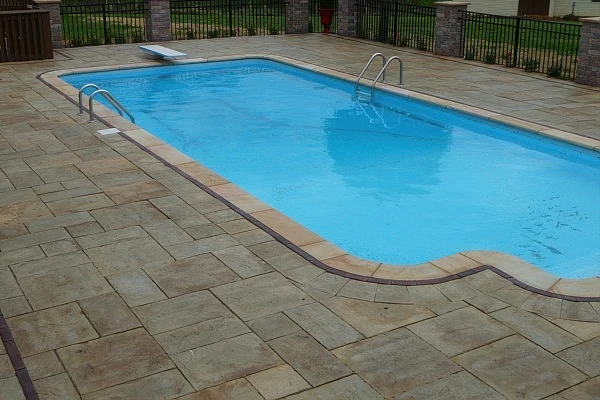
A completed pool deck project in the Roswell area — proper coping detail, surface drainage slope, and expansion joint placement throughout.
Free site evaluations for pool deck projects across Roswell, Alpharetta, Milton, and all of North Atlanta.
Kaizen Scapes is based in Canton, Georgia and serves the greater North Atlanta region within 35 miles: