

Pickleball is no longer a gym-only sport in Canton, GA. Homeowners across Cherokee County are carving dedicated courts into their backyards — and the ones doing it right are starting with the same question every serious hardscape project demands: what does the base actually require?
A pickleball court looks simple from the outside. It’s a painted rectangle with a net. But the concrete slab beneath that surface is a structural engineered system — and in Georgia’s clay-heavy soil, getting the base wrong means cracking, drainage failures, and a resurfacing bill within three to five years. The sport is fast. The base specification is slow, deliberate work. Here’s what Canton homeowners need to know before they talk to a single contractor.
Site Requirements
A regulation pickleball court is 20 feet wide by 44 feet long. That’s the playing surface. A properly built residential installation adds a minimum 10-foot surround on all four sides — giving players room to run down lobs and ensuring the fence line doesn’t clip overhead shots. That means your usable footprint needs to be at least 40 x 64 feet before site grading even begins.
Most Canton lots can accommodate this on a side yard or rear yard — but the grade matters more than the square footage. A court site needs to be near-flat or graded to a consistent 1% slope for drainage. Anything steeper requires cut-and-fill grading work before the slab can be poured, which adds cost and timeline. Lots in Canton’s hillier sections — especially in the foothills toward Ball Ground — often require retaining work on at least one side of the court to create the level plane the slab demands.
Cherokee County requires a permit for concrete flatwork of this scale. Kaizen Scapes handles the permit process as part of every sports court project — but homeowners should be aware that HOA approval may also be required in established Canton subdivisions. Plan for both conversations early.
“A pickleball court that cracks in year three didn’t fail at the surface — it failed at the base. Georgia clay doesn’t forgive shortcuts in compaction or drainage.”
Concrete Specification
This is where most residential pickleball court installations get underbuilt. A pickleball court slab is not a standard concrete pad. The specification for a court that will hold up in Cherokee County’s expanding clay soil is a 4-inch concrete slab over a minimum 4-inch compacted aggregate base — with the subgrade mechanically compacted before any base material is placed. Skip the subgrade compaction step and you’re building on a foundation that will move seasonally.
Two reinforcement approaches are standard for Georgia residential courts: post-tension cable reinforcement and fiber-reinforced concrete. Post-tension involves steel cables tensioned after the pour, which keeps the slab in compression and dramatically reduces cracking. Fiber reinforcement adds synthetic or steel fibers to the concrete mix itself, distributing tensile load throughout the slab. Either approach is valid — the key is that standard rebar grid alone is insufficient for a court surface that will see dynamic lateral load from players changing direction at speed.
Expansion joints are necessary in large concrete pours — but no expansion joint should run through the playing surface of a pickleball court. A joint through the middle of a court creates a ball-bounce inconsistency and a trip hazard that invalidates the surface entirely. The pour should be designed so that any required joints fall outside the playing lines, in the surround zone. This requires planning the pour geometry before a single truck arrives — not managing it on the fly during placement.
Surfacing Options
Once the slab is cured — typically 28 days minimum before surfacing — Canton homeowners have two primary surface options. Acrylic court coating is the traditional choice: a two-coat cushioned acrylic system applied directly to the concrete in the court’s chosen colors. It produces a surface that plays like a professional-grade pickleball facility, resists UV and moisture, and can be recoated every seven to ten years as it wears. For homeowners who want the truest playing experience, acrylic coating on a well-prepared slab is the standard.
Sport Court modular tile systems — the interlocking polypropylene panels used on many residential installations — offer a different set of trade-offs. They install faster, allow for color customization, and can be lifted and relocated if needed. Their key advantage is shock absorption: the tile system’s raised understructure provides more cushion than a pure concrete-plus-acrylic system, which matters for older players managing joint stress. The trade-off is ball bounce consistency — modular tiles play slightly differently than a poured acrylic surface, and the tile joints, while small, are perceptible at high-level play.
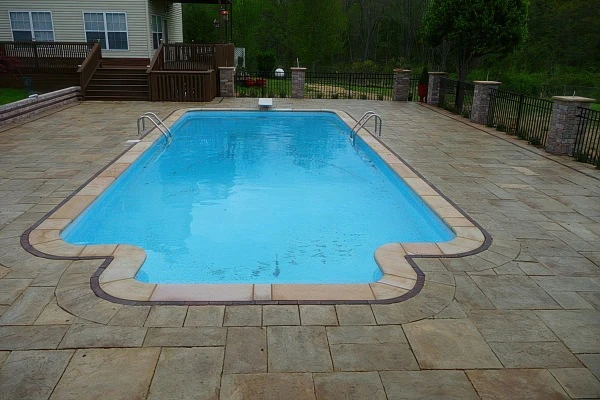
A sport court hardscape base in Canton — compacted aggregate, reinforced concrete slab, and precision drainage slope before surface application.
A properly built backyard pickleball court in Canton — concrete base, fencing, surface coating, and net system — ranges from $25,000 to $45,000 depending on site conditions, fencing height and style, lighting, and surface choice. The lower end of that range assumes a relatively flat site with minimal grading, a fiber-reinforced slab, acrylic surface coating, and a standard chain-link perimeter fence. The higher end reflects post-tension reinforcement, decorative powder-coated fencing, LED lighting for evening play, and landscaping integration around the court perimeter.
The reason cheaper options don’t hold up in Georgia clay is compaction and drainage — not surface quality. A $12,000 court quote that skips mechanical subgrade compaction, cuts the base course to 2 inches, and uses standard rebar instead of fiber reinforcement will crack within three to five years in Cherokee County’s seasonal soil movement. The rebuild cost typically exceeds the savings. The concrete base on a pickleball court is not a place to negotiate on spec.
Every pickleball court project starts with a site evaluation — grade assessment, soil observation, and a conversation about how the court connects to the rest of the backyard hardscape. A court that sits as an island in the backyard misses the opportunity to integrate with the patio, fire pit area, or pool deck into a cohesive outdoor living system. Our approach to sports courts is the same as every other hardscape project: the structural spec comes first, the aesthetic design follows, and the integration with the broader backyard plan is part of the conversation from the start.
Kaizen Scapes proudly serves homeowners across Canton, GA, Woodstock, GA, and the surrounding North Georgia communities including Holly Springs, Ball Ground, Acworth, Kennesaw, Marietta, Alpharetta, Milton, Roswell, Cumming, Johns Creek, and East Cobb. If you’re looking for hardscaping and landscaping craftsmanship within 35 miles of Canton or Woodstock, our team is ready to transform your outdoor space.
Whether you’re in Canton, Woodstock, Alpharetta, Milton, or anywhere across Cherokee County and the greater North Atlanta suburbs, Kaizen Scapes brings the same relentless standard to every project. We don’t do cookie-cutter. We do custom — built to last.
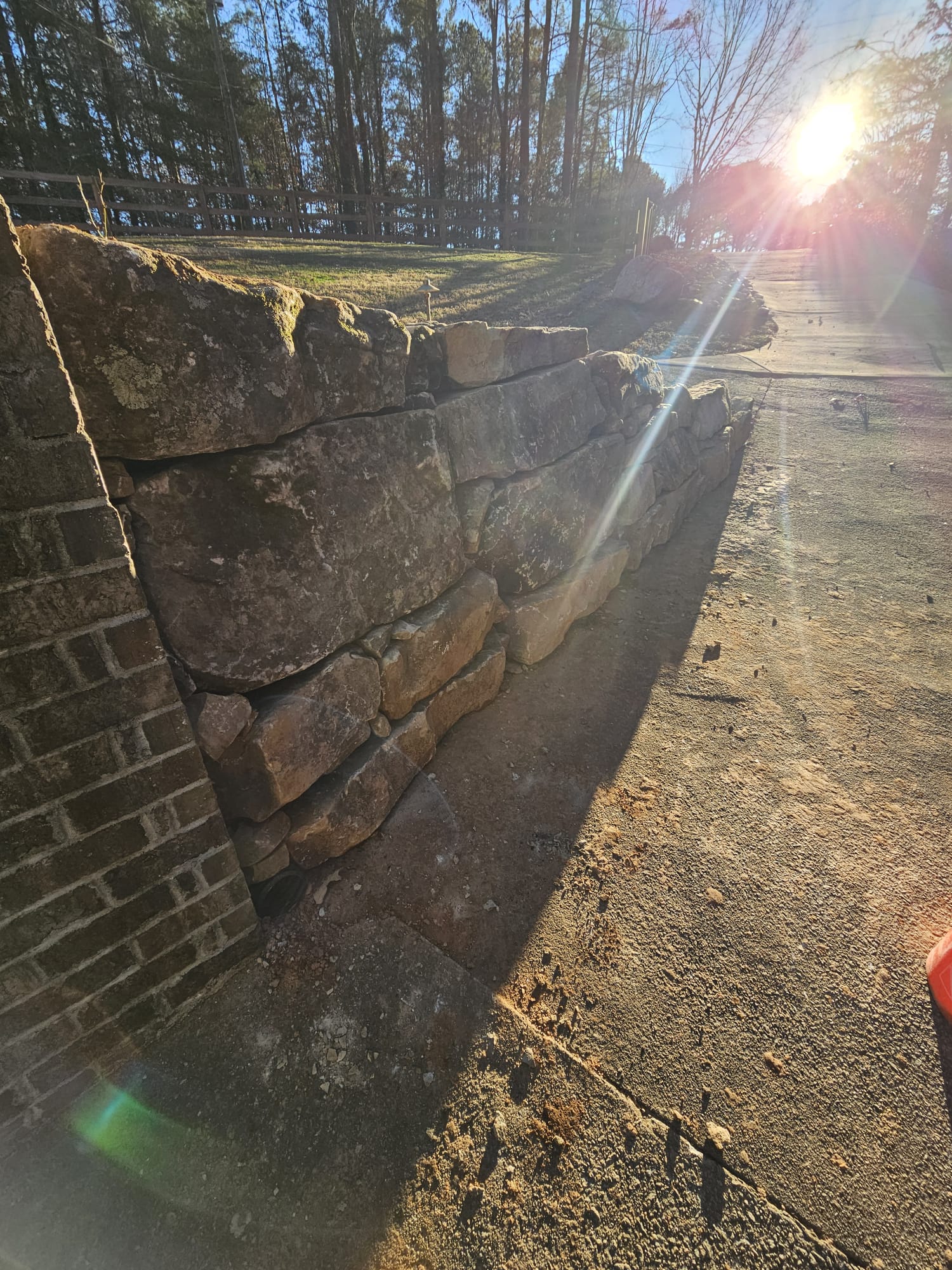
Site grading and retaining work in Canton — creating the level plane a pickleball court slab demands before a single yard of concrete is poured.
We spec the base before we quote the surface. Free pickleball court evaluations across Canton, Cherokee County, and all of North Georgia.
Kaizen Scapes is based in Canton, Georgia and serves the greater North Atlanta region within 35 miles: