

Most paver walkway pricing conversations in Woodstock start with a number and skip the context. A $3,000 walkway and a $15,000 walkway are not the same project with a different price — they are fundamentally different installations with different widths, materials, base systems, and design intent. Here is what actually drives the range, and how to know which tier your project belongs in.
Woodstock homeowners are increasingly choosing paver walkways over poured concrete — not just for aesthetics, but because the clay soils in Cherokee County make concrete paths a poor long-term investment. The upgrade conversation usually starts with “what does it cost?” but the more useful question is “what do I actually get at each price point?” Those are different questions, and they have specific answers.
The Price Tiers
Entry tier ($3,000–$6,000): A straightforward 36-to-48-inch-wide concrete paver walk, 30–40 linear feet, running-bond pattern with minimal border detail. This is a clean, functional path that outperforms poured concrete on durability and repairability, but doesn’t make a strong design statement. Appropriate for side-yard access paths, rear yard connections, and utility-oriented front approaches.
Mid-range ($6,000–$10,000): A 48-to-60-inch-wide walk with a defined border accent, landing pad at the front door, and pattern variation between field and border. This is where curb appeal upgrades become visible from the street. The width is generous enough to read as welcoming, the border creates a designed look, and the landing pad anchors the front entry as a feature rather than a path terminus. This tier fits the majority of Woodstock subdivision homes.
Architectural tier ($10,000–$15,000+): A wide entry system — 5 to 8 feet — with integrated step landings, natural stone or travertine material upgrade, decorative edge restraint, lighting rough-in, and a design that treats the front approach as a primary exterior feature. In Woodstock’s newer developments near Towne Lake and downtown, this tier is increasingly common as homeowners invest in outdoor living features that match their interior renovation level.
“An undersized walkway isn’t just a missed design opportunity — it’s the regret homeowners most commonly mention when they’re planning their next hardscaping project.”
What Drives Cost
The variable homeowners most consistently underestimate is width. Going from a 36-inch walk to a 60-inch walk is not a minor upgrade — it’s a fundamentally different installation that changes how the entire front of the home reads. The cost difference is real. So is the curb appeal difference. Every homeowner we’ve talked to who upgraded to a wider walk says the same thing: they wish they’d gone wider from the start.
A 36-inch walkway accommodates one person. A 60-inch walkway accommodates two people walking side by side — which is how most guests actually arrive. Width signals welcome. Narrowness signals utility. In Woodstock neighborhoods where homes are well-landscaped and front yards are maintained, a narrow concrete-paver walk is the element that visually undercuts everything else. The extra cost of going wider is paid back every time someone approaches your front door and the arrival experience feels like it was designed.
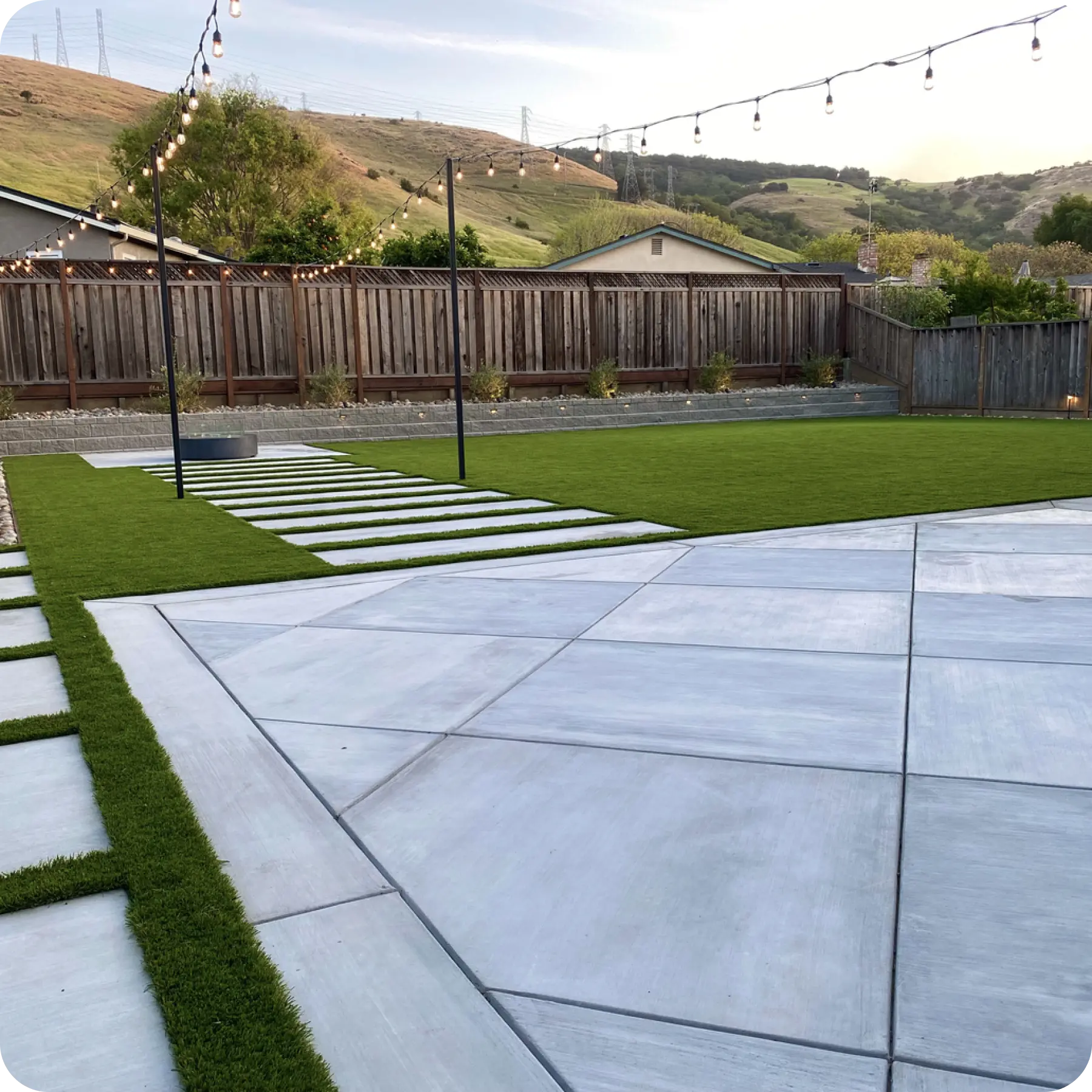
A mid-range paver walkway installation in the Woodstock area — 54 inches wide, bordered edge, front door landing pad, installed to last in Cherokee County clay.
The most common regret we hear from Woodstock homeowners who had a walkway installed in the past five years is not about the material they chose or the contractor they used. It’s about the width. They went with a 36-inch path because it was less expensive, and now they’re looking at a narrower path than their front yard deserves. Ripping out a walkway that’s two years old to redo it wider is one of the most avoidable hardscaping costs in the North Atlanta area.
The second most common regret is skipping the landing pad at the front door. A walkway that terminates in a 6-inch transition directly into the door threshold feels unfinished. A 4×4 or 5×5 landing that matches the walkway material creates a pause point — a moment of arrival — that reads as deliberate design rather than a path that just happens to end at the door.
Paver walkways in Woodstock range from $3,000 for a simple 3-foot front entry walk to $15,000 or more for a wide architectural installation with natural stone, step integration, and lighting. Getting the width right the first time is the decision that determines whether the project is something you’re proud of in year ten or something you’re planning to redo.
Kaizen Scapes proudly serves homeowners across Canton, GA, Woodstock, GA, and the surrounding North Georgia communities including Holly Springs, Ball Ground, Acworth, Kennesaw, Marietta, Alpharetta, Milton, Roswell, Cumming, Johns Creek, and East Cobb. If you’re looking for hardscaping and landscaping craftsmanship within 35 miles of Canton or Woodstock, our team is ready to transform your outdoor space.
Whether you’re in Canton, Woodstock, Alpharetta, Milton, or anywhere across Cherokee County and the greater North Atlanta suburbs, Kaizen Scapes brings the same relentless standard to every project. We don’t do cookie-cutter. We do custom — built to last.
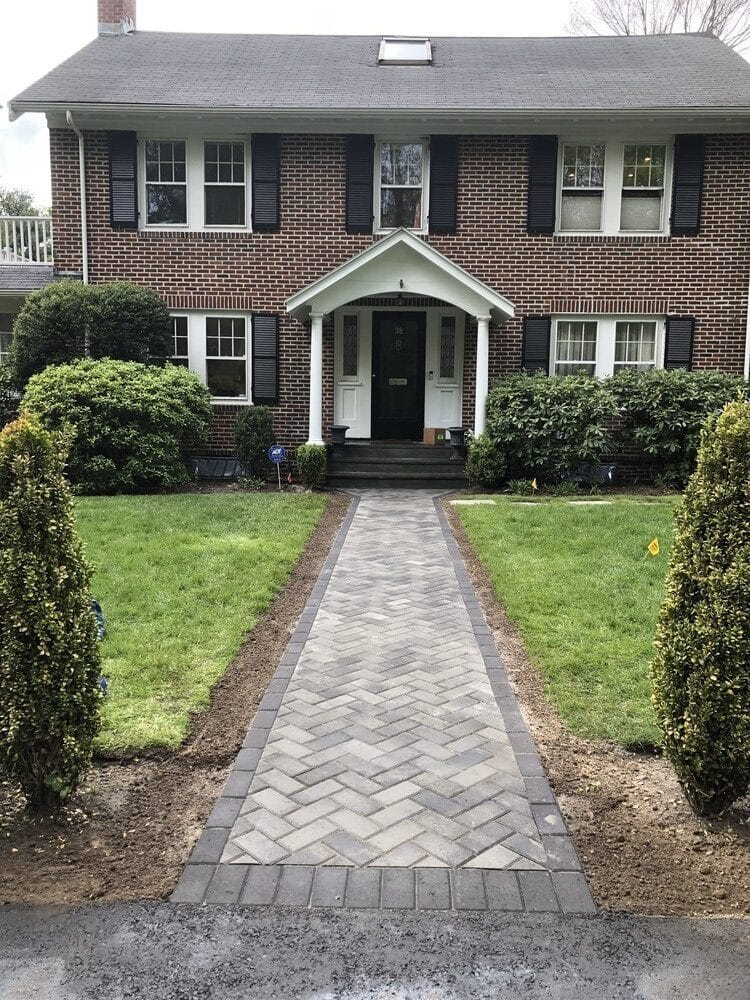
Architectural-tier paver entry in the Woodstock area — wide, bordered, with a front-door landing that turns the approach into an arrival experience.
Free walkway consultations across Woodstock, Canton, and all of Cherokee County. We quote you on the right project, not the cheapest number.
Kaizen Scapes is based in Canton, Georgia and serves the greater North Atlanta region within 35 miles: