

The most expensive paver driveway mistakes in Alpharetta don’t happen during installation. They happen in the weeks before it — in the conversations about pattern choice, the contractor’s quote that didn’t mention edge restraints, and the decision to skip a drainage evaluation because the grade “looked fine.” What those decisions look like at year three is a lot more expensive than what they looked like on paper.
Alpharetta’s paver driveway market is active and competitive, which means there are contractors quoting projects across a wide range of approaches and standards. The homeowners who call us to diagnose problems with recently installed driveways are almost always dealing with decisions made before the first paver was placed — not failures in the pavers themselves. Understanding the six most common pre-installation mistakes helps you ask the right questions before signing any contract.
Mistake One
Pattern selection feels like an aesthetic decision — and it is — but it’s also a structural one, and the scale relationship between pattern and driveway size matters more than most homeowners realize. A small-format basketweave or fan pattern that looks beautiful in a product sample reads as visual noise when applied across a 900-square-foot driveway. The eye has nowhere to rest. The same pattern on a patio — 200 to 400 square feet — is beautiful. On a full driveway, it competes with itself. Herringbone at 45 degrees remains the standard for driveways precisely because it scales correctly at any size and provides the best load distribution under vehicular traffic.
“Every paver driveway problem we’re called to diagnose traces back to a specification decision — not a material defect. The pavers were fine. The plan wasn’t.”
Mistakes Two Through Six
Skipping edge restraints is the mistake that produces the most visible early failure. Without a spiked edge restraint system at every perimeter edge, the outer pavers gradually migrate outward under the lateral pressure of vehicular traffic. As the edges spread, the center joint pattern widens. Sand base material escapes through the widening joints. Within three to five years, a driveway without edge restraints shows visible separation at borders, rocking individual pavers, and weeds establishing through compromised joints. The repair requires removing and reinstalling the perimeter sections — and adding the edge restraints that should have been there from the start.
Inadequate base depth in clay soil is the second most common failure mechanism. Alpharetta sits on red clay that behaves like Cherokee County clay — expansive, moisture-reactive, slow to drain. A base depth specification designed for sandy or loamy soil is not adequate for Alpharetta clay. Most quality installations in this market require 8 to 10 inches of compacted angular aggregate beneath the bedding sand layer. Contractors quoting shallower bases are either unaware of the soil conditions or managing cost at the expense of longevity.
Paver thickness is specified in millimeters: 60mm pavers are rated for pedestrian applications — walkways, patios, pool surrounds. 80mm pavers are the minimum specification for any application that will bear vehicular traffic. The two products are often similar in price and look identical in photos. The difference is the compressive strength and the load-bearing capacity. A 60mm paver under repeated vehicular traffic will fracture — not immediately, but within a few years of regular use. Ask your contractor to confirm the paver thickness specification in writing before the project starts. If the answer is 60mm for a driveway application, the specification is wrong.
The color mismatch problem is irreversible without full replacement. If an Alpharetta homeowner has an existing paver patio, stone walkway, or concrete stoop, the driveway paver selection needs to be made in reference to those existing elements — not independently. Bring a sample of the existing hardscape to the material selection meeting. Lay the paver samples next to the existing surface in natural light. What reads as complementary in a showroom under fluorescent lighting may read as a clash in afternoon sun on the actual property.
Paver driveway installation in Alpharetta typically runs $12,000 to $45,000 depending on size, material, and scope. That range is wide because the projects genuinely differ — from a standard two-car replacement to a full estate entry redesign. What shouldn’t vary is the specification quality: edge restraints, correct base depth for local soil, 80mm paver thickness, and a drainage plan that accounts for where water goes during a three-inch rain event.
Kaizen Scapes proudly serves homeowners across Canton, GA, Woodstock, GA, and the surrounding North Georgia communities including Holly Springs, Ball Ground, Acworth, Kennesaw, Marietta, Alpharetta, Milton, Roswell, Cumming, Johns Creek, and East Cobb. If you’re looking for hardscaping and landscaping craftsmanship within 35 miles of Canton or Woodstock, our team is ready to transform your outdoor space.
Whether you’re in Canton, Woodstock, Alpharetta, Milton, or anywhere across Cherokee County and the greater North Atlanta suburbs, Kaizen Scapes brings the same relentless standard to every project. We don’t do cookie-cutter. We do custom — built to last.
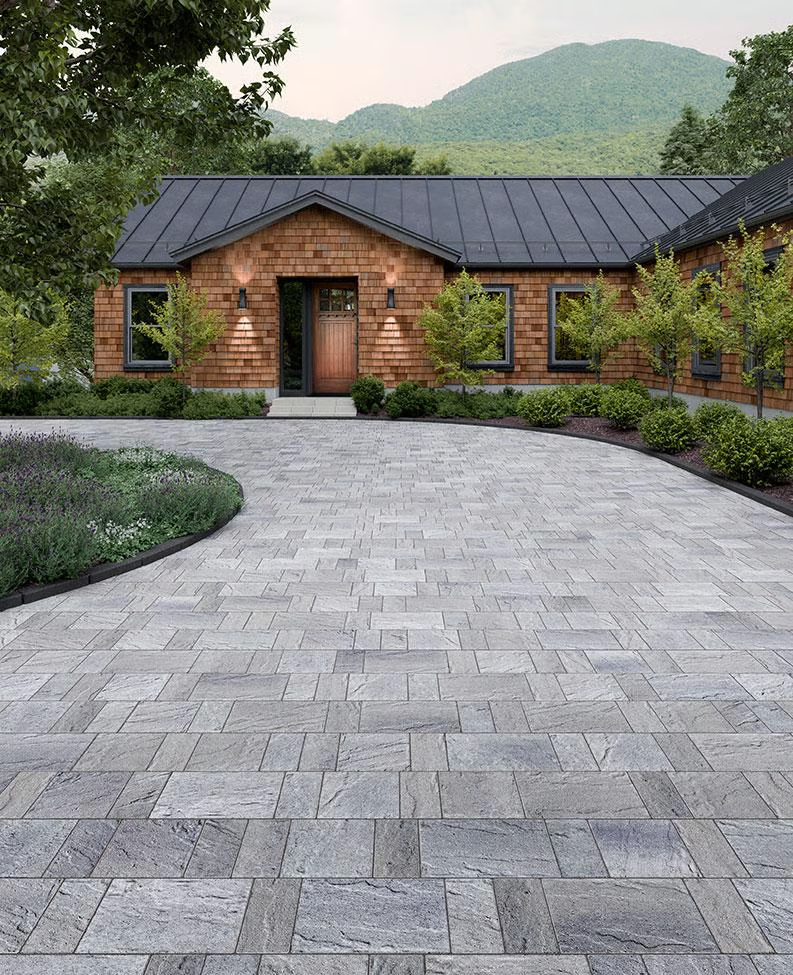
A correctly specified driveway — 80mm pavers, edge restraints, adequate base depth, drainage accounted for before the first paver was placed.
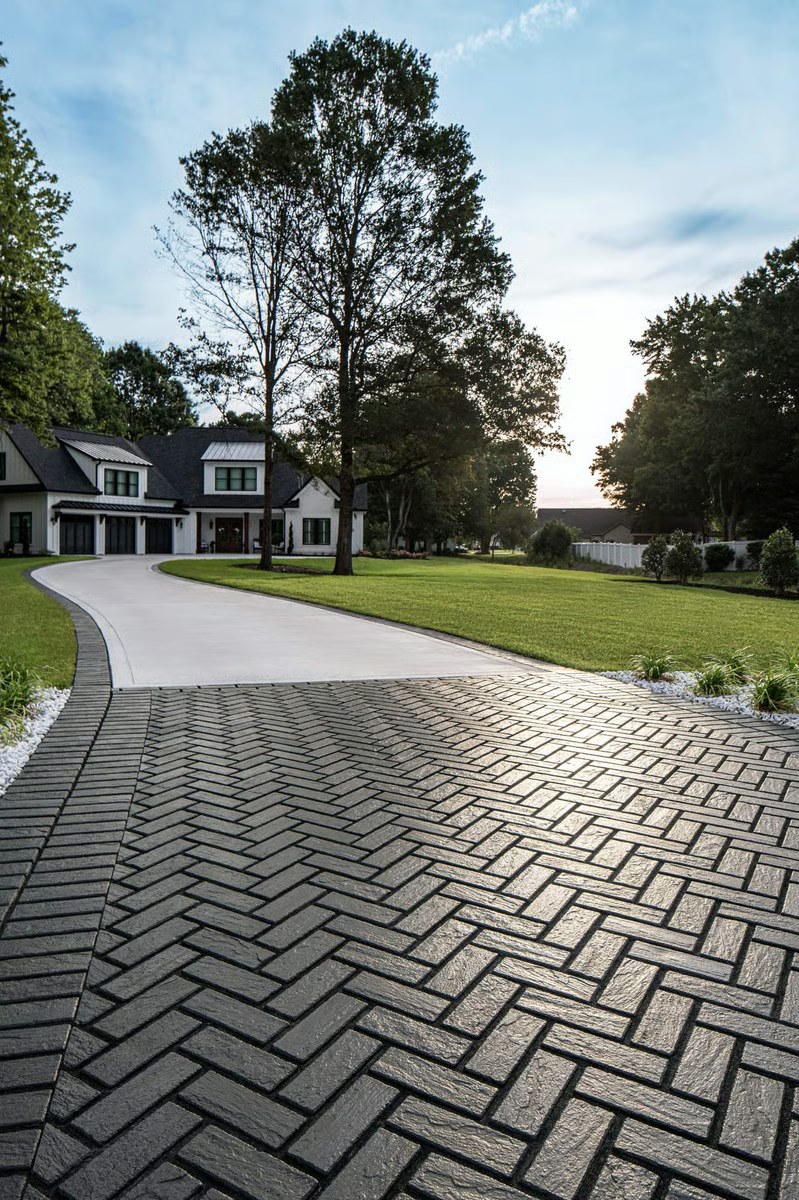
The finished surface — herringbone pattern scaled to the driveway, perimeter locked, built to hold through years of Alpharetta clay’s seasonal movement.
Free driveway assessments across Alpharetta, Milton, Roswell, and North Fulton. We evaluate soil, grade, drainage, and existing hardscape before quoting anything.
Kaizen Scapes is based in Canton, Georgia and serves the greater North Atlanta region within 35 miles: