

Milton’s estate properties present a specific challenge that smaller suburban lots don’t face: large expanses of outdoor space that need connectivity without hard-surfacing every route. A stepping stone path is the answer that designers and landscapers have used for centuries — and when it’s installed correctly, it’s one of the most elegant hardscape elements a large property can have. When it’s installed incorrectly, it rocks, sinks, and becomes a liability within three years.
The difference between a stepping stone path that performs for twenty years and one that fails in five is almost entirely in the work that happens before the stone is visible — the excavation, the base, and the individual setting of each stone into stable, properly compacted ground. A stepping stone set directly into topsoil with no base preparation will sink unevenly as the soil compresses under weight. On a Milton property where paths may cross significant distances through planted areas or lawns, that failure multiplies across every stone in the sequence.
Path Design
Stepping stone spacing is not an aesthetic variable — it’s an ergonomic one. The natural walking stride for an adult is roughly 24–30 inches center to center, and that’s the specification that should drive stone placement. Stones set closer than 22 inches force a shortened, unnatural gait. Stones set wider than 32 inches require a conscious step-stretch that feels awkward in daily use and becomes a genuine safety concern on wet Georgia mornings.
The center-to-center specification should be walked — literally — before stones are permanently set. On a Milton property where the path winds through planted areas or crosses a lawn, have the installer walk the route at natural pace and mark stone centers with spray paint before any excavation begins. A path that reads beautifully on a drawing but requires unnatural movement on the ground is a design failure that no amount of attractive stone selection can correct.
Stone thickness is equally non-negotiable. Stepping stones should be a minimum of 2 inches thick, and 2.5–3 inches is the standard specification for large-format stones (those 18 inches or larger in any dimension). Thinner stones flex under footfall and will eventually crack, particularly in the larger sizes. On Milton’s clay-rich soils, which expand and contract seasonally, an undersized stone thickness is the single most common cause of early cracking in stepping stone installations.
“A stepping stone path is one of the few hardscape elements that grows more beautiful with use — but only if every stone is individually set to stay exactly where it’s placed.”
Base Preparation
This is where most stepping stone installations are shortcut — and where the failure originates. Every stepping stone requires its own individual excavation, base preparation, and level-set. This is not a continuous base like a patio — it is a series of independent installations, each of which must be engineered to carry the stone and the load it will bear without settling or tipping.
On a standard suburban lot, a stepping stone path might connect a patio to a garage pad — a short, high-visibility, frequently used route. On a Milton estate property, stepping stone paths often cover significant distances: connecting a rear patio to a fire pit area, linking a pool to a garden structure, or winding through a planted landscape garden that spans hundreds of feet. That scale changes the project significantly.
Longer paths cross variable soil conditions — areas where lawn irrigation keeps soil consistently moist, areas under tree canopies where root systems will encounter the stone bases, areas on slopes where drainage direction affects base stability. A single base specification applied uniformly across a 200-foot stepping stone path on a Milton property is a specification that will fit some sections and fail others. Proper installation on large-lot paths requires site-reading — assessing soil moisture, root proximity, and drainage at each stone location and adjusting the base depth and compaction approach accordingly.
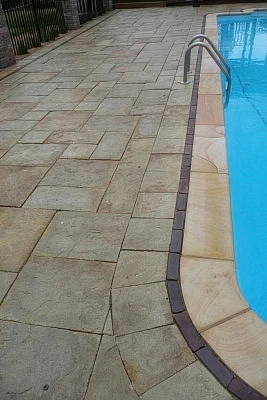
A stepping stone path on a Milton-area property — stone sized for the route, individual bases prepared for each stone to ensure long-term stability.
The space between stepping stones is one of the most underspecified elements of the installation — and it dramatically affects both the aesthetic and the long-term maintenance of the path. The right plant material depends on the path’s sun exposure, the Milton property’s moisture levels, and how much maintenance the homeowner wants to commit to.
Creeping thyme is the most versatile choice for North Atlanta stepping stone paths — it handles full sun, tolerates foot traffic on the stone edges, releases a subtle fragrance when brushed, and produces tiny pink flowers in late spring. It’s drought-tolerant once established and spreads naturally to fill joints without becoming invasive. For Milton properties with sunny stepping stone paths, creeping thyme is the first recommendation in almost every situation.
Moss is the ideal choice for shaded paths — particularly the kind of dappled-shade environment that Milton’s tree canopy creates. Established moss reads as ancient and intentional, produces a deep green color that makes stone look more settled, and requires essentially zero maintenance once it colonizes the joints. The challenge is establishment: moss needs consistent moisture and shade, and it doesn’t establish quickly in Georgia summers. Inoculating joints with a moss slurry (moss blended with buttermilk) in spring accelerates colonization significantly.
Creeping Jenny (Lysimachia) and blue star creeper (Isotoma) work in part-shade conditions and produce a ground-hugging mat that fills joints quickly. Both are more vigorous than thyme and may require periodic trimming to stay within the stone joints. For Milton paths that border planting beds, a plant that spreads actively is often preferable to bare gravel — it reduces weeding and produces a more naturalistic integration between path and garden.
Why Kaizen Scapes
We walk every Milton stepping stone path before we install it. Not to plan the route on paper — but to feel the stride, assess the slope, identify tree roots and drainage channels, and understand what each stone’s base needs to be. A stepping stone path on a Milton estate property is not a catalog item. It’s a site-specific installation that requires craft, attention, and an understanding of how the landscape will evolve around those stones over the next decade. We bring all three.
Kaizen Scapes proudly serves homeowners across Canton, GA, Woodstock, GA, and the surrounding North Georgia communities including Holly Springs, Ball Ground, Acworth, Kennesaw, Marietta, Alpharetta, Milton, Roswell, Cumming, Johns Creek, and East Cobb. If you’re looking for hardscaping and landscaping craftsmanship within 35 miles of Canton or Woodstock, our team is ready to transform your outdoor space.
Whether you’re in Canton, Woodstock, Alpharetta, Milton, or anywhere across Cherokee County and the greater North Atlanta suburbs, Kaizen Scapes brings the same relentless standard to every project. We don’t do cookie-cutter. We do custom — built to last.
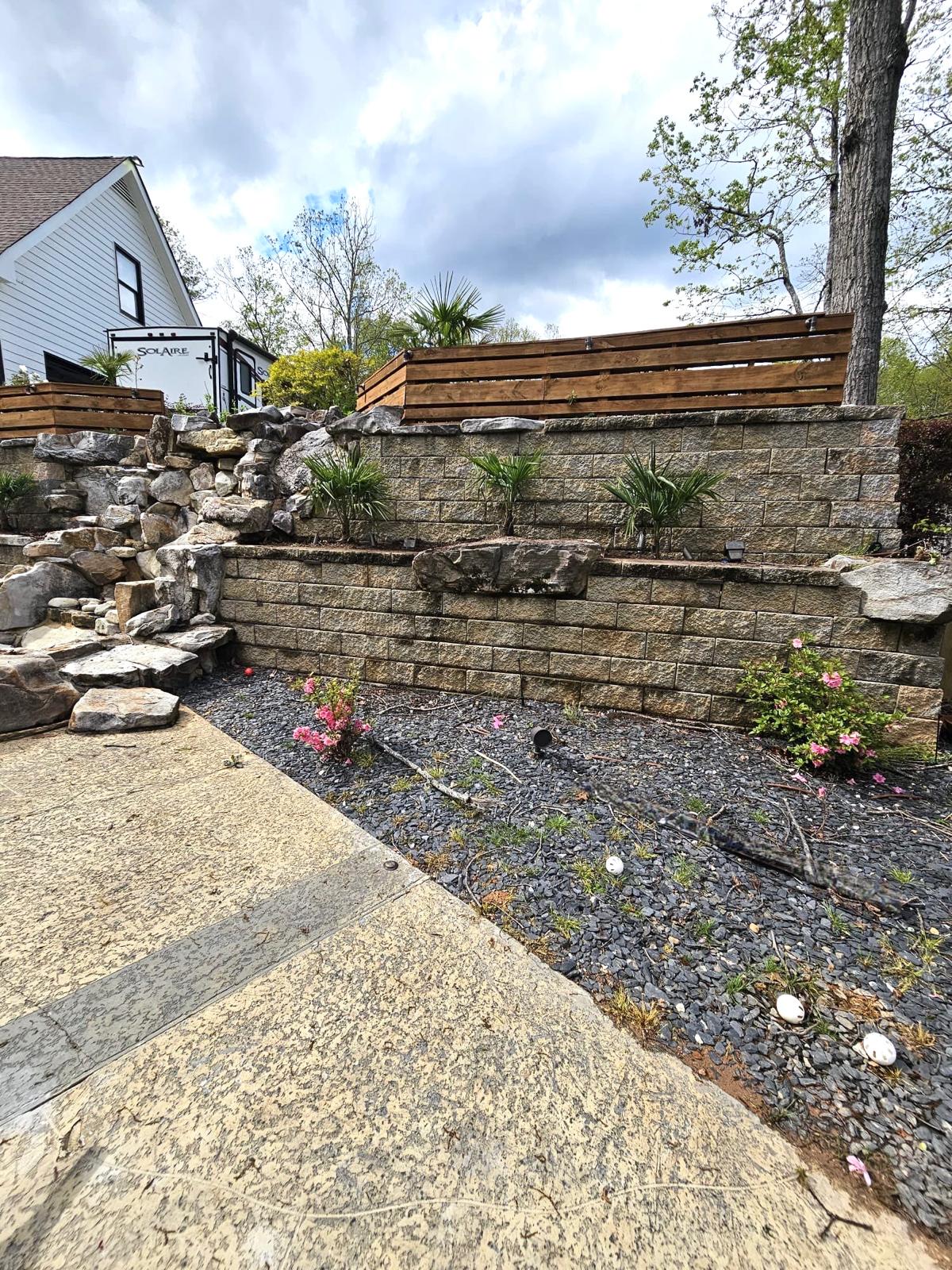
A completed Kaizen Scapes stepping stone path — individually set stones, bases engineered to the site’s soil and root conditions.
We walk the route before we quote it. Free hardscaping evaluations for Milton, Alpharetta, Roswell, and all of North Atlanta.
Kaizen Scapes is based in Canton, Georgia and serves the greater North Atlanta region within 35 miles: