

Milton, GA sets a standard for residential properties that most of metro Atlanta doesn’t attempt. The lots are larger, the driveways are longer, and the expectation at the property entrance is proportionally more demanding. A driveway gate in Milton isn’t an accessory — it’s an architectural commitment. And before a single column is poured or a gate panel is fabricated, there are decisions that determine whether this project succeeds structurally, aesthetically, and legally in Fulton County.
Most Milton homeowners who ask about driveway gates are thinking about the gate panel itself. The gate is actually the last decision. The first decisions are about the site: the driveway slope, the available swing arc or slide run, the column footing depth, the electrical infrastructure, and the Fulton County permitting requirements that govern the entire installation. Get those details right and the gate panel becomes a design conversation. Skip them and you’re rebuilding columns or regrading your entrance approach after the fact.
Gate Type Selection
The swing gate is the default preference on most Milton estate properties — and the right choice on a flat or gently graded driveway with adequate clearance. A standard dual-swing gate on a 14-foot driveway opening requires 7 feet of clear arc behind each gate panel for a full 90-degree swing. That’s 7 feet of level, unobstructed ground on the inside of each column. If your driveway transitions to a slope within that arc radius, or if planting beds, walls, or grade changes interfere with the swing path, the swing gate creates a functional problem rather than an entry statement.
Sliding gates solve the clearance problem by moving the gate laterally along a track parallel to the fence line or property boundary. The tradeoff is run space: a sliding gate panel equal to the driveway opening width requires that same width of clear linear run on one side. On a 14-foot opening, the sliding gate needs 14 feet of level, clear run — plus the column depth — in the slide direction. For Milton properties with tree lines, retaining walls, or grade changes close to the entrance, the available run space often dictates the gate type before any other factor. A cantilever sliding gate — which doesn’t require a bottom track — is the premium solution for sites with drainage concerns or surface irregularity in the slide path.
“The gate is not the first decision. The site is the first decision. Every other question — swing or slide, manual or automated, wrought iron or steel — comes after the site tells you what it can actually accommodate.”
Column Engineering
A gate-bearing masonry column is not the same structure as a decorative entrance column. The dynamic load of a swinging or sliding gate — particularly a heavy ornamental iron or steel panel — creates forces that a standard CMU or brick column cannot absorb without proper reinforcement. Gate columns in Milton must be designed for the weight of the gate panel, the operator mechanism, and the momentum forces generated during operation. A 400-pound ornamental iron panel on a standard residential column footing is a failure waiting to happen.
At Kaizen Scapes, gate-bearing columns are designed with a reinforced concrete core — typically a 12 to 18-inch poured concrete post with rebar, cast inside or alongside the masonry — sized to the specific gate weight and operator specification before the masonry envelope is built around it. Footing depth in Milton’s Fulton County soil conditions typically runs 30 to 36 inches below grade to reach stable bearing soil below the seasonal frost and moisture zone. The hinge side column carries more load than the latch side — it must be spec’d accordingly, not as a mirror of its pair.
Every conduit run for the gate operator power supply, intercom wiring, camera cable, and keypad connection must be placed inside the column during construction — after the masonry is up, cutting channels for conduit destroys the structural integrity and the aesthetic. The electrical planning conversation happens before the first course of block is set. In Milton, where estate-level properties commonly integrate video intercoms, license plate readers, and smart home access control, the conduit requirement is often more complex than residential gate operators in other markets. Plan for minimum two conduits per column: one for power, one for low-voltage signal — and a spare chase for future expansion.

The masonry craftsmanship that frames an estate gate in Milton — structural precision paired with design that earns its place at the property entrance.
Milton operates under the Fulton County permitting framework for most structural improvements, with additional City of Milton development review requirements for properties subject to design guidelines or within overlay districts. A driveway gate installation that includes masonry columns, electrical work, and an automated operator will typically require a building permit, an electrical permit, and in some cases a land disturbance permit if the project involves grading. The permit timeline in Milton varies — plan for 4 to 6 weeks on a typical residential gate installation.
Milton’s large-lot residential character also means that many properties fall under homeowners association design review requirements in addition to municipal permitting. The HOA review process in communities like Crooked Creek, White Columns, and other managed Milton neighborhoods requires architectural drawings, material samples, and written approval before construction begins. Starting construction without HOA approval in a Milton managed community is a costly mistake — fines, required removal, and mandatory reconstruction are all possible outcomes. Kaizen Scapes coordinates the documentation package for both municipal and HOA review as part of the project process.
Milton’s market for driveway gate systems starts where most other markets end. A complete gate installation — masonry columns, ornamental iron or steel gate panels, automated operator with intercom, conduit and electrical, and finish grading — on a Milton estate property typically runs $25,000 to $60,000 depending on gate panel complexity, column height and material, site preparation requirements, and access control integration. At the upper range, custom fabricated wrought iron or corten steel panels with integrated lighting, stone pillar columns with cap lighting, and full smart-home access control integration are all within scope for Milton properties where the entrance budget reflects the property value it protects and announces.
Kaizen Scapes proudly serves homeowners across Canton, GA, Woodstock, GA, and the surrounding North Georgia communities including Holly Springs, Ball Ground, Acworth, Kennesaw, Marietta, Alpharetta, Milton, Roswell, Cumming, Johns Creek, and East Cobb. If you’re looking for hardscaping and landscaping craftsmanship within 35 miles of Canton or Woodstock, our team is ready to transform your outdoor space.
Whether you’re in Canton, Woodstock, Alpharetta, Milton, or anywhere across Cherokee County and the greater North Atlanta suburbs, Kaizen Scapes brings the same relentless standard to every project. We don’t do cookie-cutter. We do custom — built to last.
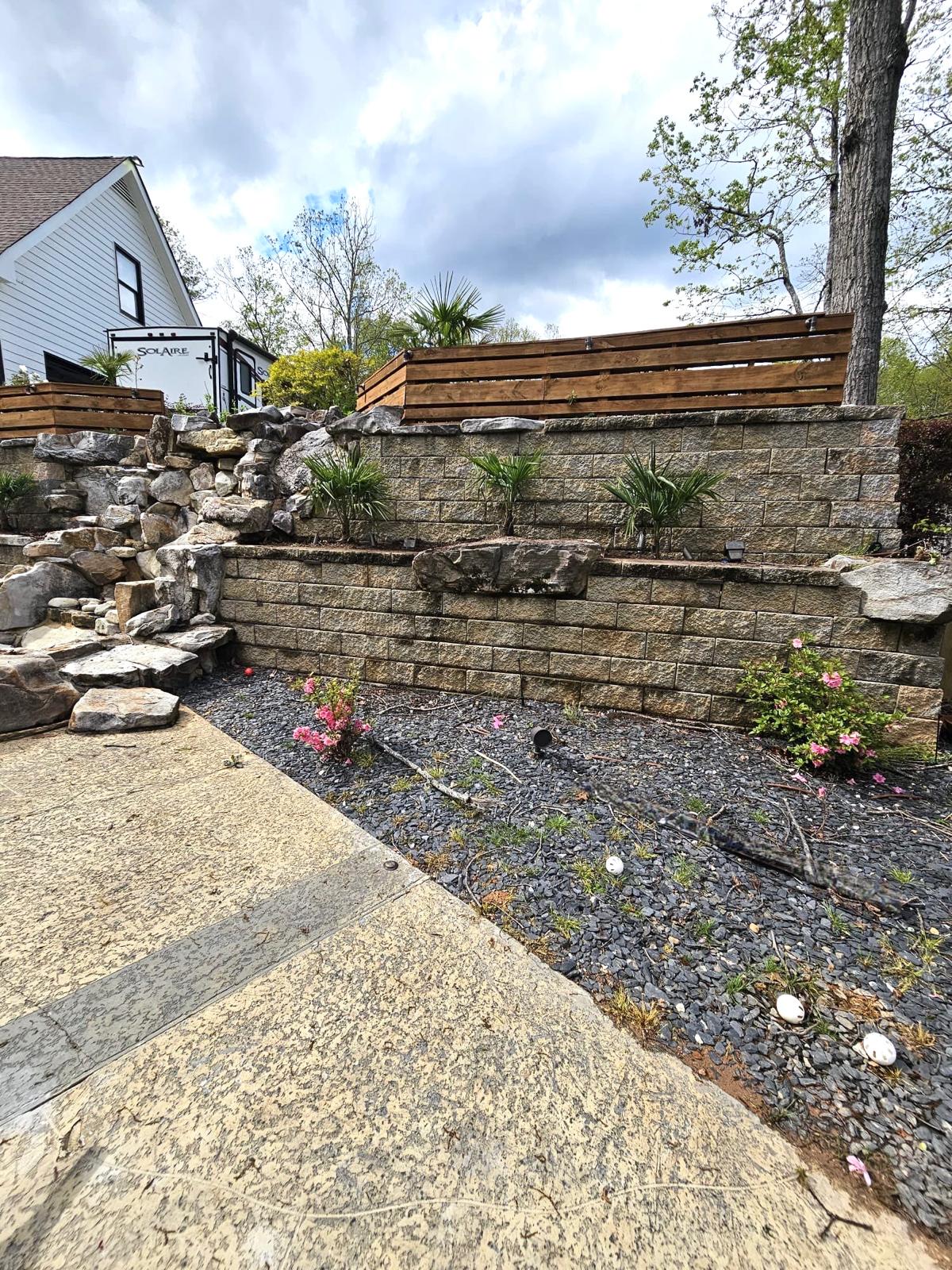
A Milton estate entrance built for the site — engineered columns, automated gate, and masonry that matches the scale of the property it announces.
We handle the site assessment, structural engineering, permit coordination, and masonry construction from start to finish. Free estimates across Milton and greater North Atlanta.
Kaizen Scapes is based in Canton, Georgia and serves the greater North Atlanta region within 35 miles: