

A landscaping company working in Woodstock GA, Marietta, or anywhere across North Georgia will tell you the same thing: tree selection is the landscaping decision with the longest tail. A bad paver installation can be corrected. A tree planted in the wrong location — too close to a foundation, in soil conditions that prevent healthy root development, in a drainage low spot that stays wet — becomes a five-year problem or a twenty-year problem depending on the species and the severity of the mismatch. The cost of removing a mature tree that was planted in the wrong place is dramatically higher than the cost of making the right species and location decision before planting. In North Georgia's clay-heavy, variable-drainage landscape, that decision deserves the same intentionality as any other major landscaping investment.
Marietta and Cobb County properties represent a particularly interesting cross-section of North Georgia planting conditions. Established neighborhoods have mature canopy coverage that limits sun exposure and creates root competition in the upper soil layer. Newer construction areas have disturbed soils, erratic drainage, and limited organic content. Many properties have both — an established front yard and a recently renovated or graded backyard. The species, location, and planting method that's correct for one area of the same property may be wrong for another.
Native species have spent thousands of years adapting to the specific soil chemistry, rainfall patterns, and seasonal temperature range of North Georgia. They establish more reliably in Georgia's clay-heavy soils, require less supplemental irrigation once established, and are more resistant to the pest and disease pressures that periodically affect ornamental plantings. The tradeoff is that native species typically don't provide the dramatic seasonal flowering or the controlled scale that ornamental trees offer. For homeowners prioritizing long-term establishment with minimal intervention, native species are the right backbone of any new planting plan.
Ornamental trees — Japanese Maple, Crape Myrtle, Dogwood, and similar species — are appropriate for Marietta properties but require more thoughtful siting. Crape Myrtle in full sun with good drainage is as close to maintenance-free as ornamental trees get in North Georgia; it tolerates drought, handles the heat, and provides strong seasonal color. Japanese Maple requires afternoon shade in the Georgia climate — full southern exposure creates heat and drought stress that produces leaf scorch and gradual decline. Dogwood is native and beautiful but highly site-specific: it thrives in dappled light with good drainage and rich organic soil and declines in heavy clay with poor air circulation. Planting a Dogwood in a spot that doesn't meet those conditions is investing in a tree that will never perform at the level that makes it worth planting.
"The most expensive tree mistake isn't choosing the wrong species — it's planting the right species in the wrong location and having to remove it five years later."
Tree root systems and hardscape are in permanent tension unless the planting plan accounts for mature root zone spread from the beginning. The rule of thumb that trees should be planted at least as far from a paved surface as their mature height is conservative but directionally correct. More practically, species with known aggressive surface root systems — Silver Maple, Willow, certain invasive species — should not be planted within 20 feet of a foundation, retaining wall, or hardscape installation. Species with deeper, less aggressive root systems — native oaks, properly sited ornamental trees — can coexist with hardscape at closer distances when the installation accounted for root intrusion during design.
Root zone calculations should also account for underground utility lines, irrigation mainlines, and drainage structures. Planting a fast-growing tree directly over a buried irrigation line is a guaranteed service call within five years. Planting any tree within the fall radius of a hardscape feature is a risk that belongs in the planting plan discussion, not a discovery after the fact. Kaizen Scapes works through the spatial relationships between proposed tree locations and existing or planned hardscape features on every planting project — because the placement decision made at planting is much cheaper to adjust than the removal decision made five years later.
Privacy screening is one of the most common tree planting objectives for Marietta residential properties, particularly on lots with close neighbor proximity. Leyland Cypress and Eastern Red Cedar are the most widely planted fast-growing privacy options in North Georgia, and both have significant liabilities that aren't apparent until the trees are several years old. Leyland Cypress in particular is susceptible to Seiridium canker and bagworm infestations that can rapidly kill individual trees in an established screen — creating gaps that are difficult and expensive to fill once the surrounding trees have matured. Planting a solid monoculture screen of any single species creates the risk that one disease or pest event takes out the entire screen simultaneously.
A staggered, mixed-species privacy planting — combining a fast-growing primary species with a slower-growing evergreen for long-term density — provides better visual screening over time and significantly better pest and disease resilience. Spacing for mature canopy should be based on the species' mature spread, not on the desired look at installation. Trees planted six feet apart that have 15-foot mature spreads are creating a competition problem that will require thinning within 10 years. Planting at the correct mature spacing and using temporary shrub plantings to fill the visual gaps in the early years is the approach that produces a healthy, dense screen without remediation.
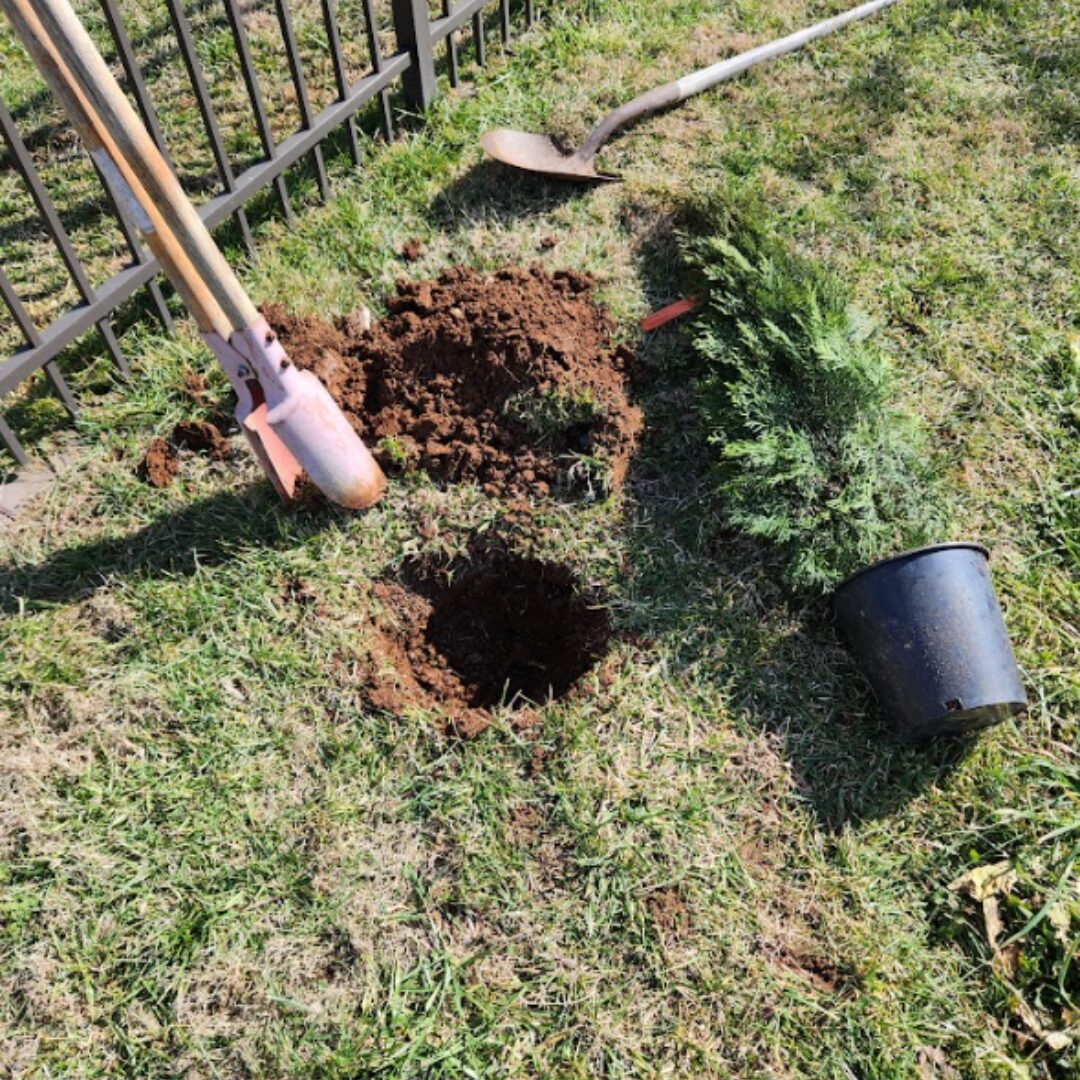
Tree planting in Cobb County — species selected and sited for the specific sun exposure, drainage conditions, and proximity to hardscape on this Marietta property.
North Georgia's clay soil creates a specific planting depth challenge. Trees planted too deep in heavy clay develop crown rot and root suffocation as the clay holds moisture against the root flare for extended periods. The root flare — the visible transition point between trunk and root system — should be at or slightly above grade at planting, not buried. The planting hole should be two to three times the width of the root ball but no deeper than the root ball height, ensuring the tree sits on undisturbed soil at the correct elevation. Backfill should be the native soil with organic amendment rather than pure fill or pure compost, which creates a drainage interface that slows water movement away from the root ball.
Kaizen Scapes proudly serves homeowners across Canton, GA, Woodstock, GA, and the surrounding North Georgia communities including Holly Springs, Ball Ground, Acworth, Kennesaw, Marietta, Alpharetta, Milton, Roswell, Cumming, Johns Creek, and East Cobb. If you're looking for hardscaping and landscaping craftsmanship within 35 miles of Canton or Woodstock, our team is ready to transform your outdoor space.
Whether you're in Marietta, Kennesaw, Acworth, or anywhere across Cobb County, Kaizen Scapes brings the same relentless standard to every project. We don't do cookie-cutter. We do custom — built to last. See our full hardscaping services or call for a free consultation.
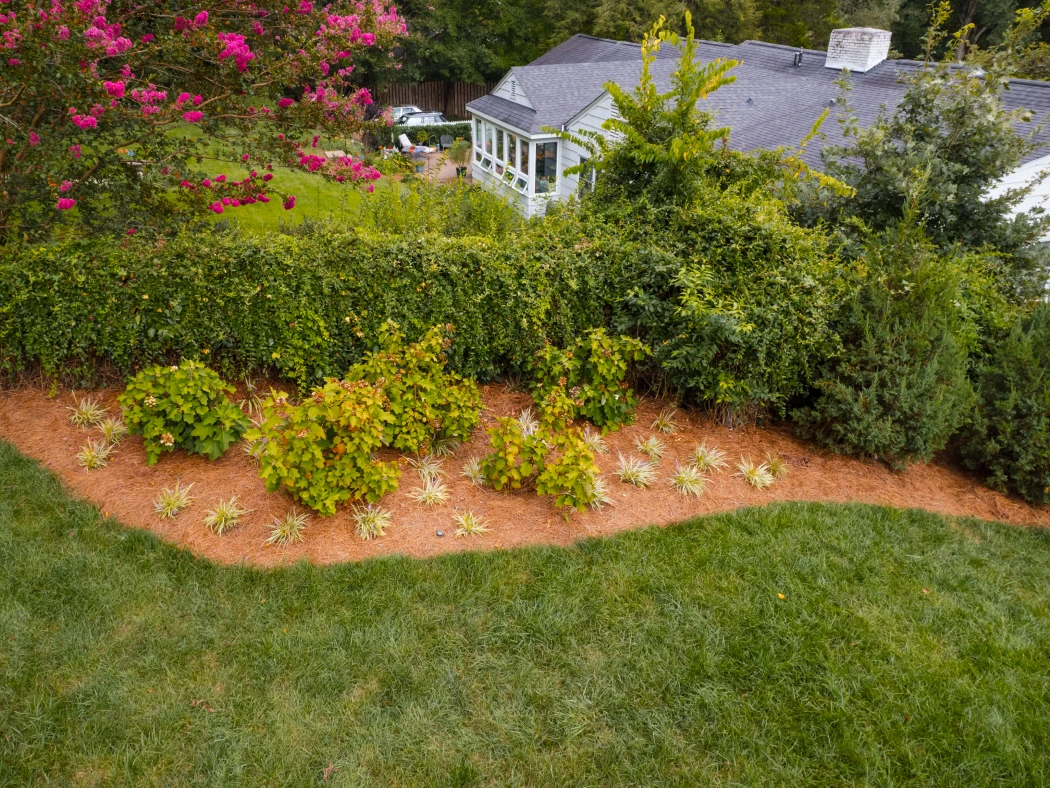
Established tree planting in Marietta — correct species selection, proper planting depth, and mulch ring installation that gives each tree the foundation to thrive in Georgia clay conditions.
Free consultations across Marietta, Kennesaw, and Cobb County. We match species to site conditions so you're not removing it in five years.
(470) 535-0252 Get a Free Estimate