

Erosion control landscaping in Georgia is most urgently needed in the hours and days immediately following excavation or construction activity — not weeks later when the homeowner gets around to it. Georgia's red clay, stripped of its vegetative cover, is among the most erosion-prone soils in the Southeast. The combination of clay's hydrophobic surface properties when dry and its tendency toward sheet flow when saturated means that a bare grade can lose a meaningful layer of topsoil in a single summer thunderstorm. For Cumming, GA and Forsyth County homeowners dealing with post-construction disturbed soil, the window for effective temporary erosion control is not measured in weeks. It's measured in hours after the last piece of equipment leaves the site.
The homeowners who deal with the worst erosion problems after construction are typically those who planned to "get to it next weekend." A graded slope that sits exposed through a weekend of spring rain in North Georgia can develop rill erosion — small channels cut by concentrated water flow — that requires regrading to repair before any permanent cover can be established. Rill erosion left unaddressed concentrates into deeper gullies over subsequent rain events. By the time the homeowner applies erosion blanket or seeds the area, there's significant topsoil loss that needs to be addressed before the slope can be stabilized. The cost of prevention — erosion blanket, silt fence, and immediate seeding — is a fraction of the cost of the regrading and topsoil replacement required after the damage is done.
North Georgia's Piedmont clay soils have a specific erosion vulnerability profile that differs from soils in other regions. When dry, the clay surface develops a hard crust that resists initial infiltration and sheds water rapidly. When wet, the clay becomes slick and provides minimal frictional resistance to moving water. The organic layer that was present in undisturbed soil — and that slowed both processes — is removed during grading. The result is a bare clay surface that alternates between rock-hard and slick-wet and has no organic buffer layer to absorb the energy of rainfall impact or slow the movement of surface water. Add North Georgia's rainfall intensity — thunderstorms that regularly deliver one to three inches per hour — and the conditions for rapid, significant erosion are present every time the weather turns.
Construction activity on residential properties in Cumming, GA and Forsyth County has increased significantly with the area's growth, and many homeowners are dealing with disturbed soils on their properties as a result of additions, pools, retaining walls, or new hardscape installations. Each of these projects creates a window of soil vulnerability between project completion and vegetation establishment that requires active erosion control management. The contractors who handle this well address erosion control as part of the project scope, not as something left to the homeowner after they leave.
"Exposed soil after construction doesn't stay in place through Georgia's first hard rain. The window between project completion and erosion control installation is measured in hours, not weeks."
Silt fence is a sediment barrier — typically woven geotextile fabric staked along the downslope perimeter of a disturbed area — designed to slow surface runoff and allow sediment to settle out before water leaves the property. It is a regulatory requirement under Georgia's land disturbance permit rules for construction activities above a certain acreage threshold, but its value is not limited to regulatory compliance. Properly installed silt fence at the downslope perimeter of a residential construction project prevents sediment from leaving the property and depositing into storm drains, drainage swales, or neighboring properties — outcomes that can generate neighbor complaints and municipal enforcement actions in addition to the environmental impact.
Silt fence is a temporary measure and must be inspected after every significant rainfall event. A fence that has been overtopped, undercut by concentrated flow, or damaged by equipment is not functioning as a sediment barrier. Regular inspection and repair during the construction period is not optional if the fence is going to perform its intended function. For larger residential projects in Cumming, GA, the Forsyth County Development Authority may require inspection records as part of the land disturbance permit compliance process.
Straw wattle and straw matting are lower-cost erosion control options for flat or very gentle slopes. On slopes greater than 3:1 — which are common on North Georgia residential lots with natural elevation changes — straw matting degrades too quickly under Georgia rainfall and provides insufficient anchoring to remain in place through a hard rain event. Biodegradable erosion control blanket (ECB) — typically a coconut fiber or straw fiber mat with a biodegradable netting on both sides — is the correct specification for slopes that will be seeded rather than sodded. ECB should be installed with stakes on a six-to-eight-foot grid pattern, with overlapping edges tucked into a keyway trench at the top of the slope to prevent undercutting. Once seed establishes through the blanket over the course of a growing season, the blanket itself decomposes into the soil surface as organic matter, leaving a stabilized slope with root structure that provides ongoing erosion resistance.
Seed selection for erosion control applications in Forsyth County should prioritize fast-germinating ground cover varieties — annual ryegrass for quick temporary cover, overseeded with permanent species appropriate to the site conditions. Warm-season applications benefit from Bermuda or Centipede mix depending on sun exposure. Fall applications in North Georgia support winter rye as a temporary cover with Bermuda or Zoysia establishing in the following spring growing season. The goal of the temporary seeding phase is to have living roots in the soil within two to three weeks of erosion blanket installation — roots that begin holding the soil profile together before the blanket alone would be overwhelmed by a significant storm event.
On slopes steeper than approximately 2:1, temporary erosion control measures and vegetation alone are not a permanent solution. The underlying slope is too steep for mowing, the root systems of ground cover plants are not sufficient to resist the shear force of moving water in a heavy rain event, and the vegetated slope will erode progressively over multiple storm seasons. The permanent solution for steep residential slopes in North Georgia is a retaining wall that reduces the effective slope to a maintainable grade in the retained area above the wall. The fill material and grading behind the wall, combined with drainage infrastructure designed into the wall construction, creates a stable, permanently protected slope profile that doesn't require ongoing erosion control management.
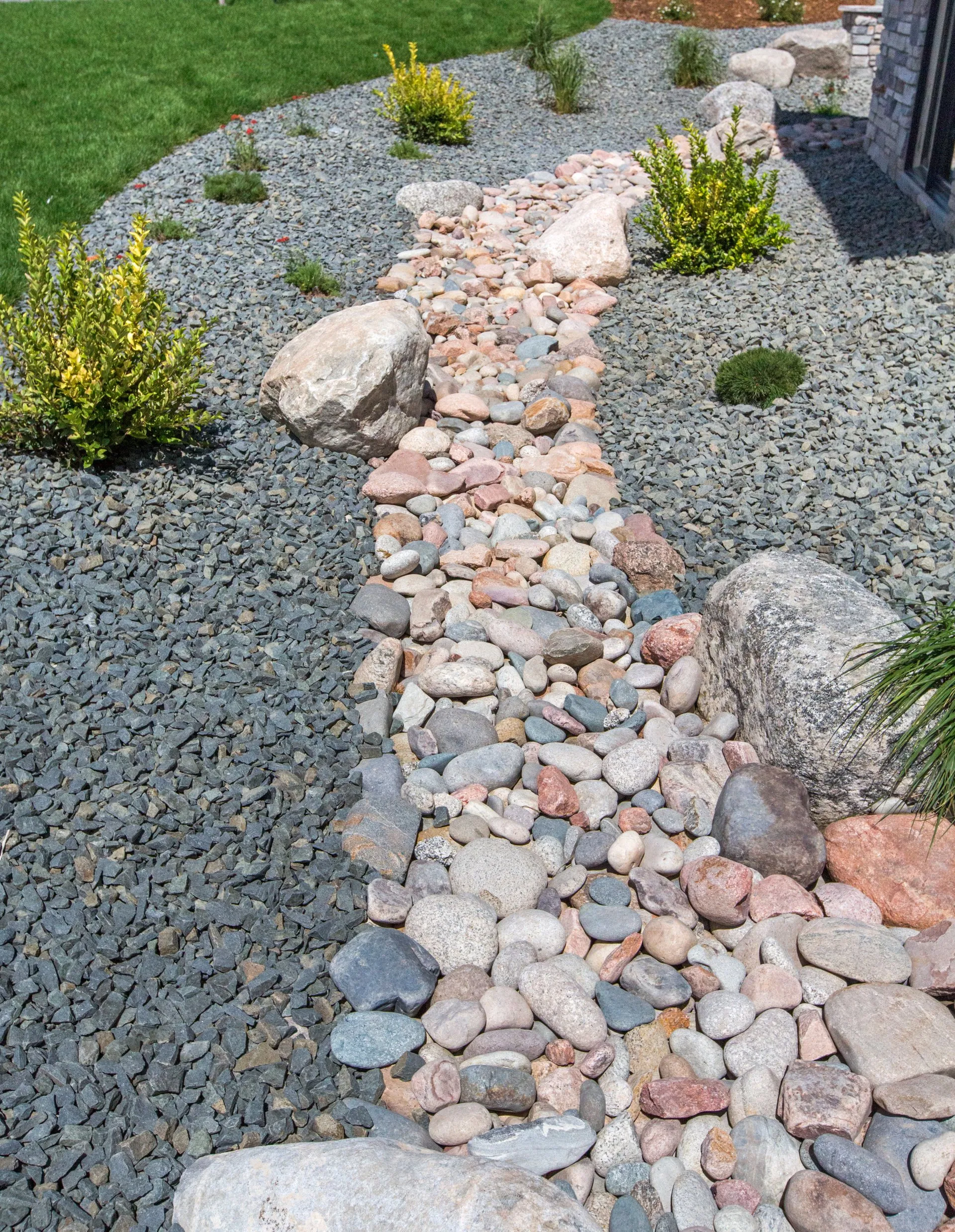
Erosion control installation in Forsyth County — erosion blanket applied immediately after grading, seed established, and slope protected before the first significant rain event post-construction.
The transition from temporary erosion control measures to permanent sod or planting is the step where many post-construction landscaping projects stall. The erosion blanket and temporary seed are doing their job, but the homeowner delays the permanent installation while the temporary cover is still functional. Eventually the temporary seed thins, the blanket degrades, and the slope is vulnerable again — now without a fresh application of either. The right time to transition to permanent sod or planting is when the construction project is definitively complete and the final grade is confirmed. Installing permanent sod on a slope that will be disturbed again within six months by additional construction activity is wasted investment. But once the project scope is finished, the permanent cover phase should follow immediately rather than being deferred until the following season.
Kaizen Scapes proudly serves homeowners across Canton, GA, Woodstock, GA, and the surrounding North Georgia communities including Holly Springs, Ball Ground, Acworth, Kennesaw, Marietta, Alpharetta, Milton, Roswell, Cumming, Johns Creek, and East Cobb. If you're looking for hardscaping and landscaping craftsmanship within 35 miles of Canton or Woodstock, our team is ready to transform your outdoor space.
Whether you're in Cumming, Johns Creek, Alpharetta, or anywhere across Forsyth County, Kaizen Scapes brings the same relentless standard to every project. We don't do cookie-cutter. We do custom — built to last. See our full hardscaping services or call for a free consultation.
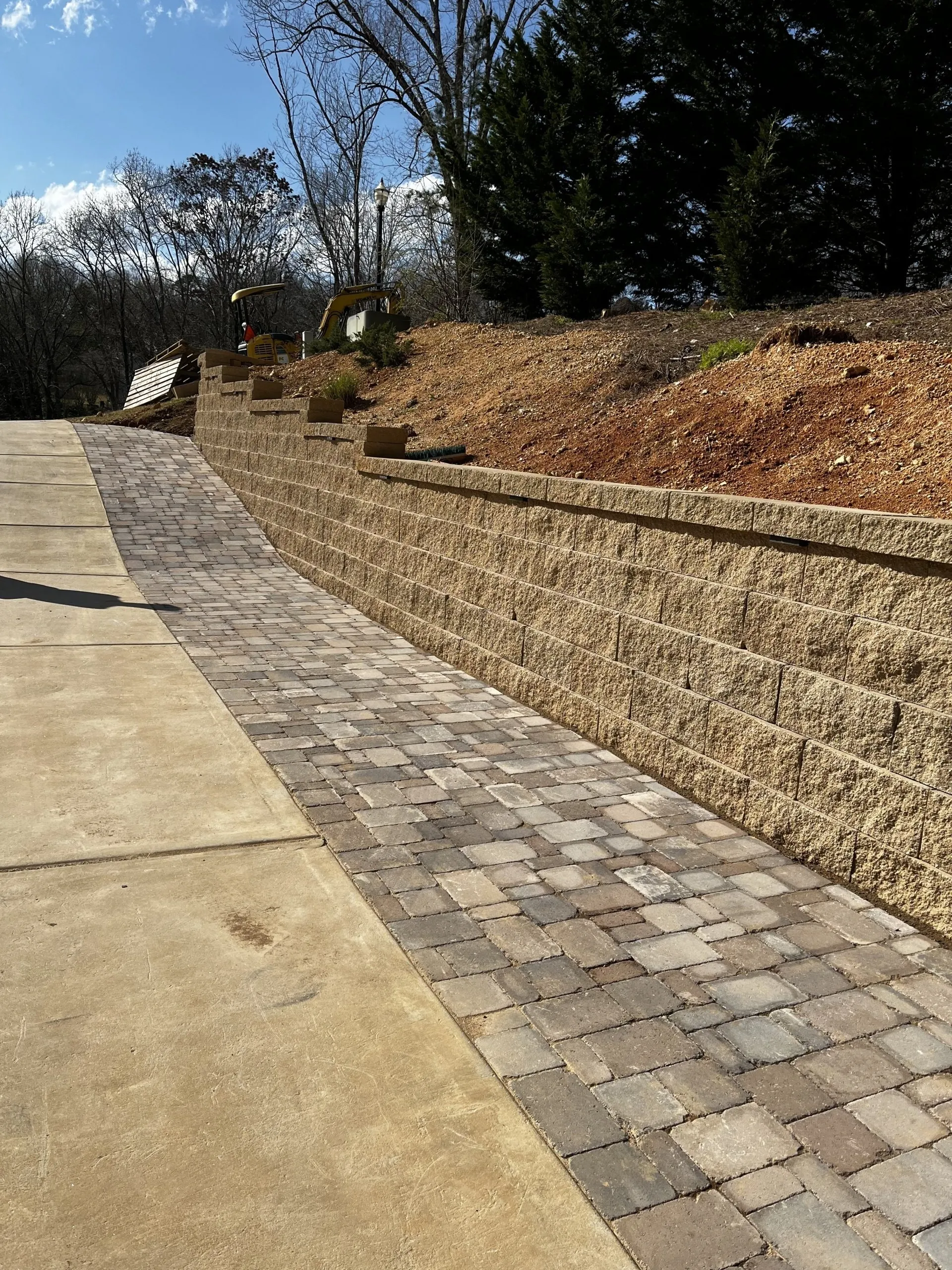
The finished slope in Forsyth County — stabilized with permanent cover, drainage managed, and the post-construction erosion window closed correctly rather than left to chance.
Free consultations across Cumming, Johns Creek, and Forsyth County. We close the erosion window fast so it doesn't become a regrading project.
(470) 535-0252 Get a Free Estimate