

The most expensive retaining wall decision a Marietta homeowner can make isn’t choosing the wrong contractor. It’s choosing repair when the wall needed replacing, or choosing replacement when a targeted repair would have solved the problem for a fraction of the cost. Neither answer is universally right — and any contractor who tells you repair is always the better option, or that a wall showing any distress should always be replaced, is selling you a service rather than giving you an honest answer.
This post is a decision framework, not a sales pitch. The criteria below are the actual variables we evaluate on every Marietta retaining wall assessment before we recommend anything. Apply them to your wall, and you’ll have a clearer picture of which path makes financial and practical sense before you spend a dollar.
The Decision Framework
These five variables cover the structural, economic, and practical dimensions of the decision. No single variable should drive the conclusion — the answer emerges from looking at all five together.
“We tell Marietta homeowners when repair money would be wasted. It costs us a smaller job in the short term. It earns us every referral they make for the next decade.”
When Repair Is Clearly Right
Not every distressed wall is a rebuild. Here are the scenarios where repair — properly executed — is the clear right answer:
Isolated bowing in one section of a longer wall run. A 20-foot bowing section in a 100-foot wall, where the bowing is under 1.5 inches and the drainage failure is localized, is a classic targeted repair scenario. The cause is correctable, the affected percentage is low, and the rest of the wall is sound. A repair here costs $3,000 to $6,000 and can deliver another 15–20 years of performance from that section. A full rebuild would be $15,000 to $25,000 and is not warranted.
Blocked drainage outlet causing localized pressure buildup. If the wall face is intact and the bowing or displacement is recent and relatively minor, restoring drainage — sometimes combined with dismantling and resetting the displaced courses — can arrest the failure progression before structural damage accumulates. This is the scenario where acting early saves the most money. The same repair done after two additional seasons of pressure cycling will cost two to three times as much.
Cap course displacement from frost heave. Individual cap blocks displaced by freeze-thaw expansion — without evidence of movement in the structural courses beneath — require only cap course resetting plus inspection to confirm the lower courses are intact. This is maintenance, not structural repair, and should be addressed promptly to prevent water infiltration through the exposed joint.
When Replace Is the Right Call
There are situations where spending repair money is genuinely wasteful — where the outcome will be another failure within a predictable timeframe and the homeowner will face the same decision again at higher cost:
Wall is leaning as a unit. As discussed in other posts, a tilting wall has typically experienced base failure. Rebuilding the blocks on a failed base produces a wall that will lean again. The base must be excavated, recompacted, and properly prepared — which essentially constitutes a rebuild. In these cases, the wall needs to come down and go back up correctly. There is no shortcut.
Wall was built without drainage and has been cycling for 15-plus years. A Marietta wall built in the early 2000s without drainage aggregate or perforated pipe has been absorbing hydrostatic pressure for every rain event in its service life. The blocks may still look acceptable on the face, but the base material has been eroding and migrating, the backfill is likely contaminated with fine migration from the soil column, and the wall’s structural margin has been consumed. Repairing any individual symptom without doing a full drainage retrofit — which requires substantial demolition — is treating a structural deficit with cosmetics.
More than 40% of the run is showing distress. The economic calculation changes when the affected zone is large. At this threshold, the mobilization costs, drainage work, and block material costs for the repair begin approaching the cost of a full rebuild. And a full rebuild gives you a new wall with a new expected service life of 20-plus years if built correctly. A patchwork repair of a heavily compromised wall gives you a cosmetically improved wall of uncertain remaining life. The rebuild is the better investment once the affected percentage reaches this range.
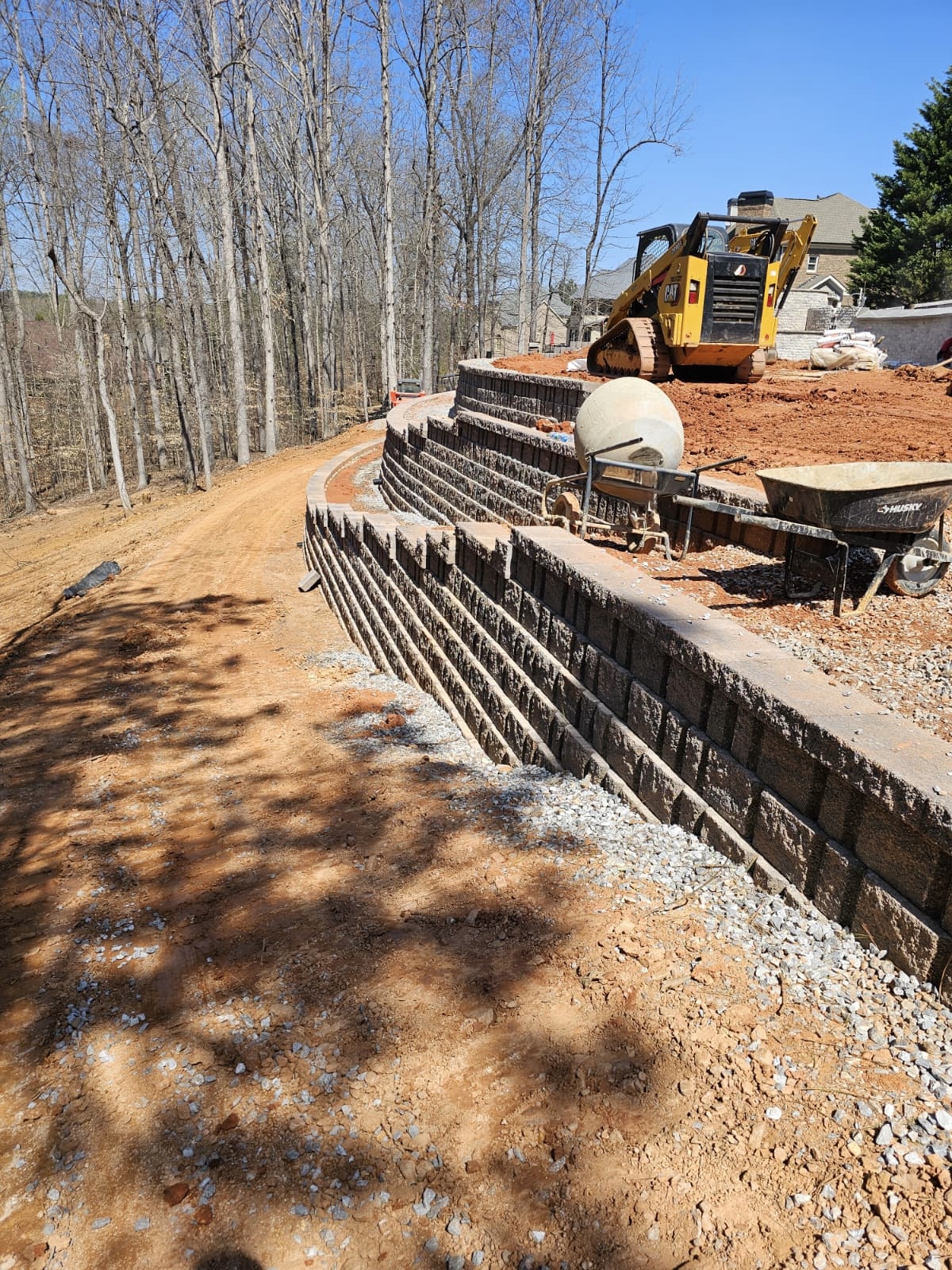
Retaining wall assessment in Marietta, GA — evaluating base condition, drainage, and failure extent before recommending repair or full replacement.
Honest Cost Comparison
Cost transparency matters in retaining wall work because the range is wide and the variables are significant. These are real ranges for Marietta residential retaining wall projects in 2025–2026, not estimates padded with contingency:
Targeted repair (20–30 LF bowing section, drainage correction, geogrid add): $2,800 to $5,500. Assumes structurally sound blocks that can be salvaged, a correctable drainage issue, and solid base condition in the repair zone. Timeline: 1–2 days.
Drainage retrofit behind existing wall (no structural rebuild): $1,800 to $4,000 depending on access and pipe run length. Only applicable where the wall face is intact and drainage work can be accomplished without significant wall demolition. Timeline: 1 day.
Full wall rebuild, segmental block, 40–60 LF, 4–6 feet tall: $9,000 to $18,000. Includes demolition, base preparation, drainage system installation, geogrid reinforcement at required intervals, block, and finish grade. Timeline: 2–4 days.
Full wall rebuild, natural boulder or ashlar stone, same dimensions: $14,000 to $28,000. Reflects material premium and labor intensity of stone placement. Where the aesthetic investment is warranted, this is a wall that may outlast the home. Timeline: 3–5 days.
The choice that costs the most: multiple rounds of face repairs on a wall that needed rebuilding. We see Marietta homeowners who have spent $8,000 to $12,000 on repair attempts over 5–7 years on a wall that needed a $12,000 rebuild to begin with. The two or three repair jobs that seemed cheaper individually exceeded the rebuild cost collectively — and they still have a failing wall at the end of it. Get the right diagnosis the first time.
Kaizen Scapes proudly serves homeowners across Canton, GA, Woodstock, GA, and the surrounding North Georgia communities including Holly Springs, Ball Ground, Acworth, Kennesaw, Marietta, Alpharetta, Milton, Roswell, Cumming, Johns Creek, and East Cobb. If you’re looking for hardscaping and landscaping craftsmanship within 35 miles of Canton or Woodstock, our team is ready to transform your outdoor space.
Whether you’re in Canton, Woodstock, Alpharetta, Milton, or anywhere across Cherokee County and the greater North Atlanta suburbs, Kaizen Scapes brings the same relentless standard to every project. We don’t do cookie-cutter. We do custom — built to last.
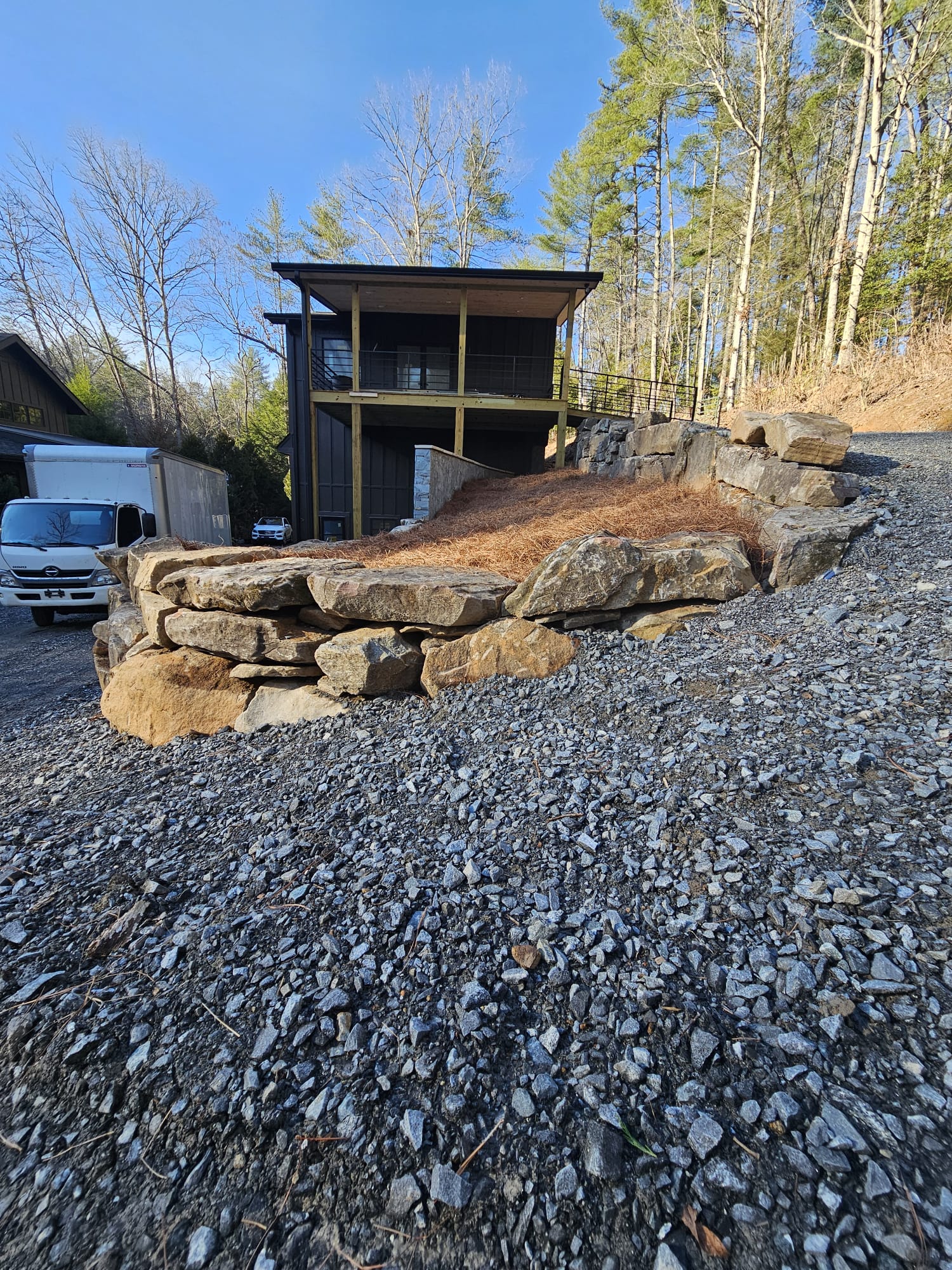
A retaining wall rebuilt in Marietta — full drainage system installed, geogrid at every 24 inches, base compacted and verified before a single block was set.
We’ll tell you what the wall actually needs — even if that answer is smaller than the job we could sell you. Free assessments across Marietta and Cobb County.