

The decision between travertine and concrete pavers for a Canton patio or pool deck is not just an aesthetic preference — it is a ten-year material performance decision that affects how your outdoor space looks, how it feels underfoot in August, how it weathers Georgia’s clay soil and occasional freeze events, and what it costs to maintain and repair over time. Both materials are legitimate choices. Neither is universally superior. The right one depends on your specific site, use case, and what you value most.
Travertine is a natural limestone-family sedimentary rock quarried primarily in Turkey, Italy, and Iran. Concrete pavers are manufactured products — engineered aggregates compressed under high pressure and cured to precise dimensional specifications. They perform differently under the same conditions because they are fundamentally different materials, and understanding those differences is what makes the choice clear rather than arbitrary.
Heat Retention
In a Georgia summer, this is not a minor comfort difference — it is a usability difference. Concrete pavers absorb and retain heat aggressively in direct sun, reaching surface temperatures of 130°F to 155°F on peak summer days in the Canton area. Walking barefoot on a concrete paver pool deck at 3pm in July is genuinely uncomfortable and, for children, can cause burns. Travertine’s natural porosity means it dissipates heat faster and retains significantly less — surface temperatures typically run 20°F to 35°F cooler than comparable concrete pavers in the same sun exposure. For pool decks in particular, this is the single most cited reason Canton homeowners choose travertine over concrete pavers when budget allows the premium.
The heat performance gap is consistent across travertine colors and finishes — lighter tumbled travertine performs best, but even the darker walnut travertine shades outperform standard gray or charcoal concrete pavers in direct sun. The one concrete paver option that approaches travertine’s heat performance is light-colored porcelain paver — but at a similar or higher price point than travertine, which largely eliminates the cost argument for choosing concrete over stone in pool deck applications.
Freeze-Thaw Performance
Cherokee County sits in USDA hardiness zone 7b — a climate that sees ice events and occasional temperatures in the teens, but not the sustained hard-freeze winters of the Midwest or Northeast. Both travertine and quality concrete pavers perform adequately in Georgia’s freeze-thaw cycle when properly installed. The installation caveat is critical: travertine is a naturally porous material, and unfilled travertine — which has open voids on the surface — is more vulnerable to water infiltration and freeze damage than filled travertine. In Canton, we specify filled and honed or tumbled travertine for outdoor applications, which closes the surface voids and dramatically reduces freeze-thaw vulnerability.
Concrete pavers in Georgia are at greater risk from the region’s clay soil movement than from freeze-thaw directly. The cycle of Cherokee County clay expanding when saturated and contracting in dry periods places more cumulative stress on a paver installation than Georgia’s temperature swings. A properly installed concrete paver system with adequate sand-set depth and edge restraint handles this well. An undersized base compound the clay movement issue and accelerates joint erosion and shifting — regardless of which material is on top.
“Travertine at year 10 looks like aged natural stone. Concrete pavers at year 10 look like aged concrete. Both are honest outcomes — the question is which one you prefer.”
Installation & Weight
Travertine’s density and natural variation create installation complexity that concrete pavers do not. Natural travertine pieces vary in thickness — even within the same batch — which requires more time and skill during installation to achieve a consistent finished surface. Large-format travertine (16×24 or 18×18) is significantly heavier per piece than comparable concrete pavers, which slows the laying process and increases labor cost. The material itself ships at greater weight and handles freight differently, contributing to a higher delivered material cost compared to locally-manufactured concrete pavers. This is why travertine patio installation in Canton typically runs $6 to $12 per square foot more than a comparable concrete paver installation — it’s not margin, it’s material cost and installation labor reality.
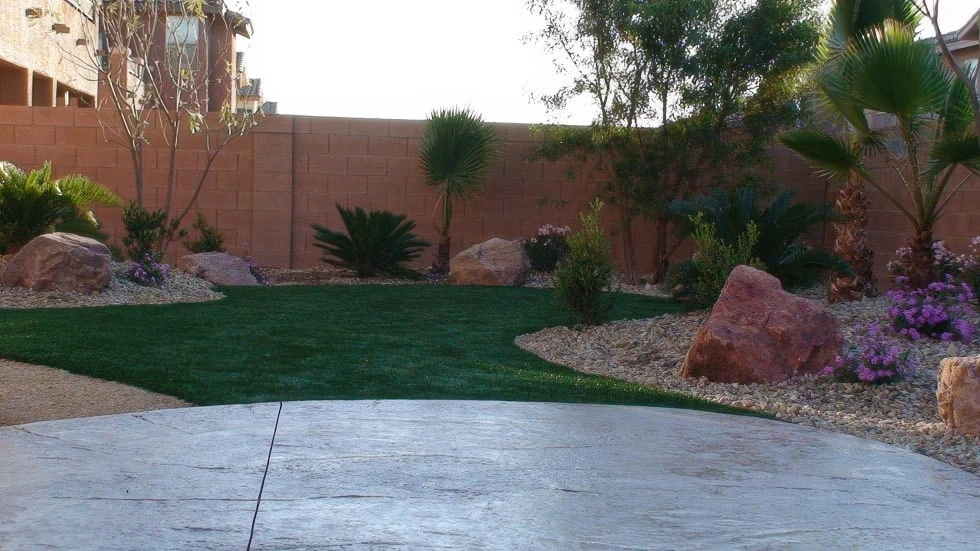
A travertine pool deck in Canton — the natural stone’s heat dissipation performance makes it the preferred material for pool surrounds in North Georgia’s summer climate.
This is where the two materials diverge most practically over time. Concrete pavers are manufactured products with consistent dimensions — if you need to replace a damaged piece in year 8, you can likely source a matching replacement from the same manufacturer in the same color. The dimensional consistency makes repairs clean and nearly invisible when done correctly. Natural travertine is a quarried material whose color, veining, and finish characteristics can shift significantly between quarry batches — even the same product line from the same supplier may not match perfectly if the original stone was installed several years earlier. Repairs to travertine are possible and manageable, but matching aged natural stone is an art form that concrete pavers sidestep entirely.
Maintenance comparison: concrete pavers are sealed every 2 to 4 years to prevent staining and joint sand erosion — a straightforward process that a homeowner can manage independently. Travertine requires sealing on a similar schedule, but the porous nature of the stone means staining from pool chemicals, iron in well water, or organic material is more likely if sealing lapses. Neither material requires significant ongoing maintenance beyond sealing and occasional joint re-sanding — but travertine is less forgiving of deferred maintenance.
Who Should Choose Each
For most Canton pool decks, travertine is the honest recommendation — the heat performance advantage is meaningful enough in Georgia’s climate that it justifies the cost premium for a surface you’ll use barefoot from May through September. For driveways and high-traffic patios not near water, quality concrete pavers are a durable, cost-effective choice that perform well for 20+ years when properly installed. The material decision should follow your use case, not a showroom preference.
Kaizen Scapes proudly serves homeowners across Canton, GA, Woodstock, GA, and the surrounding North Georgia communities including Holly Springs, Ball Ground, Acworth, Kennesaw, Marietta, Alpharetta, Milton, Roswell, Cumming, Johns Creek, and East Cobb. If you’re looking for hardscaping and landscaping craftsmanship within 35 miles of Canton or Woodstock, our team is ready to transform your outdoor space.
Whether you’re in Canton, Woodstock, Alpharetta, Milton, or anywhere across Cherokee County and the greater North Atlanta suburbs, Kaizen Scapes brings the same relentless standard to every project. We don’t do cookie-cutter. We do custom — built to last.
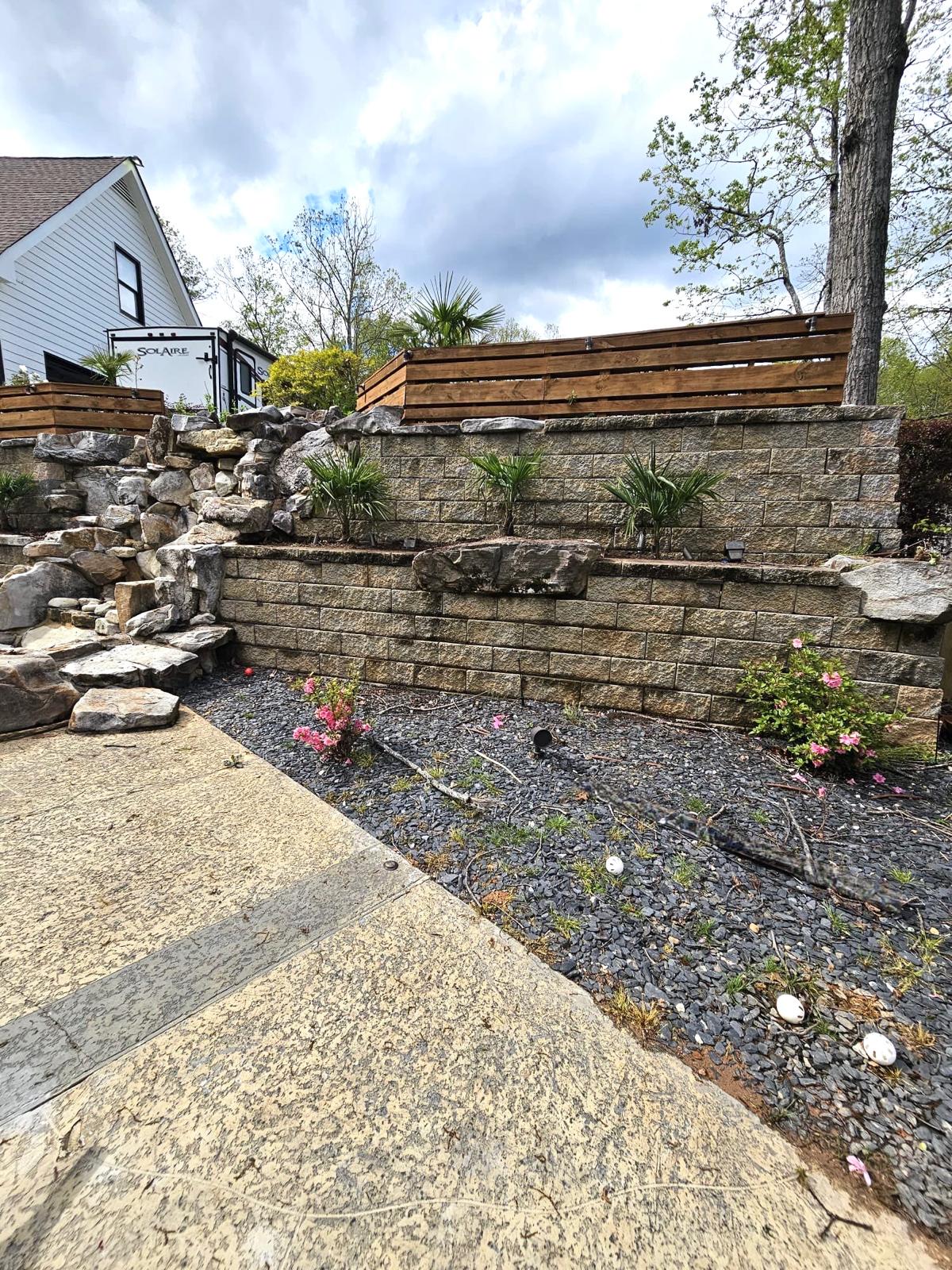
A paver and retaining wall installation in Canton — material selected to match the site conditions, climate performance, and long-term maintenance expectations.
We walk your site and walk you through the material decision before any quote is on the table. Free patio and pool deck evaluations across Canton and Cherokee County. Call (470) 535-0252.
Kaizen Scapes is based in Canton, Georgia and serves the greater North Atlanta region within 35 miles: