

There is a design principle behind the best outdoor living spaces in Milton that most homeowners don’t articulate but immediately feel: the room feels complete before a single piece of furniture is placed in it. The walls do the work. They define the edges. They provide the seating. They create the enclosure that tells your nervous system this is a place to be, not a place to pass through. The wall is the furniture — and the furniture is permanent.
Milton’s outdoor living culture demands a higher standard than most markets. Properties here tend to have significant investment in the outdoor space — pergolas, outdoor kitchens, fire features, pool decks — and the hardscape design language needs to match that investment level. A masonry seating wall at the perimeter of a Milton patio isn’t a budget-saving substitute for patio furniture. It’s an architectural decision that pays back in usability, permanence, and property value in ways that no furniture collection can replicate.
The Dimensions That Matter
A seating wall is only as good as the dimensional precision behind it. The standard comfortable seat height for most adults is 18 to 24 inches from the sitting surface to the floor. At 17 inches, the wall is too low — it puts knees above hips and becomes uncomfortable quickly. At 25 inches, the wall is too high — feet don’t reach the ground comfortably for most adults without a footrest. The professional target for a masonry seating wall cap is 18 to 20 inches for most users, with 20 to 22 inches preferred when the primary users are taller adults or when cushions will be added to the cap surface.
The cap width matters as much as the height. A cap width of 12 inches is the minimum for comfortable seated use — enough surface to sit without the edge creating discomfort, but narrow enough to feel like a wall rather than a bench. A cap at 14 to 16 inches is the professional preference: it accommodates seated use comfortably, allows space for a drink or plate beside the person sitting, and still reads as a wall rather than freestanding furniture. Caps wider than 18 inches begin to function more as ledge surfaces and less as seating — appropriate for some fire feature surrounds but visually heavy as a patio perimeter element.
“A well-designed seating wall in Milton doesn’t fight the furniture — it replaces the need for most of it. The perimeter seating is permanent. The cushions are optional. The design stands on its own.”
Cap material is the detail most visible in finished photography and most important to long-term user satisfaction. Flat bluestone or travertine caps provide a smooth, comfortable seating surface and a premium finish quality that matches Milton’s architectural expectations. Natural granite caps have more surface variation — appealing in rustic applications but less comfortable for extended seated use. Concrete caps are the durable, cost-effective choice when budget is a constraint, and with the right finish and edge profile they read as quality work. The cap is the handshake between the wall and the person using it — the material should be chosen with that in mind.
Privacy at Seated Level
The privacy function of a seating wall is frequently underestimated by homeowners who think only of tall solid walls when the word “privacy” comes up. The most common outdoor privacy problem — being seen by neighbors when using the patio — is a problem that occurs at seated level. When you are seated at a dining table, a lounge chair, or a fire feature, your eye level is roughly 42 to 48 inches above the patio surface. A seating wall at 20 inches, positioned at the patio edge, provides a visual obstruction at grade that — combined with the privacy buffer of the patio’s setback from the property line — screens the occupied zone from ground-level views across the fence line.
For many Milton properties, a seating wall at the patio perimeter combined with evergreen plantings behind it provides complete seated privacy without requiring a 6-foot wall. The wall handles the immediate sightline from grade. The plantings grow above the wall rim over time to handle standing-level views. The combination is architecturally proportional to the space and far more pleasant to spend time inside than a high solid wall would be. The enclosed feeling that makes an outdoor room inviting is not created by tall walls — it is created by defined edges at a human scale, with open sky above.
In interior design, rooms are defined by walls on four sides. In outdoor design, the same principle applies — but the walls don’t need to be full height to do their job. A seating wall at 20 inches defines the boundary of an outdoor room with the same psychological clarity as a 6-foot wall, because the human eye reads the edge change as a room boundary even without full enclosure. On a Milton property where the patio transitions from a paved surface into the lawn, a seating wall at the transition creates a clear “inside” and “outside” — the patio side is the room, the lawn side is the yard. That distinction is what transforms a paved surface into an outdoor room.

Hardscape craftsmanship in the Milton area — stone work that defines outdoor rooms and adds permanent value to the property.
The seating wall’s most powerful application in Milton outdoor living design is as the primary seating element in a fire feature surround. A curved masonry seating wall at 20 inches, wrapping 180 to 270 degrees around a round fire pit, seats 8 to 14 people comfortably — more than most patio furniture arrangements in the same footprint — while creating a social configuration that faces everyone toward the fire. The radius of the curve determines the scale of the gathering space: a 10-foot-radius curve at 20 inches creates an intimate fire feature surround. A 14-foot radius creates a fire feature that can anchor a large outdoor entertaining area.
For outdoor kitchen integration, seating walls on three sides of an outdoor kitchen bar island create a defined gathering zone — guests seated at the wall face the grill and the cook, the wall provides privacy from the rest of the yard, and the arrangement creates the same functional dynamic as a kitchen island with bar seating in an interior kitchen. The outdoor room feels complete. No chairs required at the kitchen — the wall seats the guests, the island seats the food preparation, and the space works.
Milton’s residential character — large lots, wooded buffers, equestrian-zoned areas — means that many properties have enough space to build multiple outdoor room zones, each defined by seating walls at different heights and configurations. A fire feature zone with curved seating walls. A dining zone with straight seating walls on two sides and open views on the other two. A pool deck with seating walls at the shallow end that provide both seating and a visual enclosure for the pool surround. Each zone reads as its own room. Together, they make the outdoor space feel as intentionally designed as the interior of the house.
Why Kaizen Scapes
Seating wall design requires more precision than people expect. The difference between a seating wall that people actually use and one that they avoid is three inches of cap height and two inches of cap width. We have rebuilt seating walls for Milton homeowners whose previous contractor got the dimensions wrong — walls that were 24 inches tall and uncomfortable, or 14 inches tall and more like a step than a seat. We design to specific dimensional targets based on the primary users of the space and the furniture integration plan from the start. The wall works the first time.
Kaizen Scapes proudly serves homeowners across Canton, GA, Woodstock, GA, and the surrounding North Georgia communities including Holly Springs, Ball Ground, Acworth, Kennesaw, Marietta, Alpharetta, Milton, Roswell, Cumming, Johns Creek, and East Cobb. If you’re looking for hardscaping and landscaping craftsmanship within 35 miles of Canton or Woodstock, our team is ready to transform your outdoor space.
Whether you’re in Canton, Woodstock, Alpharetta, Milton, or anywhere across Cherokee County and the greater North Atlanta suburbs, Kaizen Scapes brings the same relentless standard to every project. We don’t do cookie-cutter. We do custom — built to last.
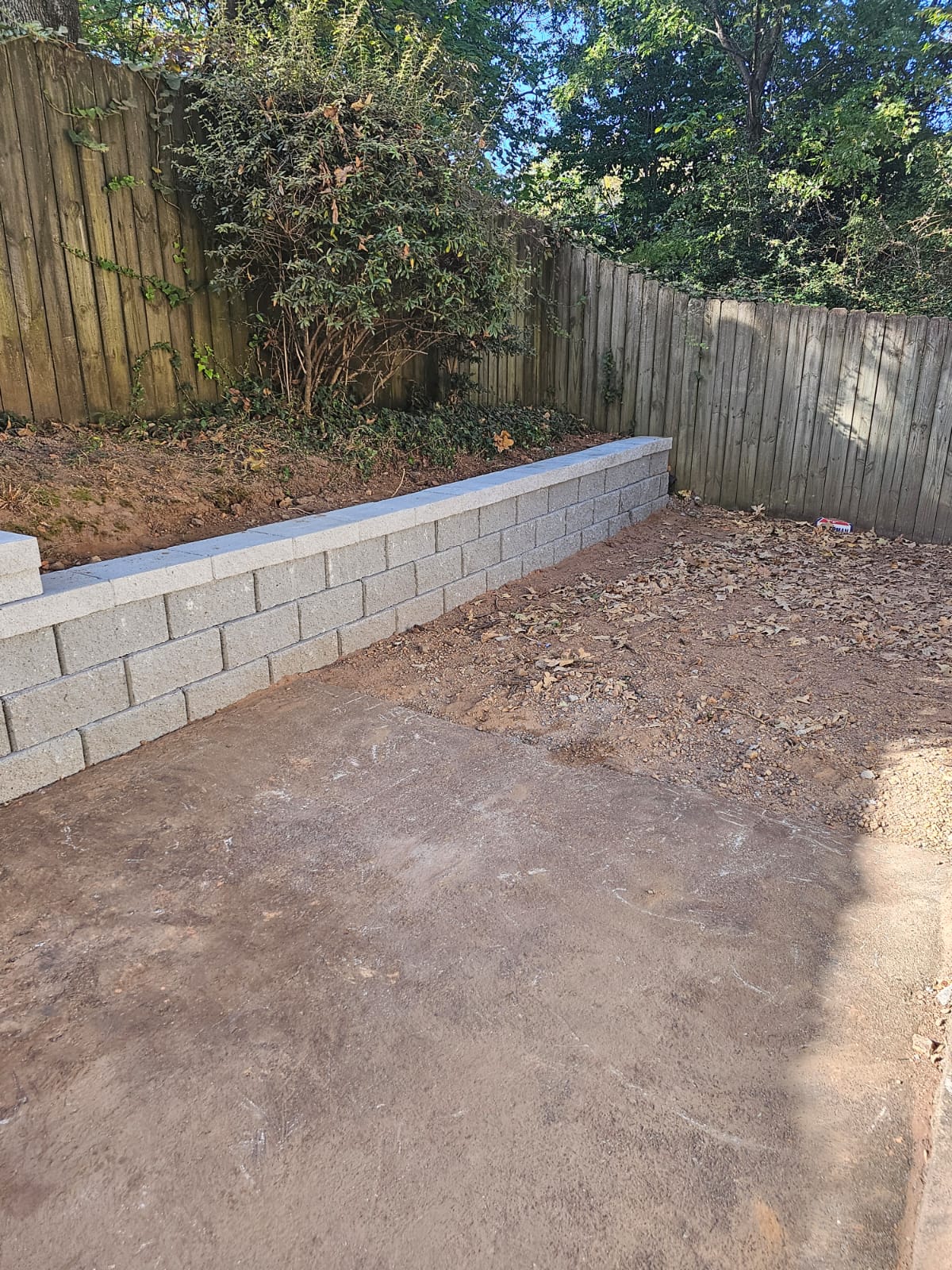
A completed masonry project in the Milton area — walls designed to precise dimensions, built to define outdoor rooms that people actually use.
We design seating walls to the dimensions that actually work — and integrate them with fire features, kitchens, and privacy plantings from the start. Free estimates across Milton and North Atlanta.
Kaizen Scapes is based in Canton, Georgia and serves the greater North Atlanta region within 35 miles: