

Alpharetta’s golf culture runs deep. Between the proximity to Trophy Club, Windmill Golf Center, and the density of avid golfers in communities like Windward, Hartness, and Providence, the backyard putting green has become one of the most requested specialty hardscape features we build across North Fulton County. But most homeowners don’t know that the difference between a green that plays like a practice facility and one that becomes a lumpy, waterlogged eyesore is almost entirely in the base — not the turf.
Drainage is the non-negotiable foundation of any putting green that actually performs. A beautifully installed artificial turf surface laid on an improperly draining base will puddle after rain, develop soft spots as the base shifts, and lose its roll consistency within two to three years. The drainage system beneath the turf is invisible — but it is the entire investment. Getting it right requires excavation, aggregate specification, and a drainage outlet plan before a single yard of infill is placed.
Base Construction
A professional putting green base in Alpharetta starts with 4 to 6 inches of excavation below the finished grade — removing native soil and any organic material that will decompose and settle. The excavated zone is filled with a compacted crushed aggregate base course — typically 4 inches of crushed granite or recycled concrete aggregate, mechanically compacted in two lifts. Above that goes 1 to 1.5 inches of decomposed granite or crushed granite fines, which provides the drainage layer while offering a shaping medium for contour work.
A weed barrier — commercial-grade, not residential landscape fabric — is installed over the fine layer before turf. This suppresses organic intrusion from below without impeding drainage. Drainage cannot be an afterthought: the base must be graded to drain to a defined outlet — a drain box, dry creek, or edge-to-grade drainage path. A putting green that collects water rather than shedding it is a base drainage failure, regardless of how good the turf specification is.
“The turf is what you see. The base is what you paid for. A putting green without proper aggregate drainage is a slow-motion mistake that reveals itself in year two.”
Turf & Green Speed
Not all artificial putting green turf is created equal, and green speed is a specification decision, not a color swatch choice. Green speed — measured on the Stimpmeter as a distance in feet a ball rolls from a standard release — is primarily controlled by nap height (pile height) and fiber density. Shorter nap produces faster greens. Standard backyard practice greens are typically built to a stimp of 10 to 12, approximating the speed of a well-maintained club green. Custom builds for serious competitive players can go to 13 or 14 by using shorter, denser fibers and a firmer infill mix.
The backing material matters as much as the fiber. A polyurethane-coated backing resists moisture intrusion and provides better dimensional stability than a standard latex backing — critical in Alpharetta’s summer humidity and UV intensity. Fibers should be a nylon or nylon-polyethylene blend for UV resistance. Cheap turf in Georgia will lose its color and fiber integrity within three to four years under direct sun. The turf specification conversation is worth having — the difference in cost between a budget turf and a 15-year-rated product on a 500 sq ft green is often less than $800. The performance difference is significant.
A green with a single flat plane and two cups drilled straight into the turf is a practice mat, not a practice green. Contour is the feature that makes a putting green compelling over years of use. Subtle slope breaks — 2 to 4 percent grade changes built into the decomposed granite shaping layer — create realistic breaking putts that genuinely improve your read on course. A standard 400 to 600 sq ft green typically accommodates three to four cup locations, cut with a standard 4.25-inch cup liner and flush surround plate.
A fringe band — typically 12 to 18 inches of slightly longer, less dense turf surrounding the green surface — adds visual definition and a more realistic chipping approach. A dedicated chip zone with an approach turf section at a slightly higher nap allows for chip-and-run practice without wearing down the green surface under repeated wedge impact. These details are what separate a putting green that gets used every evening from one that novelty wears off within a season.
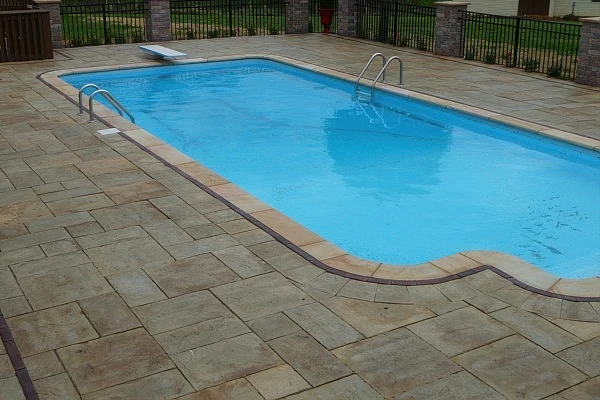
Putting green base construction in Alpharetta — compacted aggregate, contour shaping, and drainage outlet before turf installation.
A professionally installed 400 to 600 square foot putting green in Alpharetta — proper aggregate base, contoured DG shaping layer, quality UV-rated turf, fringe band, three to four cups, and chip zone — ranges from $8,000 to $18,000. The low end of that range reflects a simpler flat-to-gentle-slope green on a near-grade site with standard turf. The high end includes significant contour work, premium turf specification, a chip zone with separate approach turf, landscape framing around the green perimeter, and integration into an existing patio or pool deck hardscape.
The factor that most expands cost is site preparation — specifically, how much the existing grade departs from the finished green level, and whether drainage can be managed with a simple outlet or requires a more complex drainage run to the property edge. Alpharetta lots with heavy clay and poor natural drainage require more deliberate drainage infrastructure, which is worth building right the first time.
The most successful putting green installations in Alpharetta are the ones that aren’t designed in isolation. A green tucked into the rear corner of a property with no hardscape connection to the patio or entertaining area will be used less than one that sits within sight of the outdoor kitchen, accessible by a natural flagstone path, framed by low ornamental plantings that complement the landscape design. The best putting greens in North Fulton aren’t separate features — they’re integrated elements of a cohesive outdoor living space. That integration is part of every Kaizen Scapes green design conversation.
Kaizen Scapes proudly serves homeowners across Canton, GA, Woodstock, GA, and the surrounding North Georgia communities including Holly Springs, Ball Ground, Acworth, Kennesaw, Marietta, Alpharetta, Milton, Roswell, Cumming, Johns Creek, and East Cobb. If you’re looking for hardscaping and landscaping craftsmanship within 35 miles of Canton or Woodstock, our team is ready to transform your outdoor space.
Whether you’re in Canton, Woodstock, Alpharetta, Milton, or anywhere across Cherokee County and the greater North Atlanta suburbs, Kaizen Scapes brings the same relentless standard to every project. We don’t do cookie-cutter. We do custom — built to last.
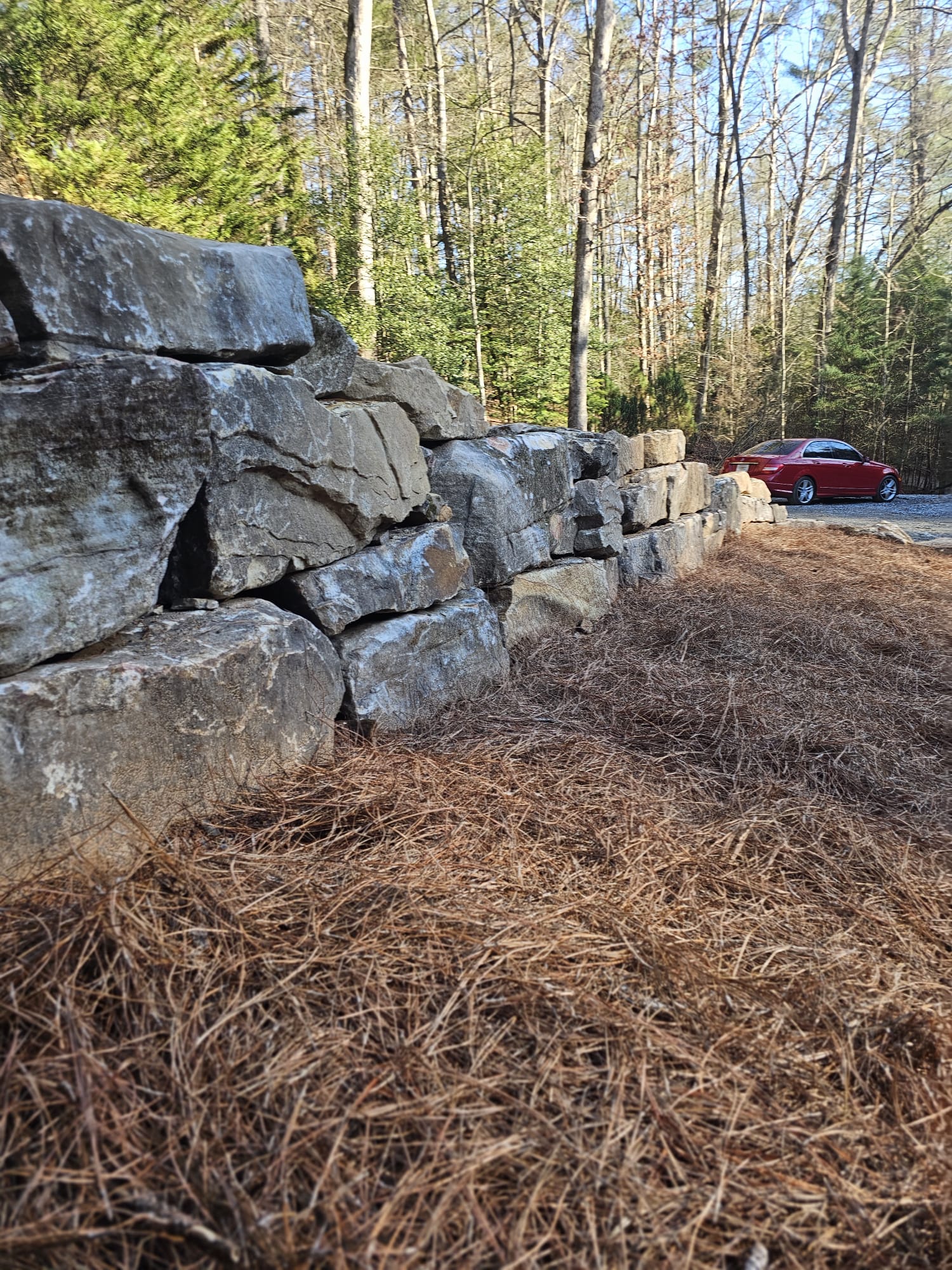
Hardscape framing and integration in Alpharetta — putting greens built as part of a cohesive outdoor living design, not an isolated corner installation.
We design the base drainage and contour before we spec the turf. Free putting green consultations across Alpharetta, Canton, and all of North Georgia.
Kaizen Scapes is based in Canton, Georgia and serves the greater North Atlanta region within 35 miles: