

If you’ve stood barefoot on a concrete pool deck in a Canton, GA summer afternoon, you already know the problem. The surface scorches. It radiates heat back up through the soles of your feet, pushes everyone to the edges of the water, and makes the entire outdoor experience feel like an obstacle to get through rather than a place to linger. The material you choose for your pool deck doesn’t just affect how the space looks — it determines whether your family actually uses it.
Most Canton homeowners comparing pool deck materials are weighing travertine, concrete pavers, and poured/stamped concrete against each other. The price gap between travertine and the other options is real — and so is the performance gap. Understanding what you’re actually paying for, and what you’re giving up when you go cheaper, is the conversation most contractors skip because it requires them to admit their preferred material has limitations.
The Core Difference
Travertine’s reputation for staying cool underfoot in Georgia heat isn’t marketing language — it’s a function of the stone’s physical properties. Travertine has a naturally low thermal mass: it absorbs heat slowly and releases it slowly. Dense concrete, by contrast, absorbs heat rapidly and holds it. On a 92-degree afternoon in Canton, a concrete pool deck surface can reach 140°F or higher — a temperature that makes bare feet impossible. A travertine surface under the same conditions typically reads 30 to 50 degrees cooler. That’s not a marginal difference. That’s the difference between a pool deck people use and one they avoid between 11am and 5pm.
The natural porosity of travertine also contributes to its thermal behavior. The microscopic pockets in the stone’s surface prevent it from acting as a continuous heat-absorbing slab. That same porosity is why tumbled travertine is the standard specification for pool surrounds — the slightly textured surface provides natural slip resistance when wet without requiring surface coatings that degrade over time in chlorinated pool water environments.
“A pool deck that burns your feet at 2pm isn’t a design problem — it’s a material selection problem. Travertine solves it structurally, not with a shade sail.”
Concrete pavers occupy the middle ground. Better than poured concrete for heat — the joints between individual pavers create micro-breaks in heat absorption — but still significantly warmer underfoot than travertine in peak Georgia summer conditions. For Canton homeowners prioritizing comfort across the full summer season, that difference matters more than it does in climates where peak heat lasts four weeks instead of five months.
Installation for Pool Surrounds
Travertine around a pool isn’t installed the same way it is on a patio or walkway. The pool coping — the cap stone that covers the pool shell edge — is the critical detail that determines both the aesthetic and the structural integrity of the surround. Pool coping in travertine requires a bullnose or drop-face profile on the pool edge, set with pool-grade adhesive over a properly prepared bond coat, with tight tolerances on the overhang over the water. Cut corners here — wrong profile, wrong adhesive, inadequate prep — and the coping fails regardless of how beautiful the field stone looks.
The deck stone itself must be set on a base that accounts for the cantilever condition near the water’s edge. Inadequate base preparation is the primary cause of travertine pool deck failure in the North Georgia region — not the material, but the installation. Cherokee County’s clay subsoil requires excavation, compaction, and a stable base layer before the setting bed. A contractor who skips the base preparation to hit a lower price point is not giving you a deal — they are deferring the cost of a rebuild to your future self.
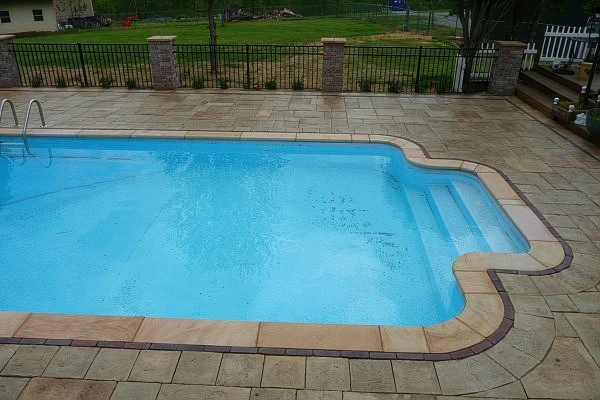
Travertine pool deck with bullnose coping in Canton — installed over a properly prepared base to handle Cherokee County’s clay subsoil movement.
A travertine pool deck in Canton, GA typically runs $18 to $28 per square foot installed, depending on pool size, coping complexity, and site conditions. A stamped concrete pool deck runs $10 to $16. That gap is real, and it deserves an honest explanation. The travertine premium pays for three things: material sourcing (travertine is a quarried natural stone, not a manufactured product), installation precision (the coping and setting specifications are more demanding), and long-term performance (travertine properly installed does not crack, resurface, or degrade the way concrete does over a 10-to-20-year horizon in Georgia heat and clay movement).
The concrete deck at $10/sqft looks appealing until you factor in resurfacing at year 8, crack repairs at year 5, and the surface coating reapplication every 3–4 years that most stamped concrete pool decks require to maintain appearance and slip resistance. Over a 15-year ownership horizon, travertine’s total cost of ownership is often lower than stamped concrete’s — and the aesthetic never degrades. Natural stone doesn’t peel, fade, or require recoating. That’s what the premium buys.
Kaizen Scapes proudly serves homeowners across Canton, GA, Woodstock, GA, and the surrounding North Georgia communities including Holly Springs, Ball Ground, Acworth, Kennesaw, Marietta, Alpharetta, Milton, Roswell, Cumming, Johns Creek, and East Cobb. If you’re looking for hardscaping and landscaping craftsmanship within 35 miles of Canton or Woodstock, our team is ready to transform your outdoor space.
Whether you’re in Canton, Woodstock, Alpharetta, Milton, or anywhere across Cherokee County and the greater North Atlanta suburbs, Kaizen Scapes brings the same relentless standard to every project. We don’t do cookie-cutter. We do custom — built to last.
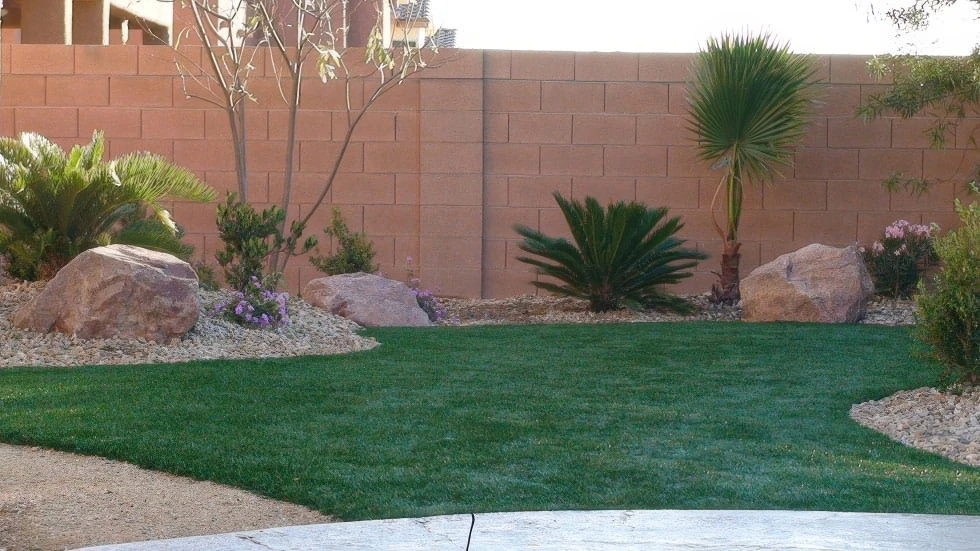
A completed travertine pool surround in Canton — cool underfoot, slip-resistant, and built to last without resurfacing.
Free pool deck consultations across Canton, Woodstock, and all of Cherokee County. We’ll walk your site and give you a straight answer on materials and cost.
(470) 535-0252
Request a Free Estimate
Kaizen Scapes is based in Canton, Georgia and serves the greater North Atlanta region within 35 miles: