

The pool deck slip hazard in Kennesaw is not a dramatic problem — it’s a quiet one. A broom-finish concrete deck that was perfectly safe when it was installed in 2012 has been losing its surface texture to foot traffic, chemical exposure, and Georgia’s seasonal freeze-thaw cycling for more than a decade. The surface that once provided adequate friction when wet now reads closer to polished concrete during afternoon pool sessions. Most Kennesaw homeowners don’t realize their deck’s slip resistance has degraded until someone slips — at which point the problem is no longer about the material, it’s about the liability.
This post is not about scare tactics. It is about the measurable difference between slip resistance ratings, what they mean in practice for a Cobb County pool deck, and which surface options reliably maintain their friction coefficient through years of pool water, sunscreen, bare feet, and the kind of enthusiastic running that no amount of signage actually prevents.
The Slip Resistance Standard
The industry standard for measuring pool deck slip resistance is the Dynamic Coefficient of Friction (DCOF), tested under wet conditions. The ANSI A137.1 standard requires a wet DCOF of 0.42 or higher for surfaces used in wet areas — and pool decks are, by definition, always wet areas. New broom-finish concrete typically starts at or above that threshold. After several years of use, cleaning, and surface wear, that same surface can drop below it — and a surface below 0.42 wet DCOF is a documented slip hazard, regardless of how it was installed or what it cost.
The practical implications for Kennesaw homeowners: if your pool deck surface was installed more than eight to ten years ago, you cannot assume its original slip resistance profile has been maintained. Smooth-faced concrete and sealed stone are the most at-risk surfaces. Textured and open-surface materials — brushed concrete, tumbled pavers, unfilled travertine — retain their friction coefficient far more reliably under normal pool conditions.
“A pool deck that looks fine is not necessarily safe. Surface texture is a performance characteristic, and it degrades in ways that are invisible until they’re not.”
Surface Comparison
A properly applied brushed concrete finish — also called a broom finish — provides adequate slip resistance when new by dragging a stiff brush across the freshly poured surface to create linear texture. The problem is durability: that texture is surface-deep. Unlike the aggregate texture in a tumbled paver or the natural porosity of travertine, a brushed finish exists only in the outer millimeter of the concrete surface. Traffic wear, pressure washing, acid washing for algae removal, and pool chemical splash all act on that surface layer over time. In Kennesaw’s climate, where summer heat causes surface thermal cycling and winter freezing can cause micro-spalling, brushed concrete finishes typically show meaningful texture loss within seven to twelve years.
Tumbled concrete pavers offer a fundamentally different slip resistance mechanism: the texture is inherent to the material’s surface profile, not applied to it. The rounded edges and irregular face of a tumbled paver maintain friction through dimensional variation rather than surface coating — meaning the slip resistance does not degrade in the same way brushed concrete does. A tumbled paver installed in 2010 and a tumbled paver installed in 2024 will have essentially the same surface friction characteristics, because the profile that creates that friction is permanent to the material. For Kennesaw homeowners managing busy pool environments with children and high traffic, the performance consistency of tumbled pavers is a strong argument for the upgrade.
Unfilled travertine, the slip-resistance leader among natural stone options for pool deck applications, achieves its high friction coefficient through the open-pore structure of the stone itself. Water drains into the voids rather than pooling on the surface, and the micro-texture of the natural stone face provides consistent grip even under foot pressure. Wet DCOF ratings for unfilled travertine in pool applications typically exceed 0.60 — significantly above the 0.42 threshold required by ANSI A137.1. The maintenance trade-off is that open pores require annual inspection and periodic cleaning to prevent biological growth, but the slip resistance advantage over aging concrete is measurable and significant.
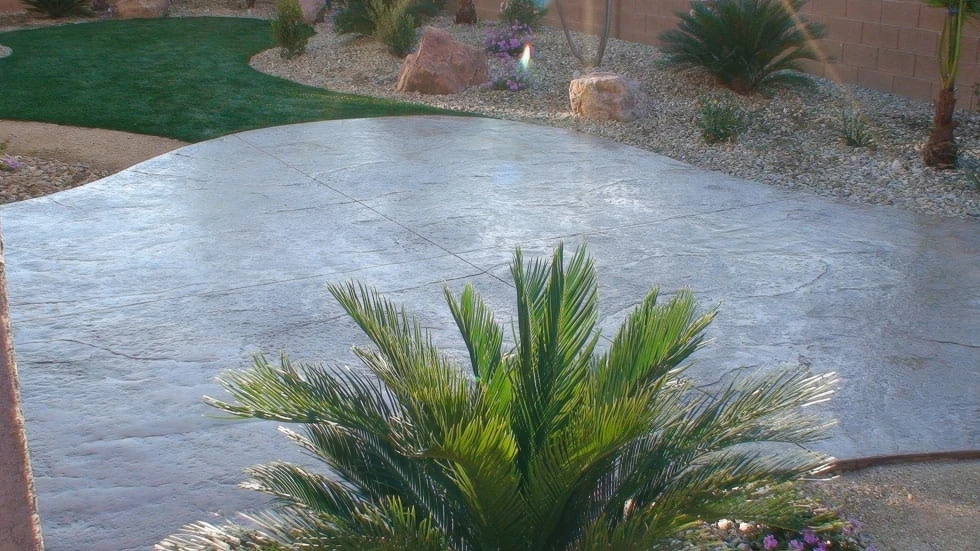
A Kaizen Scapes pool deck in Kennesaw — unfilled travertine selected for its sustained slip resistance and pool-safe drainage performance in Georgia’s climate.
For Kennesaw homeowners building or renovating pool surrounds with accessibility in mind — whether for aging family members, guests with mobility considerations, or simply future-proofing a long-term investment — ADA-compliant pool surround design introduces several specific requirements that must be integrated before the deck is installed, not retrofitted after.
The primary considerations are: slope, surface texture, and transition management. ADA guidelines limit running slope to 1:20 (5%) and cross slope to 1:50 (2%) in accessible routes — which must be reconciled with the drainage slope requirement for pool decks (minimum 1.5% away from the pool coping). These two requirements can coexist, but they must be engineered together, not applied independently. A deck sloped correctly for drainage but incorrectly for accessible cross-slope fails both standards.
Transition management — the treatment of level changes between the deck surface and pool coping, deck and landscape, or deck and interior flooring — requires changes of level under ¼ inch to be vertical, and changes between ¼ and ½ inch to be beveled at 1:2 or less. Material selection affects this: the coping overhang above the deck surface must be profiled to meet this threshold, and any expansion joint or material transition across an accessible route must be flush-detailed.
Why Kaizen Scapes
We specify slip resistance ratings in our proposals. When we recommend travertine, tumbled pavers, or textured porcelain for a Kennesaw pool deck, we can tell you the expected wet DCOF of that material and why it was selected for the use conditions of your specific project. That level of specificity is not standard practice in the residential hardscaping market — but it should be. A homeowner who has been told “we use slip-resistant materials” has not been told anything. A homeowner who has been told “unfilled travertine at 0.62 wet DCOF on the pool surround, transitioning to textured porcelain tile at 0.58 on the coping approach” has been told something they can evaluate.
Kaizen Scapes proudly serves homeowners across Canton, GA, Woodstock, GA, and the surrounding North Georgia communities including Holly Springs, Ball Ground, Acworth, Kennesaw, Marietta, Alpharetta, Milton, Roswell, Cumming, Johns Creek, and East Cobb. If you’re looking for hardscaping and landscaping craftsmanship within 35 miles of Canton or Woodstock, our team is ready to transform your outdoor space.
Whether you’re in Canton, Woodstock, Alpharetta, Milton, or anywhere across Cherokee County and the greater North Atlanta suburbs, Kaizen Scapes brings the same relentless standard to every project. We don’t do cookie-cutter. We do custom — built to last.
Call (470) 535-0252 to discuss your Kennesaw pool deck project, or request a free estimate — we’ll assess your existing surface and tell you exactly where it stands.
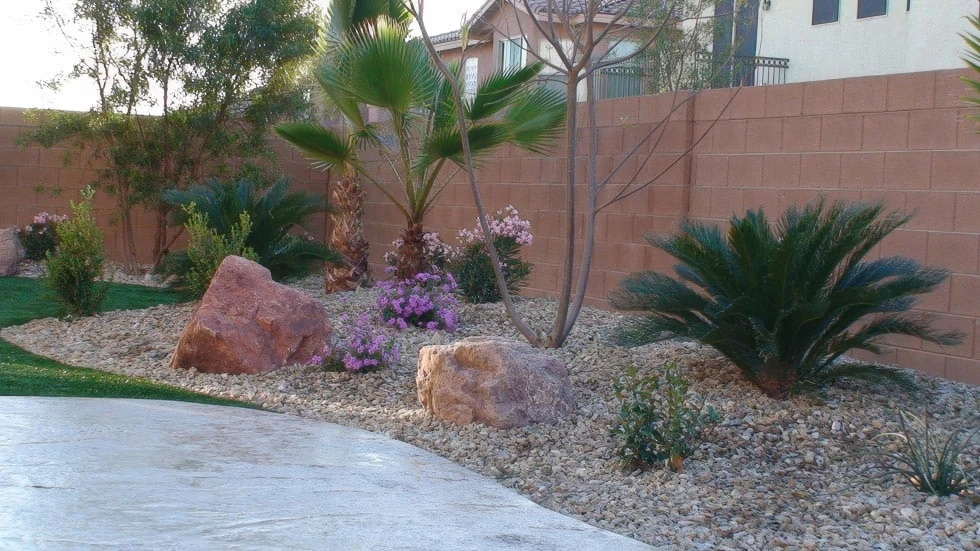
A completed pool deck in the Kennesaw area — travertine selected for slip resistance, surface slope engineered to meet both drainage and accessibility requirements.
Free site evaluations across Kennesaw, Marietta, Acworth, and all of Cobb County. We’ll assess your surface and give you honest answers.
Kaizen Scapes is based in Canton, Georgia and serves the greater North Atlanta region within 35 miles: