

Most Woodstock parents make the same mistake when installing backyard play equipment: they focus almost entirely on the structure — the swing set, the climbing wall, the slide — and give almost no thought to what’s underneath it. Within two seasons, Georgia clay has done what it always does. The grass is gone, the ground is rutted and uneven, and the area beneath the equipment is a muddy hazard in wet weather and a hard-packed impact surface in dry conditions.
A properly designed hardscape play area is not just a safer environment for children — it’s a defined, draining, attractive zone that integrates with the rest of the backyard design rather than becoming an eyesore island of compacted dirt. The surface material beneath play equipment has an ASTM safety standard for impact attenuation — and very few of the DIY solutions Woodstock homeowners attempt actually meet it. Here’s what the base under your play zone actually requires.
Why Grass Fails
In Georgia’s red clay soil, the area beneath active play equipment goes through a predictable failure sequence. The constant foot traffic of children compacts the clay surface until grass roots can no longer survive. Once the turf cover is gone, the exposed clay surface becomes deeply rutted under swings, slick when wet, and brick-hard when dry. The compacted surface provides virtually no impact attenuation — meaning a fall from even modest equipment height onto packed clay is a hard-surface fall, not the cushioned landing that play equipment manufacturers specify.
Most playground equipment sold to residential customers specifies a minimum impact-attenuating surface as a safety requirement — one that provides a critical fall height (CFH) rating appropriate for the equipment’s maximum platform height. A grass surface, even in good condition, does not meet the ASTM F1292 impact attenuation standard at typical equipment heights. Compacted clay certainly does not. The surface beneath play equipment is a safety specification decision, not just an aesthetic preference.
“The equipment gets all the attention. The surface it sits on is where the safety standard lives — and where most residential installations quietly fail within eighteen months of installation.”
Surface Material Comparison
Poured-in-place rubber mulch — recycled rubber granules bound into a solid resilient surface — is the premium option for residential play zones in Woodstock. It provides consistent ASTM F1292-rated impact attenuation at a specified depth, drains freely through the surface layer, is ADA-accessible, requires no raking or annual replenishment, and will not wash out, compact, or migrate under equipment. It installs over a compacted aggregate base and a concrete or stone border frame, producing a finished appearance that looks intentional and integrates cleanly with the surrounding hardscape. The trade-off is cost — poured rubber is the highest-cost surface per square foot, typically $18 to $28 per square foot installed.
Engineered wood fiber (EWF) is the industry standard surface for commercial playground installations and remains the most cost-effective ASTM-rated option for residential play areas. Properly installed at a minimum 9-inch depth for a 6-foot fall height, EWF meets ASTM F1292 and ASTM F2075 standards. It drains freely, provides good cushioning, and costs significantly less than rubber — typically $6 to $10 per square foot installed with a border system. The maintenance requirement is the trade-off: EWF compacts over time and needs to be raked and replenished annually to maintain its impact rating. It also absorbs organic material and will need full replacement every five to seven years in Georgia’s wet seasons.
Pea gravel is the lowest-cost option and one of the most commonly used residential surfaces — but it comes with meaningful trade-offs. Pea gravel meets ASTM F1292 only at a minimum 9-inch depth, and it migrates aggressively under high-activity equipment. Children scatter it, it tracks into the house and onto the patio, it can be thrown, and it provides a poor walking surface for younger children. It also displaces under swings over time, creating low spots beneath the impact zone precisely where the impact rating matters most. For Woodstock families with young children, pea gravel requires more discipline than most households are willing to maintain.

Hardscape-framed play zone in Woodstock — concrete border, compacted aggregate base, and defined connection to the surrounding patio and backyard.
The biggest design failure we see in Woodstock residential play areas is the play zone dropped into the yard without any hardscape connection to the rest of the outdoor space. A play area that sits as a freestanding rectangle of surface material in the middle of a lawn feels like what it is: an afterthought. A play area that is framed by a clean concrete or natural stone border, connected to the patio by a defined concrete or paver pathway, and positioned with visual connection to the adult gathering area feels like a designed component of the outdoor living space — because it is.
The border performs both aesthetic and functional roles. A poured concrete curb or natural stone border keeps the surface material contained — preventing the migration and displacement that undermine both safety ratings and appearance. It defines the zone clearly so children understand the play area boundary, and it provides a clean mow-line for the surrounding lawn. The pathway from the patio or back door to the play zone is not a luxury — it’s what ensures the area is used daily rather than avoided when the lawn is wet.
The most successful residential play areas in Woodstock are the ones designed at the same time as the patio, outdoor kitchen, or fire pit — not after. When the play zone is planned alongside the adult gathering space, it’s positioned where a parent can watch from the patio. The pathway runs from the back door past the grill to the play zone. The border material matches the patio edge or retaining wall stone. The area feels like one cohesive outdoor living system — not a children’s zone bolted onto an adult landscape as an obligation. That integration is part of every Kaizen Scapes outdoor project conversation. We don’t design around children. We design spaces that work for the whole family.
Kaizen Scapes proudly serves homeowners across Canton, GA, Woodstock, GA, and the surrounding North Georgia communities including Holly Springs, Ball Ground, Acworth, Kennesaw, Marietta, Alpharetta, Milton, Roswell, Cumming, Johns Creek, and East Cobb. If you’re looking for hardscaping and landscaping craftsmanship within 35 miles of Canton or Woodstock, our team is ready to transform your outdoor space.
Whether you’re in Canton, Woodstock, Alpharetta, Milton, or anywhere across Cherokee County and the greater North Atlanta suburbs, Kaizen Scapes brings the same relentless standard to every project. We don’t do cookie-cutter. We do custom — built to last.
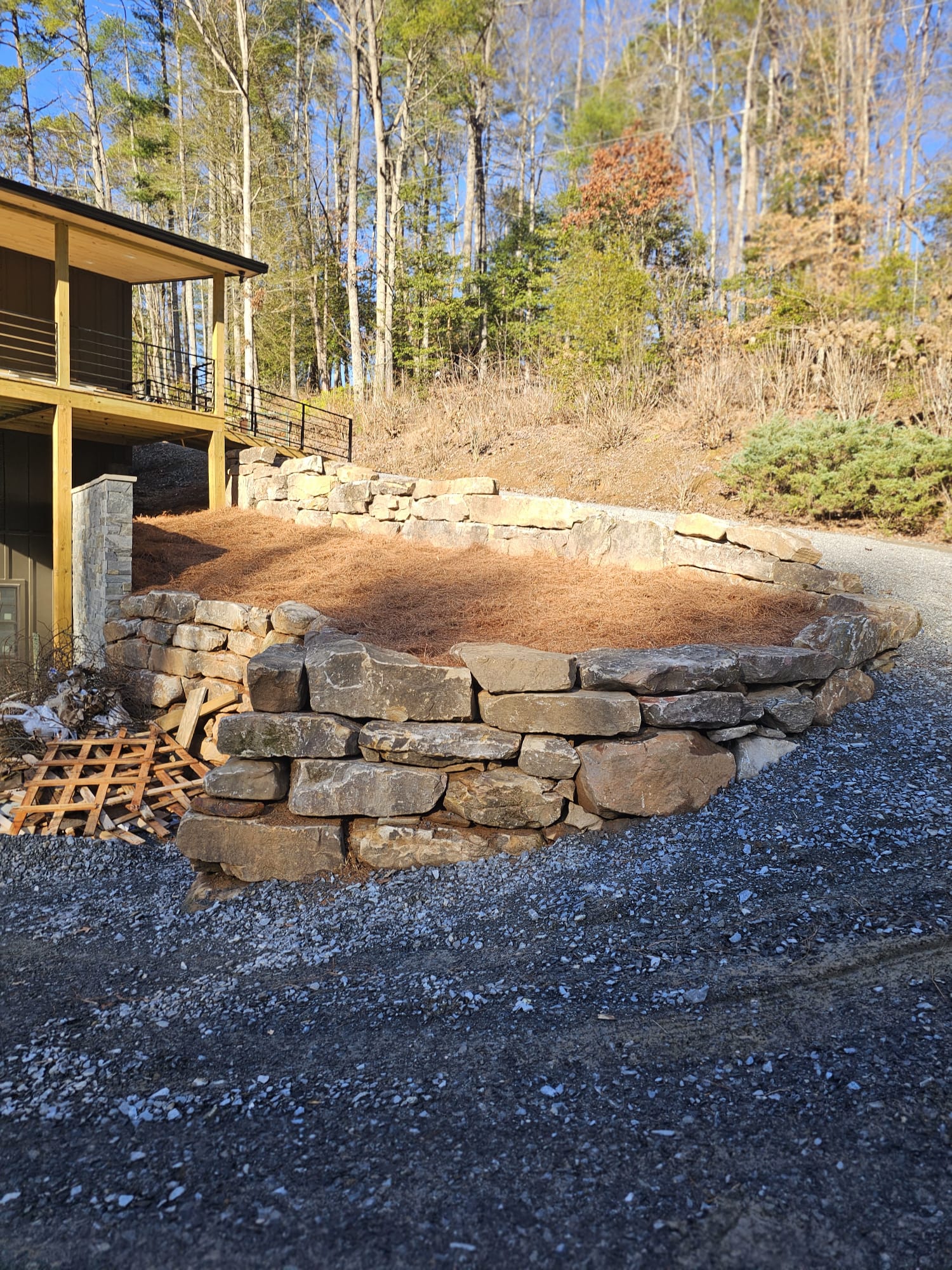
Hardscape border and integration work in Woodstock — the framework that makes a backyard play zone feel designed, not dropped.
We integrate the play zone into your backyard hardscape from the start. Free consultations across Woodstock, Canton, and all of Cherokee County.
Kaizen Scapes is based in Canton, Georgia and serves the greater North Atlanta region within 35 miles: