

Waleska is a homeowner’s community in the most literal sense — properties are larger, lots are private, and the outdoor space is something people actually use rather than maintain for curb appeal. The outdoor kitchen investment in Waleska isn’t driven by keeping up with a neighborhood trend — it’s driven by the genuine desire to extend the living space permanently to the backyard, where the acreage, the treeline, and the Cherokee County quiet make outdoor cooking and entertaining worth building for. What separates an outdoor kitchen that serves a Waleska property for 20 years from one that deteriorates in five comes down to three factors: structural permanence, material selection, and the ROI math that most contractors won’t walk you through honestly.
An outdoor kitchen in Waleska, GA is a different project than a patio kitchen in a close-in Atlanta suburb. The lot sizes, the relative privacy, and the typical property values in Cherokee County’s rural zones mean that outdoor kitchens here tend to be more ambitious in scope — larger island footprints, more appliance variety, more integration with the surrounding landscape. They also tend to be the kind of project where the homeowner is investing once and expecting the result to last — which means the specification decisions matter more than they do on a smaller-budget installation where replacement is easier to rationalize.
What Makes Them Last
A masonry-built outdoor kitchen — concrete block frame, mortar-set veneer, integrated counter support — behaves as a single structural unit across seasonal temperature and moisture cycles. A modular system — pre-fabricated frames assembled with fasteners, panels attached to a skeleton structure — concentrates thermal expansion stress at every fastener point and every panel joint. In Cherokee County’s outdoor environment, where summer-to-winter temperature swings exceed 80 degrees Fahrenheit and humidity cycles are significant, that concentrated stress produces loosening fasteners, opening panel joints, and eventually delaminating veneer surfaces. The masonry alternative distributes the same thermal load across an entire monolithic form, which handles it without structural consequence. This is why properly built masonry outdoor kitchens from the 1990s are still performing well in the North Atlanta area, and why pre-fabricated modular systems from the same era are uniformly gone.
The countertop is the surface that gets the most daily contact and the most environmental exposure of any element in an outdoor kitchen. Waleska homeowners investing in a long-term installation should specify granite or quartzite — full stop. Granite at 3 cm is the outdoor kitchen countertop standard for a reason: it handles UV exposure, radiant grill heat, rain, freeze-thaw cycling, and food contact without degrading when properly sealed annually. Quartzite — a metamorphic natural stone that is harder and denser than granite — is the premium specification for Waleska properties where the countertop is also a premium visual element and maximum durability is the goal. Both materials are available in formats and color ranges that integrate with the natural stone and warm earth tone aesthetics that complement Cherokee County’s wooded outdoor settings.
“On a Waleska property, an outdoor kitchen is a 20-year investment — not a 5-year one. The difference between those two outcomes is the structural and material specification made at the beginning, not the appliances chosen at the end.”
The ROI Question
The return on an outdoor kitchen in Waleska has two components: resale value contribution and quality-of-life return. Real estate professionals in Cherokee County consistently report that outdoor kitchen installations add measurable documented value to properties in the Waleska and Ball Ground market — particularly when the outdoor kitchen is paired with a covered patio, professional landscaping, and other outdoor living features that tell a coherent story about the property’s outdoor space. A single, well-built outdoor kitchen island on a bare concrete patio adds some value. The same kitchen integrated into a complete outdoor living environment — covered pergola, paver patio, landscape lighting, seating area — adds compounding value because buyers perceive and purchase the totality, not the individual elements.
The quality-of-life return is harder to quantify but easier to observe. A Waleska homeowner with a permanent outdoor kitchen uses their backyard differently than one without. The permanent gas line means no tank logistics. The built-in counter means no folding table. The integrated refrigeration means no cooler runs to the garage. The cooking happens outside, where the space is, rather than inside with periodic trips to the patio with finished food. This isn’t a minor convenience — it’s a fundamental change in how the outdoor space functions, and it accumulates value with every season it’s used. On a Waleska lot where the outdoor space is genuinely worth spending time in, that change is worth building for.

Outdoor kitchen installation in Cherokee County — masonry structure, quartzite counter, permanent gas connection. Designed and built by Kaizen Scapes for long-term performance.
The appliance selection for a Waleska outdoor kitchen should follow a simple principle: specify commercial-grade built-in units designed for outdoor installation, and don’t add appliances that won’t get used. A 36-inch or 42-inch commercial built-in grill insert — Blaze Professional, Coyote, Twin Eagles, or equivalent — is the cooking core of any serious outdoor kitchen. A side burner integrated into the prep-side counter handles sauces, sides, and boiling. An outdoor-rated undercounter refrigerator keeps ingredients accessible without trips inside. A sink with a properly permitted drain line eliminates the back-and-forth for washing prep items. Beyond these four elements, every additional appliance should be evaluated against frequency of actual use — a pizza oven, a kamado insert, a warming drawer, or an ice maker all add cost, footprint, and counter claims that only justify themselves if the homeowner genuinely uses them enough to warrant the permanence of built-in installation.
Kaizen Scapes proudly serves homeowners across Canton, GA, Woodstock, GA, and the surrounding North Georgia communities including Holly Springs, Ball Ground, Acworth, Kennesaw, Marietta, Alpharetta, Milton, Roswell, Cumming, Johns Creek, and East Cobb. If you’re looking for hardscaping and landscaping craftsmanship within 35 miles of Canton or Woodstock, our team is ready to transform your outdoor space.
Whether you’re in Canton, Woodstock, Alpharetta, Milton, or anywhere across Cherokee County and the greater North Atlanta suburbs, Kaizen Scapes brings the same relentless standard to every project. We don’t do cookie-cutter. We do custom — built to last.
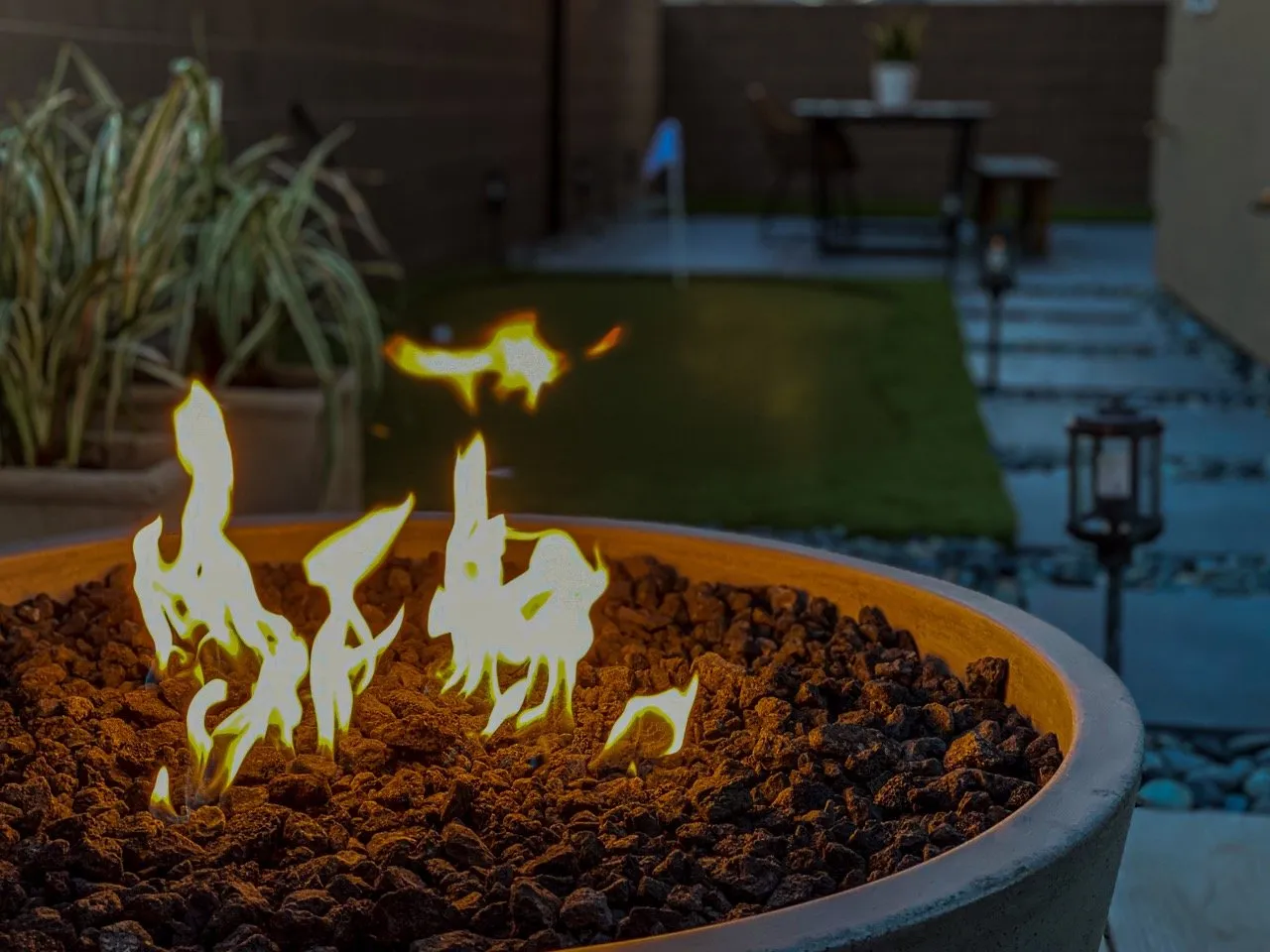
Completed outdoor kitchen in Cherokee County — masonry structure, quartzite counter, built-in grill and side burner, permanent propane connection. Built by Kaizen Scapes.
We design and build permanent outdoor kitchens across Waleska, Cherokee County, and all of North Georgia. Free estimates — we walk your site and assess your utility access before we quote anything.
Kaizen Scapes is based in Canton, Georgia and serves the greater North Georgia region within 35 miles: