

Sandy Springs outdoor kitchens built on the wrong structural foundation look fine in year one. The stone veneer is clean. The countertop is level. The grill lights on the first try. And then year two arrives — and the cracks appear in the mortar joints, the countertop lifts at one corner, and the masonry structure settles unevenly into a patio substrate that was never prepared to support it. The mistake that causes this is made before a single block is laid — and most Sandy Springs homeowners are never told about it until they’re looking at a repair bill.
The most common outdoor kitchen failure in Sandy Springs is substrate preparation — specifically, building a permanent masonry structure on an existing residential concrete patio slab that was never engineered to carry that load. A residential patio slab in Sandy Springs is typically 4 inches of unreinforced or lightly reinforced concrete poured on a compacted aggregate base. It is designed to carry foot traffic, patio furniture, and a grill on wheels. It is not designed to carry a permanent masonry outdoor kitchen structure — typically 2,000 to 4,000 pounds of block, stone, countertop, and appliances — without proper reinforcement or supplemental footing. This is the year-two problem. Here is what avoiding it actually requires.
Sandy Springs Lot Constraints
Sandy Springs occupies a distinct position in the Atlanta metro: it is a Fulton County city with an urban-suburban character, tighter lot lines than the North Atlanta suburbs, and a buyer pool that expects high finish quality throughout. The typical Sandy Springs backyard is more constrained than a Cumming or Woodstock lot — there is less depth, less buffer from neighboring properties, and often less flexibility in where a structure can be placed. City of Sandy Springs zoning and the City of Atlanta’s supplemental regulations for incorporated municipalities govern setback requirements for permanent outdoor structures — including outdoor kitchens — from property lines, easements, and accessory structures. A contractor who does not verify setback compliance before locating the outdoor kitchen footprint creates a permit rejection or worse, a stop-work order after construction begins.
Kaizen Scapes conducts a full site assessment on every Sandy Springs outdoor kitchen project before design begins. That assessment includes lot line verification, setback confirmation against current Fulton County and City of Sandy Springs regulations, gas line access routing from the meter location, and substrate evaluation of the existing patio slab. The design is built around the lot’s actual constraints — not around a template that gets modified after the permit reviewer flags issues. This is what prevents the year-two problems that result from a build that was never properly sited.
“In Sandy Springs, you are working with a more constrained footprint than the suburbs. That makes the site assessment — setbacks, substrate, gas routing — the most important part of the project. It happens before any design decisions are final.”
The Structural Foundation
The first question on every Sandy Springs outdoor kitchen project is whether the existing patio slab can carry the structure’s load without supplemental footing. The answer depends on the slab’s thickness, reinforcement, and sub-base condition — all of which need to be assessed, not assumed. A 4-inch unreinforced slab on a disturbed or settled sub-base is not an adequate foundation for a permanent masonry outdoor kitchen, regardless of how solid it looks on the surface. The structural load of the masonry surround, countertop, and appliances creates point loads at the kitchen’s corners and along the counter span that an inadequate slab will express as cracking and settlement over one to two seasonal cycles — hence the year-two problem.
When the existing slab assessment reveals inadequate load capacity, the correct response is supplemental concrete footings poured at the kitchen’s support points — not a decision to proceed on an inadequate base and see what happens. In Sandy Springs, this typically means cutting the existing slab at the kitchen footprint, digging to the required frost depth, pouring reinforced concrete footings, and building the masonry structure on those footings rather than on the slab surface. This adds time and cost to the project — and it is a line item that budget contractors routinely omit from their proposals, choosing to proceed on the existing slab and pass the structural risk to the homeowner. Kaizen Scapes includes foundation assessment in every Sandy Springs site evaluation and quotes footing work as a visible line item when it is required.

An outdoor kitchen built in the Sandy Springs, GA area — proper footing preparation, masonry construction, quartzite countertop, permanent gas line.
Finish Expectations
Sandy Springs buyers and homeowners expect finish quality that is consistent with the neighborhood. On a Sandy Springs outdoor kitchen, this means stone veneer that references the home’s exterior material palette, a countertop specified at the same grade as the interior — 3 cm quartzite or premium granite — and appliances that perform at a commercial grade rather than the residential tier that shows up in budget proposals. The difference between a finish level that reads as appropriate for a Sandy Springs property and one that reads as an afterthought is visible from fifty feet: in the stone selection, the edge profile on the countertop, the precision of the mortar joints, and the proportional relationship between the kitchen structure and the home behind it.
Kaizen Scapes approaches every Sandy Springs outdoor kitchen project as a design problem, not just a construction problem. The stone selection conversation happens before any material is ordered. The design references the home’s exterior architecture — the brick tone, the shutter color, the sill detail — and the kitchen structure is proportioned to read as part of the property rather than an addition to it. On a Sandy Springs property, this is not a luxury consideration — it is the standard the market expects.
Kaizen Scapes proudly serves homeowners across Canton, GA, Woodstock, GA, and the surrounding North Georgia communities including Holly Springs, Ball Ground, Acworth, Kennesaw, Marietta, Alpharetta, Milton, Roswell, Cumming, Johns Creek, and East Cobb. If you’re looking for hardscaping and landscaping craftsmanship within 35 miles of Canton or Woodstock, our team is ready to transform your outdoor space.
Whether you’re in Canton, Woodstock, Alpharetta, Milton, or anywhere across Cherokee County and the greater North Atlanta suburbs, Kaizen Scapes brings the same relentless standard to every project. We don’t do cookie-cutter. We do custom — built to last.
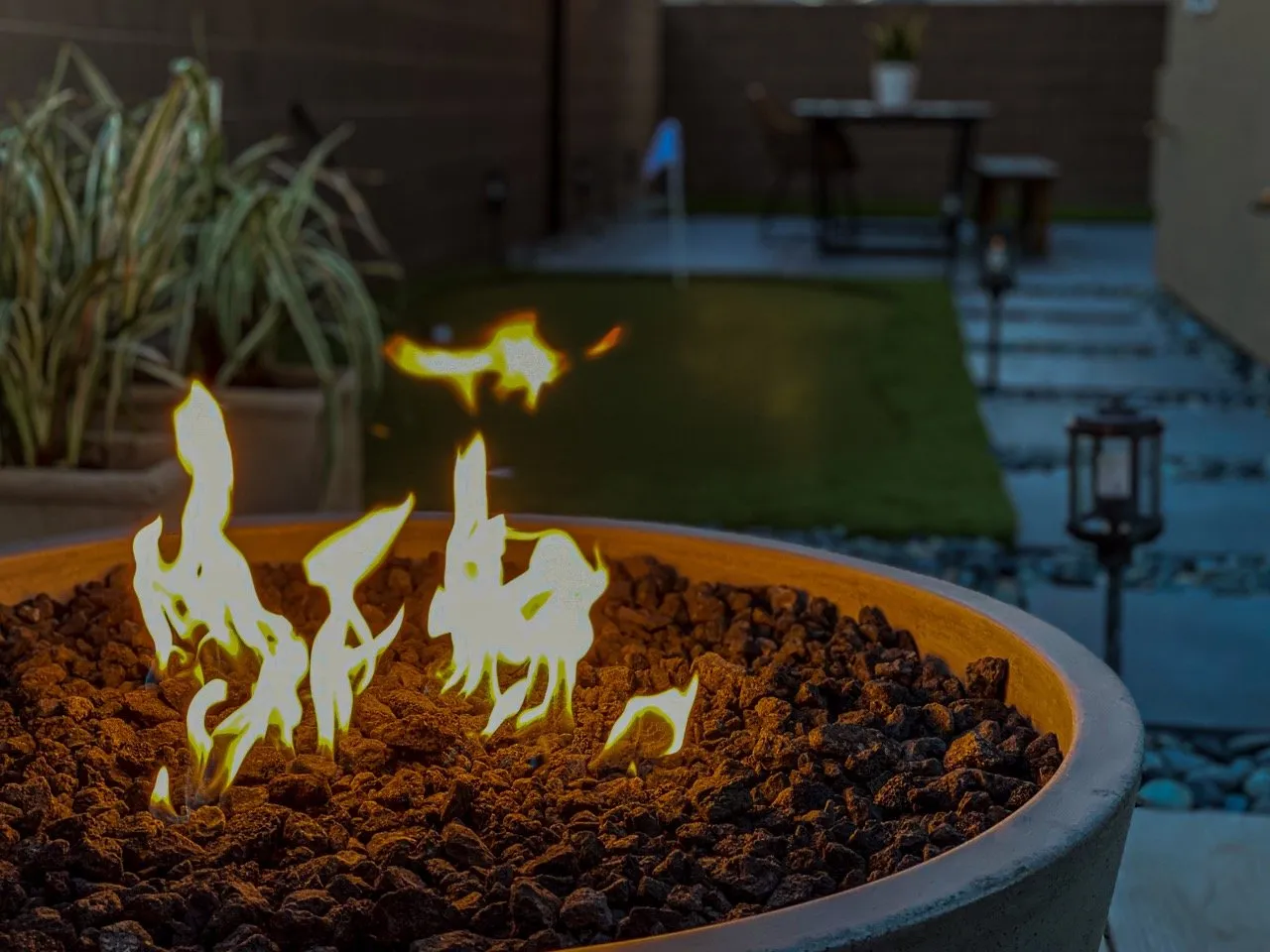
A completed outdoor kitchen in the Sandy Springs, GA area — proper foundation, quartzite countertop, commercial-grade appliances, Fulton County permits complete.
We design and build permanent outdoor kitchens across Sandy Springs, Roswell, and all of Fulton County. Full site assessment included. Free estimates.
Kaizen Scapes is based in Canton, Georgia and serves the greater North Atlanta region within 35 miles: