

Native plants and hardscape used to be treated as two separate conversations — one for the naturalist, one for the contractor. Alpharetta homeowners are increasingly rejecting that split, and the results after three or four growing seasons explain why. A paver patio surrounded by Georgia natives isn’t just visually distinct — it behaves differently. It requires less, survives more, and improves with time rather than requiring constant replacement.
The traditional approach to landscaping around hardscape in Alpharetta typically involves non-native ornamentals: Knockout Roses, Loropetalum, and Liriope in beds that need fertilizer, pest treatment, and replacement on a three-to-five year cycle. Native plants change that maintenance equation completely — but only if they’re selected and placed correctly relative to the hardscape system. Doing it wrong with natives looks as bad as doing it wrong with anything else.
The Year Three Shift
Year one of a native plant bed adjacent to hardscape is the hardest. Natives establish slowly — most spend their first growing season building root systems rather than visible above-ground growth. A homeowner who doesn’t know this looks at their newly installed native planting in year one and wonders if something is wrong. By year three, the question reverses entirely. The root systems are deep, the plants have adapted to the specific drainage and soil conditions of the site, and the beds are starting to self-sustain in ways that non-native ornamentals simply don’t.
Year three is typically when supplemental irrigation can be reduced or eliminated entirely for most Georgia natives in Zone 7b. The same beds that needed weekly watering in year one are thriving on rainfall alone by year three, with the only exceptions being an unusually dry summer. For Alpharetta homeowners with drip irrigation integrated under a paver patio, this means the irrigation becomes a drought-emergency resource rather than a routine maintenance requirement — a significant shift in both cost and effort.
The Hardscape Relationship
Paver patios, retaining walls, and walkways create specific microclimate conditions in the adjacent planting beds that most conventional plant palettes aren’t designed for. Reflected heat from a paver surface in July can raise the ambient temperature in an adjacent bed by 8–12 degrees. Non-native ornamentals often struggle in this microclimate — the same plants that perform well in a lawn bed fail against a south-facing paver field. Georgia natives, adapted to the region’s heat and drought cycles, handle these conditions better than most alternatives.
The relationship works in the other direction too. Native plants adjacent to hardscape create benefits that non-natives typically don’t — deeper root systems that improve drainage through compacted clay profiles near paver base edges, dense pollinator activity that adds life to an outdoor living space, and structural forms that change dramatically with the seasons, giving the same patio a genuinely different visual character in March, July, and November.
“In year one you maintain native plants. In year three they start maintaining themselves. In year five you’re editing a thriving ecosystem rather than replacing dead ones. That’s the tradeoff Alpharetta homeowners keep choosing.”
Top Performers
Selection matters. Not all Georgia natives are suited to the hardscape-adjacent microclimate — some require consistently moist soil that a well-drained paver base won’t provide. The natives that consistently perform in Fulton County hardscape installations are those adapted to the transition zone between dry upland and moderate moisture. Ironweed, Black-Eyed Susan, Eastern Bluestar, and Wild Bergamot all perform reliably in the reflected-heat, moderately-dry conditions of a bed adjacent to a paver field.
For structural plants at retaining wall tops — where drainage is excellent but moisture is minimal — Aromatic Aster, Little Bluestem ornamental grass, and Rattlesnake Master thrive in the conditions that most ornamentals reject. The combination of Little Bluestem’s copper-orange fall color against the warm tones of a travertine or concrete paver cap is one of the most visually compelling combinations in North Georgia landscaping — and it requires almost no intervention after establishment.
The visual success of a native planting adjacent to hardscape depends heavily on how the edge between the two is handled. Native plants by nature have a looser, more organic form than traditional ornamentals — which can look beautiful against a clean hardscape edge or untidy against a poorly defined one. The soldier course paver edging detail — a row of vertically set pavers creating a permanent rigid border — is exactly what allows native plant forms to read as intentional rather than neglected.
The contrast between the geometric precision of a paver edge and the organic billowing form of established native plant material is one of the most successful design tensions in modern outdoor space design. It works because the structure of the hardscape makes the softness of the plants feel deliberate. Without that edge definition, the same plants can look like they simply happened — which is the opposite of the effect Alpharetta homeowners are paying for.
Kaizen Scapes proudly serves homeowners across Canton, GA, Woodstock, GA, and the surrounding North Georgia communities including Holly Springs, Ball Ground, Acworth, Kennesaw, Marietta, Alpharetta, Milton, Roswell, Cumming, Johns Creek, and East Cobb. If you’re looking for hardscaping and landscaping craftsmanship within 35 miles of Canton or Woodstock, our team is ready to transform your outdoor space.
Whether you’re in Canton, Woodstock, Alpharetta, Milton, or anywhere across Cherokee County and the greater North Atlanta suburbs, Kaizen Scapes brings the same relentless standard to every project. We don’t do cookie-cutter. We do custom — built to last.

Native plant integration alongside hardscape in Alpharetta — soldier course paver edging creates the clean boundary that lets organic plant forms read as intentional.
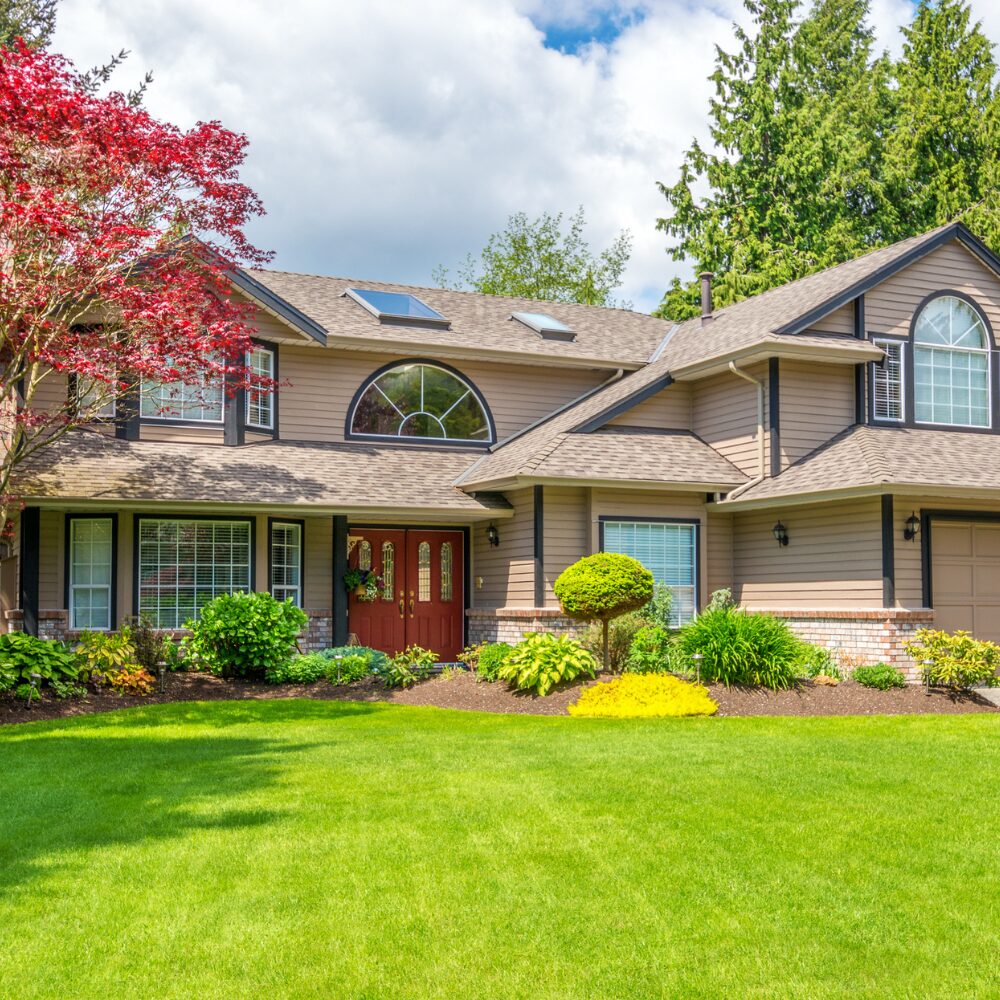
Year-three established native beds in Alpharetta — largely self-sustaining, drought-tolerant, and structurally compelling against the paver field behind them.
We design native plant palettes alongside paver systems from the first meeting — selections, edging details, and irrigation planned together. Free consultation across Alpharetta, Fulton County, and North Atlanta.
Kaizen Scapes is based in Canton, Georgia and serves the greater North Atlanta region within 35 miles: