

Most Canton homeowners hire a hardscape contractor and a landscape company at different times — sometimes years apart. The result is a yard where the patio, the planting beds, the drainage, and the edging are all fighting each other instead of working together. This post is about why integration from day one produces a fundamentally better outcome, and what that process actually looks like on a Cherokee County property.
The separation of hardscape and landscaping is a market problem, not a design problem. Most contractors specialize in one or the other — and most homeowners plan them separately because the budgets feel separate. But the decisions made during hardscape installation directly determine what’s possible with plants, drainage, and irrigation for the life of the property. Getting those decisions wrong in sequence two is expensive. Getting them right together is straightforward.
Why Sequencing Matters
There’s a reason every well-executed integrated outdoor space starts with hardscape — pavers, retaining walls, walkways, and drainage infrastructure — before any plant material goes in the ground. Hardscape installation involves heavy equipment, compacted base material, and grade changes that would destroy any plant material in the vicinity. Install the plants first and you’re paying twice.
But sequencing goes deeper than logistics. The grade established during hardscape work determines where water moves across the property. The planting beds that sit adjacent to a patio or along a retaining wall need to be designed with that drainage pattern in mind — not retrofitted around it. When the hardscape designer and the landscape designer are the same team, that coordination is automatic. When they’re different contractors, it often doesn’t happen at all.
The Root Zone Problem
Canton sits on Georgia red clay — and red clay is the single biggest challenge for integrated hardscape and landscape design in Cherokee County. Clay retains water, compacts under hardscape base material, and creates drainage bottlenecks that can saturate plant root zones within feet of a paver system that appears to be draining correctly. A patio that drains well off its surface can still be sitting above a clay layer that’s holding water against the root zones of every ornamental planted around it.
The solution is not to avoid plants near hardscape — it’s to design the plant selection and the soil amendment plan during the hardscape phase. Raised planting pockets adjacent to retaining walls, amended backfill in planter zones, and deep-root irrigation for trees planted near paver fields are all decisions that work best when made before the hardscape is complete. On Cherokee County red clay, the difference between a plant that establishes in two seasons and one that fails in three years often comes down to the drainage decisions made when the patio base was installed.
“Integration isn’t a design preference — it’s an engineering requirement. In Canton’s red clay, the drainage decisions you make during hardscape installation determine whether the plants adjacent to that hardscape live or die.”
The 60/40 Ratio
Experienced outdoor designers often reference a 60/40 split between hardscape and softscape as the ratio that produces outdoor spaces that feel both functional and alive. The numbers aren’t absolute — some properties warrant 70/30, others work better at 50/50 — but the principle is sound. A yard that’s all paver and no plant material feels sterile and industrial. A yard that’s all plant material with minimal hardscape lacks the structure and usability that makes outdoor space livable.
The ratio matters most at the edges — where paver fields meet planting beds, where retaining walls transition to grade, where walkways pass through lawn areas. These transitions are where integrated design pays the biggest dividend. The edging detail at the junction of a paver patio and a planting bed is simultaneously a hardscape problem and a landscape problem — and it only looks right when both were designed at the same time with the same eye.
On a typical Kaizen Scapes integration project in the Canton area, the design process starts with a single site walk that addresses both hardscape and softscape simultaneously. We map drainage patterns, identify grade change opportunities, note existing tree root zones, and mark irrigation access points before the first hardscape line is drawn. The plant palette is selected in the same meeting where paver materials are chosen — so the warm tones of a travertine patio inform whether the planting beds use ornamental grasses with silver blades or flowering shrubs with deep burgundy foliage.
The result isn’t just aesthetic coherence — it’s structural coherence. Drip irrigation conduit runs under the paver field to the beds on the far side. Wall-top planters on the retaining wall are built with drainage rock and amended soil during wall construction, not retrofitted after. The edging between the patio and the first planting bed is a flush-set soldier course that locks into the paver field and creates a clean, permanent line. None of these details cost significantly more when done in sequence — but all of them are significantly more expensive, or simply impossible, when done as afterthoughts.
Kaizen Scapes proudly serves homeowners across Canton, GA, Woodstock, GA, and the surrounding North Georgia communities including Holly Springs, Ball Ground, Acworth, Kennesaw, Marietta, Alpharetta, Milton, Roswell, Cumming, Johns Creek, and East Cobb. If you’re looking for hardscaping and landscaping craftsmanship within 35 miles of Canton or Woodstock, our team is ready to transform your outdoor space.
Whether you’re in Canton, Woodstock, Alpharetta, Milton, or anywhere across Cherokee County and the greater North Atlanta suburbs, Kaizen Scapes brings the same relentless standard to every project. We don’t do cookie-cutter. We do custom — built to last.

Integrated hardscape and landscape design in Canton — walkway, planting beds, and edging designed as a single system from the start.
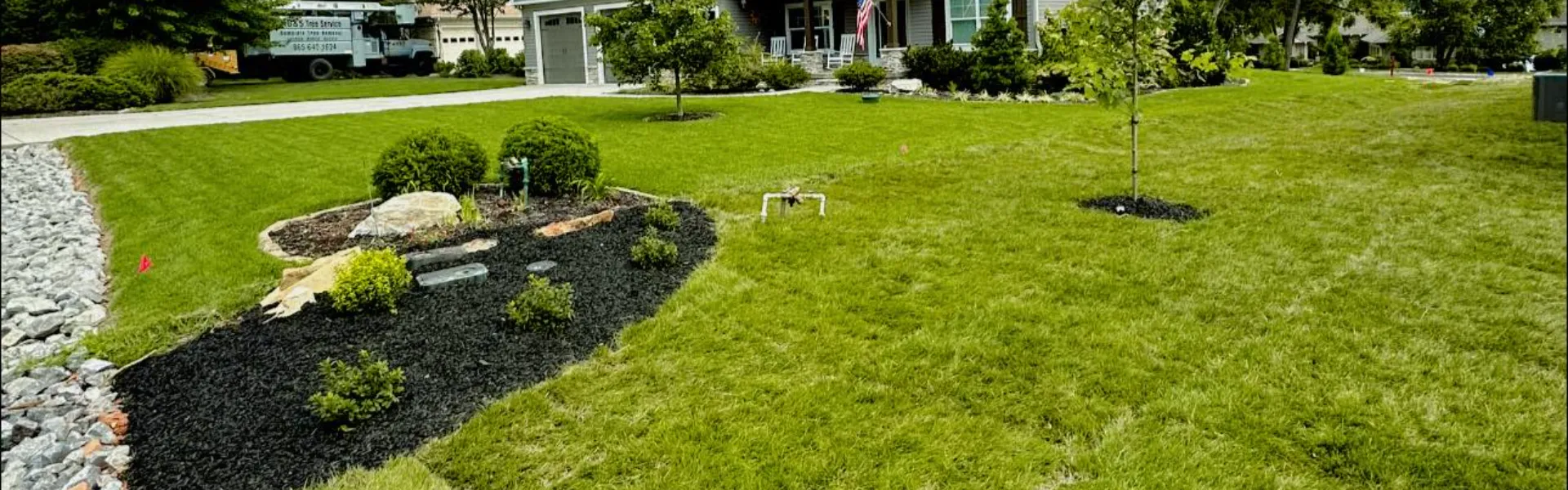
Softscape installed after hardscape is complete — the correct sequencing for Canton’s red clay soil ensures drainage compatibility and long-term plant health.
One team, one design process, one project — hardscape and landscape integrated from the first site walk. Free consultation across Canton, Cherokee County, and North Atlanta.
Kaizen Scapes is based in Canton, Georgia and serves the greater North Atlanta region within 35 miles: