

A backyard basketball court in Woodstock is one of the highest-use hardscape investments a family can make — and one of the most frequently underbuilt. The difference between a court that becomes a neighborhood gathering point and one that sits cracked and peeling at year four comes down to decisions made before the first yard of concrete is poured.
Woodstock homeowners are building everything from simple 19 x 32 foot half-courts for casual play to full 50 x 84 foot recreational courts with tournament lines, multi-sport overlays, and full lighting systems for evening play. The scope varies — but the base specification, drainage requirements, and site planning process do not change based on how serious your family is about basketball. A court is a structural concrete installation, and Cherokee County’s clay soils demand the same respect whether the court gets used daily or on weekends.
Court Sizing Options
The most popular residential basketball installation in Woodstock is the half-court: 19 feet wide by 32 feet long for a basic three-point setup, or up to 28 x 47 feet for a full half-court with corner three-point arcs and a proper lane. Add a 6-foot surround for out-of-bounds clearance and ball recovery, and most Woodstock lots can accommodate this footprint on a side yard or rear yard without significant grading.
A full court — 50 x 84 feet — requires a minimum 62 x 96 foot footprint with surround. This is achievable on larger Woodstock lots, particularly in newer developments with deeper rear yards, but it typically requires more substantial site grading and often retaining work on sloped Cherokee County terrain. Don’t let the desire for a full court push you into a grading budget that dwarfs the court itself. A well-built, properly lit half-court almost always gets more daily use than an oversized full court that consumed the entire landscaping budget.
“A cracked, faded court in year four is not a maintenance problem — it’s a specification problem. The base either was or wasn’t built for Georgia clay, and that decision is made at the design stage.”
Surface Systems
Woodstock homeowners have two credible surface system choices for a backyard basketball court. Poured concrete with acrylic sport coating is the traditional standard: a 4-inch slab over a 4-inch compacted aggregate base, cured for 28 days, then finished with a two-coat cushioned acrylic system in the homeowner’s chosen color scheme. This is the most durable, lowest-maintenance system available — a properly built concrete court with quality acrylic surfacing in Woodstock will look and play well for 15 to 20 years before the surface coat needs renewal. The concrete base itself outlasts the property.
Sport Court modular tile systems — interlocking polypropylene panels installed over a concrete or asphalt base — offer a faster installation timeline and meaningfully better shock absorption. For family courts where children and older adults are the primary users, the joint cushioning and knee-friendly bounce of a modular tile system is a legitimate ergonomic advantage over a pure concrete surface. The tradeoff is long-term durability: tiles can crack, shift, and discolor over time in Georgia’s UV intensity, and individual panels need periodic replacement. For competitive players, the surface inconsistency at tile joints is noticeable at high speed.
The hoop system is not an afterthought — it’s part of the concrete pour specification. An in-ground anchor hoop system requires a sleeve or direct-embed anchor cast into the slab before the concrete is placed. The anchor location determines the court’s entire geometry. Relocating an in-ground hoop after the slab is poured is a jackhammer project. Bolt-down surface-mount systems are more flexible but introduce a raised surface hardware profile that requires planning around court line placement. Every in-ground hoop installation at Kaizen Scapes is planned with the pour — never retrofitted. A breakaway backboard with a tempered glass or acrylic panel is standard for residential courts where player safety under hard dunks matters.
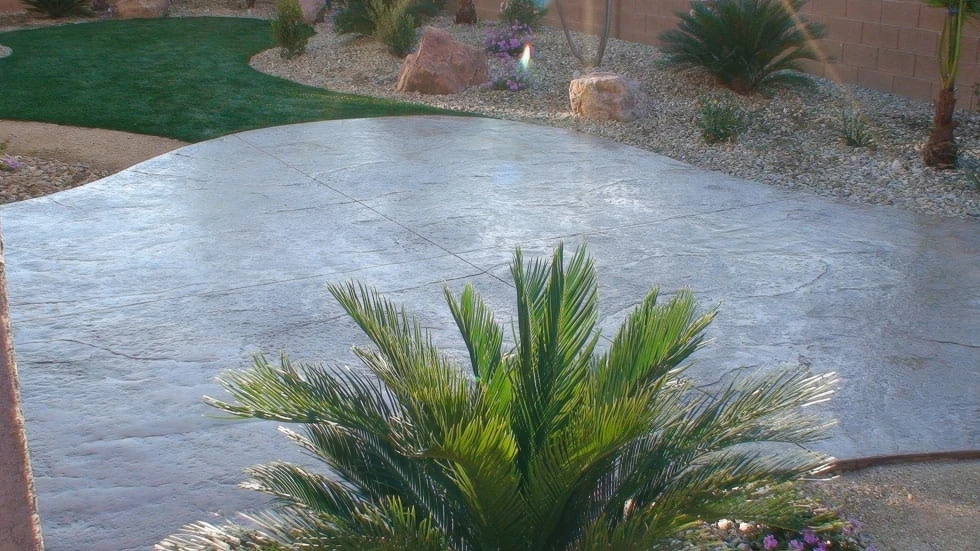
Sport court concrete base in Woodstock — compacted aggregate, reinforced slab, and in-ground hoop anchor placed before the pour.
A basketball court without fencing is a ball-retrieval obstacle course. For a 19 x 32 foot half-court, a minimum perimeter fence of 10 feet high on the baseline and 8 feet on the sidelines keeps play clean and reduces neighborhood ball-chasing. Standard residential options range from powder-coated chain-link — durable and functional — to aluminum picket or commercial-gauge welded wire systems for homeowners who want something that integrates more visually with the surrounding landscape design. The fencing post footings are set in concrete separate from the court slab — a detail that matters because fencing takes wind load and cannot rely on the court slab for structural support.
Lighting transforms a court from a daytime amenity to an evening gathering space. A properly lit 19 x 32 half-court requires a minimum of 2 poles — positioned on opposite sides of the court, set back from the playing surface to avoid collision hazard. LED sports lighting at 30 feet provides even coverage with minimal shadows at the arc. Woodstock homeowners who are serious about evening play typically invest in 4 poles for full shadow elimination. The conduit run for court lighting should be planned and placed before the slab is poured — trenching after the fact through a finished court perimeter is expensive and disruptive.
What It Costs
A complete half-court system in Woodstock — concrete slab, acrylic surface coating, in-ground hoop with breakaway backboard, perimeter fencing, and 2-pole lighting — ranges from $18,000 to $35,000. The low end reflects a standard fiber-reinforced slab on a near-flat site with chain-link fencing and a single-hoop setup. The high end includes post-tension reinforcement, Sport Court tile system, decorative powder-coated fencing, 4-pole LED lighting, multi-sport line package (basketball, pickleball, futsal overlay), and site grading on a sloped Woodstock lot.
Cherokee County’s setback requirements place residential sport courts a minimum of 10 feet from property lines — a measurement that must be verified against your recorded plat before finalizing the court footprint. HOA restrictions in Woodstock communities like Weatherstone, Wynchase, or Ridgewalk may impose additional color, fencing height, or lighting restrictions. Kaizen Scapes verifies these constraints before design begins — not after the slab is poured.
Kaizen Scapes proudly serves homeowners across Canton, GA, Woodstock, GA, and the surrounding North Georgia communities including Holly Springs, Ball Ground, Acworth, Kennesaw, Marietta, Alpharetta, Milton, Roswell, Cumming, Johns Creek, and East Cobb. If you’re looking for hardscaping and landscaping craftsmanship within 35 miles of Canton or Woodstock, our team is ready to transform your outdoor space.
Whether you’re in Canton, Woodstock, Alpharetta, Milton, or anywhere across Cherokee County and the greater North Atlanta suburbs, Kaizen Scapes brings the same relentless standard to every project. We don’t do cookie-cutter. We do custom — built to last.
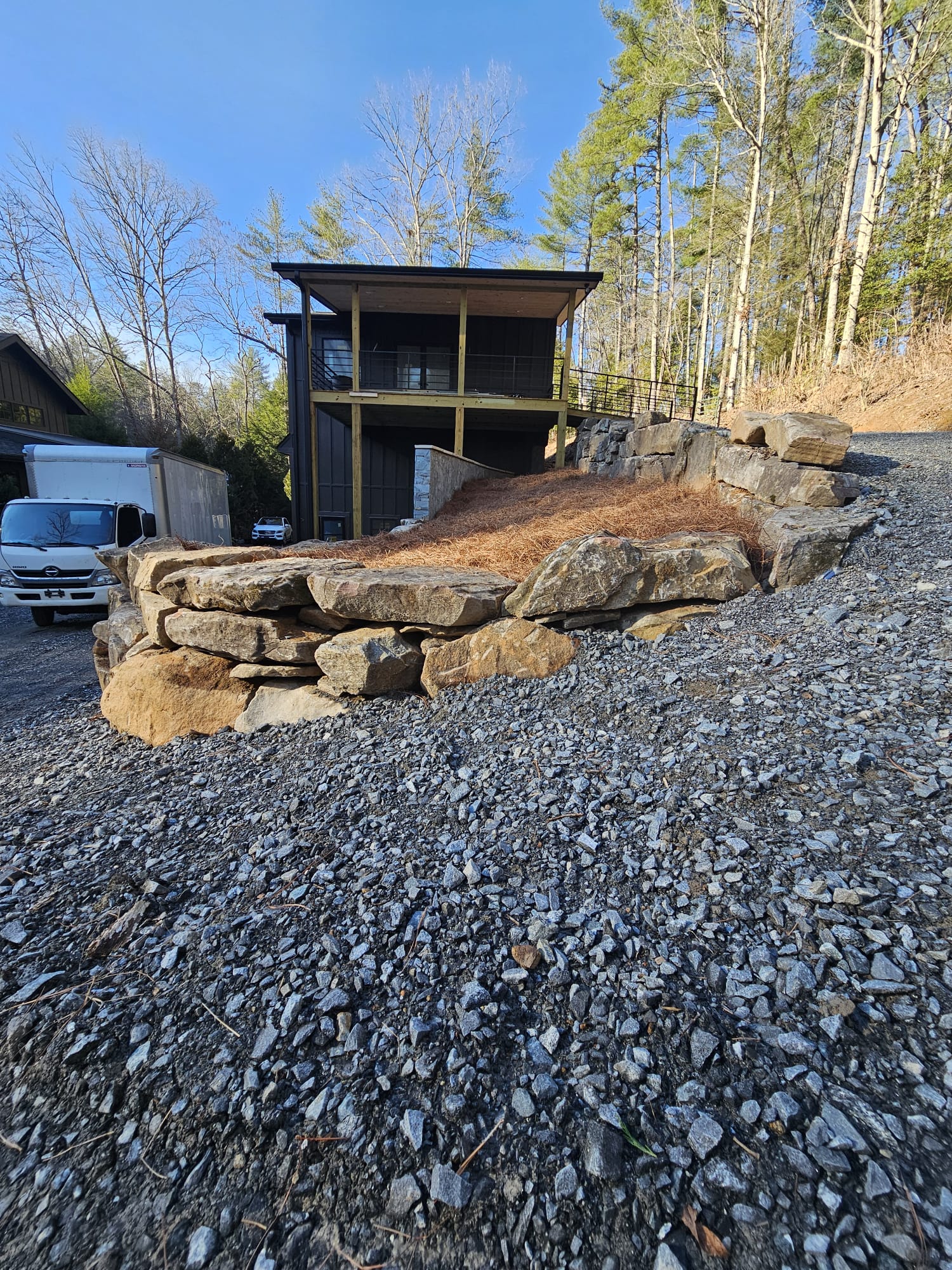
Site preparation and grading in Woodstock — creating the level plane a sport court slab demands on Cherokee County’s rolling terrain.
We verify setbacks, HOA rules, and soil conditions before we design anything. Free sport court evaluations across Woodstock, Canton, and Cherokee County.
Kaizen Scapes is based in Canton, Georgia and serves the greater North Atlanta region within 35 miles: