

Tree removal and grading in Cherokee County and the broader North Georgia area is a service where the stakes of a poorly chosen contractor are significantly higher than most homeowners realize before they get a quote. A tree removed cleanly from an open lawn area with no adjacent structures is a straightforward job. A tree removed within eight feet of a paver patio, a retaining wall, or a foundation — where the root system is intertwined with the structure's base layer — is an entirely different operation. The difference between a contractor who understands what's underneath the surface and one who doesn't shows up immediately if anything goes wrong, and the damage from a tree falling in the wrong direction or a root system disruption destabilizing adjacent hardscape is permanent and expensive to repair.
Alpharetta homeowners dealing with trees that need removal are typically confronting one of a few scenarios: a tree that's declined or died and presents a safety risk, a tree that's grown into proximity with a structure or hardscape and is causing or threatening damage, or a tree that's being removed to open a space for a new hardscape, sod, or landscaping project. Each scenario requires a slightly different approach — and the approach affects what happens to the root system, the surrounding grade, and the existing plantings or hardscape adjacent to the work area.
The decision between removal and structural pruning isn't always straightforward. A tree with a dead or declining canopy that still has a sound structure and a root system clear of any structure is often a candidate for crown reduction or removal of the problematic sections rather than full removal. A certified arborist assessment is valuable here — not because it will always recommend pruning over removal, but because it separates the trees that genuinely need to come down from the ones where targeted pruning addresses the risk at a fraction of the cost and without the disruption of full removal.
Trees that are definitively removal candidates: dead or significantly declining trees within fall distance of a structure; trees with root systems actively lifting or cracking hardscape or foundation elements; trees damaged by storm, lightning, or disease past the point where structural integrity can be maintained; and trees being removed to create space for a project that requires their location. For trees in the last category — project-related removal — the timing of removal relative to the adjacent hardscape or sod project matters significantly and should be planned in coordination rather than sequentially.
"Tree removal next to a hardscape, foundation, or utility line is not a job where the lowest bid is the right bid. The risk of a mistake is permanent and expensive."
A tree's root system typically extends one to one-and-a-half times the height of the tree in radius. A 40-foot oak adjacent to a paver patio has roots under that patio — potentially deep into the base layer. Removing the tree without addressing the root system leaves decomposing roots under the hardscape that will create voids as they break down over the following several years, causing settling and surface failure in the paver field. The correct sequence for a removal that's preparatory to a new hardscape installation is: tree removal, stump grinding to below grade, root excavation in the project footprint, base preparation, and installation. Skipping the root excavation step to save cost is a decision that will produce a visible failure in the hardscape within three to five years.
Stump grinding versus full root removal is a legitimate choice that depends on what's happening in the space post-removal. Stump grinding to six to eight inches below grade is sufficient for most sod or planting applications — the remaining root mass will decompose over time without causing surface problems. For hardscape installation in the same footprint, full root excavation to the depth of the base layer is necessary to ensure a stable, compacted base without organic material that will shrink and create voids. Tree removal and grading in Cherokee County done in conjunction with a hardscape project should be scoped as a single integrated project, not two separate contracts handed off sequentially.
Alpharetta has a tree ordinance that governs the removal of specimen trees — generally those exceeding a certain DBH (diameter at breast height) — on residential properties. The threshold and requirements vary, and the city has periodically updated its tree protection regulations. Before booking removal of a large-canopy tree on an Alpharetta residential property, the current permitting requirements should be confirmed through the city's Community Development Department. Most standard residential removals do not require a permit, but trees meeting specimen size thresholds may require documentation, replacement planting, or a fee in lieu of replacement. Proceeding without a required permit is a liability that falls on the property owner, not the contractor.
Georgia 811 utility marking should be called before any stump grinding or root excavation that involves digging below grade near buried utility lines. This is not optional — it's the law, and it's the step that prevents gas line strikes and underground electrical damage that can be catastrophic. Reputable contractors will confirm 811 marking before work begins. Any contractor who doesn't raise this step is not operating with the protocols that protect the homeowner.
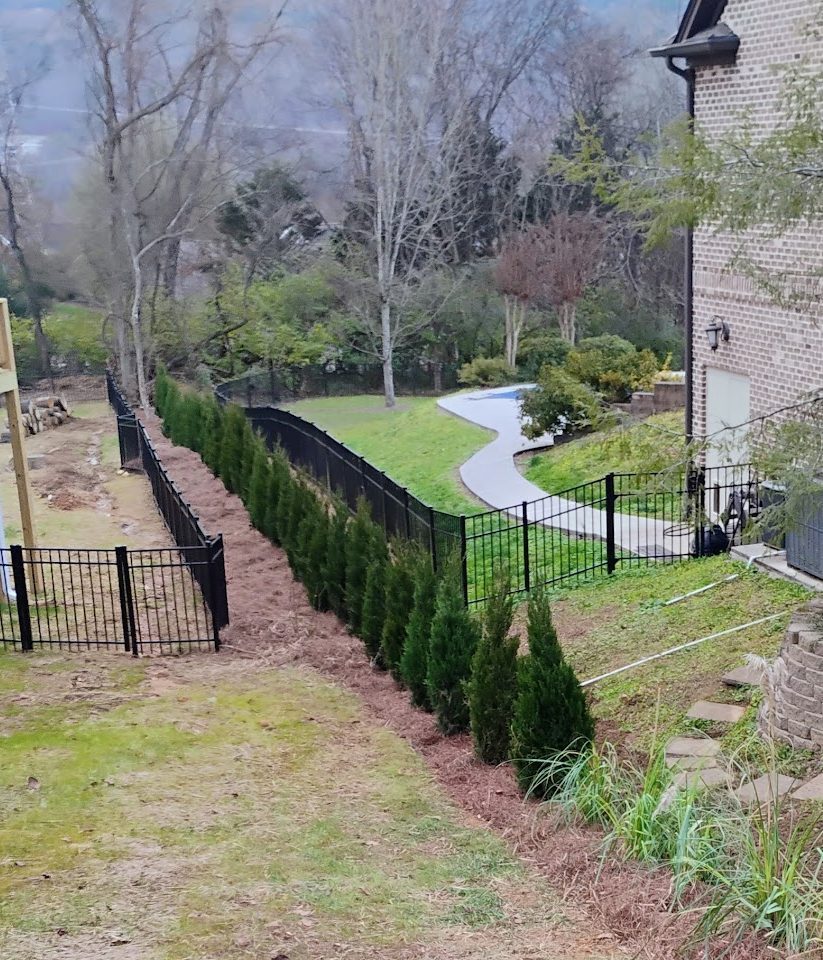
Tree removal and site preparation in Alpharetta, GA — root excavation, grade restoration, and coordination with the adjacent hardscape project handled as a single scope.
The space opened by tree removal in an Alpharetta backyard is an opportunity that most homeowners don't fully plan for before the tree comes down. The most common scenario is a shaded area that will now receive significantly more sun — which changes the appropriate sod variety, the irrigation requirement, and the potential for planting beds. The root excavation and grading work done as part of the removal process is also the best moment to set the grade correctly for whatever comes next: sod, a patio, a planting bed, or additional privacy screening. Planning the post-removal use before the work begins ensures that the site is left in the right condition rather than needing additional work to correct grade or address soil after the removal crew is gone.
Kaizen Scapes proudly serves homeowners across Canton, GA, Woodstock, GA, and the surrounding North Georgia communities including Holly Springs, Ball Ground, Acworth, Kennesaw, Marietta, Alpharetta, Milton, Roswell, Cumming, Johns Creek, and East Cobb. If you're looking for hardscaping and landscaping craftsmanship within 35 miles of Canton or Woodstock, our team is ready to transform your outdoor space.
Whether you're in Alpharetta, Roswell, Milton, or anywhere across North Georgia, Kaizen Scapes brings the same relentless standard to every project. We don't do cookie-cutter. We do custom — built to last. See our full hardscaping services or call for a free consultation.
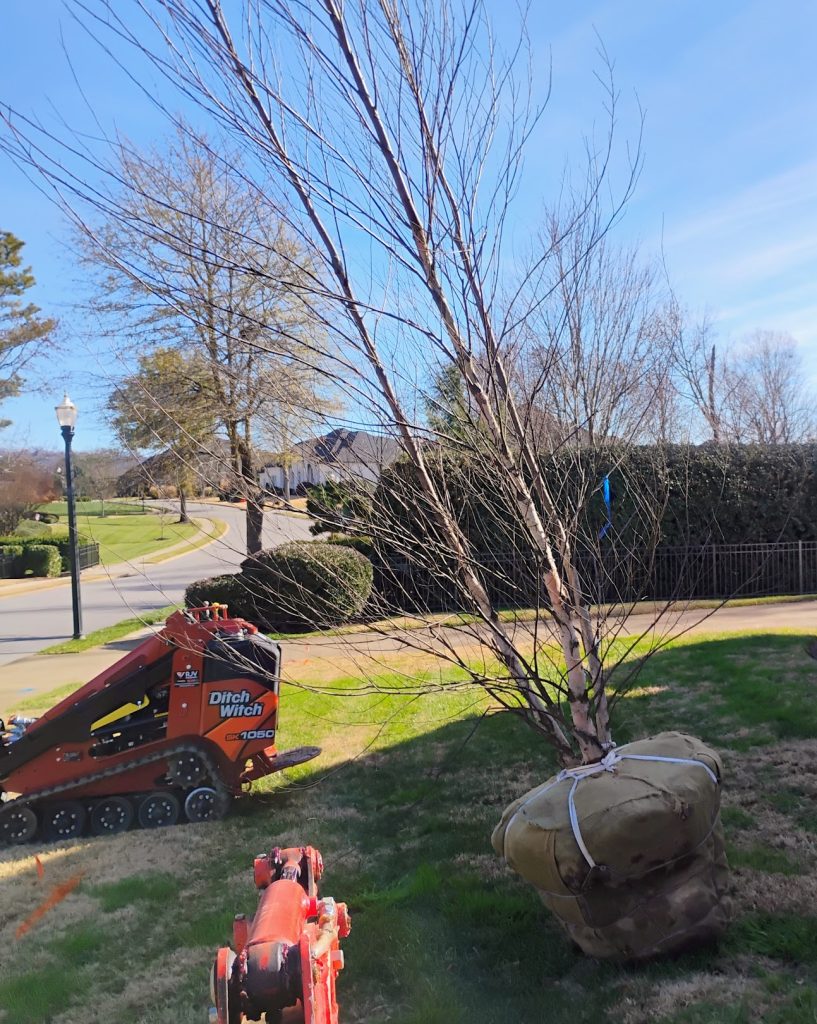
The space after removal — properly graded, root-cleared, and ready for the next phase of the landscape project without deferred problems from incomplete site preparation.
Free consultations across Alpharetta, Roswell, and North Georgia. We coordinate removal with what comes next so the site is set up correctly from the start.
(470) 535-0252 Get a Free Estimate