

Landscape lighting mistakes in Marietta, GA come in two categories: mistakes made at the point of installation that show up immediately, and mistakes made at the point of design that don't show up for months or years — until plants grow, mulch accumulates, or the first landscape maintenance crew runs a string trimmer through the wire. The second category is the more expensive one, because fixing it usually involves digging up portions of the installation rather than simply adjusting fixture angles. Understanding both categories before you hire a landscape lighting contractor is the difference between a system that performs for a decade and one that needs partial reinstallation within the first two years.
The most common single mistake in residential landscape lighting isn't a technical error — it's over-lighting. More fixtures, brighter fixtures, and higher lumen output feels like a reasonable instinct: more light means better coverage and better security. In practice, over-lit landscapes produce glare that makes the space uncomfortable to be in, reduce the contrast that creates visual interest, and produce the parking-lot effect that homeowners with any visual taste instinctively dislike but can't always articulate. A well-designed landscape lighting system uses the minimum effective light level at each fixture location — enough to illuminate the target without creating competing bright spots that overwhelm the overall composition. Restraint in landscape lighting is a design skill, and it's one that separates professional work from amateur installations consistently.
Under-buried wire is the most common technical installation error in landscape lighting, and it's one that produces damage during routine landscape maintenance rather than at the time of installation. Low-voltage landscape wire should be buried a minimum of 6 inches deep in planting beds and 12 inches deep when crossing lawn areas or driveways. Wire buried at 2–3 inches — the depth that results from placing wire in the ground with a flat spade and covering it with mulch — is vulnerable to damage every time a bed is edged, every time a string trimmer operates nearby, and every time a homeowner or landscape crew digs in the bed for any reason. The repair cost after the damage is incurred is always higher than the cost of burying it correctly to begin with.
Plant growth is the other variable that DIY installations and poorly designed professional systems consistently fail to account for. A shrub that's 18 inches tall at the time of installation and positioned perfectly to frame an uplight will be 4 feet tall in three years and obscuring the fixture entirely in five. Trees grow, arborvitae spread, ornamental grasses expand. Fixture placement that ignores the mature size of surrounding plant material produces a system that requires either constant repositioning or diminishing performance as plants grow in front of and around fixtures. A landscape lighting contractor who understands horticulture places fixtures at positions that remain functional at the plant's mature size, not at its installation-day size.
"The most expensive landscape lighting mistake isn't buying cheap fixtures. It's designing the system without accounting for how trees grow, how mulch is applied, and where sprinkler heads are."
Transformer undersizing is a mistake that shows up on day one and never improves. When a transformer is loaded at or above its rated capacity, two things happen: the transformer runs hot, reducing its service life significantly, and the fixtures at the end of long wire runs operate at lower voltage and appear dimmer than fixtures near the transformer. The standard is to load a transformer to no more than 80% of its rated capacity, leaving headroom for voltage drop and future fixture additions. A 150-watt transformer should not be loaded above 120 watts. Contractors who undersize transformers to reduce installation cost produce systems that underperform from the start and fail the transformer prematurely — requiring a replacement expense on top of the original underperformance.
Fixture spacing errors and forgotten uplighting on architectural features are the two aesthetic mistakes that most commonly make a landscape lighting installation look unfinished. Path lights spaced too far apart create a dotted-line effect with pools of light and dark between them — the spacing should be close enough that the illuminated zones overlap slightly. And the front elevation of a home without any uplighting on architectural features — columns, dormers, gable ends, statement trees — reads as flat and unintentional after dark no matter how well the ground-level lighting is designed. Uplighting on the architecture is what makes a property look like a destination from the street. It's also the element most likely to be left out of a budget-constrained installation and most likely to be the first thing noticed as missing.
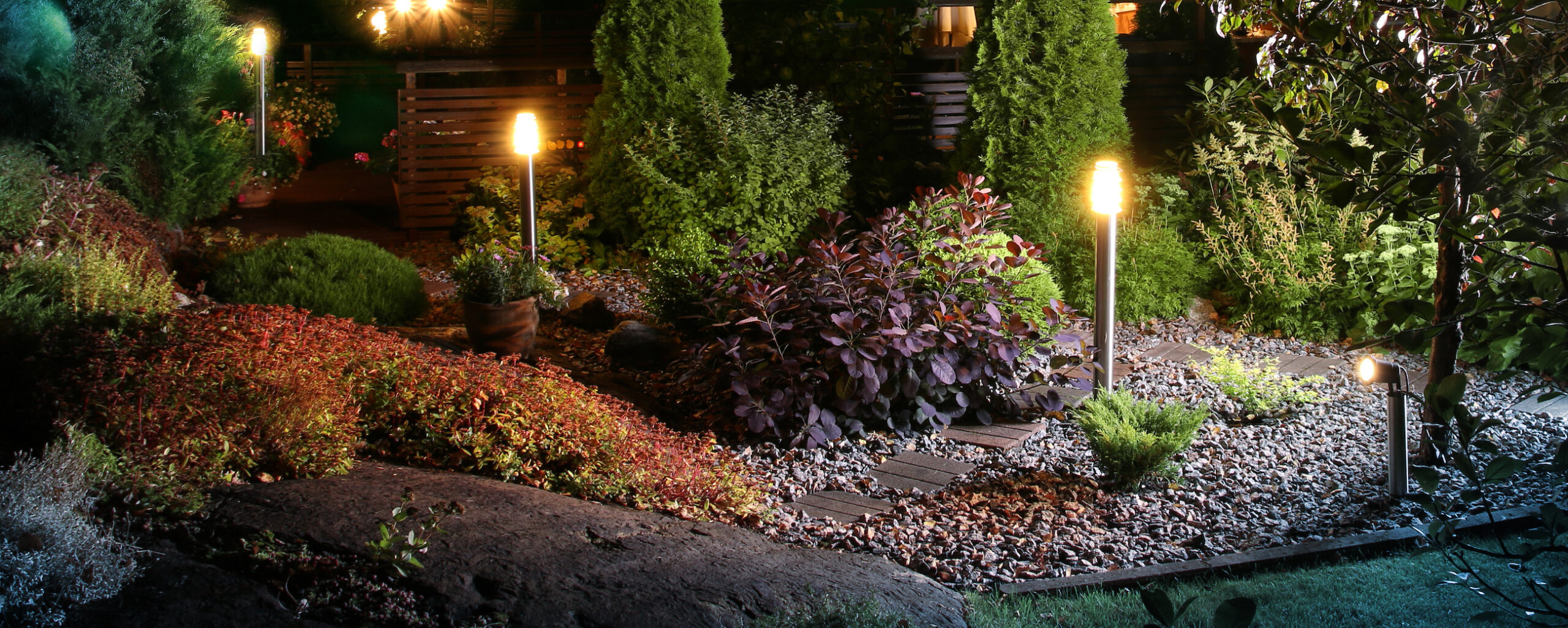
Professional landscape lighting in Marietta, GA — correctly buried wire, fixtures positioned for plant maturity, and transformer capacity designed for long-term performance.
The mistakes in this post are not hypothetical — they're the ones we encounter most often when homeowners call us to evaluate an existing system that isn't performing the way they expected. Getting landscape lighting right means understanding not just fixture placement and wire routing, but how the landscape changes over time and how installation shortcuts show up as performance problems months or years later. Kaizen Scapes designs systems for the long term: correctly buried wire, fixtures placed for mature plant positions, transformers sized with appropriate headroom, and architectural uplighting that makes the home look intentional from the street every night.
Kaizen Scapes proudly serves homeowners across Canton, GA, Woodstock, GA, and the surrounding North Georgia communities including Holly Springs, Ball Ground, Acworth, Kennesaw, Marietta, Alpharetta, Milton, Roswell, Cumming, Johns Creek, and East Cobb. If you're looking for hardscaping and landscaping craftsmanship within 35 miles of Canton or Woodstock, our team is ready to transform your outdoor space.
Whether you're in Marietta, Kennesaw, East Cobb, or anywhere across Cobb County, Kaizen Scapes brings the same relentless standard to every project. We don't do cookie-cutter. We do custom — built to last. See our full hardscaping services or call for a free consultation.
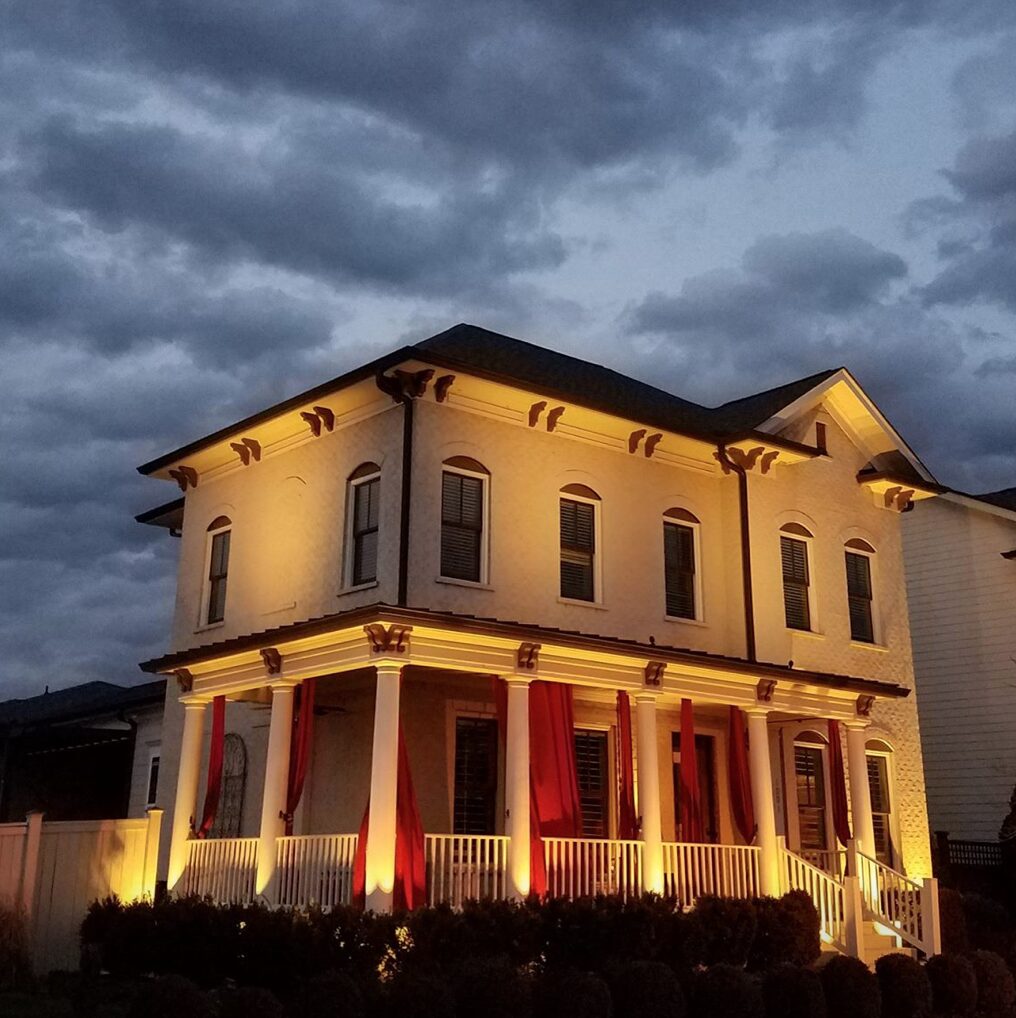
Finished landscape lighting — no over-lighting, no buried wire at risk, fixtures positioned for how the plants look in three years rather than today.
Free consultations across Marietta, Kennesaw, Canton, and Cobb County. Landscape lighting installed to last — not to look good in the quote.
(470) 535-0252 Get a Free Estimate