

Steps are the most underestimated element in any retaining wall or grade change project. Most contractors treat them as a structural necessity — something to get people from one level to another safely and move on. The result is steps that function but don't belong, steps that feel like a correction rather than a feature. Oversized natural stone slab treads are a different approach, and they produce a completely different result.
In this Canton project, the stone staircase wasn't added to the retaining wall — it was integrated into it. The treads are set directly into the face of the tiered block structure, so the stairs don't feel like something bolted on after the wall was finished. They feel like they were always there. That's the difference between a built-to-last detail and an afterthought.
The instinct with outdoor steps is often to match the material to the wall — if it's a concrete block wall, pour concrete steps. If it's a wood wall, use treated timber treads. That logic produces functional steps that feel appropriately matched to the structure they're part of. But it misses the real opportunity.
Oversized natural stone slab treads — wide, heavy, and set with substantial depth — create a completely different tactile and visual experience. When you step onto a tread that's four inches thick and extends 24 inches in depth, your foot knows it's on something that isn't going anywhere. That confidence underfoot is the kind of thing homeowners describe as "it just feels right" without being able to explain exactly why. The why is mass and proportion — the step communicates its permanence through its physical presence.
"A thin concrete step says 'we got you from here to there.' A natural stone slab says 'this was designed.' The difference is felt before it's noticed."
When steps are added to a retaining wall as a separate element — bolted on, attached to the side, or poured against the face — they carry their load independently. That means two structures moving at slightly different rates over time as soil settles and temperature cycles expand and contract materials. The result is gaps, cracks at the joint between stairs and wall, and eventually steps that pull away from the structure they're supposed to be part of.
Integrated stone steps are set into the wall structure itself, sharing the same base and the same anchoring. There's no separate structure to move at a different rate. The stairs and the wall are one system — which means they behave as one system through all the stress cycles Georgia weather delivers. This isn't an aesthetic distinction. It's an engineering one that determines whether the stairs are still exactly where they started in fifteen years.
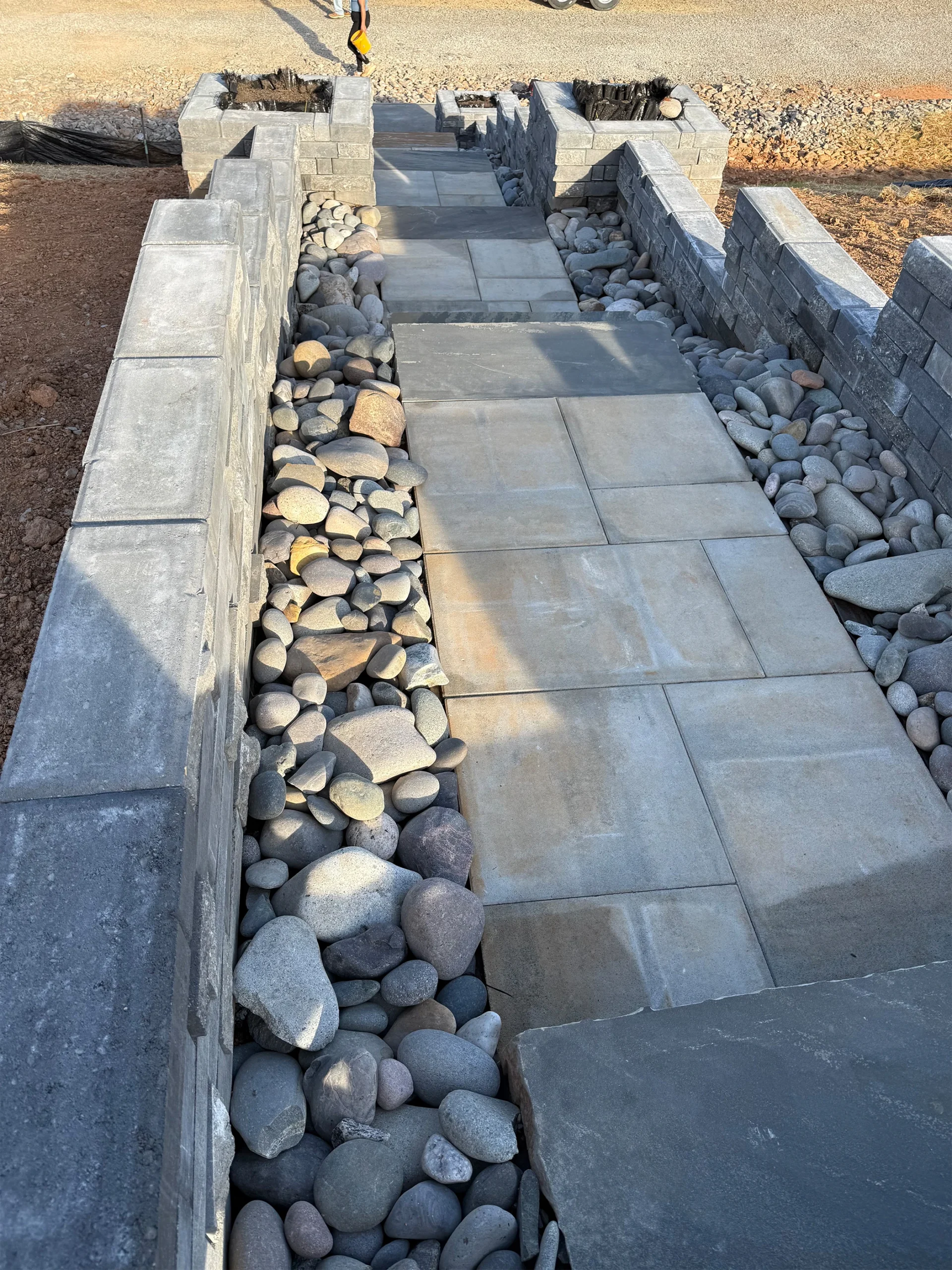
Stone slab treads set into the retaining wall face — structurally integrated, not attached afterward. These stairs and the wall move as one system.
Natural stone steps have one of the highest return-on-investment profiles of any outdoor feature you can add to a residential property. Unlike wood, which requires sealing, replacing, and eventual full removal, or concrete, which can crack and spall and is expensive to repair in sections — natural stone requires essentially no maintenance and doesn't degrade with exposure. The stone used in this project will look the same in twenty years as it does today.
When appraisers and buyers evaluate a property with high-quality hardscaping, the permanence of the materials is a significant factor. A staircase that looks like it was installed last year and will still look like that in a decade reads as a value asset. Steps that show their age — cracked concrete, rotting timber, uneven settlement — read as a liability. The investment in natural stone is, in the long run, the more economical choice.
This project's staircase is one component of a five-element hardscape system that also includes a tiered retaining wall, aggregate drainage, a concrete landing, and architectural entry columns. Each element reinforces the others. To see how the full system comes together, visit our hardscaping services page or call for a free estimate on your property.
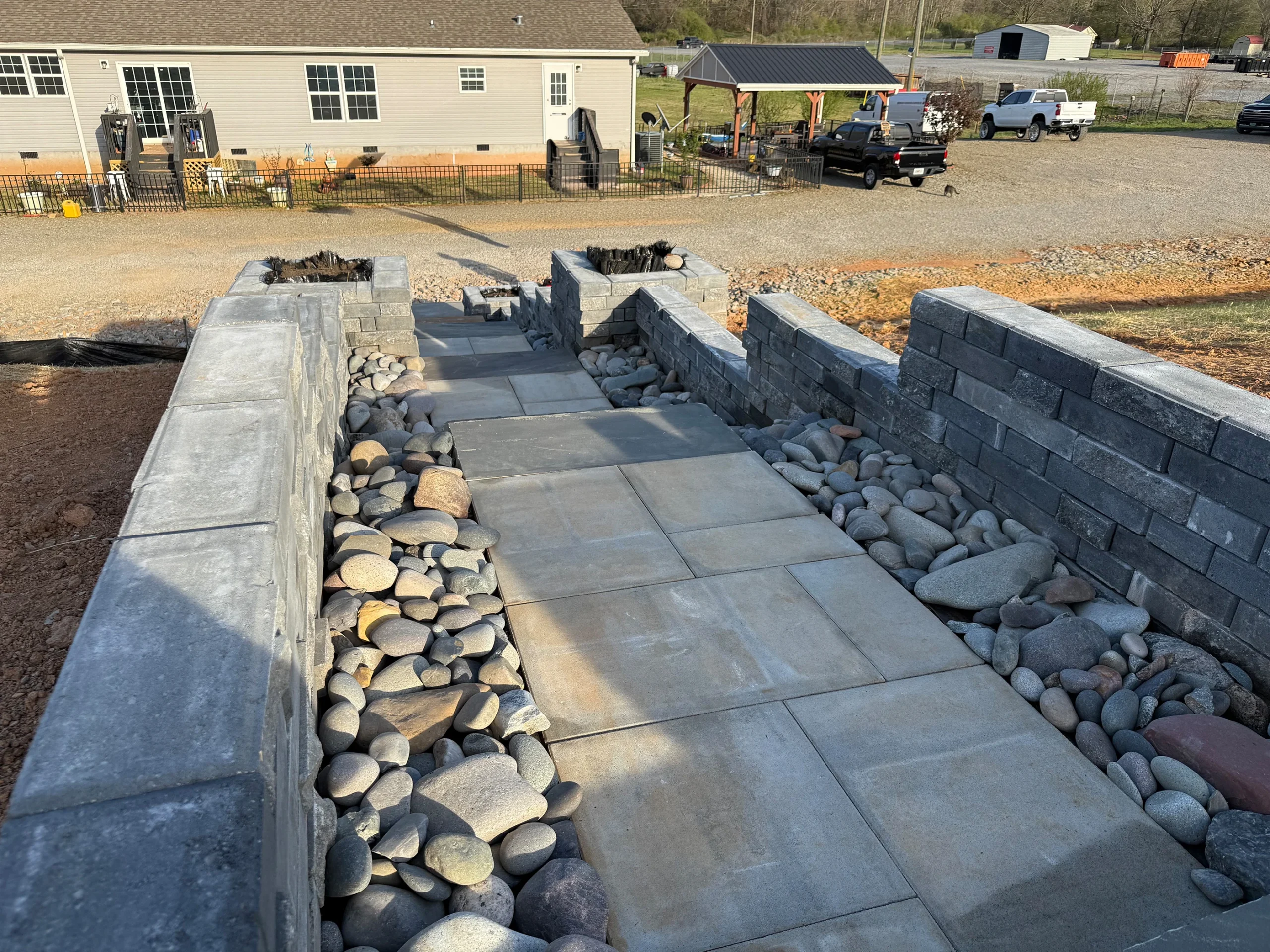
Wide slab treads with natural texture — ergonomic, non-slip, and built for the scale of the surrounding structure.
The access problem on a steep lot is permanent — grade changes don't fix themselves. The question is whether you solve it with something that ages well or something you'll want to replace in ten years. Natural stone integrated into the structure of the wall is the answer that holds up, looks right, and adds to the property value rather than eroding it.
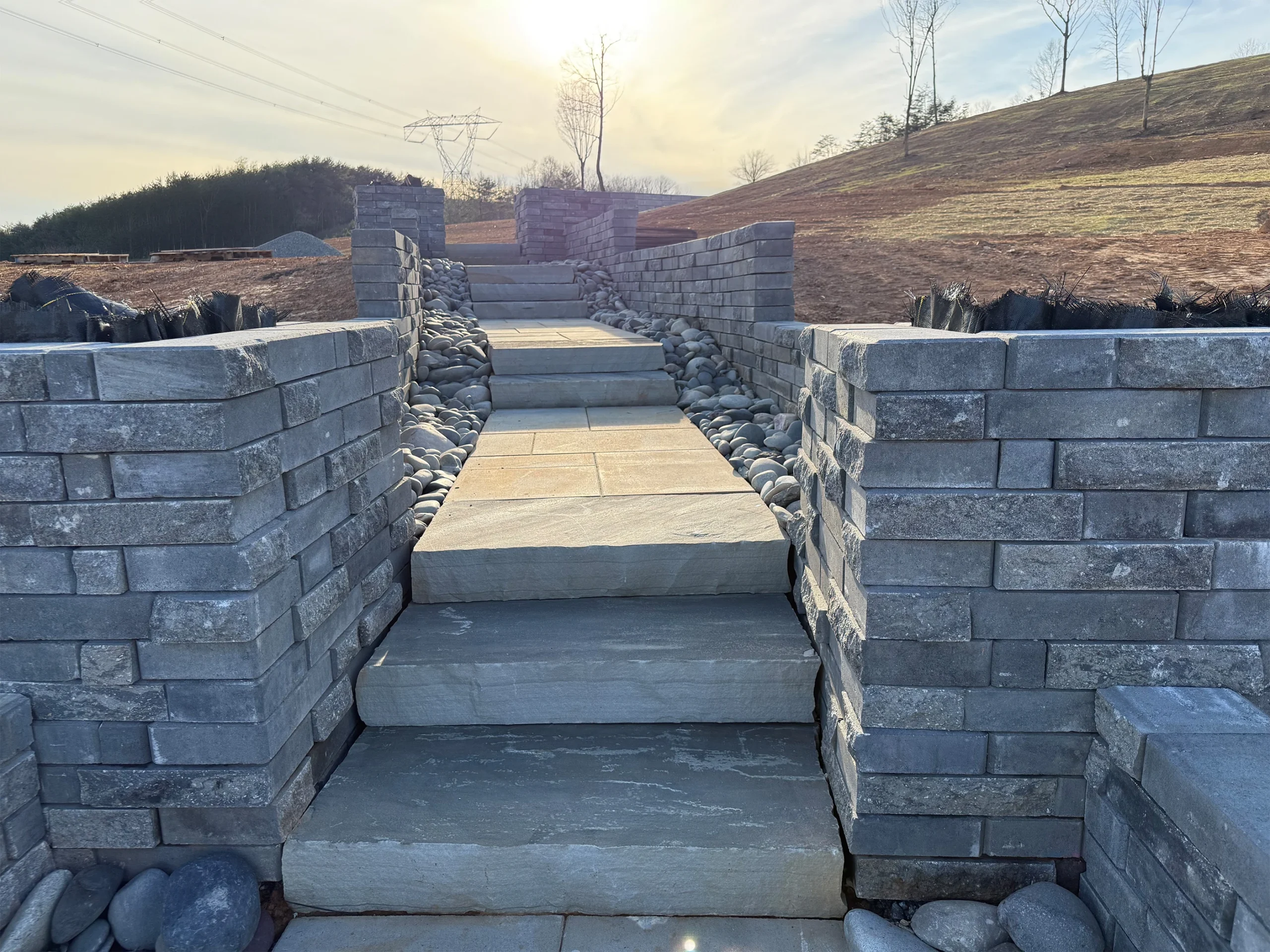
The finished staircase — integrated into the wall, scaled for the space, and built to be permanent.
Free on-site estimates for stone staircases and integrated retaining wall systems across Canton and Cherokee County.
(470) 535-0252 Request a Free Estimate