

Roswell, GA homeowners who invest in a built-in BBQ area or full outdoor kitchen often make the same mistake — they choose the feature in isolation from the house it belongs to. The result is an outdoor kitchen that functions fine but reads as something dropped into the backyard rather than grown from it. In North Atlanta's competitive real estate market, a disconnected outdoor kitchen doesn't just look wrong; it can actually reduce the perceived value of a property by signaling that the outdoor space was an afterthought. Designing a built-in BBQ area in Canton GA or Roswell requires the same architectural discipline as designing an interior room.
The concept of architectural continuity isn't complicated, but it requires discipline during the design phase when it's easy to focus on appliance selection and layout rather than on how the finished structure will relate to the home's rear elevation. An outdoor kitchen is a permanent hardscape feature — it will be visible from inside the house through rear windows, from the patio, and as a dominant visual element in the backyard for as long as the home stands. Getting the relationship between that feature and the home's architecture right is a one-time decision that pays forward for decades.
The most direct path to architectural continuity is using veneer materials on the outdoor kitchen's structure that either match or complement the home's exterior. A Roswell home with a brick front elevation reads naturally with an outdoor kitchen finished in a compatible brick or manufactured stone with similar warm tones and coursing scale. A home with smooth stucco and painted trim reads better with a stucco-finished or large-format tile outdoor kitchen structure than with a stacked ledge stone that introduces an entirely different texture vocabulary.
This doesn't mean the outdoor kitchen has to be a literal copy of the home's exterior. It means the materials should be in a coherent conversation with each other. A modern transitional home with fiber cement siding and dark trim reads well with a smooth plaster or large-format porcelain tile outdoor kitchen structure — darker tones, clean lines, minimal texture. A traditional brick colonial reads well with tumbled bluestone or warm-toned manufactured stone. The test is simple: stand at the rear of the home and look at the outdoor kitchen against the home's rear elevation. If it looks like it belongs to a different building, the material selection needs reconsideration.
"The most common outdoor kitchen mistake in North Atlanta isn't the appliance selection — it's building a feature that looks disconnected from the house it's supposed to belong to."
The indoor kitchen and the outdoor kitchen exist in a visual relationship, particularly in homes where the rear of the house has large glass doors or windows that create a sight line between the two spaces. When a homeowner stands at their indoor kitchen island and can see the outdoor kitchen through glass doors, countertop material and color dissonance is immediately visible. This doesn't mean you have to use identical countertop materials indoors and out — outdoor countertops have different performance requirements. But it does mean the outdoor countertop color family, undertone, and visual weight should be considered relative to what's visible through the glass.
Placement is a related design decision. The outdoor kitchen should generally be positioned to make functional sense from the indoor kitchen — a logical extension of the cooking and entertaining axis rather than something located for the view or for convenience of gas line routing. An outdoor kitchen positioned so that walking from the indoor kitchen to the outdoor grill requires navigating around furniture or exiting through a distant door defeats one of the feature's primary purposes. When the outdoor kitchen is placed thoughtfully relative to the interior floor plan, the indoor-to-outdoor flow feels natural.
One of the most overlooked design tests for an outdoor kitchen is how it reads from inside the home — specifically from the rooms that look out onto the backyard. A large outdoor kitchen structure with prominent mass and a high countertop profile can obscure yard views and visually compress the sense of outdoor space when viewed from inside. This is particularly relevant in smaller backyards common in Roswell's residential neighborhoods, where the outdoor kitchen can occupy a significant portion of the rear yard's apparent depth.
A lower-profile L-shaped or linear outdoor kitchen layout often reads better from inside the home than a high-profile U-shape because it allows a view line over the structure to the yard beyond. Counter height matters too — standard 36-inch counter height is appropriate, but added stone ledge details or backsplash elements that extend higher should be considered carefully relative to sight lines. The outdoor kitchen should anchor the patio space visually without dominating the backyard view from inside the home.
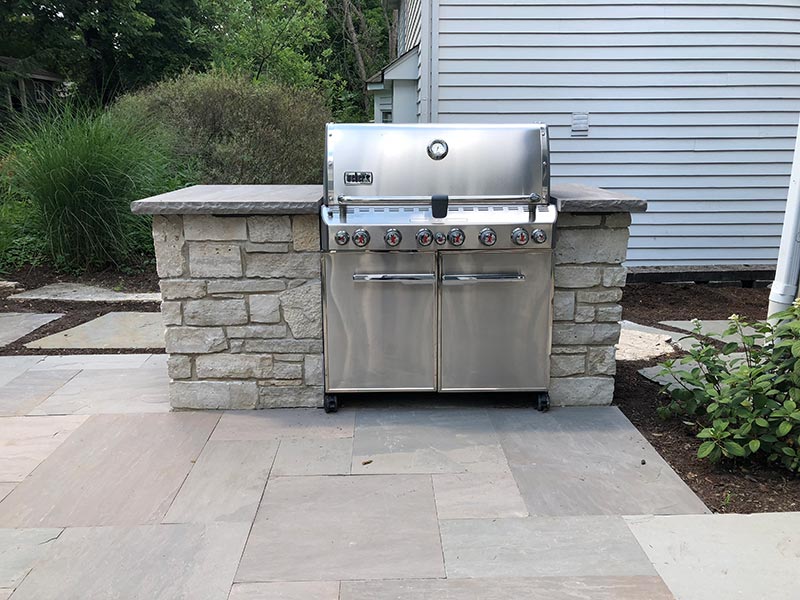
Outdoor kitchen in Roswell, GA — stone veneer selected to complement the home's rear elevation, countertop material chosen for outdoor performance and visual continuity with interior finishes.
The final architectural consideration is how the outdoor kitchen integrates with the existing patio hardscape. A patio built from natural bluestone pavers doesn't read naturally with an outdoor kitchen set on a plain concrete slab — the transition between materials creates a visual break that undermines the coherence of the outdoor space. The outdoor kitchen should either share the same patio surface or connect to it through a deliberate transition — a raised platform in the same material, a step detail, or a framing border that signals intentional design rather than sequential installation.
When we design outdoor kitchens and hardscaping features for Roswell and North Atlanta homeowners, the architectural relationship between the feature and the home is always part of the first conversation. The goal is an outdoor kitchen that looks like it was always there — not one that looks like it was added later.
Kaizen Scapes proudly serves homeowners across Canton, GA, Woodstock, GA, and the surrounding North Georgia communities including Holly Springs, Ball Ground, Acworth, Kennesaw, Marietta, Alpharetta, Milton, Roswell, Cumming, Johns Creek, and East Cobb. If you're looking for hardscaping and landscaping craftsmanship within 35 miles of Canton or Woodstock, our team is ready to transform your outdoor space.
Whether you're in Roswell, Alpharetta, Johns Creek, or anywhere across North Atlanta, Kaizen Scapes brings the same relentless standard to every project. We don't do cookie-cutter. We do custom — built to last. See our full hardscaping services or call for a free consultation.
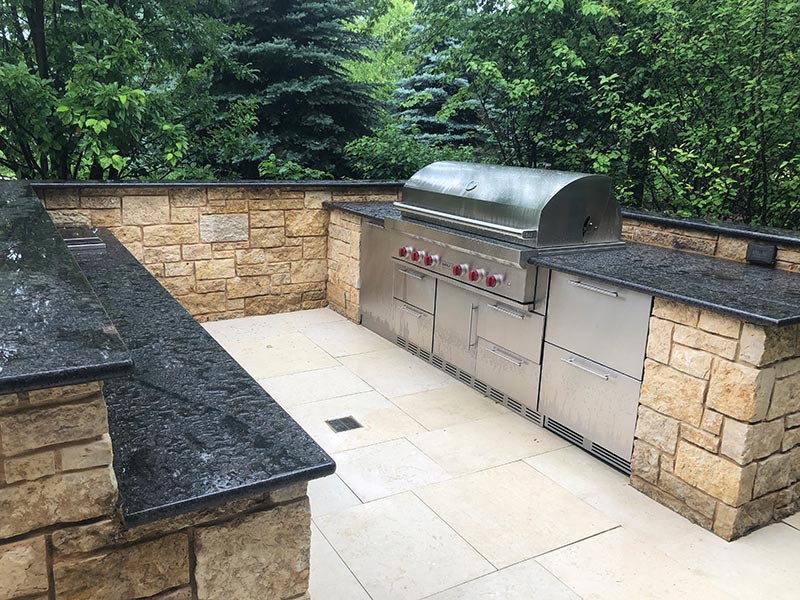
Completed outdoor kitchen — designed to belong to the home architecturally, not just to occupy space behind it.
Free consultations across Roswell, Canton, and North Atlanta. We design outdoor kitchens that belong to the homes they serve.
(470) 535-0252 Get a Free Estimate